


Prezentare generală a cazurilor de aplicare
În industria aerospațială, cererile tot mai mari pentru creșterea eficienței motoarelor și a fiabilității vehiculelor de lansare au făcut ca rezistența la temperaturi ridicate și tehnologia de protecție termică să devină blocaje critice. Lamele turbinelor motoarelor aeronautice trebuie să funcționeze în fluxuri de gaze mai fierbinți decât punctul de topire al substratului metalic, în timp ce învelișurile frontale ale vehiculelor de lansare suportă o încălzire aerodinamică susținută de peste 500 °C în timpul reintrării în atmosferă. În același timp, rezervoarele de propulsie criogenică din cadrul fuselajului se confruntă cu condiții extreme de temperatură scăzută, de până la -183 °C. Acest “mediu dublu cald și rece” dramatic impune cerințe extrem de stricte privind performanța materialelor și tehnologia de acoperire.
Acoperirile cu bariere termice (TBC) sunt tehnologii-cheie pentru protejarea materialelor de bază și reducerea temperaturii suprafețelor, cu două metode principale de fabricație: Pulverizarea cu plasmă (PS) și depunerea fizică în vapori cu fascicul de electroni (EB-PVD). EB-PVD este preferată deoarece produce acoperiri cu granulație columnară cu o toleranță excepțională la deformare. Această microstructură absoarbe în mod eficient tensiunile datorate nepotrivirii termice în timpul ciclurilor termice repetate, îmbunătățind considerabil rezistența la șocurile termice și durata de viață a acoperirii. În schimb, straturile pulverizate cu plasmă au o arhitectură lamelară; interfețele interlaminare și microfisurile pot duce la fisurare și spallație sub sarcină termomecanică, în ciuda avantajelor în ceea ce privește eficiența depunerii și costul.
EB-PVD vaporizează materialul de acoperire prin bombardare cu fascicul de electroni și îl depune pe suprafața componentei cu control precis asupra grosimii și microstructurii acoperirii. Acoperirile cu granulație columnară rezultate nu numai că rezistă la solicitări termice extreme, dar prezintă, de asemenea, spații între coloane care ajută la atenuarea tensiunii de nepotrivire termică în timpul încălzirii ciclice. Deși EB-PVD are rate de depunere mai mici și costuri mai mari pentru echipamente și procese, performanța sa superioară la șocuri termice și beneficiile privind durata de viață o fac metoda de acoperire preferată pentru componentele cu secțiune fierbinte din motoarele de aviație, cum ar fi paletele turbinei și piesele camerei de ardere.
În sistemele de protecție termică pentru rachete, izolația tradițională din plută lipită manual implică procese complexe, numeroase îmbinări și riscuri de absorbție a umidității, formare de bășici și delaminare. EB-PVD și variantele sale avansate (de exemplu, EB-PVD asistat de plasmă) oferă o cale inovatoare către acoperiri integrate de protecție termică de înaltă performanță și fiabilitate. Aceste tehnologii răspund cerințelor urgente ale sistemelor aerospațiale de nouă generație în materie de fiabilitate, longevitate și soluții ușoare de protecție termică.


EB-PVD Typical Application Cases
Case 1: Thermal Barrier Coating for Aero-Engine Turbine Blades
Provocare tehnică
A high-pressure turbine blade for a commercial aero-engine uses superalloys such as DZ125 and DZ406. Operating in high-temperature, high-pressure exhaust flow, blade surface temperature can exceed 1600°C, far beyond the metal’s thermal capability. Under long-term thermal-cycling loads, oxidation, corrosion, and creep damage may occur, threatening engine safety and durability.
EB-PVD Solution
Apply an Electron-Beam Physical Vapor Deposition (EB-PVD) thermal barrier coating system on the blade surface.
First, electroplate platinum and then perform vapor-phase aluminizing to form a PtAl bond layer. Key parameters such as Pt coating thickness and aluminizing temperature are optimized, achieving excellent oxidation resistance at 1150°C.
Next, deposit rare-earth-modified zirconia ceramic (GYb-YSZ) via EB-PVD. High-purity, fine-grain ceramic targets are selected to avoid spatter and ensure uniform columnar-grain microstructure.
Process and Performance
The GYb-YSZ + PtAl coating system endured 4,320 thermal cycles at 1050°C (total dwell time 720 hours) without spallation, demonstrating exceptional thermal-cycle resistance.
By tuning deposition energy, ceramic chemistry and phase structure can be optimized. Studies show LaZrCeO/YSZ dual-ceramic coatings with pyrochlore + fluorite phases achieved an average thermal-cycle life of 1,518 cycles at 1100°C.
Application Value
Blade surface temperature reduction: ~100–150°C
Thermal-shock resistance improvement: >30%
Maintenance interval extension: ~50%
Significant reduction in engine life-cycle cost due to extended blade durability and improved thermal efficiency
Case 2: Thermal-Protection Coatings for Launch-Vehicle Engine Hot-Section and Airframe
Provocare tehnică
Next-generation launch-vehicle turbo-pump blades and hot-section components experience intense high-temperature, high-velocity combustion gas flow. Meanwhile, the fairing endures >500°C aerodynamic heating during atmospheric transit, and cryogenic tanks face −183°C fuel temperatures. Traditional methods, such as manually bonded thermal cork panels, present risks including delamination, moisture absorption, and labor-intensive processing.
EB-PVD-Based and Derived Solutions
For rocket turbo-pump blades: deposit MCrAlY bond coats and modified YSZ ceramic topcoats via EB-PVD to resist oxidation, erosion, and high-temperature gas impingement.
For integrated thermal protection of fairings and tanks: adopt the “hyperbranched polymer coating” approach developed by Shanghai Jiao Tong University. Although not traditional EB-PVD, it shares the same goal of producing continuous thermal-protection coatings without joints.
Hyperbranched polymer coatings:
Three-dimensional branched molecular structure wraps functional fillers for spray-formability
Reactive end groups form strong bonds with metal substrate
Withstands extreme thermal shock and cryogenic-to-high-temperature transitions
Process and Performance
Plasma-assisted EB-PVD enables denser MCrAlY oxidation-resistant and nitride erosion-resistant coatings, improving service life in complex environments.
Hyperbranched coating system enables one-pass continuous spraying on fairings and tanks, eliminating seams and reducing insulation application time from ~1 month to <1 week, while reducing vehicle mass.
Application Value
Successfully applied to the Long March-6A launch system
Significantly improved launch reliability and turnaround efficiency
Hyperbranched polymer coating technology adopted in major civil projects including Beijing Winter Olympics venues and Paris Olympics facilities, breaking foreign monopolies on advanced industrial coatings
Rezumat
EB-PVD thermal barrier coating technology delivers:
High-performance TBC systems for turbine blades and rocket engines
Superior thermal-shock durability and oxidation resistance vs. plasma spray
Precise columnar-grain ceramic coating structures optimized for extreme aerospace environments
Proven performance in commercial aircraft engines and next-gen launch vehicles
Extended component life, reduced thermal load, and lower total ownership cost
This advanced coating approach enables higher efficiency, greater reliability, and improved safety across modern aerospace propulsion and thermal-protection systems.
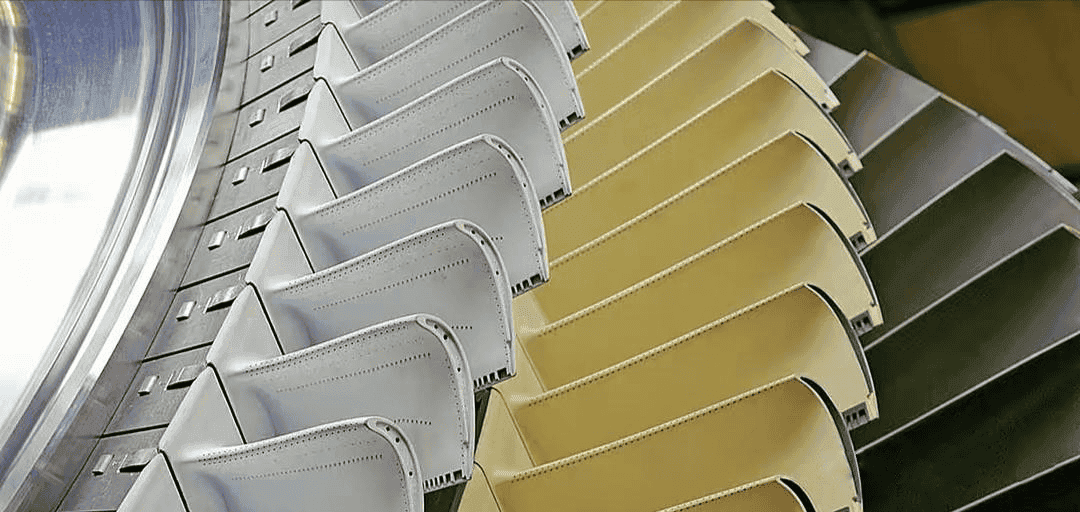


Technical Summary and Outlook
EB-PVD coating technology, with its unique columnar-grain architecture, plays an irreplaceable role in protecting aerospace components operating under extreme thermal environments.
Key Technical Advantages
Columnar-grain thermal barrier coatings produced via EB-PVD offer exceptional strain tolerance, effectively absorbing and releasing thermal stresses. This significantly enhances thermal-shock resistance and service life under drastic temperature variations.
The process enables precise control of coating composition and microstructure, supporting advanced architectures such as gradient layers and micro-laminated coatings to meet diverse substrate and mission-critical requirements.
Compared with conventional thermal-protection approaches, EB-PVD and its derivative technologies provide critical materials and process support for lightweight, high-reliability, and long-life aerospace systems.
Perspective de viitor
EB-PVD will evolve toward higher deposition rates, lower costs, and advanced composite coating architectures such as CMAS-resistant and ultra-low-thermal-conductivity layers.
Next-generation TBC materials—including rare-earth-doped zirconia systems and high-entropy ceramics—represent key research directions, targeting lower thermal conductivity and higher phase stability at extreme temperatures.
Hybrid advanced processes, such as plasma-assisted EB-PVD and plasma-spray PVD (PS-PVD), combine the high deposition speed of plasma spray with EB-PVD’s ability to form highly oriented columnar microstructures, offering strong potential for next-generation thermal-barrier coatings.
Concluzie
As a core enabling technology in aerospace engineering, EB-PVD coating technology will continue driving the performance boundaries of flight systems, providing essential protection for future high-temperature propulsion and space-exploration platforms.


