


Overzicht van toepassingsgevallen
In de lucht- en ruimtevaartindustrie hebben de toenemende eisen voor een hoger rendement van motoren en een grotere betrouwbaarheid van lanceervoertuigen ervoor gezorgd dat weerstand tegen hoge temperaturen en thermische beschermingstechnologie kritieke knelpunten zijn geworden. Turbineschoepen van vliegtuigmotoren moeten werken in gasstromen die heter zijn dan het smeltpunt van het metalen substraat, terwijl de neuskappen van lanceervoertuigen tijdens de terugkeer in de dampkring voortdurend aërodynamische hitte van meer dan 500 °C te verduren krijgen. Tegelijkertijd worden cryogene stuwstoftanks in het luchtframe blootgesteld aan extreme lage temperaturen tot -183 °C. Deze dramatische “hete en koude dubbele omgeving” stelt uitzonderlijk hoge eisen aan de prestaties van materialen en coatingtechnologie.
Thermische Barrière Coatings (TBC's) zijn belangrijke technologieën voor het beschermen van basismaterialen en het verlagen van oppervlaktetemperaturen, met twee gangbare productiemethoden: Plasmaspuiten (PS) en elektronenstraal fysische dampdepositie (EB-PVD). EB-PVD geniet de voorkeur omdat het coatings met een zuilvormige korrel produceert met een uitstekende spanningstolerantie. Deze microstructuur absorbeert effectief spanningen als gevolg van thermische mismatch tijdens herhaalde thermische cycli, waardoor de weerstand tegen thermische schokken en de levensduur van de coating sterk verbeteren. Plasma gespoten coatings hebben daarentegen een lamellaire architectuur; interlaminaire interfaces en microscheurtjes kunnen leiden tot barsten en spallatie onder thermomechanische belasting, ondanks voordelen in afzettingsefficiëntie en kosten.
EB-PVD verdampt coatingmateriaal via elektronenstraalbeschieting en zet het op het componentoppervlak af met nauwkeurige controle over de laagdikte en microstructuur. De resulterende coatings met kolomvormige korrel zijn niet alleen bestand tegen extreme thermische spanningen, maar vertonen ook openingen tussen de kolommen die helpen bij het verlichten van thermische mismatch tijdens cyclische verhitting. Hoewel EB-PVD lagere neersmeltsnelheden en hogere apparatuur- en proceskosten heeft, maken de superieure thermische schokbestendigheid en levensduurvoordelen het de geprefereerde coatingmethode voor hete onderdelen in vliegtuigmotoren, zoals turbinebladen en verbrandingsonderdelen.
In systemen voor thermische bescherming van raketten gaat traditionele, handmatig verlijmde kurkisolatie gepaard met complexe processen, talrijke verbindingen en risico's op vochtabsorptie, blaasvorming en delaminatie. EB-PVD en zijn geavanceerde varianten (bv. plasma-ondersteunde EB-PVD) bieden een innovatieve weg naar hoogperformante, zeer betrouwbare, geïntegreerde thermische beschermingslagen. Deze technologieën voldoen aan de dringende eisen van de volgende generatie lucht- en ruimtevaartsystemen voor betrouwbaarheid, duurzaamheid en lichtgewicht oplossingen voor thermische bescherming.


EB-PVD Typical Application Cases
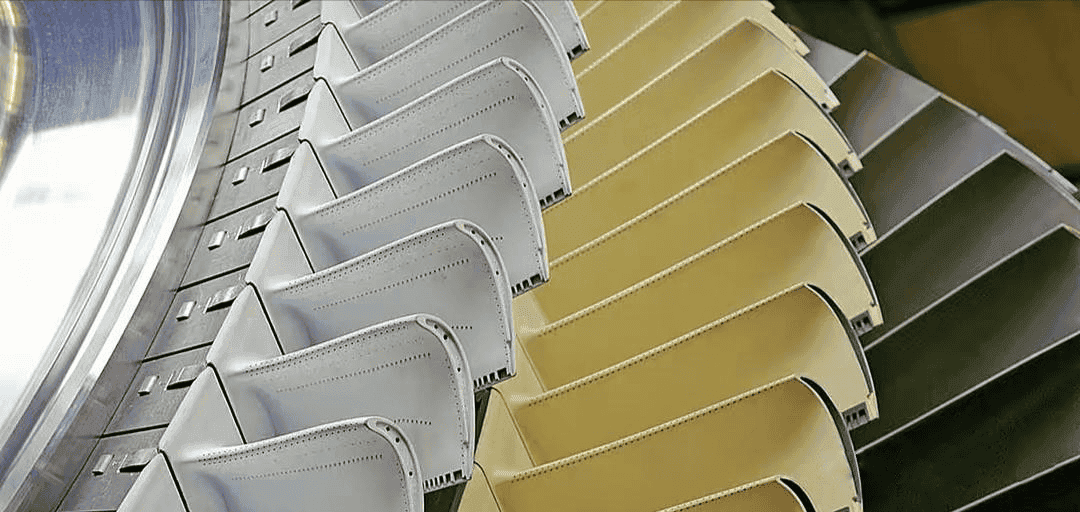
Case 1: Thermal Barrier Coating for Aero-Engine Turbine Blades
Technische uitdaging
A high-pressure turbine blade for a commercial aero-engine uses superalloys such as DZ125 and DZ406. Operating in high-temperature, high-pressure exhaust flow, blade surface temperature can exceed 1600°C, far beyond the metal’s thermal capability. Under long-term thermal-cycling loads, oxidation, corrosion, and creep damage may occur, threatening engine safety and durability.
EB-PVD Solution
Apply an Electron-Beam Physical Vapor Deposition (EB-PVD) thermal barrier coating system on the blade surface.
First, electroplate platinum and then perform vapor-phase aluminizing to form a PtAl bond layer. Key parameters such as Pt coating thickness and aluminizing temperature are optimized, achieving excellent oxidation resistance at 1150°C.
Next, deposit rare-earth-modified zirconia ceramic (GYb-YSZ) via EB-PVD. High-purity, fine-grain ceramic targets are selected to avoid spatter and ensure uniform columnar-grain microstructure.
Process and Performance
The GYb-YSZ + PtAl coating system endured 4,320 thermal cycles at 1050°C (total dwell time 720 hours) without spallation, demonstrating exceptional thermal-cycle resistance.
By tuning deposition energy, ceramic chemistry and phase structure can be optimized. Studies show LaZrCeO/YSZ dual-ceramic coatings with pyrochlore + fluorite phases achieved an average thermal-cycle life of 1,518 cycles at 1100°C.
Application Value
Blade surface temperature reduction: ~100–150°C
Thermal-shock resistance improvement: >30%
Maintenance interval extension: ~50%
Significant reduction in engine life-cycle cost due to extended blade durability and improved thermal efficiency
Case 2: Thermal-Protection Coatings for Launch-Vehicle Engine Hot-Section and Airframe
Technische uitdaging
Next-generation launch-vehicle turbo-pump blades and hot-section components experience intense high-temperature, high-velocity combustion gas flow. Meanwhile, the fairing endures >500°C aerodynamic heating during atmospheric transit, and cryogenic tanks face −183°C fuel temperatures. Traditional methods, such as manually bonded thermal cork panels, present risks including delamination, moisture absorption, and labor-intensive processing.
EB-PVD-Based and Derived Solutions
For rocket turbo-pump blades: deposit MCrAlY bond coats and modified YSZ ceramic topcoats via EB-PVD to resist oxidation, erosion, and high-temperature gas impingement.
For integrated thermal protection of fairings and tanks: adopt the “hyperbranched polymer coating” approach developed by Shanghai Jiao Tong University. Although not traditional EB-PVD, it shares the same goal of producing continuous thermal-protection coatings without joints.
Hyperbranched polymer coatings:
Three-dimensional branched molecular structure wraps functional fillers for spray-formability
Reactive end groups form strong bonds with metal substrate
Withstands extreme thermal shock and cryogenic-to-high-temperature transitions
Process and Performance
Plasma-assisted EB-PVD enables denser MCrAlY oxidation-resistant and nitride erosion-resistant coatings, improving service life in complex environments.
Hyperbranched coating system enables one-pass continuous spraying on fairings and tanks, eliminating seams and reducing insulation application time from ~1 month to <1 week, while reducing vehicle mass.
Application Value
Successfully applied to the Long March-6A launch system
Significantly improved launch reliability and turnaround efficiency
Hyperbranched polymer coating technology adopted in major civil projects including Beijing Winter Olympics venues and Paris Olympics facilities, breaking foreign monopolies on advanced industrial coatings
Samenvatting
EB-PVD thermal barrier coating technology delivers:
High-performance TBC systems for turbine blades and rocket engines
Superior thermal-shock durability and oxidation resistance vs. plasma spray
Precise columnar-grain ceramic coating structures optimized for extreme aerospace environments
Proven performance in commercial aircraft engines and next-gen launch vehicles
Extended component life, reduced thermal load, and lower total ownership cost
This advanced coating approach enables higher efficiency, greater reliability, and improved safety across modern aerospace propulsion and thermal-protection systems.


Technical Summary and Outlook
EB-PVD coating technology, with its unique columnar-grain architecture, plays an irreplaceable role in protecting aerospace components operating under extreme thermal environments.
Key Technical Advantages
Columnar-grain thermal barrier coatings produced via EB-PVD offer exceptional strain tolerance, effectively absorbing and releasing thermal stresses. This significantly enhances thermal-shock resistance and service life under drastic temperature variations.
The process enables precise control of coating composition and microstructure, supporting advanced architectures such as gradient layers and micro-laminated coatings to meet diverse substrate and mission-critical requirements.
Compared with conventional thermal-protection approaches, EB-PVD and its derivative technologies provide critical materials and process support for lightweight, high-reliability, and long-life aerospace systems.
Future Outlook
EB-PVD will evolve toward higher deposition rates, lower costs, and advanced composite coating architectures such as CMAS-resistant and ultra-low-thermal-conductivity layers.
Next-generation TBC materials—including rare-earth-doped zirconia systems and high-entropy ceramics—represent key research directions, targeting lower thermal conductivity and higher phase stability at extreme temperatures.
Hybrid advanced processes, such as plasma-assisted EB-PVD and plasma-spray PVD (PS-PVD), combine the high deposition speed of plasma spray with EB-PVD’s ability to form highly oriented columnar microstructures, offering strong potential for next-generation thermal-barrier coatings.
Conclusie
As a core enabling technology in aerospace engineering, EB-PVD coating technology will continue driving the performance boundaries of flight systems, providing essential protection for future high-temperature propulsion and space-exploration platforms.


