


ภาพรวมกรณีการใช้งาน
ในอุตสาหกรรมการบินและอวกาศ ความต้องการที่เพิ่มขึ้นสำหรับประสิทธิภาพของเครื่องยนต์ที่สูงขึ้นและความน่าเชื่อถือของยานพาหนะในการปล่อยที่มากขึ้นได้ทำให้ความต้านทานต่ออุณหภูมิสูงและเทคโนโลยีการป้องกันความร้อนกลายเป็นอุปสรรคสำคัญ ใบพัดกังหันของเครื่องยนต์อากาศยานต้องทำงานในกระแสแก๊สที่ร้อนกว่าจุดหลอมเหลวของโลหะฐาน ในขณะที่แฟร์ริ่งด้านหน้าของยานพาหนะในการปล่อยต้องทนต่อความร้อนทางอากาศพลศาสตร์ที่ต่อเนื่องเหนือ 500 °C ระหว่างการกลับเข้าสู่ชั้นบรรยากาศในขณะเดียวกัน ถังเชื้อเพลิงเย็นจัดภายในโครงสร้างอากาศยานต้องเผชิญกับสภาวะอุณหภูมิต่ำสุดถึง –183 °C สภาพแวดล้อมที่เปลี่ยนแปลงอย่างรุนแรงระหว่าง “ร้อนและเย็น” นี้ก่อให้เกิดข้อกำหนดที่เข้มงวดอย่างยิ่งต่อประสิทธิภาพของวัสดุและเทคโนโลยีการเคลือบผิว.
สารเคลือบฉนวนความร้อน (Thermal Barrier Coatings: TBCs) เป็นเทคโนโลยีสำคัญในการปกป้องวัสดุพื้นฐานและลดอุณหภูมิพื้นผิว โดยมีวิธีการผลิตหลักสองวิธี ได้แก่ การพ่นพลาสม่า (Plasma Spraying: PS) และการเคลือบด้วยวิธีอิเล็กตรอนบีมฟิสิกส์ (Electron-Beam Physical Vapor Deposition: EB-PVD) โดย EB-PVD เป็นที่นิยมอย่างมากเนื่องจากสามารถผลิตสารเคลือบที่มีโครงสร้างเม็ดยาว (columnar-grain) ซึ่งมีความทนทานต่อความเค้นสูงเป็นพิเศษโครงสร้างจุลภาคนี้สามารถดูดซับความเค้นจากความไม่สมดุลทางความร้อนที่เกิดขึ้นซ้ำในระหว่างรอบความร้อนได้อย่างมีประสิทธิภาพ ช่วยเพิ่มความทนทานต่อการกระแทกจากความร้อนและยืดอายุการใช้งานของชั้นเคลือบได้อย่างมาก ในทางตรงกันข้าม ชั้นเคลือบที่พ่นด้วยพลาสมาจะมีโครงสร้างแบบแผ่นซ้อนกัน (lamellar) ซึ่งพื้นผิวระหว่างแผ่นและรอยแตกระดับจุลภาคอาจนำไปสู่การแตกร้าวและการหลุดล่อนของชั้นเคลือบภายใต้แรงกระทำทางกลความร้อน แม้ว่าจะมีข้อดีในด้านประสิทธิภาพการสะสมและต้นทุนก็ตาม.
EB-PVD ทำการระเหยวัสดุเคลือบโดยการยิงด้วยลำแสงอิเล็กตรอนและเคลือบบนพื้นผิวของชิ้นส่วนด้วยการควบคุมความหนาของชั้นเคลือบและโครงสร้างจุลภาคได้อย่างแม่นยำการเคลือบผิวที่มีลักษณะเป็นเม็ดเรียงตัวเป็นคอลัมน์ที่เกิดขึ้นไม่เพียงแต่ทนต่อความเค้นทางความร้อนที่รุนแรงเท่านั้น แต่ยังมีความว่างระหว่างคอลัมน์ที่ช่วยลดการเกิดแรงเค้นจากความไม่สมดุลทางความร้อนในระหว่างการให้ความร้อนแบบวนรอบอีกด้วย แม้ว่า EB-PVD จะมีอัตราการสะสมต่ำและต้นทุนอุปกรณ์และกระบวนการที่สูงกว่า แต่ประสิทธิภาพในการทนต่อความร้อนแบบช็อกและประโยชน์ด้านอายุการใช้งานที่ดีกว่าทำให้เป็นวิธีการเคลือบผิวที่ได้รับความนิยมสำหรับชิ้นส่วนส่วนร้อนในเครื่องยนต์อากาศยาน เช่น ใบพัดกังหันและชิ้นส่วนในห้องเผาไหม้.
ในระบบป้องกันความร้อนของจรวด ฉนวนกันความร้อนแบบดั้งเดิมที่ใช้การติดด้วยมือด้วยไม้ก๊อกนั้นเกี่ยวข้องกับกระบวนการที่ซับซ้อน ข้อต่อจำนวนมาก และความเสี่ยงในการดูดซับความชื้น การพองตัว และการลอกชั้นEB-PVD และรุ่นที่พัฒนาขึ้น (เช่น EB-PVD ที่ใช้พลาสมาช่วย) มอบแนวทางนวัตกรรมสำหรับการเคลือบป้องกันความร้อนที่มีประสิทธิภาพสูง เชื่อถือได้สูง และรวมเป็นหนึ่งเดียว เทคโนโลยีเหล่านี้ตอบสนองความต้องการเร่งด่วนของระบบอากาศยานรุ่นต่อไปในด้านความน่าเชื่อถือ อายุการใช้งานยาวนาน และโซลูชันป้องกันความร้อนที่มีน้ำหนักเบา.


EB-PVD Typical Application Cases
Case 1: Thermal Barrier Coating for Aero-Engine Turbine Blades
ความท้าทายทางเทคนิค
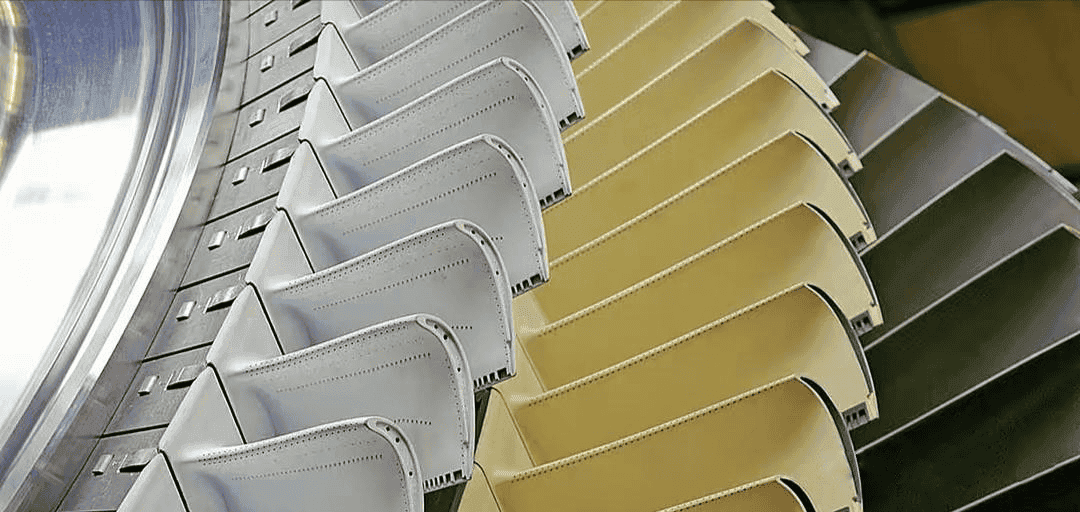
A high-pressure turbine blade for a commercial aero-engine uses superalloys such as DZ125 and DZ406. Operating in high-temperature, high-pressure exhaust flow, blade surface temperature can exceed 1600°C, far beyond the metal’s thermal capability. Under long-term thermal-cycling loads, oxidation, corrosion, and creep damage may occur, threatening engine safety and durability.
EB-PVD Solution
Apply an Electron-Beam Physical Vapor Deposition (EB-PVD) thermal barrier coating system on the blade surface.
First, electroplate platinum and then perform vapor-phase aluminizing to form a PtAl bond layer. Key parameters such as Pt coating thickness and aluminizing temperature are optimized, achieving excellent oxidation resistance at 1150°C.
Next, deposit rare-earth-modified zirconia ceramic (GYb-YSZ) via EB-PVD. High-purity, fine-grain ceramic targets are selected to avoid spatter and ensure uniform columnar-grain microstructure.
Process and Performance
The GYb-YSZ + PtAl coating system endured 4,320 thermal cycles at 1050°C (total dwell time 720 hours) without spallation, demonstrating exceptional thermal-cycle resistance.
By tuning deposition energy, ceramic chemistry and phase structure can be optimized. Studies show LaZrCeO/YSZ dual-ceramic coatings with pyrochlore + fluorite phases achieved an average thermal-cycle life of 1,518 cycles at 1100°C.
Application Value
Blade surface temperature reduction: ~100–150°C
Thermal-shock resistance improvement: >30%
Maintenance interval extension: ~50%
Significant reduction in engine life-cycle cost due to extended blade durability and improved thermal efficiency
Case 2: Thermal-Protection Coatings for Launch-Vehicle Engine Hot-Section and Airframe
ความท้าทายทางเทคนิค
Next-generation launch-vehicle turbo-pump blades and hot-section components experience intense high-temperature, high-velocity combustion gas flow. Meanwhile, the fairing endures >500°C aerodynamic heating during atmospheric transit, and cryogenic tanks face −183°C fuel temperatures. Traditional methods, such as manually bonded thermal cork panels, present risks including delamination, moisture absorption, and labor-intensive processing.
EB-PVD-Based and Derived Solutions
For rocket turbo-pump blades: deposit MCrAlY bond coats and modified YSZ ceramic topcoats via EB-PVD to resist oxidation, erosion, and high-temperature gas impingement.
For integrated thermal protection of fairings and tanks: adopt the “hyperbranched polymer coating” approach developed by Shanghai Jiao Tong University. Although not traditional EB-PVD, it shares the same goal of producing continuous thermal-protection coatings without joints.
Hyperbranched polymer coatings:
Three-dimensional branched molecular structure wraps functional fillers for spray-formability
Reactive end groups form strong bonds with metal substrate
Withstands extreme thermal shock and cryogenic-to-high-temperature transitions
Process and Performance
Plasma-assisted EB-PVD enables denser MCrAlY oxidation-resistant and nitride erosion-resistant coatings, improving service life in complex environments.
Hyperbranched coating system enables one-pass continuous spraying on fairings and tanks, eliminating seams and reducing insulation application time from ~1 month to <1 week, while reducing vehicle mass.
Application Value
Successfully applied to the Long March-6A launch system
Significantly improved launch reliability and turnaround efficiency
Hyperbranched polymer coating technology adopted in major civil projects including Beijing Winter Olympics venues and Paris Olympics facilities, breaking foreign monopolies on advanced industrial coatings
สรุป
EB-PVD thermal barrier coating technology delivers:
High-performance TBC systems for turbine blades and rocket engines
Superior thermal-shock durability and oxidation resistance vs. plasma spray
Precise columnar-grain ceramic coating structures optimized for extreme aerospace environments
Proven performance in commercial aircraft engines and next-gen launch vehicles
Extended component life, reduced thermal load, and lower total ownership cost
This advanced coating approach enables higher efficiency, greater reliability, and improved safety across modern aerospace propulsion and thermal-protection systems.


Technical Summary and Outlook
EB-PVD coating technology, with its unique columnar-grain architecture, plays an irreplaceable role in protecting aerospace components operating under extreme thermal environments.
Key Technical Advantages
Columnar-grain thermal barrier coatings produced via EB-PVD offer exceptional strain tolerance, effectively absorbing and releasing thermal stresses. This significantly enhances thermal-shock resistance and service life under drastic temperature variations.
The process enables precise control of coating composition and microstructure, supporting advanced architectures such as gradient layers and micro-laminated coatings to meet diverse substrate and mission-critical requirements.
Compared with conventional thermal-protection approaches, EB-PVD and its derivative technologies provide critical materials and process support for lightweight, high-reliability, and long-life aerospace systems.
Future Outlook
EB-PVD will evolve toward higher deposition rates, lower costs, and advanced composite coating architectures such as CMAS-resistant and ultra-low-thermal-conductivity layers.
Next-generation TBC materials—including rare-earth-doped zirconia systems and high-entropy ceramics—represent key research directions, targeting lower thermal conductivity and higher phase stability at extreme temperatures.
Hybrid advanced processes, such as plasma-assisted EB-PVD and plasma-spray PVD (PS-PVD), combine the high deposition speed of plasma spray with EB-PVD’s ability to form highly oriented columnar microstructures, offering strong potential for next-generation thermal-barrier coatings.
บทสรุป
As a core enabling technology in aerospace engineering, EB-PVD coating technology will continue driving the performance boundaries of flight systems, providing essential protection for future high-temperature propulsion and space-exploration platforms.


