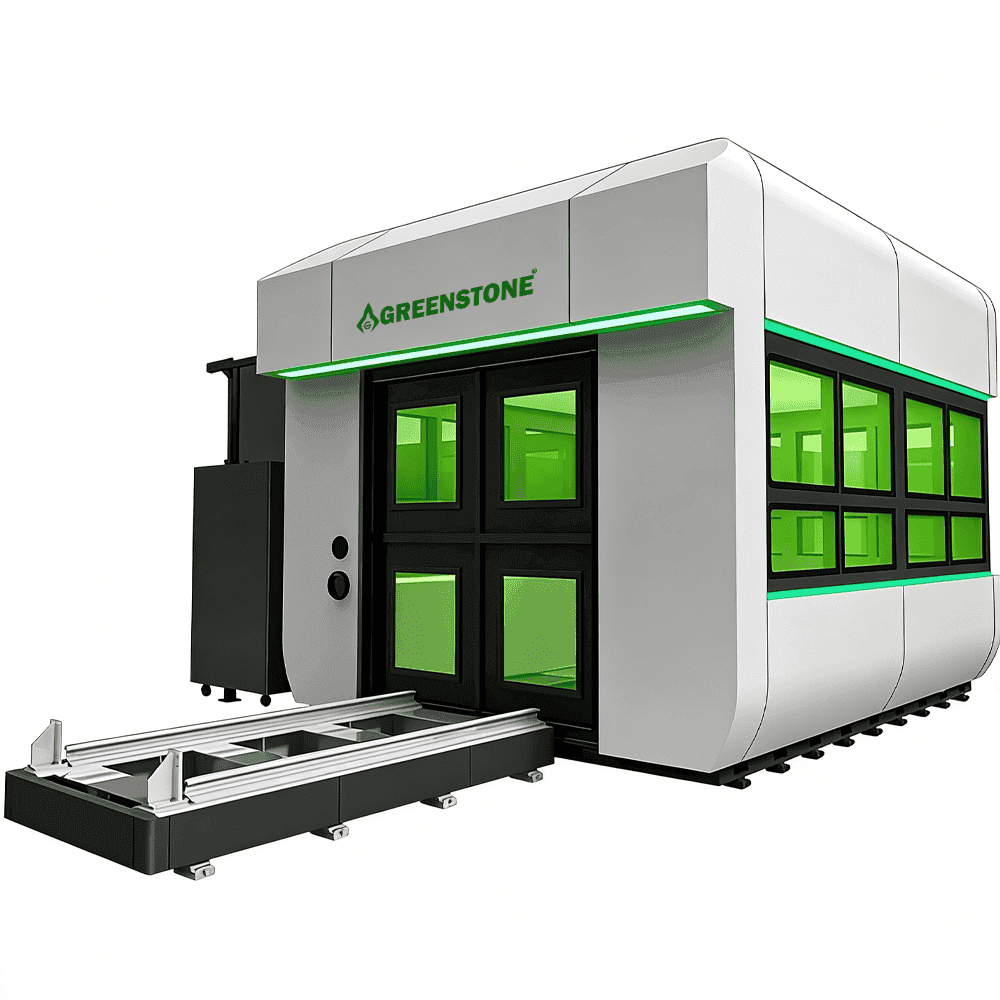
Presentatie van de kenmerken van de apparatuur
Compared with coaxial annular and three-point nozzles, our coaxial four-point nozzle has a larger powder spot and a longer working distance. When combined with a high-power, large-spot laser, it can achieve higher cladding efficiency and a longer service life, making it more suitable for large workpiece repair and surface strengthening.
verwerkte monsters


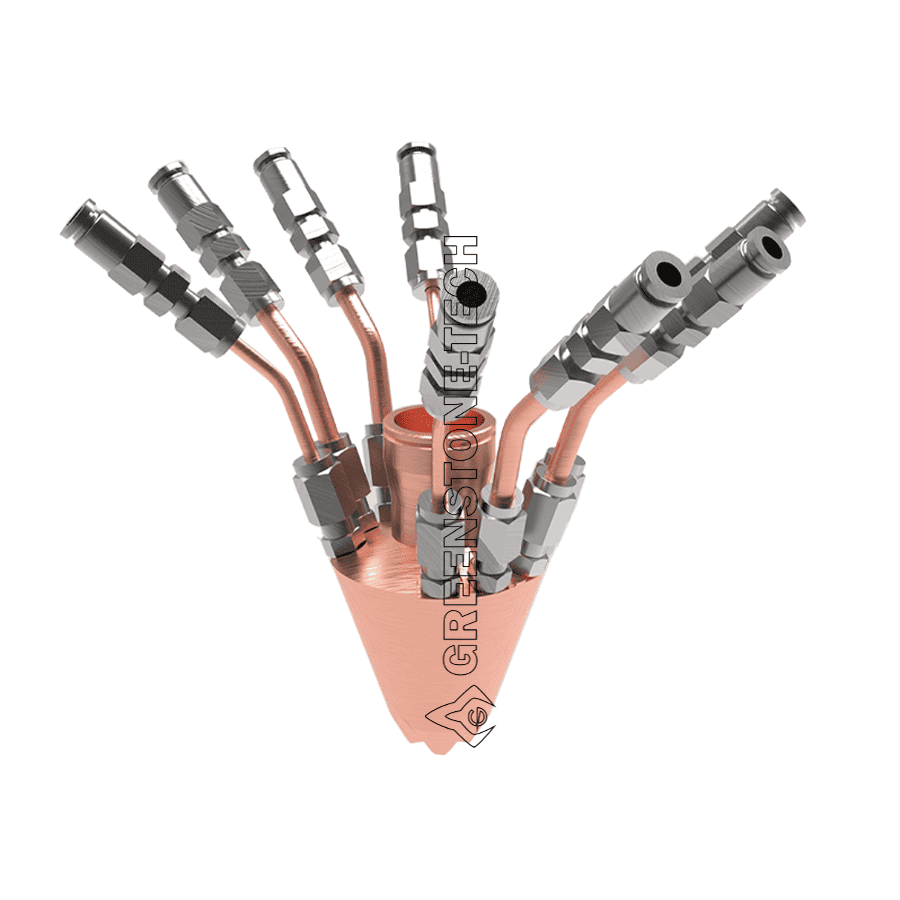
- Coaxial powder feeding process is stable: it is not easy to produce defects such as pores, undulations, and direction differences;
- Coaxial powder feeding has good powder flow focusing: the powder spot focus and light spot can be accurately controlled to match, maximizing the powder utilization rate;
- Coaxial powder feeding adaptive deposition thickness control function: avoid uneven cladding thickness and ensure the stability of the cladding process;
- Powder is evenly distributed: powder feeding is completely unaffected by direction and can adapt to the required contour of any workpiece.
- Wide application: modular design allows the use of precision tubes (inlays) of different specifications, and the wear resistance of the product is improved by using inlays. Customers can replace the inlays inside the nozzle by themselves.
| Productnaam | Coaxial Four – point Nozzle |
| Specification Model | CF – 1317 – 01 |
| Poeder Vlekgrootte | 2.5~4mm |
| Materiaal | Red Copper |
| Light – passing Aperture | φ7.5mm |
| Laservermogen | ≤6KW |
| Deeltjesgrootte poeder | 50~200μm |
| Gewicht | 1.25kg |
| Powder Flow Rate | 10~100g/min |
| Aantal poederstromen | 4 |
| Cooling Water Flow Rate | ≥2L/min |
| Powder Focus Height | 16~18mm |
| Inlay Specification | φ1.2mm, φ1.5mm |
| Powder Divider Model | One – to – four |
| Connection Method | Standard Interface |
| We can customize laser cladding nozzles according to the actual needs of customers |


Verwante producten
Beheersing van kerntechnologieën in hoogwaardige additieve metaalproductie en oppervlaktebehandeling