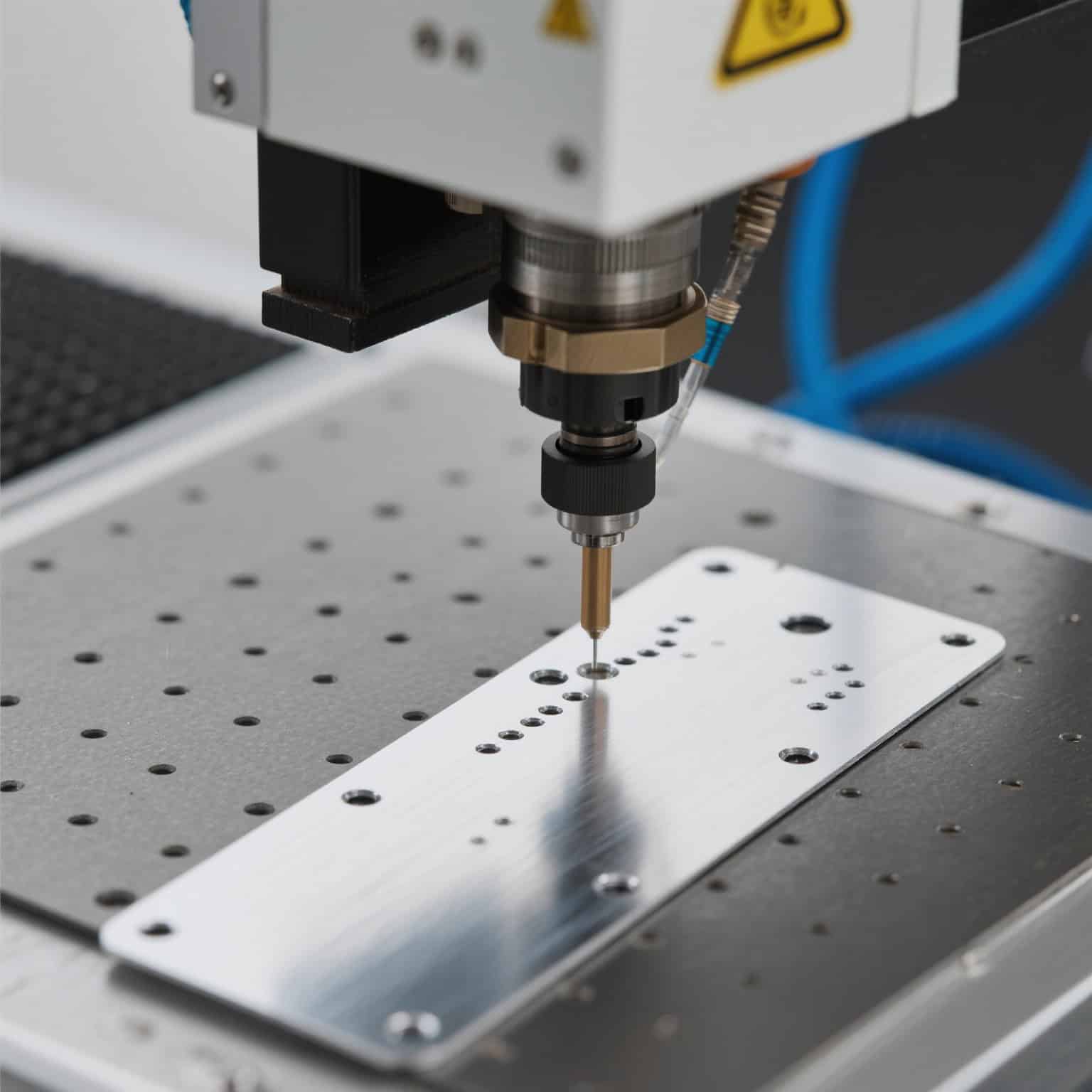
Overzicht van toepassingsgevallen
In de lucht- en ruimtevaartindustrie is de vliegtuigmotor het “hart” van het vliegtuig en de hete onderdelen ervan werken onder extreem hoge temperaturen, hoge druk en hoge rotatiesnelheden. Kritische onderdelen zoals turbinebladen moeten stabiel functioneren bij gastemperaturen die het smeltpunt van de legering overschrijden. De bewerkingsnauwkeurigheid en betrouwbaarheid van deze onderdelen bepalen direct de algehele motorprestaties en levensduur.
Traditionele bewerkingsprocessen hebben te maken met grote beperkingen bij de productie van precisiestructuren zoals filmkoelingsgaten en microbrandstofspuitopeningen. Mechanisch boren kan leiden tot gereedschapbreuk en beschadiging van de gatwand, terwijl EDM lijdt onder elektrodeslijtage en een laag rendement. Slechte beheersing van thermische effecten kan leiden tot microscheurtjes, overmatige gietlagen en andere defecten, waardoor de vermoeiingssterkte aanzienlijk afneemt en de operationele veiligheid in gevaar komt.
Aangezien de eisen voor de verhouding tussen stuwkracht en gewicht en de thermische efficiëntie blijven stijgen, wordt de precisie van de koellucht steeds kritischer en kunnen traditionele methoden niet de kwaliteit en productiviteit garanderen die vereist zijn voor dichte microgaatjes. Daarom is de ontwikkeling van een zeer nauwkeurige, weinig beschadigende, zeer efficiënte microboortechnologie essentieel geworden om te voldoen aan de veeleisende koelstructuurvereisten van de volgende generatie vliegtuigmotoren.


Case Study 1: Film-Cooling Hole Drilling for Aero-Engine Turbine Blades
Technische uitdaging
Turbine blades operate in extreme high-temperature and high-pressure environments, with surface temperatures exceeding 1600 °C—far beyond the material’s inherent limit. Traditional mechanical drilling struggles with micro-holes below a 20° inclination angle, leading to frequent tool breakage, large burrs, and thick recast layers. These defects significantly reduce blade fatigue life and compromise operational safety.
Innovatieve oplossing
Ultraviolet laser micro-drilling system (355 nm wavelength)
Five-axis precision motion platform with real-time visual alignment
Dedicated process database covering various hole geometries and parameters
Capability to produce 0.2–0.5 mm film-cooling holes with a depth-to-diameter ratio of 15:1
Procesdoorbraken
Drilling efficiency up to 15 holes/second with ±10 μm positional accuracy
Recast layer thickness controlled within 5 μm
Exit burr height less than 8 μm
Stable machining of 3,000+ film-cooling holes on single-crystal turbine blades
This advanced UV-laser micro-drilling technology delivers exceptional precision, efficiency, and surface quality, meeting the demanding thermal-management requirements of next-generation jet engines.


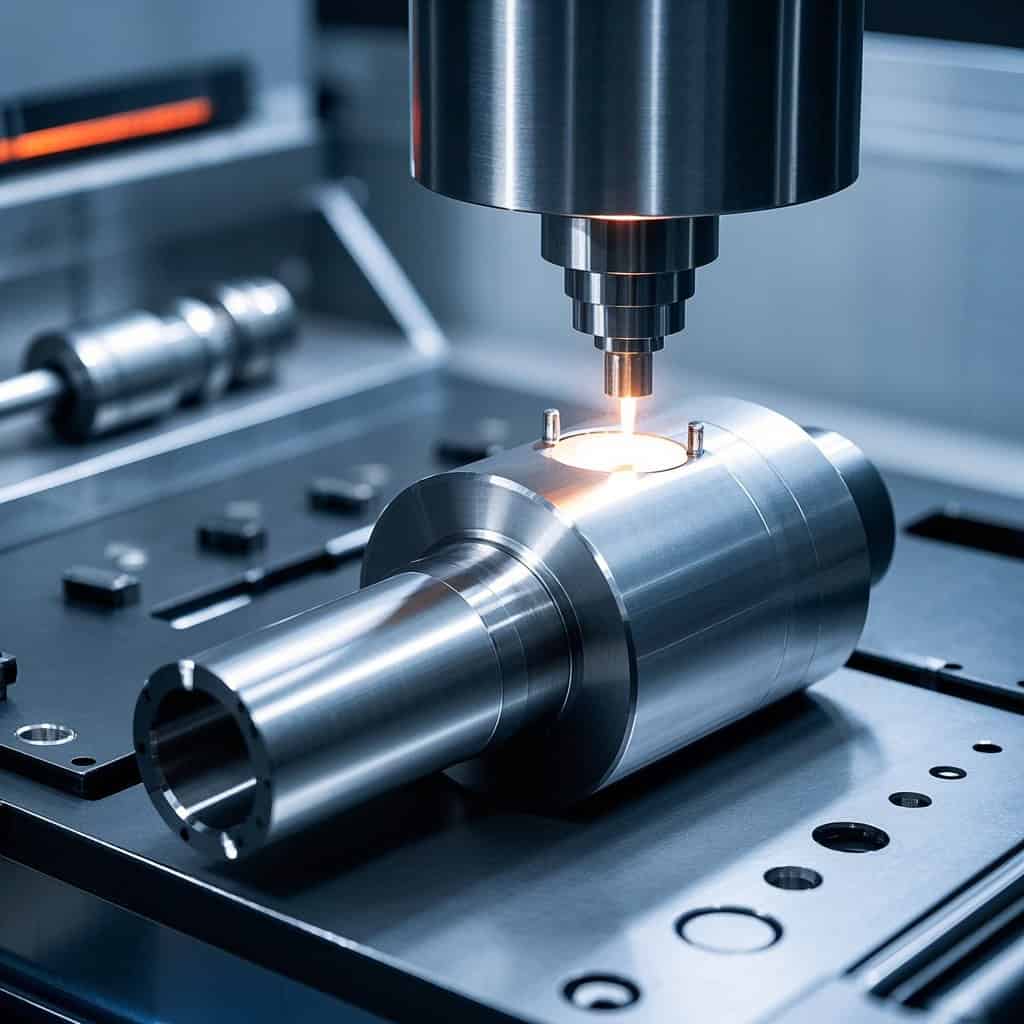
Case Study 2: Multi-Layer Combustor Wall Micro-Hole Array for Aero Engines
Achtergrond toepassing
A multi-layer film-cooling combustor structure required machining over 50,000 micro-holes in 0.8 mm-thick Hastelloy X plates to form an efficient cooling film.
Technische kenmerken
Femtosecond laser ultra-fast micro-machining
Custom beam-splitting optics enabling 32-hole simultaneous drilling
Real-time quality monitoring and adaptive compensation
Active hole-shape control algorithms for film-cooling geometry
Kwaliteit
98.5% process uniformity
Heat-affected zone < 2 μm
Hole taper controlled within ±1°
Overall manufacturing cycle reduced by 40%
Case Study 3: Precision Micro-Holes for Aero Fuel Nozzles
Technische vereisten
Fuel-nozzle micro-holes (0.1–0.3 mm diameter) directly affect atomization quality and combustion efficiency. Traditional EDM suffers from electrode wear and low productivity.
Procesinnovatie
Green-laser precision drilling system
Adaptive multi-parameter matching control
High aspect-ratio micro-holes up to 20:1
Integrated in-line diameter measurement and closed-loop control
Performance Improvements
Atomization uniformity improved by 25%
Combustion efficiency increased by 3%
Yield rate improved from 85% to 99%
Per-part machining cost reduced by 35%
Case Study 4: Thermal-Management Micro-Channels for Avionics
Thermal Challenge
An airborne phased-array radar T/R module required machining 32 micro-channels (0.15 mm × 0.3 mm) inside a Cu-W alloy base (15 mm height, 8 mm width), beyond the capability of traditional methods.
Technische doorbraak
Spiral laser micro-drilling strategy
Short-pulse fiber-laser processing
Deep-hole straightness error < 0.5° per 100 mm
High-pressure assist-gas debris-removal system
Thermal Performance
Heat-dissipation power density up to 150 W/cm²
Temperature rise reduced by 40 K
Device reliability improved three-fold
Successfully passed 2,000-hour endurance validation
Technologie waardesamenvatting
Laser precision micro-drilling offers unique advantages in aerospace manufacturing:
Breaks conventional machining limits to achieve extreme aspect-ratio micro-holes
Exceptional performance on superalloys, composites, and other difficult-to-machine materials
No tool wear, enabling superior stability and repeatability
Provides critical manufacturing capability for performance and reliability enhancement in aerospace systems
These achievements demonstrate that laser micro-hole machining has evolved into an indispensable core process in aerospace precision manufacturing, delivering irreplaceable benefits in performance enhancement and cost reduction.