


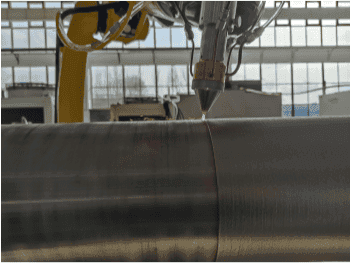
Tổng quan về các trường hợp ứng dụng
Các bộ phận của thiết bị luyện kim thường hoạt động trong điều kiện làm việc khắc nghiệt, bao gồm nhiệt độ cao, tải trọng dao động, sốc nhiệt theo chu kỳ, ăn mòn, mài mòn và mỏi. Nhiều bộ phận bằng gang rất dễ bị ăn mòn và mài mòn, đòi hỏi phải thay thế và bảo trì thường xuyên. Trong sản xuất tấm kim loại, các bộ phận như trục cán và trục băng tải đòi hỏi chất lượng bề mặt cực kỳ cao. Đối với những bộ phận được sử dụng rộng rãi và có tần suất bảo trì cao này, việc kéo dài tuổi thọ và giảm chi phí bảo trì là yếu tố then chốt đối với sự phát triển của ngành.
Hiện nay, các lớp bảo vệ bề mặt cho các bộ phận của thiết bị thép và luyện kim chủ yếu được sản xuất thông qua các phương pháp mạ điện, phun nhiệt và hàn hồ quang. Việc áp dụng công nghệ phủ lớp bằng laser giúp tăng cường đáng kể độ bền của lớp phủ và kéo dài tuổi thọ sử dụng, đồng thời giảm tần suất sửa chữa. Công nghệ phủ lớp bằng laser còn mang lại sự linh hoạt cao hơn trong việc kiểm soát độ dày và hiệu suất của lớp phủ, khiến nó trở thành giải pháp tối ưu cho việc gia cố bề mặt và phục hồi khả năng chống mài mòn trong các ứng dụng luyện kim.


Scene 1: Laser Cladding for Rolling Mill Rolls
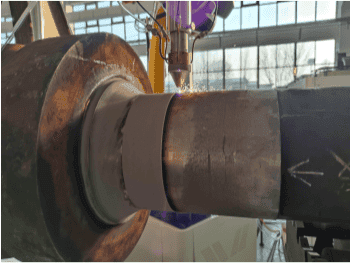
Rolling mill rolls are the most critical consumable components in the steel industry. Their quality directly influences mill efficiency and final product surface quality, making advanced surface treatment technology essential. Typical roll failure modes include thermal cracking, spalling, fatigue wear, and abrasive wear.
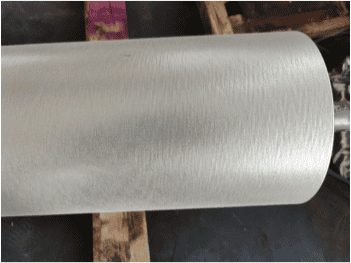
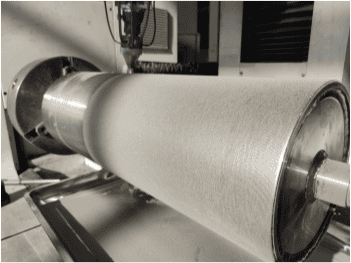
Laser cladding technology enables the selection of optimized alloy powders and process parameters based on roll material, working conditions, and technical requirements. This process achieves strong metallurgical bonding between the coating and substrate, forming a dense cladding layer with surface hardness typically reaching 50–60 HRC, significantly enhancing wear and impact resistance.
Compared with traditional repair technologies, phủ lớp bằng laser tốc độ cao offers lower heat input, minimizing the heat-affected zone and avoiding excessive hardening of the base material that can hinder machining. The coating demonstrates uniform hardness distribution, preventing localized hard spots that could scratch steel plates. As a result, laser-cladded rolls achieve several-fold improvement in durability, wear resistance, and impact performance, greatly extending service life and reducing maintenance costs in steel production.
Scene 2: Laser Cladding for Guide Wheels
Guide wheels are critical consumable components in hot-rolled bar production lines and play an essential role in maintaining mill uptime and production efficiency. In service, many guide wheels suffer from insufficient heat resistance, steel adhesion, poor wear resistance, and inadequate thermal-fatigue performance. These issues shorten service life and negatively affect product quality.
Laser cladding technology provides a highly effective solution due to its low dilution rate, small heat-affected zone, and easy automation. By selecting optimized cladding alloys and process parameters, laser cladding significantly enhances the guide wheel’s wear resistance, corrosion resistance, fatigue strength, and crack resistance. Typical cladding thickness ranges from 1–3 mm, with surface hardness often exceeding 60 HRC.
After laser cladding, guide wheels can be reused with substantially extended service life, improving equipment availability and significantly reducing maintenance and operating costs in steel rolling applications.

