
Titanium & Titanium Alloy Powders for Aerospace, Medical, Additive Manufacturing, DED, Laser Cladding & Industrial 3D Printing
Product Overview
High-Purity Titanium & Titanium Alloy Powders
GREENSTONE titanium and titanium alloy powders are engineered for metal additive manufacturing, Directed Energy Deposition (DED), laser cladding, Laser Powder Bed Fusion (LPBF), Electron Beam Powder Bed Fusion (EB-PBF), thermal spray and advanced powder metallurgy applications.
The portfolio covers commercially pure titanium, Ti-6Al-4V, Ti-6Al-4V ELI, high-temperature titanium alloys, Ti-Al intermetallic alloys, Ti-Ni shape-memory alloys, Ti-Nb alloys and Ti-Zr alloys, supporting applications across aerospace, medical, automotive, energy, chemical processing, marine engineering and advanced industrial manufacturing.
Produced through controlled atomization processes, GREENSTONE titanium alloy powders are available with high sphericity, controlled particle-size distribution, good flowability, low oxygen content and consistent chemical composition. Powder specifications can be optimized according to different additive manufacturing and surface engineering processes.
Typical particle-size ranges include 0–20 μm, 15–45 μm, 15–53 μm, 45–105 μm, 53–105 μm, 53–150 μm and 105–250 μm, with customized particle-size distributions available for specific equipment and applications.
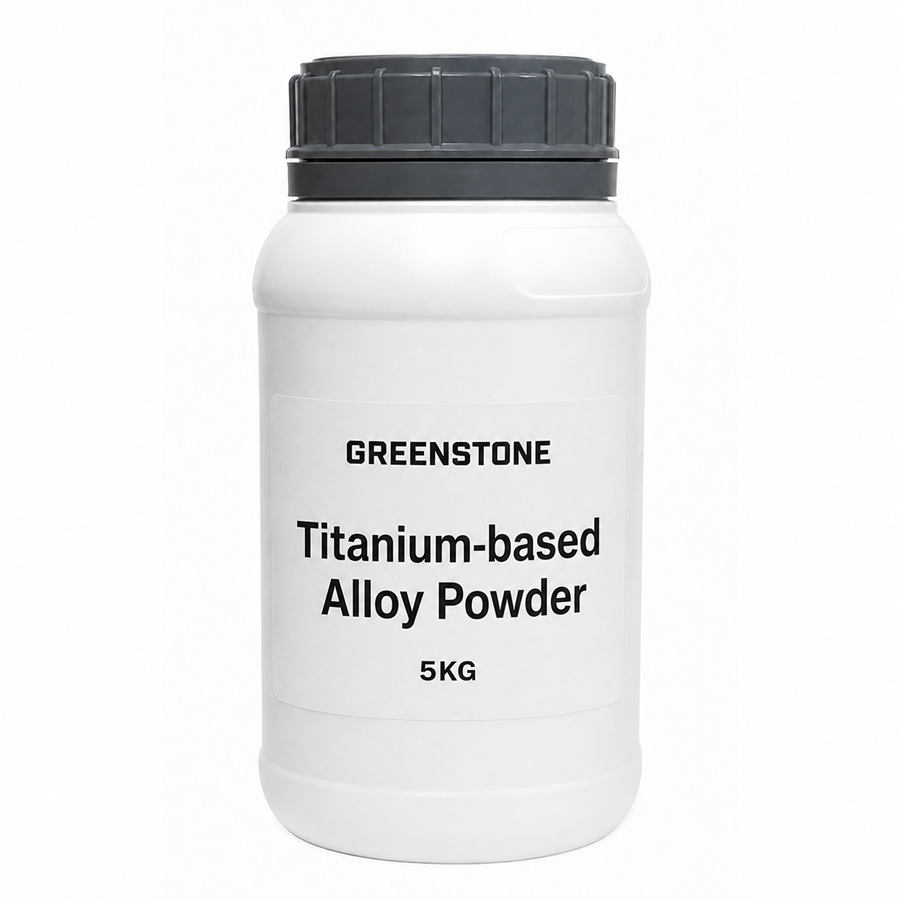
Titanium Alloy Powder Solutions for Advanced Manufacturing
Titanium and titanium alloys combine high specific strength, low density, excellent corrosion resistance and good high-temperature performance, making them strategically important materials for high-value manufacturing.
Compared with conventional steels and many nickel alloys, titanium provides an outstanding strength-to-weight ratio, while selected titanium alloys can maintain mechanical performance under demanding thermal, corrosive and fatigue-loading conditions.
Commercially Pure Titanium Powders
Commercially pure titanium grades such as Grade 1 and Grade 2 provide excellent corrosion resistance, good ductility and biocompatibility.
Typical applications include:
- Chemical processing equipment
- Heat exchangers
- Marine components
- Medical components
- Corrosion-resistant structures
- Additive manufacturing
- Surface engineering
Ti-6Al-4V Grade 5 Powder
Ti-6Al-4V (Grade 5) is one of the world’s most widely used titanium alloys and a key material for metal additive manufacturing.
It combines high strength, low density, fatigue resistance and corrosion resistance, making it suitable for:
- Aerospace structural components
- Aircraft components
- Turbomachinery
- Automotive lightweight components
- Energy equipment
- Industrial 3D printing
- DED additive manufacturing
- Laser repair and remanufacturing
Ti-6Al-4V ELI Grade 23 Powder
Ti-6Al-4V ELI (Grade 23) is an extra-low-interstitial version of Ti-6Al-4V with tighter control of oxygen, nitrogen and other interstitial elements.
Its enhanced fracture toughness and ductility make it particularly attractive for:
- Medical implants
- Orthopedic components
- Dental applications
- High-performance aerospace components
- Critical additive manufacturing applications
High-Temperature Titanium Alloy Powders
Titanium alloys such as Ti-6Al-2Sn-4Zr-2Mo and Ti-6Al-2Sn-4Zr-6Mo are designed for applications requiring higher temperature capability, creep resistance and mechanical strength.
Typical applications include aerospace engine components, compressor components, high-temperature structural parts and advanced energy systems.
Ti-Al Intermetallic Powders
Titanium aluminide (TiAl) alloys combine low density with good elevated-temperature strength and oxidation resistance.
They are increasingly used for:
- Aero-engine components
- Turbine blades
- Turbocharger wheels
- High-temperature lightweight components
- Advanced additive manufacturing research
Ti-Ni, Ti-Nb & Ti-Zr Alloy Powders
Special titanium alloy systems expand the application range beyond conventional structural titanium.
Ti-Ni (NiTi) alloys are known for shape-memory and superelastic behavior. Ti-Nb alloys are used in advanced biomedical and functional-material research, while Ti-Zr systems can provide excellent corrosion resistance and biocompatibility depending on composition.
Key Advantages
High Sphericity and Stable Powder Feeding
Spherical or near-spherical morphology supports stable powder transport, consistent layer deposition and repeatable additive manufacturing performance.
Low Oxygen and Controlled Interstitial Content
Titanium is highly reactive with oxygen, nitrogen and hydrogen. Controlled powder production and handling help maintain chemistry suitable for demanding additive manufacturing applications.
High Strength-to-Weight Ratio
Titanium alloys provide excellent mechanical strength at substantially lower density than many steels and nickel-based superalloys.
Excellent Corrosion Resistance
Titanium’s stable passive oxide layer provides strong resistance to seawater and many chemical environments.
Excellent Additive Manufacturing Performance
Controlled particle size and morphology support LPBF, EB-PBF, DED and other metal additive manufacturing technologies.
Wide Particle-Size Availability
Fine powders are available for powder-bed processes, while medium and coarse fractions can be supplied for DED, laser cladding and other powder-fed processes.
Application-Specific Alloy Selection
Powder chemistry can be selected for aerospace strength, biomedical performance, elevated-temperature service, corrosion resistance or functional-material applications.
| International Alloy / Material | Typical Composition / Alloy System | Typical Particle Size | Main Characteristics | Recommended Processes | Typical Industries & Applications |
|---|---|---|---|---|---|
| Titanium Grade 1 | Commercially Pure Ti | 15–45 / 15–53 / 45–105 μm | High ductility, excellent corrosion resistance | LPBF, DED, Powder Metallurgy | Chemical, medical, marine, heat exchangers |
| Titanium Grade 2 | Commercially Pure Ti | 15–45 / 15–53 / 45–105 μm | Good strength, corrosion resistance and formability | LPBF, DED, Laser Cladding | Chemical processing, marine, medical, industrial |
| Ti-6Al-4V (Grade 5) | Ti–6Al–4V | 15–45 / 15–53 / 45–105 / 53–150 μm | High specific strength, fatigue and corrosion resistance | LPBF, DED, EB-PBF, Laser Cladding | Aerospace, automotive, energy, industrial AM |
| Ti-6Al-4V ELI (Grade 23) | Ti–6Al–4V, Extra Low Interstitial | 15–45 / 15–53 / 45–105 μm | High toughness, ductility and biocompatibility | LPBF, EB-PBF, DED | Medical implants, aerospace, dental |
| Ti-5Al-2.5Sn | Ti–5Al–2.5Sn | 15–53 / 45–105 / 53–150 μm | Good elevated-temperature stability and weldability | DED, Laser Cladding, AM | Aerospace and high-temperature components |
| Ti-6Al-2Sn-4Zr-2Mo | Ti–6Al–2Sn–4Zr–2Mo | 15–53 / 45–105 / 53–150 μm | Creep resistance and elevated-temperature strength | DED, AM, Laser Deposition | Aero engines, compressor components |
| Ti-6Al-2Sn-4Zr-6Mo | Ti–6Al–2Sn–4Zr–6Mo | 15–53 / 45–105 / 53–150 μm | High strength and heat resistance | DED, AM | Aerospace, energy, high-performance engineering |
| TiAl | Titanium Aluminide System | 15–45 / 15–53 / 45–105 μm | Low density, high-temperature strength | LPBF, EB-PBF, DED | Turbine blades, turbochargers, aerospace |
| NiTi / TiNi | Nickel-Titanium System | 15–45 / 15–53 / 45–105 μm | Shape-memory effect and superelasticity | LPBF, DED, Powder Metallurgy | Medical, actuators, functional components |
| Ti-Nb | Titanium-Niobium System | 15–45 / 15–53 / 45–105 μm | Low elastic modulus, corrosion resistance | LPBF, DED, Research AM | Biomedical, research, functional materials |
| Ti-Zr | Titanium-Zirconium System | 15–45 / 15–53 / 45–105 μm | Corrosion resistance and biocompatibility | LPBF, DED, Powder Metallurgy | Medical, chemical and advanced engineering |
| Custom Titanium Alloy Powder | Application-Specific Ti Alloy | 0–20 to 105–250 μm | Customized chemistry and PSD | LPBF, EB-PBF, DED, Laser Cladding | Research, OEM manufacturing, specialized applications |
General Powder Specifications
| Parameter | Typical Specification |
|---|---|
| Material Family | Titanium & Titanium Alloy Powder |
| Powder Morphology | Spherical / Near-Spherical |
| Production Technology | Vacuum / Inert-Gas Atomization or Process-Specific Atomization |
| Available Particle Size | 0–20, 15–45, 15–53, 45–105, 53–105, 53–150, 105–250 μm |
| Typical LPBF Size | 15–45 μm / 15–53 μm |
| Typical DED Size | 45–105 μm / 53–150 μm |
| Coarse Powder Range | 105–250 μm |
| Sphericity | High, process-dependent |
| Oxygen Content | Controlled according to alloy grade and customer specification |
| Flowability | Optimized for powder-bed or powder-fed processing |
| Chemical Composition | According to selected international alloy specification |
| Custom Particle Size | Available |
| Custom Alloy Composition | Available |
| Packaging | Sealed protective packaging |
| Applicable Technologies | LPBF, EB-PBF, DED, Laser Cladding, Powder Metallurgy |
| Main Industries | Aerospace, Medical, Automotive, Energy, Chemical, Marine, Research & Advanced Manufacturing |
Recommended Particle Size by Process
| Manufacturing Process | Recommended Powder Size |
|---|---|
| Laser Powder Bed Fusion (LPBF) | 15–45 μm / 15–53 μm |
| Electron Beam Powder Bed Fusion (EB-PBF) | 45–105 μm |
| Laser DED / Powder-Fed Additive Manufacturing | 45–105 μm / 53–150 μm |
| Laser Cladding | 45–105 μm / 53–150 μm |
| Powder Metallurgy / Specialized Processes | Process dependent |
| Customized Industrial Applications | 0–20 to 105–250 μm |
Technical Note: Final alloy chemistry, oxygen level, particle-size distribution, apparent density, flowability and manufacturing route should be specified according to the applicable material standard and customer’s additive manufacturing process. Titanium powders require controlled storage and handling because fine titanium powder can present significant fire and explosion hazards.
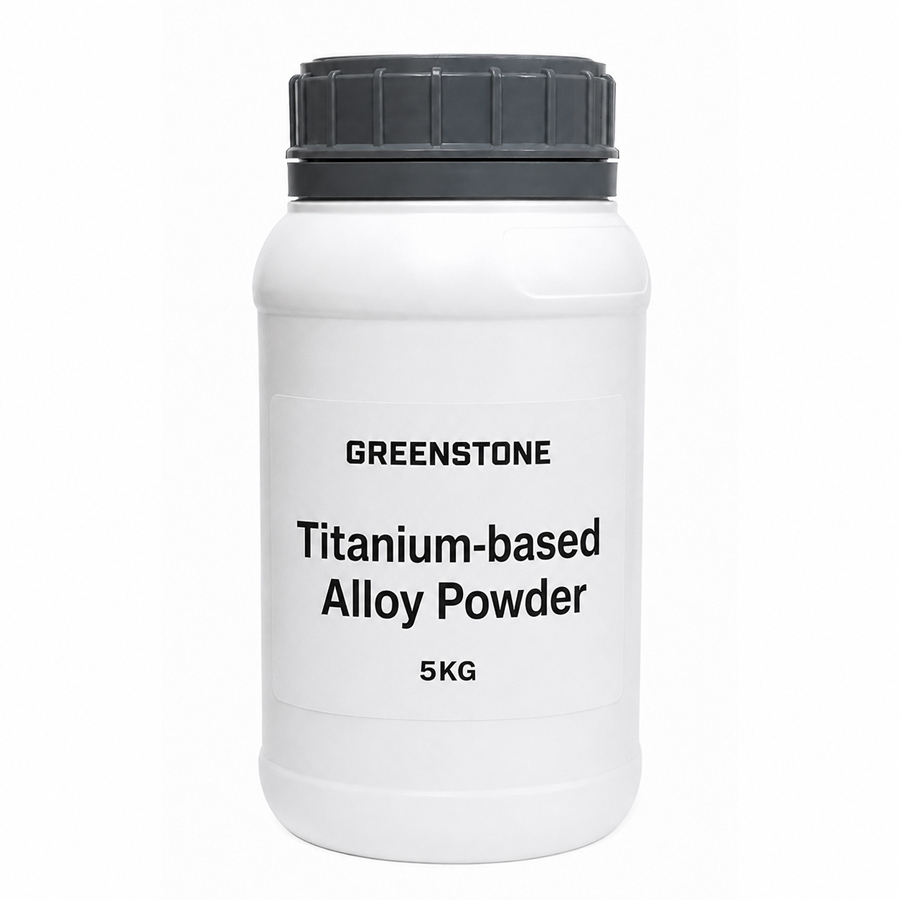
Recommended Advanced Manufacturing Solutions
Explore Greenstone’s related portfolio of high-performance industrial equipment, engineered to complement your manufacturing objectives across laser cladding, DED additive manufacturing, laser cleaning, surface engineering, precision automation, and advanced material processing. Each solution is strategically designed to expand production capabilities, enhance process efficiency, and support scalable industrial innovation.
From modular laser systems to fully integrated intelligent manufacturing platforms, Greenstone provides customers with interconnected technologies that deliver greater flexibility, precision, and operational excellence for modern global manufacturing environments.


