
Metal Alloy Wire for Wire DED, WAAM, Laser Cladding, Additive Manufacturing & Industrial Welding
Product Overview
Stainless Steel, Nickel-Based, Cobalt-Based, Iron-Based and High-Performance Alloy Wire for Aerospace, Energy, Oil & Gas, Marine and Industrial Remanufacturing
GREENSTONE Metal Alloy Wire is a comprehensive range of high-performance metallic wire materials developed for Wire Directed Energy Deposition (Wire DED), Wire Arc Additive Manufacturing (WAAM), laser wire cladding, laser additive manufacturing, welding, surface coating, repair and industrial remanufacturing.
The product portfolio includes stainless steel wire, duplex stainless steel wire, martensitic stainless steel wire, nickel and nickel-alloy wire, nickel-copper alloy wire, nickel-chromium alloy wire, nickel-chromium-molybdenum alloy wire, cobalt-based hardfacing wire and customized engineering alloy wire.
GREENSTONE wire materials are designed to provide stable wire feeding, consistent chemical composition, reliable melting behavior and high-quality metallurgical deposition. Different alloy systems can be selected according to requirements for corrosion resistance, wear resistance, high-temperature strength, oxidation resistance, hardness and mechanical performance.
Typical applications include aerospace, power generation, oil & gas, petrochemical processing, marine engineering, mining, railway, automotive, molds and tooling, heavy machinery, industrial component repair and metal additive manufacturing.
Wire diameter, spool configuration, chemical composition and surface condition can be supplied according to the selected manufacturing process and customer requirements.
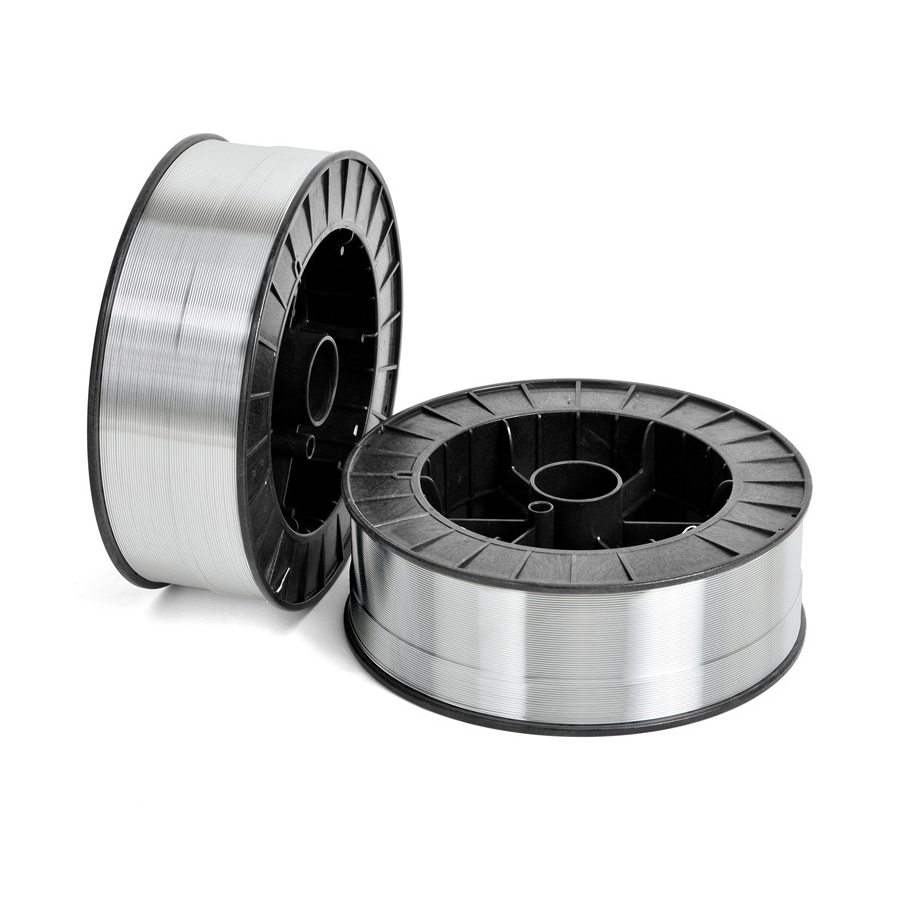
Stainless Steel & Iron-Based Alloy Wire
GREENSTONE stainless steel and iron-based alloy wires provide a versatile solution for additive manufacturing, welding and component repair.
Available material families include austenitic stainless steels, martensitic stainless steels and duplex stainless steels, enabling selection according to corrosion resistance, mechanical strength, hardness and service environment.
ER316L is widely used where good corrosion resistance, weldability and stable deposition characteristics are required. It is suitable for chemical-processing equipment, marine components, industrial machinery and general-purpose additive manufacturing.
ER2209 is designed primarily for duplex stainless steel applications and provides a combination of strength and corrosion resistance suitable for chemical, offshore, marine and process-industry components.
ER410NiMo provides higher strength and hardness than conventional austenitic stainless steels and is particularly suitable for repair and manufacturing of hydroelectric, turbine and engineering components.
Typical applications include valves, pumps, shafts, hydraulic components, turbine components, marine equipment, chemical equipment and industrial remanufacturing.
Nickel & Nickel-Copper Alloy Wire
Nickel-based wire materials are suitable for components exposed to demanding environments involving corrosion, elevated temperatures, aggressive chemicals or thermal cycling.
ERNi-1 provides commercially pure nickel weld metal and is widely used for joining, overlaying and repair of nickel and nickel-compatible materials.
ERNiCu-7 is a nickel-copper alloy wire offering excellent resistance to seawater and various corrosive environments, making it suitable for marine engineering, offshore equipment, chemical processing and nickel-copper alloy components.
These alloys can also be used in Wire DED and laser deposition where compatible process qualification has been established.
Nickel-Chromium & Nickel-Chromium-Molybdenum Alloy Wire
For more severe corrosion and high-temperature applications, GREENSTONE provides nickel-chromium and nickel-chromium-molybdenum wire materials.
ERNiCr-3 is commonly associated with Alloy 82-type filler metal chemistry and is used for joining and depositing nickel-chromium alloys and dissimilar-metal combinations.
ERNiCrMo-3 is an Alloy 625-type filler wire containing Ni-Cr-Mo-Nb alloying elements. It offers excellent corrosion resistance and is widely used for oil & gas equipment, offshore components, chemical-processing systems, marine engineering, power-generation equipment and corrosion-resistant overlays.
ERNiCrMo-4 is associated with Alloy C276-type filler chemistry and provides outstanding resistance to aggressive chemical environments. Typical applications include chemical-processing equipment, petrochemical systems, pollution-control equipment and highly corrosion-resistant components.
These materials are particularly valuable for Wire DED repair, additive manufacturing, laser wire cladding and corrosion-resistant surface deposition.
Cobalt-Based Hardfacing & Additive Manufacturing Wire
Cobalt-based alloy wires are intended for applications requiring combinations of wear resistance, hot hardness, corrosion resistance, galling resistance and high-temperature stability.
Different cobalt-chromium-tungsten and cobalt-chromium-molybdenum compositions can be selected according to the required balance between hardness, toughness and wear resistance.
Typical applications include:
Valve seats and sealing surfaces, bearings, bushings, hot-working tools, extrusion components, petrochemical equipment, turbine components and severe-wear industrial parts.
For additive manufacturing and laser deposition, cobalt-based wire can be used to manufacture new components or locally reinforce and rebuild high-value parts.
Wire DED & Laser Wire Additive Manufacturing
Compared with powder-fed deposition, wire-fed DED provides extremely high material utilization and eliminates airborne metal powder during material feeding.
GREENSTONE alloy wire can be integrated with:
Laser Wire DED systems, robotic additive manufacturing cells, multi-axis DED systems, WAAM systems, laser wire cladding systems and automated repair/remanufacturing equipment.
Depending on the alloy and process configuration, wire-based deposition is particularly suitable for large-component additive manufacturing, near-net-shape manufacturing, repair, feature addition and functional surface deposition.
Key Advantages
Wide Alloy Portfolio — Stainless steel, duplex stainless steel, nickel, nickel-copper, nickel-chromium, Ni-Cr-Mo, cobalt-based and customized alloy wires are available.
Optimized for Wire-Fed Processing — Controlled diameter and surface quality support stable wire feeding in automated deposition systems.
High Material Utilization — Wire-fed additive manufacturing can provide very high material efficiency compared with conventional subtractive manufacturing.
Stable Chemical Composition — Controlled alloy chemistry supports repeatable deposited-material properties.
Excellent Deposition Performance — Suitable wire quality helps maintain stable melting and continuous deposition during automated manufacturing.
Corrosion & High-Temperature Options — Ni-based and Co-based alloys are available for aggressive environments and elevated-temperature service.
Wear-Resistant Solutions — Cobalt-based and specialized iron-based wires can be selected for hardfacing and surface engineering.
Multiple Manufacturing Technologies — Suitable grades are available for Wire DED, WAAM, laser cladding, welding and remanufacturing.
Custom Wire Solutions — Alloy chemistry, wire diameter and packaging can be customized according to equipment and application requirements.
Standard Alloy Wire Portfolio
| Alloy / AWS Classification | Alloy Family | Typical Material Characteristics | Typical Applications |
|---|---|---|---|
| ER316L | Austenitic Stainless Steel | Corrosion resistance, weldability, good ductility | Chemical equipment, marine parts, AM components, general engineering |
| ER2209 | Duplex Stainless Steel | High strength, chloride corrosion resistance | Offshore, marine, chemical processing, duplex steel components |
| ER410NiMo | Martensitic Stainless Steel | High strength, toughness, erosion resistance | Hydropower components, turbines, repair and remanufacturing |
| ERNi-1 | Nickel | Corrosion resistance, ductility, stable welding | Nickel components, chemical equipment, repair |
| ERNiCu-7 | Nickel-Copper | Excellent seawater and corrosion resistance | Marine, offshore, chemical processing |
| ERNiCr-3 | Nickel-Chromium | High-temperature and corrosion resistance | Ni-Cr alloys, dissimilar joints, power-generation components |
| ERNiCrMo-3 | Nickel-Chromium-Molybdenum | Excellent corrosion and oxidation resistance | Oil & gas, offshore, chemical, marine, energy |
| ERNiCrMo-4 | Nickel-Chromium-Molybdenum | Severe chemical corrosion resistance | Chemical, petrochemical, pollution-control systems |
| Co-Cr-W Alloy | Cobalt-Based | Hot hardness, wear and galling resistance | Valves, bearings, tooling, high-temperature wear |
| Co-Cr-Mo Alloy | Cobalt-Based | Corrosion, wear and thermal resistance | Valves, energy, chemical and severe-service components |
| Custom Fe-Based Alloy | Iron-Based | Wear resistance and cost efficiency | Mining, machinery, shafts, rollers, repair |
| Custom Engineering Alloy | Customized | Application-specific properties | DED, WAAM, repair and specialized manufacturing |
Typical Chemical Composition of Major International Grades
| Grade | C | Cr | Ni | Mo | Fe | Nb + Ta | Cu | Other / Balance |
|---|---|---|---|---|---|---|---|---|
| ER316L | ≤0.03 | 18.0–20.0 | 11.0–14.0 | 2.0–3.0 | Bal. | — | ≤0.75 | Mn, Si controlled |
| ER2209 | ≤0.03 | 22.5–24.0 | 7.5–9.5 | 3.0–3.5 | Bal. | — | ≤0.75 | N controlled |
| ER410NiMo | ≤0.06 | 11.0–12.5 | 4.0–5.0 | 0.4–0.7 | Bal. | — | — | Mn, Si controlled |
| ERNi-1 | ≤0.15 | — | ≥93 | — | ≤1.0 | — | ≤0.25 | Ti, Mn, Al controlled |
| ERNiCu-7 | ≤0.15 | — | ≥62 | — | ≤2.5 | — | 28–32 | Mn, Ti, Al controlled |
| ERNiCr-3 | ≤0.10 | 18.0–22.0 | ≥67 | — | ≤3.0 | 2.0–3.0 | ≤0.5 | Mn controlled |
| ERNiCrMo-3 | ≤0.10 | 20.0–23.0 | ≥58 | 8.0–10.0 | ≤5.0 | 3.15–4.15 | ≤0.5 | Mn, Si controlled |
| ERNiCrMo-4 | 0.02 max | 14.5–16.5 | Bal. | 15.0–17.0 | 4.0–7.0 | — | — | W 3.0–4.5 |
Chemical composition ranges are general international reference values. Final supplied material should be confirmed against the applicable AWS/ASME/EN specification and product certificate.
Typical Wire Supply Specifications
| Parameter | Typical Specification |
|---|---|
| Product Type | Metal Alloy Wire / Additive Manufacturing Wire |
| Wire Form | Spool / Coil / Straight Length |
| Typical Wire Diameter | 0.8–3.2 mm |
| Common Laser Wire DED Sizes | 1.0 / 1.2 / 1.6 mm |
| Large-Scale Wire AM Sizes | 1.2–3.2 mm, process dependent |
| Diameter Tolerance | According to applicable specification / customized |
| Surface Condition | Clean, smooth and suitable for continuous feeding |
| Wire Feeding | Continuous automated feeding |
| Alloy Families | Fe / Stainless Steel / Ni / Ni-Cr / Ni-Cr-Mo / Co-Based |
| Primary Processes | Wire DED, WAAM, Laser Cladding, Welding, Remanufacturing |
| Shielding Gas | Argon / Helium / Process-Specific Gas |
| Packaging | Spool, coil or customized packaging |
| Chemical Composition | According to international grade or customer specification |
| Custom Alloy Development | Available |
| Custom Wire Diameter | Available |
| Brand | GREENSTONE |
Typical Selection by Industry
| Industry | Recommended Alloy Families | Typical Applications |
|---|---|---|
| Aerospace | Ni-Cr, Ni-Cr-Mo, Co-Based, Stainless Steel | Additive manufacturing, repair, high-temperature components |
| Oil & Gas | ERNiCrMo-3, ERNiCrMo-4, Duplex Stainless Steel | Valves, sealing surfaces, corrosion-resistant overlays |
| Marine & Offshore | ERNiCu-7, ER2209, ERNiCrMo-3 | Seawater-resistant components, repair, protective deposition |
| Power Generation | ER410NiMo, Ni-Based, Co-Based | Turbines, hydropower components, valves |
| Chemical & Petrochemical | ERNiCrMo-3, ERNiCrMo-4, ER316L | Reactors, piping, valves, corrosion-resistant components |
| Mining & Heavy Industry | Fe-Based, Co-Based | Wear surfaces, shafts, rollers, component rebuilding |
| Industrial Remanufacturing | Fe / Ni / Co / Stainless Steel | Dimensional restoration, functional repair, surface enhancement |
| Metal Additive Manufacturing | Stainless Steel / Ni / Co / Custom Alloy | Wire DED, WAAM, near-net-shape manufacturing |
Technical Note: For Wire DED and laser wire additive manufacturing projects, wire selection should be based not only on the nominal alloy grade but also on substrate material, required deposited properties, wire diameter, laser power, deposition rate, shielding atmosphere, wire-feed angle and speed, heat input and post-processing requirements. GREENSTONE can provide alloy and wire specifications matched to the customer’s manufacturing process.
Recommended Advanced Manufacturing Solutions
Explore Greenstone’s related portfolio of high-performance industrial equipment, engineered to complement your manufacturing objectives across laser cladding, DED additive manufacturing, laser cleaning, surface engineering, precision automation, and advanced material processing. Each solution is strategically designed to expand production capabilities, enhance process efficiency, and support scalable industrial innovation.
From modular laser systems to fully integrated intelligent manufacturing platforms, Greenstone provides customers with interconnected technologies that deliver greater flexibility, precision, and operational excellence for modern global manufacturing environments.


