
Copper-Based Alloy Powders for Laser Cladding, Thermal Spray, Bearings, Marine, Automotive & Industrial Surface Engineering
Product Overview
Copper-Based Alloy Powders
GREENSTONE copper-based alloy powders are engineered for laser cladding, Directed Energy Deposition (DED), thermal spraying, powder metallurgy, brazing and industrial surface engineering applications requiring excellent thermal conductivity, corrosion resistance, wear resistance, low-friction behavior and reliable metallurgical performance.
The product portfolio includes aluminum bronze, tin bronze, nickel-aluminum bronze, copper-nickel alloys and tin-based bearing bronze powders, with compositions and particle-size distributions selected according to the deposition process and operating environment.
Copper-based alloy powders are particularly suitable for components exposed to seawater, friction, sliding contact, corrosive media, thermal cycling and electrical or thermal conductivity requirements. Typical applications include marine components, bearings, bushings, valve components, pump parts, engine components, molds, electrical components and industrial wear surfaces.
GREENSTONE can supply different powder particle-size distributions for laser cladding, DED, plasma transferred arc (PTA), HVOF/HVAF thermal spraying and powder metallurgy. Customized alloy compositions and particle-size ranges are available according to the substrate material, deposition process and required coating performance.
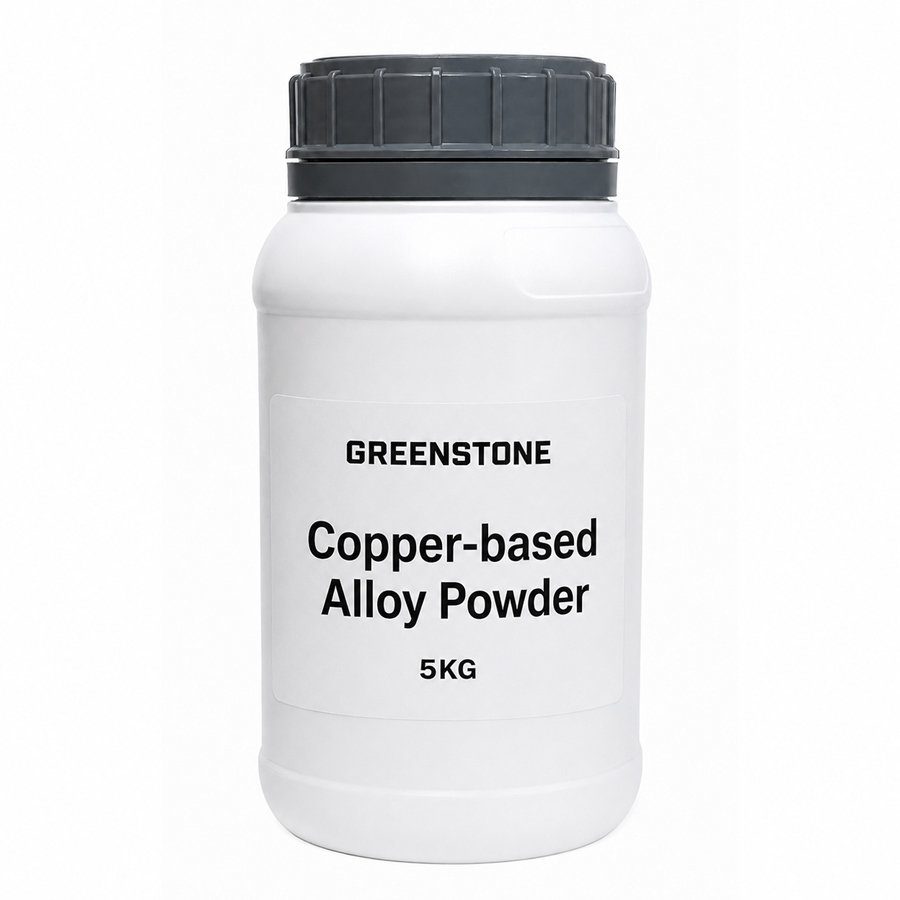
Copper Alloy Powder Solutions for Industrial Surface Engineering
Copper-based alloys combine the intrinsic thermal and electrical conductivity of copper with enhanced mechanical, wear and corrosion properties obtained through alloying with elements such as Al, Sn, Ni, Fe, Mn and Si.
Depending on alloy composition, GREENSTONE copper alloy powders can be selected for applications ranging from low-friction bearing surfaces to highly corrosion-resistant marine coatings and wear-resistant laser-cladded functional layers.
Aluminum Bronze & Nickel-Aluminum Bronze Powders
Aluminum bronze powders such as CuAl10Fe1 and related Cu-Al-Fe / Cu-Al-Ni-Fe compositions provide an excellent combination of strength, wear resistance, cavitation resistance and corrosion resistance.
Nickel-aluminum bronze systems are particularly suitable for demanding marine and fluid-handling environments.
Typical applications include:
- Marine propellers and propulsion components
- Pump and valve components
- Valve seats and sealing surfaces
- Marine shafts and sleeves
- Bearings and bushings
- Hydraulic components
- Corrosion-resistant functional coatings
- Laser repair of copper-alloy components
Tin Bronze & Nickel-Tin Bronze Powders
Tin bronze powders such as CuSn10 and CuSn12Ni2 provide good wear resistance, anti-friction performance, corrosion resistance and machinability.
Nickel additions can further improve strength and service stability for demanding bearing and sliding applications.
Typical applications include:
- Bearings and bearing shells
- Bushings and sleeves
- Worm gears and sliding components
- Engine bearing surfaces
- Wear-resistant overlays
- Industrial machinery
- Repair and remanufacturing
Copper-Nickel Alloy Powders
Copper-nickel alloys provide excellent resistance to seawater corrosion, biofouling environments and many industrial fluids while maintaining good ductility and thermal properties.
They are suitable for:
- Marine engineering
- Offshore equipment
- Seawater handling systems
- Heat exchanger components
- Pumps and valves
- Chemical processing equipment
Copper-Based Bearing Alloy Powders
Copper-tin, copper-tin-nickel and related bronze powders are widely used to manufacture or restore sliding and bearing surfaces.
Controlled powder morphology and particle-size distribution help provide stable powder feeding, consistent melting behavior and repeatable deposited layers.
Applications include:
- Engine bearings
- Compressor components
- Industrial bearing surfaces
- Shaft sleeves
- Sliding guides
- Heavy machinery components
Key Advantages
Excellent Corrosion Resistance
Selected copper alloys provide strong resistance to seawater, atmospheric exposure and industrial corrosive environments, making them particularly suitable for marine, offshore, chemical and fluid-handling applications.
Superior Wear and Anti-Friction Performance
Tin bronze, aluminum bronze and related copper alloys provide good tribological properties for bearings, bushings, shafts and sliding-contact components.
High Thermal Conductivity
Compared with many iron-, nickel- and cobalt-based alloys, copper alloys offer significantly higher thermal conductivity, making them attractive for molds, heat-management components and functional thermal surfaces.
Good Metallurgical Compatibility
Appropriate alloy selection and optimized laser parameters allow copper alloy powders to be deposited onto copper alloys and selected ferrous or nickel-based substrates for repair and surface functionalization.
Controlled Powder Morphology
Gas-atomized spherical or near-spherical powder can provide good flowability, stable powder feeding and repeatable deposition performance.
Multiple Deposition Technologies
Powders can be tailored for laser cladding, DED, PTA, HVOF/HVAF, thermal spraying and powder metallurgy.
Custom Particle Size Distribution
Typical powder ranges include 15–45 μm, 20–53 μm, 45–106 μm and 53–150 μm, with customized distributions available according to equipment and process requirements.
| Alloy / Powder Type | Typical Nominal Composition (wt.%) | Typical Particle Size | Key Properties | Recommended Processes | Typical Applications |
|---|---|---|---|---|---|
| CuAl10Fe1 Aluminum Bronze | Cu Bal.; Al ~10; Fe ~1 | 15–45 / 20–53 / 45–106 μm | Wear resistance, corrosion resistance, good strength | Laser Cladding, DED, Thermal Spray | Marine components, valves, pumps, sliding surfaces |
| Nickel-Aluminum Bronze (Cu-Al-Ni-Fe) | Cu Bal.; Al ~8–11; Ni ~3–6; Fe ~2–5 | 15–45 / 20–53 / 45–106 μm | Seawater corrosion resistance, cavitation resistance, high strength | Laser Cladding, DED, PTA, Thermal Spray | Propellers, marine pumps, valves, offshore components |
| CuSn10 Tin Bronze | Cu Bal.; Sn ~10 | 20–53 / 45–106 / 53–150 μm | Anti-friction, wear resistance, corrosion resistance | Laser Cladding, PTA, Powder Metallurgy | Bearings, bushings, sleeves, sliding components |
| CuSn12Ni2 Nickel Tin Bronze | Cu Bal.; Sn ~12; Ni ~2 | 20–53 / 45–106 / 53–150 μm | Improved strength, wear resistance and bearing performance | Laser Cladding, PTA, Powder Metallurgy | Engine bearings, bearing shells, industrial machinery |
| CuSn6Bi3 Lead-Free Bearing Bronze | Cu Bal.; Sn ~6; Bi ~3 | 45–106 / 53–150 μm | Lead-free bearing properties, machinability, anti-friction behavior | Powder Metallurgy, Sintering, Cladding* | Bearings, bushings, automotive components |
| Cu-Ni Copper Nickel Alloy | Cu Bal.; Ni typically 10–30 | 15–45 / 20–53 / 45–106 μm | Excellent seawater corrosion resistance and ductility | Laser Cladding, Thermal Spray, DED | Marine, offshore, heat exchangers, seawater systems |
| Cu-Sn-Ni Bearing Bronze | Cu Bal.; Sn and Ni according to application | 20–53 / 45–106 / 53–150 μm | Wear resistance, anti-friction, stable bearing performance | Laser Cladding, PTA, Powder Metallurgy | Bearings, shafts, sleeves, engine components |
| Cu-Al-Ni Alloy Powder | Cu Bal.; Al and Ni customized | 15–45 / 20–53 / 45–106 μm | Strength, corrosion resistance, thermal conductivity | Laser Cladding, DED, Thermal Spray | Molds, marine components, industrial repair |
| Custom Copper Alloy Powder | Customized Cu-Al / Cu-Sn / Cu-Ni / Cu-Sn-Ni systems | Customized | Application-specific properties | Laser Cladding, DED, PTA, Thermal Spray, PM | OEM repair, remanufacturing and surface engineering |
*Process suitability depends on the exact alloy chemistry, substrate, equipment and required deposited properties.
Typical Powder Specifications
| Parameter | Typical Specification |
|---|---|
| Powder Base | Copper-Based Alloy |
| Available Alloy Families | Cu-Al, Cu-Al-Ni-Fe, Cu-Sn, Cu-Sn-Ni, Cu-Ni and customized copper alloys |
| Powder Morphology | Spherical / Near-Spherical |
| Manufacturing Method | Gas Atomization or Process-Specific Powder Manufacturing |
| Typical Particle Size – Fine | 15–45 μm |
| Typical Particle Size – DED / Laser Cladding | 20–53 μm / 45–106 μm |
| Typical Particle Size – PTA / Other Processes | 53–150 μm or customized |
| Chemical Composition | According to selected alloy specification |
| Powder Flowability | Optimized for powder feeding and deposition |
| Packaging | Sealed moisture-resistant packaging |
| Standard Package | 5 kg or customized |
| Custom Composition | Available |
| Custom Particle Size | Available |
| Applicable Processes | Laser Cladding, DED, PTA, HVOF/HVAF, Thermal Spray, Powder Metallurgy |
| Main Industries | Marine, Offshore, Automotive, Energy, Mold & Die, Pumps & Valves, Bearings, Heavy Industry |
Application Industries
GREENSTONE copper-based alloy powders are suitable for a broad range of industrial applications, including marine and offshore engineering, shipbuilding, automotive manufacturing, engine and bearing production, pumps and valves, oil & gas equipment, power generation, mold and die manufacturing, chemical processing, heat-exchange equipment, industrial remanufacturing and surface engineering.
For laser applications, alloy chemistry, substrate material, laser wavelength, laser power, dilution rate and shielding conditions should be evaluated together. Copper and high-copper alloys have relatively high thermal conductivity and can present greater processing challenges than conventional iron- or nickel-based powders, so the final powder specification should be matched to the actual deposition system and component.
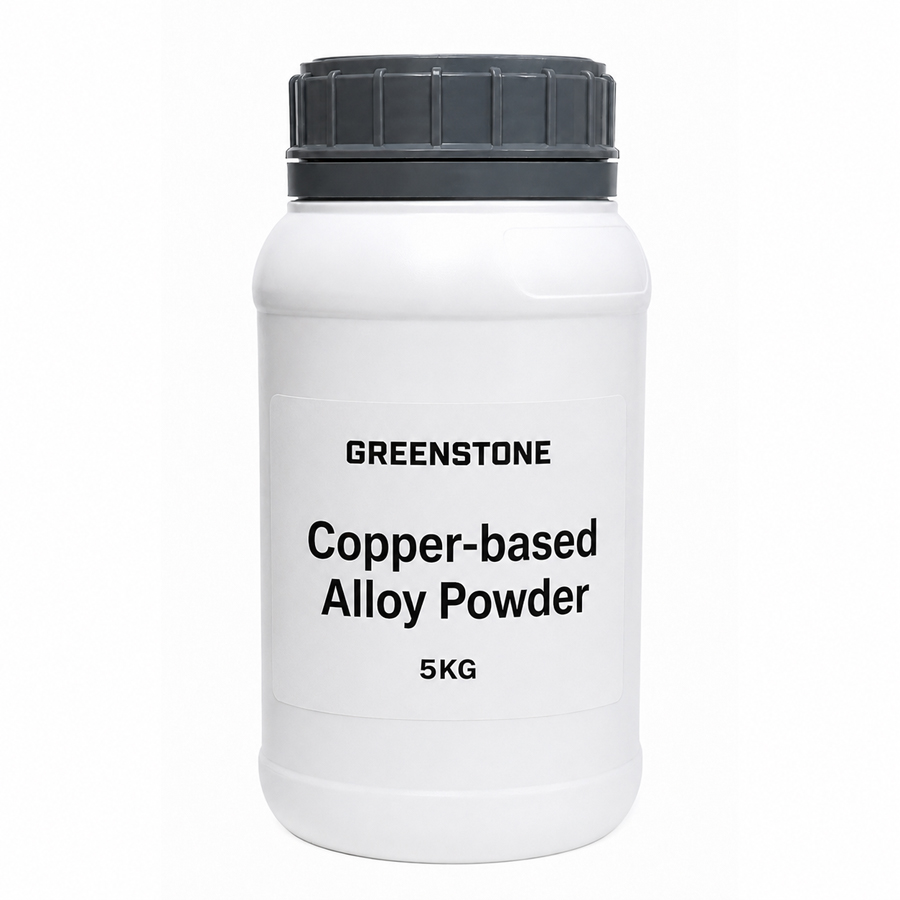
Recommended Advanced Manufacturing Solutions
Explore Greenstone’s related portfolio of high-performance industrial equipment, engineered to complement your manufacturing objectives across laser cladding, DED additive manufacturing, laser cleaning, surface engineering, precision automation, and advanced material processing. Each solution is strategically designed to expand production capabilities, enhance process efficiency, and support scalable industrial innovation.
From modular laser systems to fully integrated intelligent manufacturing platforms, Greenstone provides customers with interconnected technologies that deliver greater flexibility, precision, and operational excellence for modern global manufacturing environments.


