


Shaft components are widely used in industrial machinery as critical parts that are subjected to complex working conditions, such as high-load operation, poor lubrication, external contamination, or accidental impacts. These conditions often lead to wear, deformation, and even fractures, severely affecting equipment stability and production efficiency. Therefore, selecting an efficient, cost-effective, and reliable repair technology is crucial for maintaining operational efficiency.

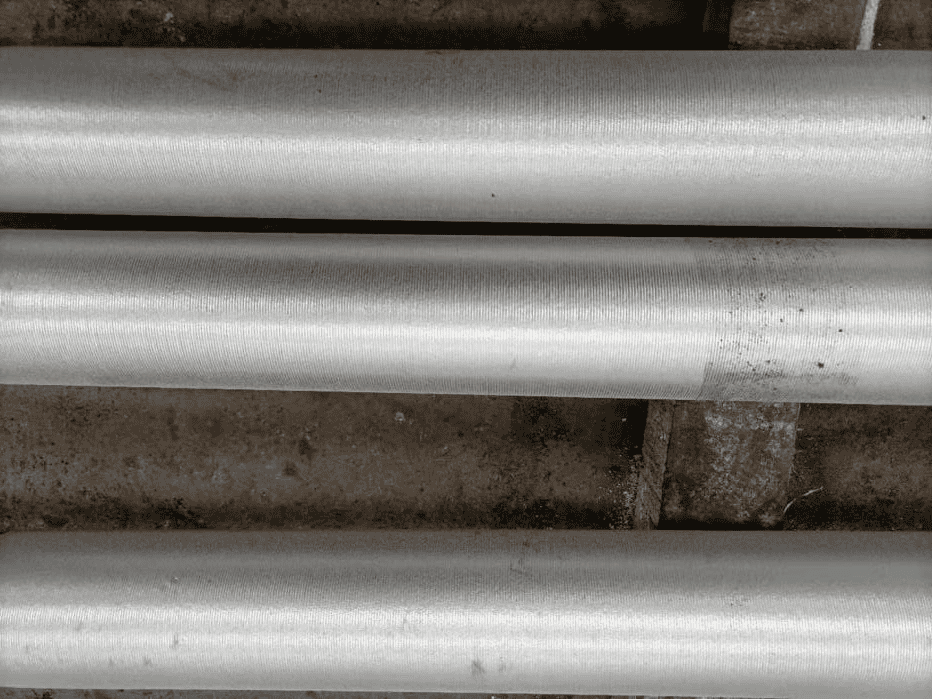
Limitations of Traditional Repair Methods
To address the wear issues of shaft components, industries have traditionally used surface treatment techniques such as thermal spraying with tungsten carbide, plasma spraying, or arc welding. However, these methods have notable drawbacks:
- Large Heat-Affected Zone: This often leads to high-temperature deformation and concentrated residual stresses in the workpiece.
- Low Bonding Strength: The bond between the coating and the substrate is mechanical, making it prone to peeling.
- Poor Process Control: These techniques may result in cracks, porosity, and other defects, impacting service reliability.
These limitations make traditional repair methods insufficient for high-precision, high-reliability industrial applications.
Breakthrough Advantages of Laser Cladding Technology
Laser cladding technology, which uses a high-energy-density laser beam to melt and fuse one or more layers of metal alloy onto the surface of shaft components, forms metallurgically bonded functional coatings. Its core advantages stem from low heat input, rapid solidification, and precise process control, making it a leading technology in surface modification.
1. Surface Performance Tailored to Specific Needs
Laser cladding can be customized to develop alloy coatings with wear resistance, corrosion resistance, high-temperature oxidation resistance, or fatigue resistance based on the specific working conditions of shaft components. For example:
- Transmission shafts working in high-temperature environments can use сплавы на основе никеля (such as Inconel 625) to improve heat resistance.
- Pump shafts operating in corrosive media can be coated with сплавы на основе кобальта (such as Stellite 6) to enhance corrosion resistance.
Such coatings significantly improve the overall performance of the shaft surface and extend its service life.
2. Metallurgical Bonding for High Strength
During the laser cladding process, the added material and the substrate surface melt together and rapidly solidify, forming a metallurgical bond interface. The bonding strength can reach over 80% of the substrate material’s strength. This solves the problem of coating peeling found in traditional techniques like electroplating and spraying, especially for shaft components subject to high alternating loads.
3. Low Heat Input Reduces Deformation and Residual Stress
The “rapid heating and cooling” characteristic of laser cladding ensures that the heat-affected zone is only 0.1–1.0 mm wide, and the dilution rate can be controlled to below 5%. This effectively prevents workpiece deformation. Compared to arc welding or TIG welding, the heat input is reduced by over 60%, making laser cladding especially suitable for precision shaft repairs that require high dimensional accuracy.
Applications and Extended Value of Laser Cladding Technology
1. Dual Pathways for Remanufacturing and Preventive Strengthening
- Remanufacturing Repairs: Restoring the size and enhancing the performance of worn shaft components to meet operational requirements.
- Preventive Strengthening: Preemptively cladding functional coatings on new shafts to enhance wear and corrosion resistance, thereby extending their service life.
2. Adaptability to Complex Geometries
Laser cladding technology is not only applicable to rotational shaft components (e.g., drive shafts and crankshafts) but can also repair flat, curved, and irregular geometries (e.g., gears and cams). Its flexible processing capabilities are especially beneficial in the following scenarios:
- Hydraulic Cylinder Piston Rods: Repairing worn seal areas to restore dimensional accuracy.
- Die-Casting Mold Mandrels: Repairing high-temperature wear surfaces to enhance resistance to thermal fatigue.
- Turbine Generator Rotors: Repairing bearing seats, avoiding the high cost of replacement.
Greenstone-Tech’s Technological Practice
Greenstone-Tech, through its self-developed intelligent laser cladding system, precisely matches process parameters (such as laser power, scanning speed, and powder feed rate) with material systems to achieve:
- Crack-Free, Pore-Free Cladding Layers: Stress control through preheating and process optimization.
- Forming Precision of ±0.1 mm: Meeting direct assembly requirements and reducing post-processing work.
- Powder Utilization ≥95%: Significantly lowering material costs and reducing waste disposal burdens.
Заключение
Laser cladding technology, with its high metallurgical bonding strength, minimal heat-affected zone, and flexible process capabilities, has become the preferred solution for shaft component repair and reinforcement. Greenstone-Tech continues to innovate, providing cost-effective remanufacturing solutions for industries such as mining machinery, energy equipment, and transportation, driving industrial equipment toward longer lifespans, lower energy consumption, and smarter operation.

Лидия Лю
Д-р Лидия Лю – старший научный сотрудник, эксперт по интеграции рынка и решений. Д-р Лидия Лю – уникальный специалист-гибрид, идеально сочетающий в себе передовой технический опыт в области аддитивного производства с глубоким видением интеграции рынка и ресурсов. Будучи доктором наук и старшим научным сотрудником в области аддитивного производства, она обладает глубокими техническими знаниями, одновременно выступая в роли важнейшего связующего звена между передовыми технологиями и потребностями рынка. Её уникальная ценность заключается в способности глубоко понимать самые сложные технические задачи, с которыми сталкиваются клиенты, и, основываясь на комплексном обзоре глобальной экосистемы аддитивного производства, точно интегрировать лучшие технические ресурсы и решения…


