


Revestimento a laser para engenharia naval e componentes de navios: Soluções resistentes à corrosão e ao desgaste
Visão geral do caso de aplicação
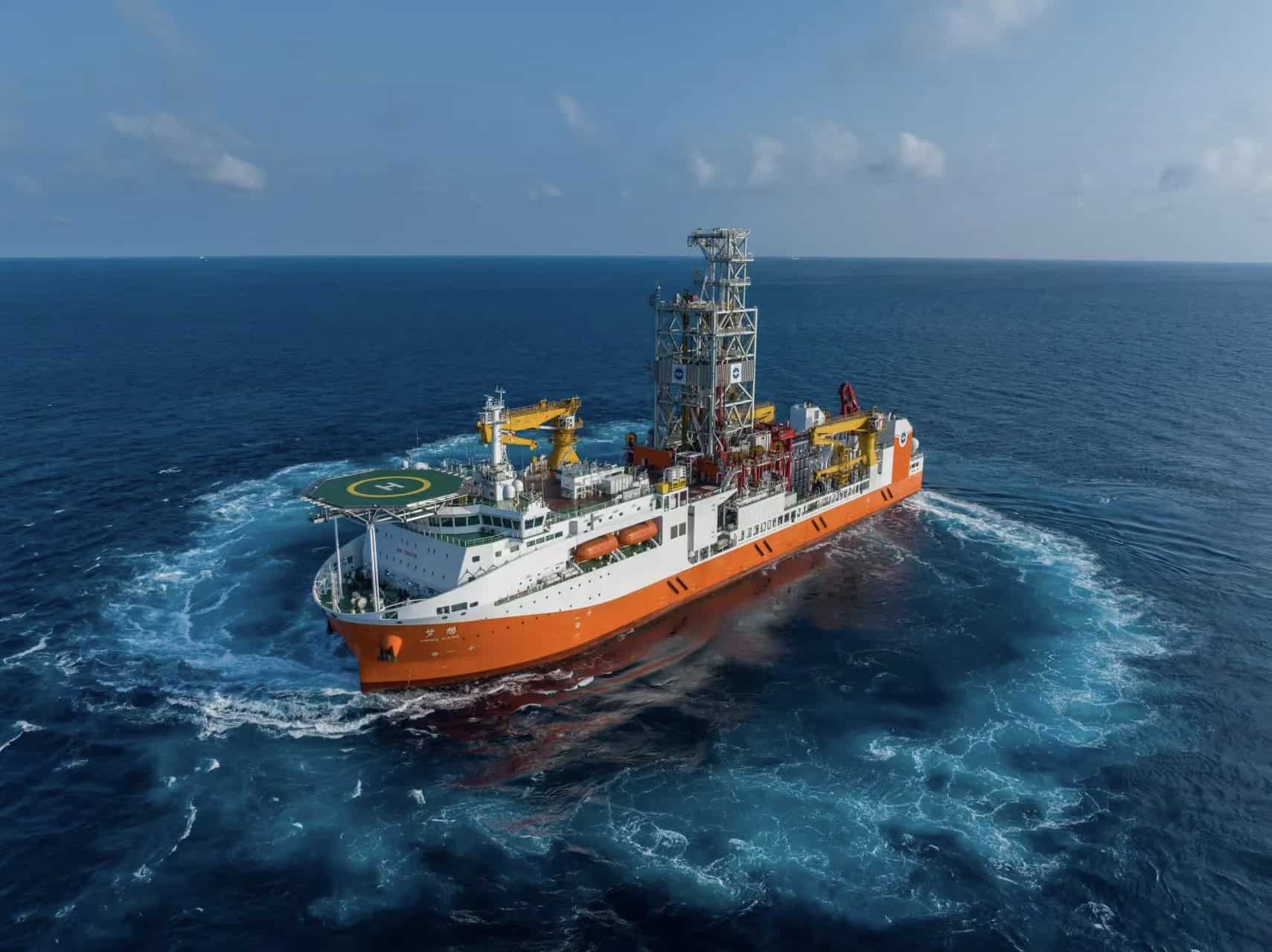
Due to long-term operation in river and marine environments, many components on offshore drilling platforms, ships, and large marine cranes experience severe corrosion and wear, requiring protective treatment and repair. For shaft-type parts that need large-area wear- and corrosion-resistant coatings, high-efficiency surface processing technology is essential. In addition, some power equipment suffers localized wear failure—such as when iron filings or impurities appear in the lubrication system, or when low oil temperature or low oil pressure occurs during engine start-up—leading to abrasion between the bearing and shaft surface. These localized damages require precision cladding and repair, making flexible robotic automatic restoration methods ideal.
To address wear and corrosion issues in marine mechanical components, laser cladding repair and remanufacturing technology provides a highly effective solution. Laser cladding meets both large-surface coating needs and localized repair demands, and is widely applied in marine diesel engines, marine gas turbines, steam turbines, propellers, hull structures, and other critical marine equipment. This advanced surface engineering technology significantly enhances part durability, reduces maintenance costs, and extends the service life of ocean engineering and ship machinery.


Laser cladding technology is widely applied in ship component restoration and delivers significant performance improvements. Key applications include:
Propeller repair: Precise control of laser power (2–5 kW) and spot diameter (0.5–2 mm) enables accurate restoration of hydrodynamic performance.
Engine cylinder liner scoring: Alloying elements such as chromium (Cr) increase corrosion resistance and hardness of the cladding layer.
Shaft corrosion pit repair: Laser cladding forms a 0.5–3 mm coating, achieving post-repair surface roughness of Ra 0.8–1.6 μm.
Gear repair: Maintaining a scanning speed of 5–10 mm/s increases tooth surface hardness and contact strength, extending gear life.
Valve sealing surface repair: Cobalt-based alloy powders allow the sealing surface to withstand 10–20 MPa, ensuring sealing reliability.
Chain wear repair: Introducing WC reinforcement phase on the surface extends wear life by 2–3 times.
Pump housing repair: Adjusting pulse frequency (20–50 Hz) ensures strong metallurgical bonding between the cladding layer and the substrate.
Process control guidelines:
Preheating treatment: Heat alloy steel parts to 150–250°C to reduce thermal stress and prevent cracking.
Post-heat treatment: Temper high-strength steel components at 550–650°C to eliminate residual stress and improve mechanical performance.
Through optimized material selection and process control, laser cladding significantly enhances wear resistance, corrosion resistance, and service life of ship components. This advanced technology is suitable for critical parts such as propellers, cylinder liners, shafts, gears, valves, chains, and pump housings, offering reliable marine equipment remanufacturing and long-term durability.
04.jpg)
05.jpg)
Ultra-High-Speed Laser Cladding
Used for high-efficiency deposition of wear-resistant and corrosion-resistant coatings on shaft components of various sizes, including offshore platform columns, steam turbine rotors, and drive shafts. This advanced process enables rapid cladding of large components, and due to its low heat input and minimal distortion, it also offers significant advantages for heat-sensitive materials and small-size parts.
Internal Wall Laser Cladding
Designed for applying wear-resistant hard coatings, erosion-resistant or corrosion-resistant coatings on internal surfaces of components. It enables rapid restoration of localized internal surface damage and laser cladding in narrow or confined spaces that are difficult to access with traditional processes.
Conventional Laser Cladding Repair
Applied for remanufacturing damaged parts or creating functional coatings on new components. Typical applications include laser cladding repair of corroded and worn cylinder heads, engine blades, and other critical machinery parts, significantly improving durability and service life.
02.png)
03.png)
Ultra-High-Speed Laser Cladding Repair for Drive Shafts
Drive shafts commonly fail due to damage, wear, and deformation, which can cause mechanical malfunctions and disrupt normal equipment operation. Ultra-high-speed laser cladding technology provides an efficient and precise solution to these issues by enabling targeted localized cladding. This enhances the hardness and structural strength of bearing areas, significantly improving durability and service life.
The cladding thickness can be accurately adjusted from 0.05–1 mm, achieving a processing efficiency of approximately 0.8–1.2 m²/h depending on the layer thickness. With extremely low heat input, the process minimizes thermal distortion while producing dense coatings with strong metallurgical bonding.
In addition, ultra-high-speed laser cladding reduces material consumption and post-processing requirements, delivering unmatched advantages in cost efficiency, processing speed, and thermal impact control. This makes it an ideal technology for high-performance, long-lasting drive shaft restoration and surface reinforcement.