


Laser-Cladding für Schiffstechnik und Schiffskomponenten: Korrosionsbeständige und verschleißfeste Lösungen
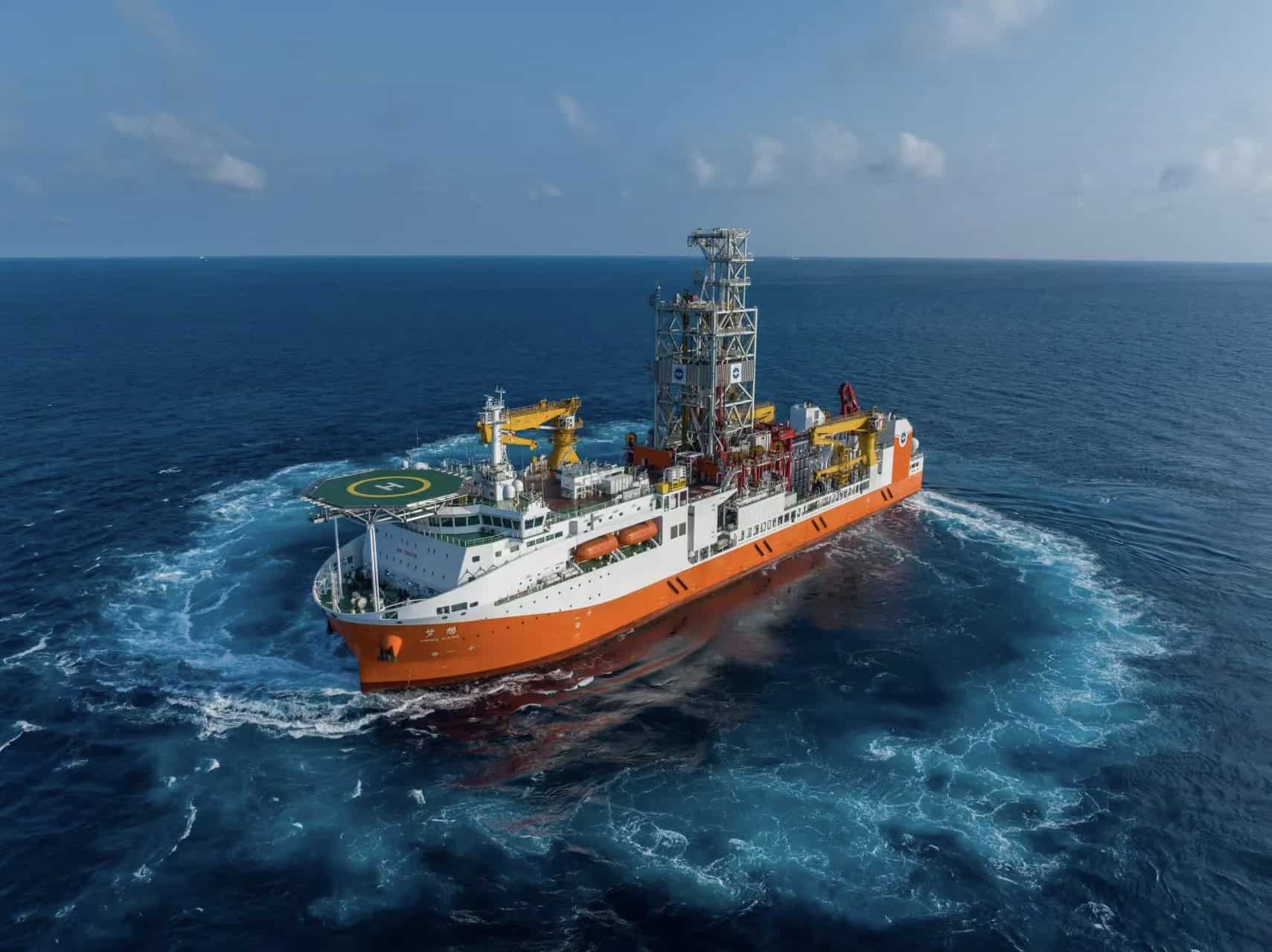
Übersicht über die Anwendungsfälle
Aufgrund des langfristigen Betriebs in Fluss- und Meeresumgebungen sind viele Komponenten auf Offshore-Bohrinseln, Schiffen und großen Schiffskränen starker Korrosion und Abnutzung ausgesetzt, was eine Schutzbehandlung und Reparatur erfordert. Für wellenartige Teile, die großflächige verschleiß- und korrosionsbeständige Beschichtungen benötigen, ist eine hocheffiziente Oberflächenbearbeitungstechnologie unerlässlich. Darüber hinaus kommt es bei einigen Kraftwerksanlagen zu lokalen Verschleißschäden, z. B. wenn Eisenspäne oder Verunreinigungen im Schmiersystem auftreten oder wenn beim Anlassen des Motors eine niedrige Öltemperatur oder ein niedriger Öldruck auftritt, was zu Abrieb zwischen Lager und Wellenoberfläche führt. Diese lokal begrenzten Schäden erfordern eine präzise Beschichtung und Reparatur, so dass sich flexible automatische Instandsetzungsmethoden mit Robotern anbieten.
Um Verschleiß- und Korrosionsprobleme bei mechanischen Schiffskomponenten zu beheben, bietet die Technologie des Laserauftragschweißens eine äußerst effektive Lösung. Das Laserstrahl-Auftragschweißen erfüllt sowohl den Bedarf an großflächigen Beschichtungen als auch den Bedarf an lokalen Reparaturen und findet breite Anwendung bei Schiffsdieselmotoren, Schiffsgasturbinen, Dampfturbinen, Propellern, Rumpfstrukturen und anderen wichtigen Schiffsausrüstungen. Diese fortschrittliche Oberflächentechnologie erhöht die Haltbarkeit der Teile, senkt die Wartungskosten und verlängert die Lebensdauer von Schiffstechnik und -maschinen.


Laser cladding technology is widely applied in ship component restoration and delivers significant performance improvements. Key applications include:
Propeller repair: Precise control of laser power (2–5 kW) and spot diameter (0.5–2 mm) enables accurate restoration of hydrodynamic performance.
Engine cylinder liner scoring: Alloying elements such as chromium (Cr) increase corrosion resistance and hardness of the cladding layer.
Shaft corrosion pit repair: Laser cladding forms a 0.5–3 mm coating, achieving post-repair surface roughness of Ra 0.8–1.6 μm.
Gear repair: Maintaining a scanning speed of 5–10 mm/s increases tooth surface hardness and contact strength, extending gear life.
Valve sealing surface repair: Cobalt-based alloy powders allow the sealing surface to withstand 10–20 MPa, ensuring sealing reliability.
Chain wear repair: Introducing WC reinforcement phase on the surface extends wear life by 2–3 times.
Pump housing repair: Adjusting pulse frequency (20–50 Hz) ensures strong metallurgical bonding between the cladding layer and the substrate.
Process control guidelines:
Preheating treatment: Heat alloy steel parts to 150–250°C to reduce thermal stress and prevent cracking.
Post-heat treatment: Temper high-strength steel components at 550–650°C to eliminate residual stress and improve mechanical performance.
Through optimized material selection and process control, laser cladding significantly enhances wear resistance, corrosion resistance, and service life of ship components. This advanced technology is suitable for critical parts such as propellers, cylinder liners, shafts, gears, valves, chains, and pump housings, offering reliable marine equipment remanufacturing and long-term durability.
04.jpg)
05.jpg)
Ultra-Hochgeschwindigkeits-Laserauftragschweißen
Used for high-efficiency deposition of wear-resistant and corrosion-resistant coatings on shaft components of various sizes, including offshore platform columns, steam turbine rotors, and drive shafts. This advanced process enables rapid cladding of large components, and due to its low heat input and minimal distortion, it also offers significant advantages for heat-sensitive materials and small-size parts.
Internal Wall Laser Cladding
Designed for applying wear-resistant hard coatings, erosion-resistant or corrosion-resistant coatings on internal surfaces of components. It enables rapid restoration of localized internal surface damage and laser cladding in narrow or confined spaces that are difficult to access with traditional processes.
Conventional Laser Cladding Repair
Applied for remanufacturing damaged parts or creating functional coatings on new components. Typical applications include laser cladding repair of corroded and worn cylinder heads, engine blades, and other critical machinery parts, significantly improving durability and service life.
02.png)
03.png)
Ultra-High-Speed Laser Cladding Repair for Drive Shafts
Drive shafts commonly fail due to damage, wear, and deformation, which can cause mechanical malfunctions and disrupt normal equipment operation. Ultra-high-speed laser cladding technology provides an efficient and precise solution to these issues by enabling targeted localized cladding. This enhances the hardness and structural strength of bearing areas, significantly improving durability and service life.
The cladding thickness can be accurately adjusted from 0.05–1 mm, achieving a processing efficiency of approximately 0.8–1.2 m²/h depending on the layer thickness. With extremely low heat input, the process minimizes thermal distortion while producing dense coatings with strong metallurgical bonding.
In addition, ultra-high-speed laser cladding reduces material consumption and post-processing requirements, delivering unmatched advantages in cost efficiency, processing speed, and thermal impact control. This makes it an ideal technology for high-performance, long-lasting drive shaft restoration and surface reinforcement.