
Laser Cladding for Hot Rolling Mill Pinch Rolls: Wear Protection and Roll Remanufacturing
June 18, 2026


Pinch rolls are critical components in hot rolling lines, where they grip, guide and transport hot steel under demanding operating conditions. Their surfaces are repeatedly exposed to high temperature, mechanical impact, friction, thermal cycling and abrasive scale, resulting in progressive wear and dimensional loss.
Once the roll surface deteriorates beyond its operating tolerance, strip handling stability and roll service performance can be affected.
Laser cladding provides a practical method for rebuilding worn pinch roll surfaces while applying a wear-resistant metallurgically bonded layer to the original roll body.
The process can be used for both remanufacturing worn rolls and surface reinforcement of new components.
Why Hot Rolling Mill Pinch Rolls Wear
During operation, pinch rolls repeatedly contact hot steel while transmitting substantial mechanical forces.
The combination of elevated temperature, oxide scale, pressure and repeated contact can produce several degradation mechanisms:
- Abrasive wear
- Adhesive wear
- Thermal fatigue
- Surface cracking
- Localized spalling
- Oxidation
- Impact damage
- Progressive diameter reduction
Wear may also develop unevenly across the roll surface depending on strip position, loading and operating conditions.
For large rolls, the main shaft and internal structure may remain serviceable even after the working surface has reached its wear limit. In these cases, replacing the entire component can result in unnecessary material and cost.
Laser cladding allows the functional surface to be rebuilt while retaining the usable roll body.
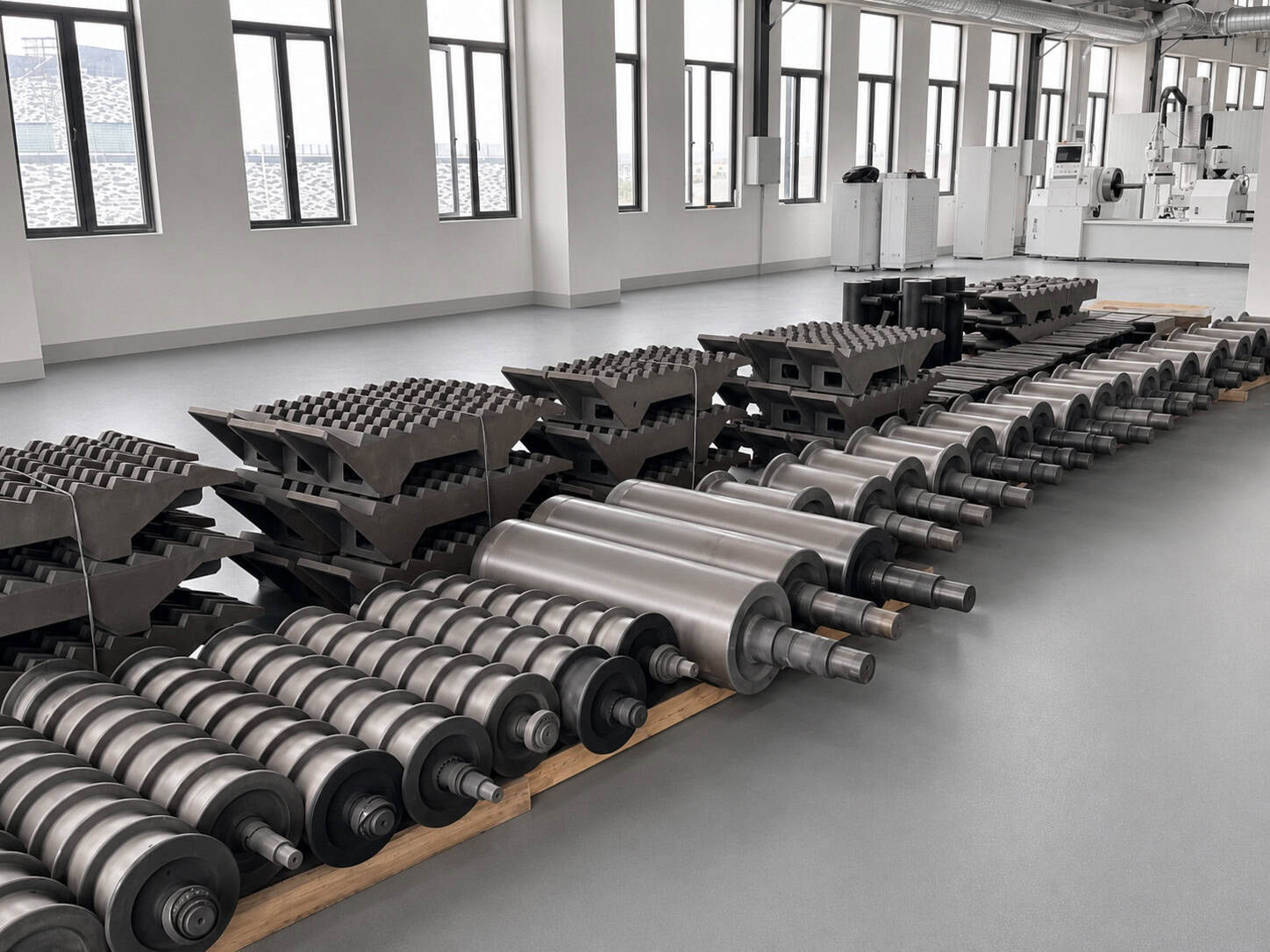
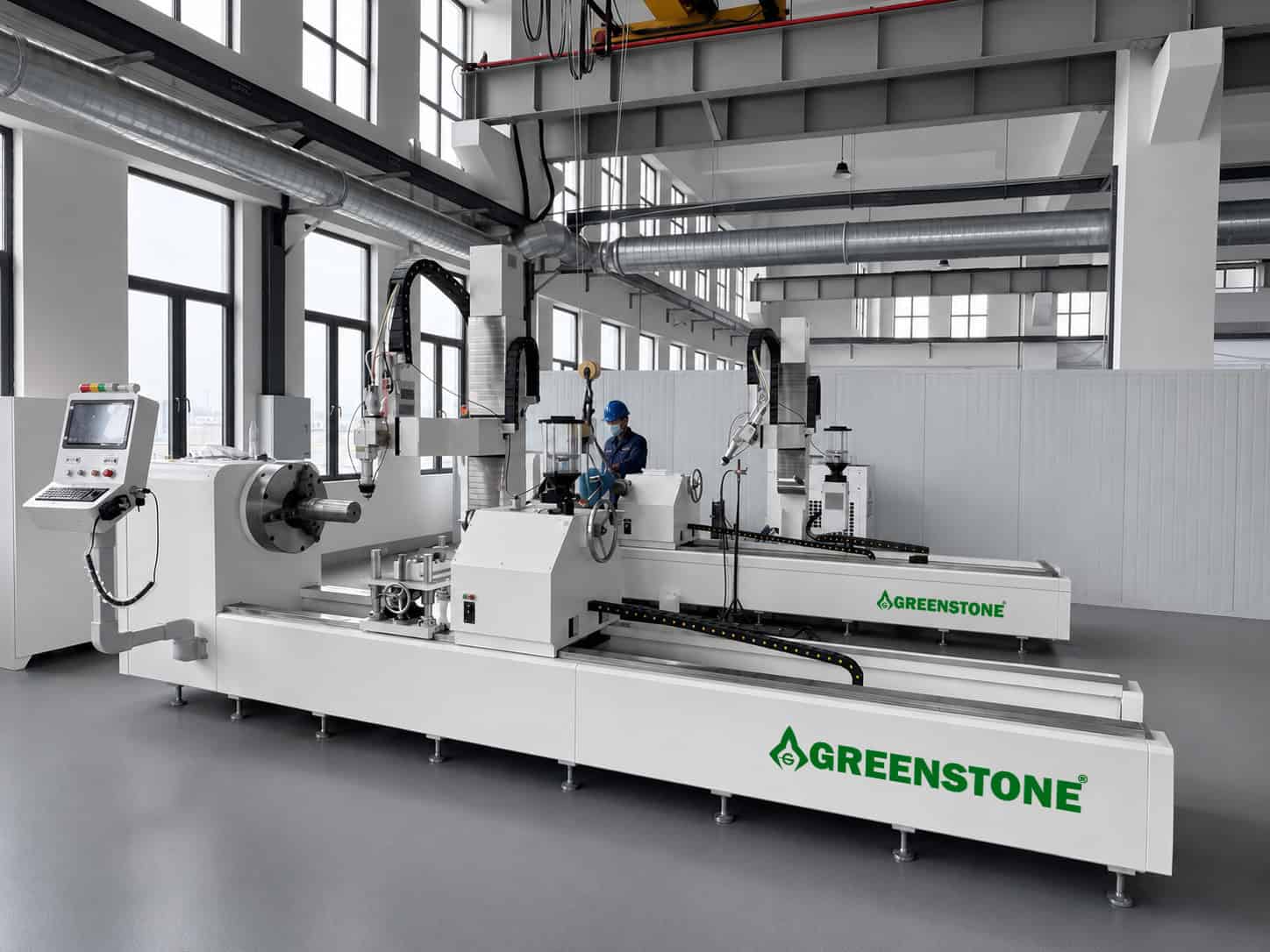
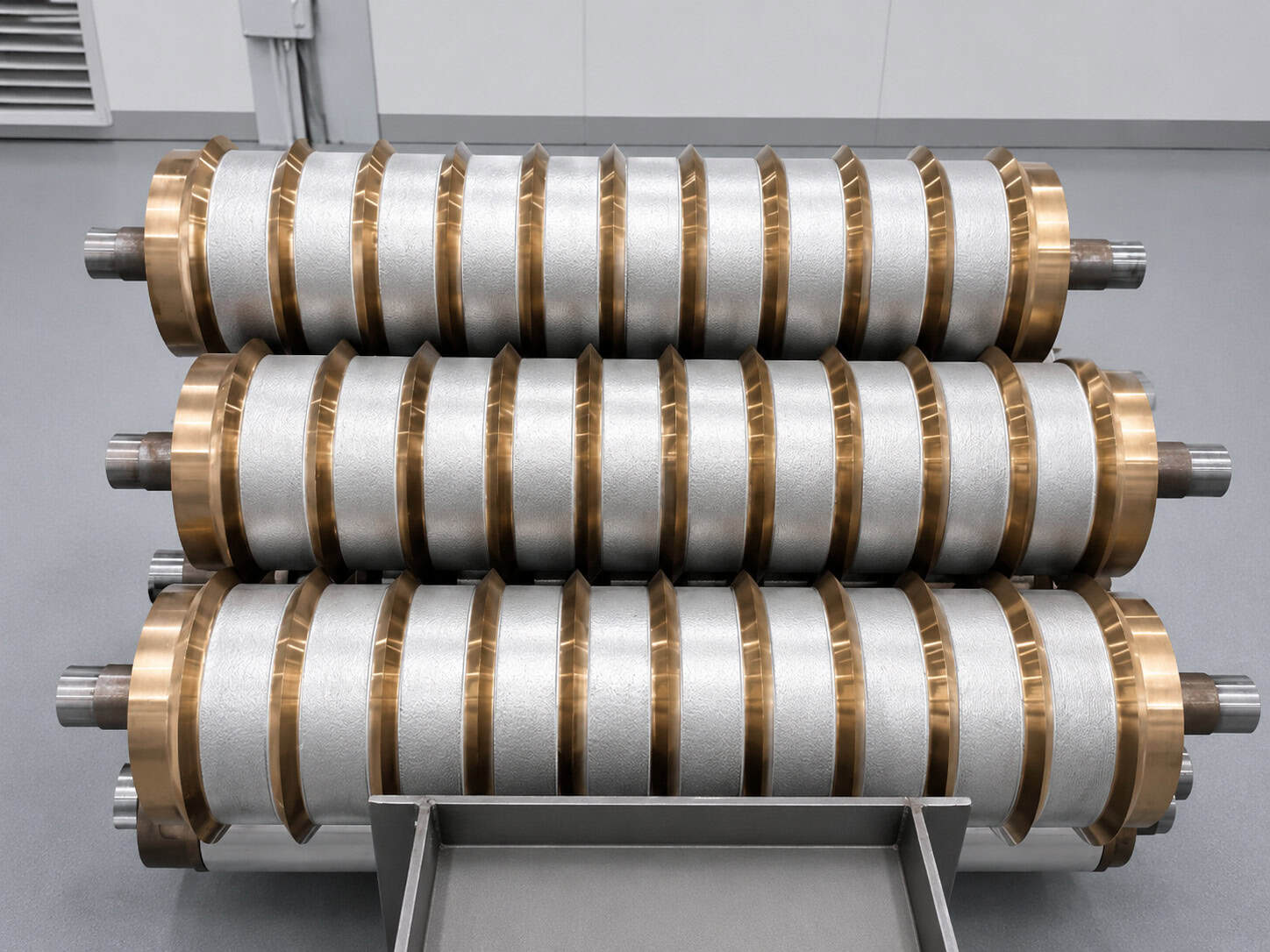
Laser Cladding for Pinch Roll Remanufacturing
During laser cladding, metallic powder is delivered into a controlled laser-generated melt pool on the rotating roll surface.
The powder and a thin layer of the substrate melt together, producing a dense coating with metallurgical bonding to the roll body.
A typical remanufacturing sequence includes:
Inspection → removal of damaged material → surface preparation → laser cladding → multi-track/multi-layer rebuilding → machining or grinding → dimensional inspection
Depending on the amount of wear, laser cladding can either restore a relatively thin damaged surface or rebuild additional material before final machining.
The objective is not simply to coat the roll, but to restore both surface performance and functional dimensions.
Wear-Resistant Cladding Materials
Material selection depends on the roll substrate, operating temperature and dominant failure mechanism.
Depending on the application, iron-, nickel- or other alloy systems may be considered to provide a combination of:
Wear resistance + thermal stability + toughness + oxidation resistance + crack resistance
For pinch rolls subjected to repeated impact and thermal cycling, maximum hardness is not necessarily desirable.
An excessively hard and brittle deposited layer may provide good laboratory wear resistance but perform poorly under repeated mechanical and thermal loading.
The cladding material therefore needs to balance hardness with sufficient toughness and metallurgical compatibility with the substrate.
Controlled Dilution and Metallurgical Bonding
Dilution is an important consideration in roll laser cladding.
Excessive melting of the base material changes the chemistry of the deposited layer and can reduce the intended surface properties. At the same time, insufficient interaction with the substrate can compromise bonding.
Laser power, beam size, travel speed, powder feed rate and deposition strategy must therefore be optimized together.
The target is a stable metallurgical bond with controlled substrate dilution and consistent deposited-layer properties.
The appropriate process window should be developed according to the specific roll material and selected cladding alloy rather than applying one fixed parameter set to every roll.
Multi-Layer Rebuilding of Worn Rolls
Heavily worn pinch rolls may require more than a single deposited layer.
Multiple circumferential or helical tracks can be deposited across the roll surface, with additional layers applied until sufficient machining allowance has been created.
Important variables include:
- Layer thickness
- Track overlap
- Rotational speed
- Longitudinal travel speed
- Powder feed rate
- Heat accumulation
- Interpass temperature
The deposition strategy should provide uniform material distribution while avoiding excessive thermal buildup in the roll body.
Automated Cladding of Large Roll Components
Pinch rolls are well suited to automated laser cladding because of their predominantly rotational geometry.
During processing, the roll rotates while the laser cladding head travels longitudinally along the workpiece. Coordinated motion produces a continuous helical deposition path over the required surface.
For long and heavy rolls, an industrial cladding system must provide:
- Sufficient workpiece load capacity
- Stable rotary positioning
- Longitudinal CNC travel
- Accurate laser-head positioning
- Controlled powder delivery
- Repeatable processing speed
For this reason, machine rigidity and motion control are just as important as laser power when processing large rolling-mill components.
Heat Management During Roll Cladding
Large rolls can require extended continuous processing, making thermal management an important part of the remanufacturing strategy.
Depending on the substrate and cladding material, the process may require control of:
- Preheating
- Interpass temperature
- Deposition sequence
- Laser heat input
- Cooling rate
Proper thermal management helps reduce residual stress and lowers the risk of cracking or distortion.
The appropriate strategy should be determined through material analysis and process testing before full-scale production.
Post-Machining and Dimensional Recovery
Laser cladding normally leaves additional material above the required final roll diameter.
After deposition, the roll is machined or ground back to the specified dimensions and surface condition.
Final inspection can include:
- Outside diameter
- Cylindricity
- Runout
- Surface condition
- Cladding thickness
- Surface hardness
- Crack inspection
- Metallurgical bonding where required
For remanufacturing applications, successful cladding should therefore be evaluated by the finished roll performance and dimensional accuracy, not simply by the appearance of the deposited layer.
Remanufacturing vs. Replacing Worn Pinch Rolls
Large industrial rolls contain substantial amounts of processed alloy steel and can represent significant replacement cost.
When the roll body, shaft and other structural areas remain suitable for continued service, remanufacturing can preserve much of the original component.
Laser cladding adds material primarily to the damaged functional surface.
This can provide several advantages:
- Recovery of worn dimensions
- Localized use of high-performance alloy
- Reduced removal of usable base material
- Controlled heat input
- Metallurgically bonded surface layer
- Potential extension of component service life
- Reuse of high-value roll bodies
However, remanufacturing should only be performed after determining that the underlying component remains structurally suitable for further service.
Applications Across Steel Rolling Equipment
The same laser cladding principle can be extended beyond pinch rolls to other rolling-mill components subjected to severe wear.
Typical applications include:
- Hot rolling mill pinch rolls
- Guide rolls
- Table rolls
- Conveyor rolls
- Bridle rolls
- Transport rolls
- Selected work and support roll surfaces
- Other large rotational wear components
Each component requires an individual evaluation of its substrate, wear mechanism, operating temperature and loading conditions.
GREENSTONE Laser Cladding Solutions for Rolling Mill Rolls
GREENSTONE provides laser cladding process and equipment solutions for pinch rolls, large shafts and other heavy industrial components requiring wear-resistant surface enhancement or dimensional restoration.
For long roll components, systems can integrate heavy-duty rotary positioning, CNC longitudinal movement, precision powder feeding and automated helical laser cladding.
Equipment configuration can be adapted according to workpiece diameter, length, weight, required coating thickness and production capacity.
Process development can also include material selection, parameter optimization, thermal-control strategy and sample testing before final equipment configuration.
For a rolling-mill roll laser cladding project, provide the roll drawing, overall length, maximum diameter, workpiece weight, base material, worn position, required rebuilding thickness, operating conditions and target production capacity. These parameters can then be used to evaluate the appropriate cladding material, process strategy and equipment configuration.
Thomas Tong
Laser Cladding Equipment Engineering Director & Industrial System Integration Expert Thomas Tong serves as Greenstone’s Laser Cladding Equipment Engineering Director, focusing on laser processing equipment development, manufacturing integration, automation systems, and turnkey industrial solution implementation. With comprehensive experience in industrial equipment engineering and advanced manufacturing systems, Thomas leads the design, integration, and optimization of Greenstone’s laser cladding equipment platforms, including robotic laser cladding systems, multi-axis processing systems, automated production solutions, and customized industrial equipment. His expertise covers the complete equipment development process, from mechanical structure design, laser system integration, motion control coordination, electrical engineering, automation programming, and final commissioning. Through…