


راهکارهای پیشرفته پوششدهی لیزری برای ارزیابی آسیب و بازسازی دقیق پرههای موتور هواپیما
Aircraft engines are the core power systems of modern aviation, and their performance and reliability directly determine flight safety. Among all engine components, turbine blades endure the harshest operating conditions—high temperature, high pressure, high rotational speed, and corrosive gas flow. Over long service periods, blades inevitably develop cracks, wear, corrosion pits, impact dents, and thermal ablation.
Accurate damage identification and high-quality repair are essential for ensuring engine safety and extending blade life. In recent years, پوششدهی لیزری has emerged as a breakthrough technology for restoring damaged blades due to its high precision, low heat input, and excellent metallurgical bonding. This article examines the principles, applications, and future direction of پوششدهی لیزری in aircraft engine blade restoration, highlighting its growing role in the aviation maintenance industry.
1. Importance of Accurate Damage Detection for Blade Repair
High-quality repair begins with reliable blade damage identification. Several advanced nondestructive testing (NDT) methods are now widely used in maintenance and overhaul operations:
Key detection methods include:
Nondestructive testing (NDT):
Ultrasonic testing, X-ray inspection, and eddy current methods effectively detect internal cracks and porosity.
Acoustic emission (AE):
AE monitoring captures transient elastic waves generated by crack growth, enabling early detection of micro-cracks.
Infrared thermography (IR):
Thermal imaging reveals subsurface defects by analyzing temperature distributions and identifying abnormal heat flow patterns.
These technologies provide accurate characterization of cracks, impact zones, corrosive pits, and tip wear. Once a defect is confirmed as repairable, پوششدهی لیزری becomes the preferred restoration method due to its precision and structural reliability.
2. Laser Cladding: A Core Technology for High-Value Blade Repair
پوششدهی لیزری utilizes a high-energy laser beam to melt the blade surface while synchronously feeding alloy powder into the molten pool. As the pool rapidly solidifies, it forms a dense, metallurgically bonded cladding layer that restores the blade’s structure and geometry.
Why laser cladding is ideal for turbine and compressor blades
Small heat-affected zone reduces distortion and preserves blade integrity.
Precise and localized heating minimizes the risk of degrading surrounding microstructures.
Strong metallurgical bonding produces high mechanical strength in the repaired zone.
Compatibility with high-performance alloys makes it suitable for nickel-based and titanium-based blades.
Excellent geometric reconstruction restores leading edges, trailing edges, and blade tips with high accuracy.
Compared with traditional welding or brazing, پوششدهی لیزری ensures better dimensional recovery and more reliable long-term performance, especially in harsh turbine environments.

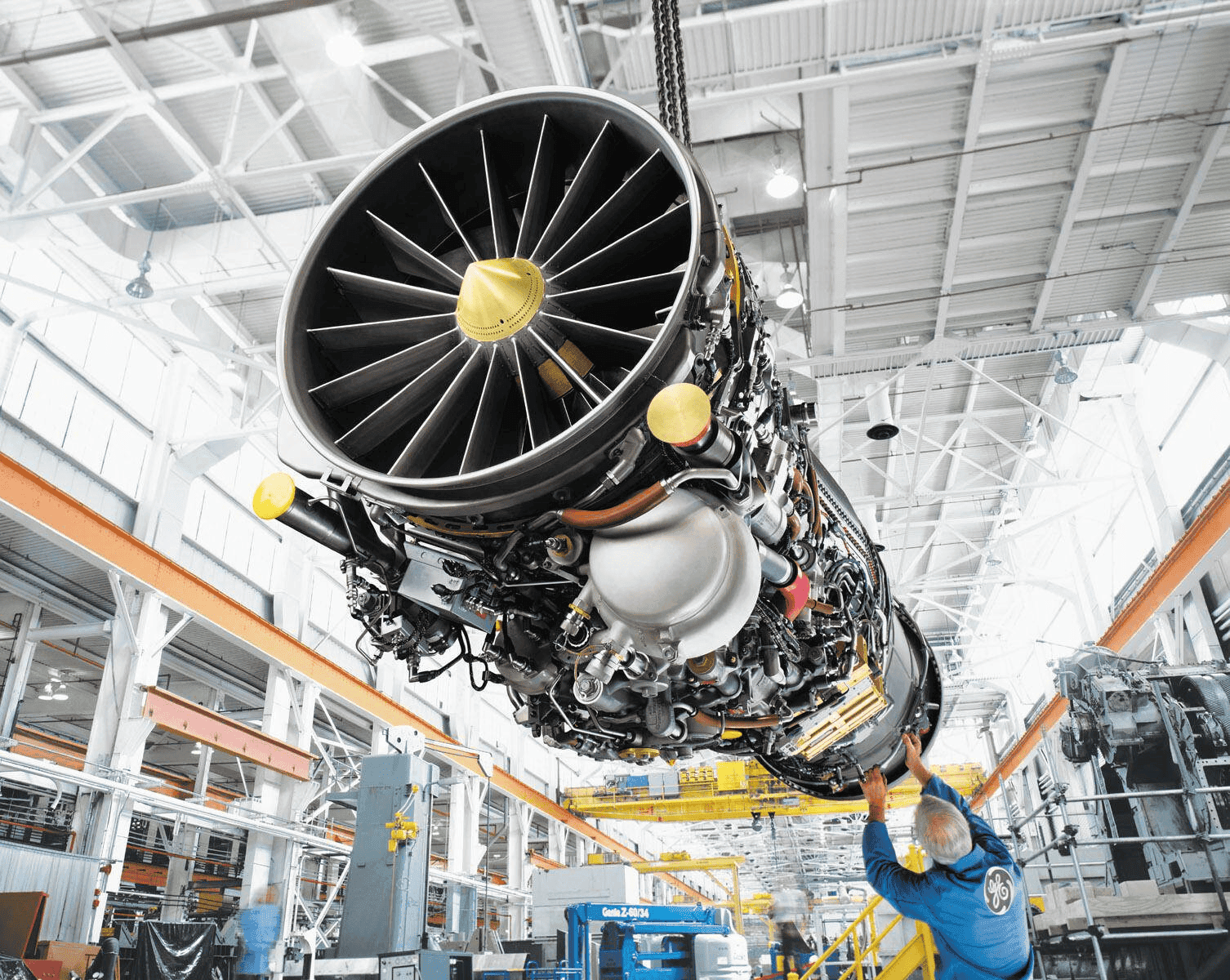
3. Intelligent Restoration Workflow: From Damage Detection to Laser Cladding
In modern MRO (maintenance, repair, and overhaul) practices, پوششدهی لیزری is tightly integrated with digital inspection technologies.
3.1 3D scanning and geometric reconstruction
After detecting damage, engineers perform high-resolution 3D scanning to:
capture the exact geometry of cracks, wear zones, or ablated areas
generate a digital model of the damaged region
automatically calculate the required deposition volume
These data feed directly into the پوششدهی لیزری control system.
3.2 Automated cladding path planning
Based on the 3D model, software generates:
optimized multi-axis toolpaths
laser power profiles
powder-feeding strategies
heat input control plans
This ensures that پوششدهی لیزری is highly automated, consistent, and repeatable.
3.3 Metallurgical restoration and property matching
During cladding, process parameters must be precisely controlled. For example:
Nickel-based blades: Laser power and scanning speed must be optimized to reduce cracking sensitivity and maintain high-temperature strength.
Titanium alloy blades: Heat input must be limited to avoid grain coarsening and preserve toughness.
Through careful control, پوششدهی لیزری produces a fine microstructure with properties approaching those of the base metal.
4. Laser Cladding Applications for Different Blade Types
4.1 Repairing leading-edge ablation
Turbine blades undergo severe thermal and mechanical erosion along the leading edge. پوششدهی لیزری restores lost material while maintaining aerodynamic smoothness and structural strength.
4.2 Restoring blade-tip wear
High-speed rotation often causes blade-tip rubbing. پوششدهی لیزری can reconstruct the blade tip with:
accurate dimension control
کمتحریف
stable high-temperature performance
4.3 Repairing cracks and surface corrosion
After NDT confirms repairable cracks or corrosion, پوششدهی لیزری fills defects and reconstructs local microstructure. The metallurgical bond ensures excellent fatigue resistance.
4.4 Repairing advanced single-crystal and directionally solidified blades
Recent studies show that پوششدهی لیزری—using customized powders and optimized thermal cycles—can approach the microstructural integrity of:
single-crystal (SX) blades
directionally solidified (DS) blades
Although still challenging, this marks a major step toward extending پوششدهی لیزری into high-end turbine components.
5. Engineering Challenges in Laser Cladding Repair
Despite its advantages, پوششدهی لیزری still faces several technical challenges:
5.1 Quality control and defect prevention
Porosity, hot cracking, and dilution must be controlled through advanced monitoring technologies and improved powder metallurgy.
5.2 Microstructure matching
Ensuring that the cladding layer matches the base metal’s mechanical properties requires:
controlled cooling rates
optimized alloy composition
post-cladding heat treatment
5.3 Fatigue performance assessment
Fatigue life of repaired blades must be validated through:
high-cycle fatigue tests
thermal-mechanical fatigue simulations
creep performance evaluation
5.4 Standardization and certification
Aviation-grade پوششدهی لیزری requires standardized acceptance criteria for:
crack tolerance
bonding strength
microstructural stability
International standards for پوششدهی لیزری repairs are still evolving.
6. Future Prospects of Laser Cladding in Blade Remanufacturing
As aerospace engines continue to evolve, پوششدهی لیزری is expected to play an increasingly central role.
6.1 Integration with real-time monitoring
Future cladding systems will combine:
melt-pool imaging
laser power feedback
temperature mapping
AI-driven predictive corrections
to achieve “self-optimizing” پوششدهی لیزری.
6.2 Smarter repair strategies
Digital twin technology will allow simulation of cladding results before actual repair, improving consistency and efficiency.
6.3 New materials and customized alloy powders
Next-generation cladding powders will be engineered for:
better crack resistance
improved fatigue life
closer compatibility with SX and DS blades
6.4 Toward standardized industrial application
As more MRO centers adopt پوششدهی لیزری, the technology is moving from laboratory research to widespread industrialization. This will accelerate standardization and certification processes.
نتیجهگیری
پوششدهی لیزری has become a cornerstone technology in the repair of aircraft engine blades. When combined with advanced damage detection techniques such as NDT, AE, and infrared thermography, it forms a complete technical chain from diagnosis to high-precision restoration. Its ability to rebuild complex blade geometries while maintaining mechanical performance makes it one of the most valuable tools in modern aircraft maintenance.
With ongoing improvements in digitalization, monitoring technologies, and alloy powder development, پوششدهی لیزری is poised to become the standard high-performance solution for turbine blade remanufacturing—greatly enhancing engine safety while significantly reducing maintenance costs.
لیدیا لیو
دکتر لیدیا لیو – پژوهشگر ارشد، متخصص یکپارچهسازی بازار و راهکارها دکتر لیدیا لیو یک حرفهای ترکیبی منحصر به فرد است که بهطور کامل تخصص فنی سطح بالا در ساخت افزودنی را با دیدی تیزبینانه نسبت به یکپارچهسازی بازار و منابع ترکیب میکند. او بهعنوان دکترا و پژوهشگر ارشد در زمینه ساخت افزودنی، دانش فنی عمیقی دارد و در عین حال بهعنوان پلی حیاتی میان فناوری پیشرفته و نیازهای بازار عمل میکند. ارزش منحصربهفرد او در تواناییاش برای درک عمیق پیچیدهترین چالشهای فنی پیش روی مشتریان و، بر اساس دیدی جامع از اکوسیستم جهانی ساخت افزودنی، یکپارچهسازی دقیق بهترین منابع و راهحلهای فنی نهفته است....


