


Placare cu laser aplicată la centrala hidroelectrică Three Gorges: 90% reducere a uzurii echipamentelor
Damage Challenges at Three Gorges Hydroelectric Station
Hydroelectric stations, especially massive ones like the Three Gorges Hydroelectric Station, operating in the high sediment content of the Yangtze River, face two primary forms of damage to their core components:
- Cavitation corrosion (cavitation): When water flow interacts at high speeds with components such as runners and blades, bubbles are generated. The sudden collapse of these bubbles produces intense shock waves and micro-jets that continuously impact the metal surface, causing material fatigue and eventual delamination.
- Sediment wear: Hard particles like sand carried in the river water cause continuous cutting and erosion of the flow surfaces.
These two forms of damage often exacerbate one another, resulting in a combined cavitation-wear effect that accelerates component failure. Traditional repair methods, such as regular arc welding, involve high heat input, which leads to deformation, high residual stresses, and suboptimal coating performance.
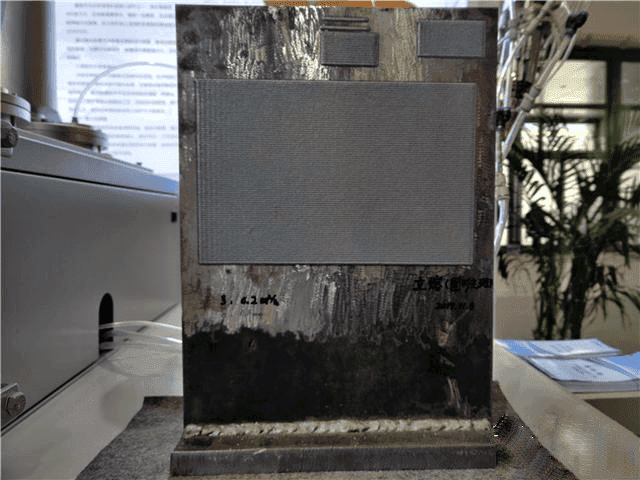
Laser Cladding: The Solution
Placare cu laser technology offers targeted solutions to these challenges:
- Metallurgical Bonding, Strong and Durable: The cladding layer in placare cu laser forms a strong metallurgical bond with the base material, providing bonding strength much higher than traditional mechanical bonding coatings (such as thermal spray). This effectively prevents large-scale delamination of the repair layer under high-speed water flow impacts.
- Consum redus de căldură, deformare minimă: The laser energy is highly concentrated and applied for a short duration, resulting in minimal thermal impact on the base material. This maximizes control over component deformation. This is crucial for precision components, such as water turbine shafts, which require high tolerances.
- Customizable Performance, Significant Improvement: By choosing specific alloy powders, the cladding layer can exhibit superior performance compared to the base material. For example, after applying a cobalt-based alloy cladding, the microhardness of water turbine blades can increase by 1.5 times compared to the base material. Under similar operating conditions, the cavitation-induced mass loss is only one-third that of the base material.
- On-Site Repair, Economic Benefits: For large, non-detachable, or extremely costly to transport components (such as massive turbine chambers), placare cu laser equipment can be mobilized for on-site repairs. This avoids the high costs of disassembly, transportation, and prolonged downtime associated with traditional repair methods. For instance, if the mirror plate component of the Three Gorges Hydroelectric Station were to shut down due to wear, it could result in a loss of over 5 million CNY per day. Placare cu laser significantly shortens repair cycles, providing huge economic benefits.
Practical Application and Benefits
Aplicarea placare cu laser technology at the Three Gorges Hydroelectric Station has been scaled and systematized, demonstrating significant comprehensive benefits:
- Wide Application: According to statistics, the Three Gorges Group’s hydropower stations can apply placare cu laser technology to up to 1,591 spare parts, with a total direct value of approximately 97.43 million CNY. Additionally, 196 tools, worth around 13.47 million CNY, are also repairable using this technology.
- Significant Reduction in Damage: The use of placare cu laser has reduced wear and corrosion by approximately 90%, significantly extending the service life of equipment.
- Key Technological Breakthroughs: For common turbine materials such as martensitic stainless steel (e.g., ZG06Cr13Ni5Mo), applying placare cu laser with cobalt-based, corrosion- and wear-resistant materials results in excellent metallurgical bonding and a marked increase in both corrosion and wear resistance.
- Ongoing Process Optimization: Using numerical simulations (e.g., using Ansys and the death cell technology to model the finite element analysis of the mirror plate repair), the effects of parameters like laser power and scanning speed on residual stress are analyzed to optimize processes and reduce the tendency for cracks.
Conclusion and Outlook
Placare cu laser technology, with its high metallurgical bond strength, minimal thermal deformation, superior performance of the repair layer, and ability to conduct efficient on-site repairs, has become a key technology for ensuring the safe, stable, and economic operation of large-scale hydroelectric facilities such as the Three Gorges Hydroelectric Station.
Ca placare cu laser technology and equipment (such as devices for online laser strengthening of turbine blades) continue to advance and costs decrease, it will play an increasingly significant role not only in the hydropower sector but also in a broader range of industrial fields. It will provide strong support for enhancing the lifespan, energy efficiency, and reliability of critical equipment.
Graham Luo
Dr. Graham Luo - Inginer superior, specialist MIM în titan Dr. Graham Luo este o autoritate recunoscută în domeniul turnării prin injecție a metalelor (MIM), cu accent special pe aliajele de titan. În prezent, este inginer principal la un institut de cercetare a metalelor neferoase, deține un doctorat de la Asociația Helmholtz a centrelor de cercetare germane și a fost cercetător postdoctoral, ceea ce îi conferă o bază teoretică profundă și experiență din partea instituțiilor de cercetare europene de prim rang. Cercetările sale pătrund în miezul tehnologiei MIM, concentrându-se pe domenii critice precum reologia materiei prime de titan, procesele de debitare catalitică/termică cu conținut scăzut de carbon/oxigen și...


