


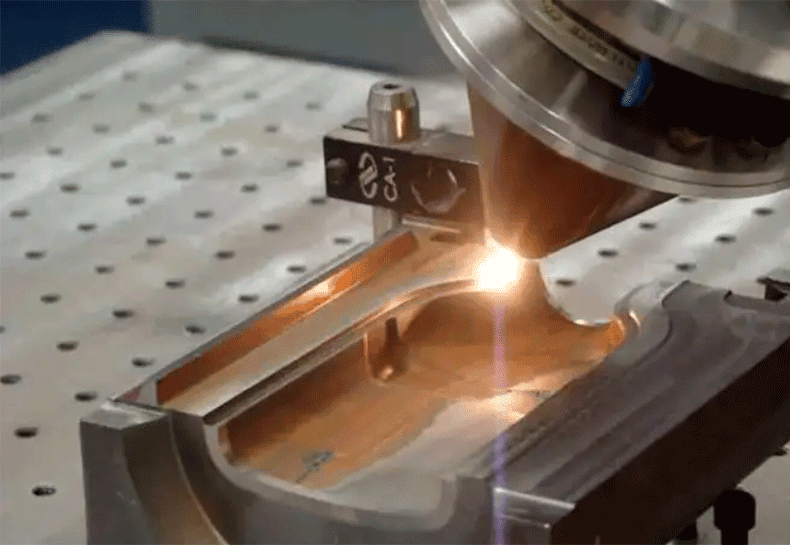
Placare cu laser, as an advanced surface engineering technology, can be classified into two main types based on the material delivery method: the “two-step method” and the “one-step method.” Choosing the right placare cu laser technique is crucial for improving cladding efficiency and controlling processing quality. Below is a systematic introduction to these two typical placare cu laser methods.

01 Two-Step Method (Preset Method)
The two-step method, also known as the preset placare cu laser method, involves pre-depositing cladding material onto the surface of the workpiece before laser irradiation. The material is then melted and solidified through laser scanning, ultimately forming a metallurgically bonded cladding layer. This method is still valuable in certain laser cladding tasks for specific structures and is implemented in two main ways:
1) Pre-Coating Method
In this method, cladding powder is mixed with a binder to form a paste, which is manually applied to the area of the workpiece that requires treatment. After drying, the placare cu laser process is carried out. The pre-coating method is low-cost and easy to operate, making it one of the most basic placare cu laser approaches. However, due to the difficulty in controlling the coating thickness and its relatively low production efficiency, it is not suitable for batch production or scenarios with high consistency requirements.
2) Pre-Formed Thin Sheet Method
In this approach, cladding powder is pressed with a small amount of binder to form thin sheets, which are precisely placed on the areas of the workpiece to be repaired or reinforced. Afterward, the placare cu laser process is applied. The pre-formed thin sheet method boasts high powder utilization, good process stability, and is particularly suitable for laser cladding on special structures like deep holes and inner walls. For instance, it can effectively restore the coating of small-diameter valve bodies, achieving high-quality and uniform placare cu laser results.
02 One-Step Method (Synchronous Method)
The one-step method, also known as synchronous powder feeding placare cu laser, involves feeding cladding material directly into the melt pool area while the laser irradiates the workpiece, completing both melting and solidification in one integrated step. This method is suitable for automated, high-efficiency placare cu laser processing and is currently the mainstream placare cu laser technology in industrial applications. It mainly includes two types:
1) Synchronous Powder Feeding Method
This method uses a powder feeder to directly spray either single or composite powders into the laser irradiation zone. By precisely controlling the powder feeding rate and laser scanning parameters, the thickness and composition of the cladding layer can be adjusted. Due to the high absorption rate of loose powder by the laser and its excellent thermal efficiency, this placare cu laser method can produce thicker coatings and is easy to integrate into automated equipment. It is a widely used technical path in modern placare cu laser sisteme.
2) Synchronous Wire Feeding Method
The principle of the synchronous wire feeding method is similar to the synchronous powder feeding method, with the distinction being that wire material is used as the cladding material. This method offers high material utilization, uniform composition, and no powder contamination. It is especially suitable for composite material cladding, as it avoids segregation issues caused by powder density or granularity differences. However, the smooth surface of the wire may cause laser reflection, reducing laser energy efficiency. Moreover, the types of wire material currently available are limited, and the manufacturing process is more complex, which restricts its widespread application in placare cu laser.
Concluzie
The two-step and one-step methods are two typical material supply strategies for placare cu laser, each suited for different scenarios and workpiece requirements. Choosing the appropriate placare cu laser method affects both efficiency and quality, directly influencing the final performance and lifespan of the workpieces. As technology evolves, the one-step method, with its high automation and good process controllability, is becoming the mainstream direction for placare cu laser technology in the future.
Lydia Liu
Dr. Lydia Liu - Cercetător principal, expert în integrarea pieței și a soluțiilor Dr. Lydia Liu este un profesionist hibrid unic, care îmbină perfect expertiza tehnică de top în fabricarea aditivă cu o viziune ascuțită pentru integrarea pieței și a resurselor. În calitate de doctor și cercetător principal în AM, ea posedă cunoștințe tehnice profunde, acționând în același timp ca o punte de legătură esențială între tehnologia de ultimă oră și nevoile pieței. Valoarea sa unică constă în capacitatea sa de a înțelege în profunzime cele mai complexe provocări tehnice cu care se confruntă clienții și, pe baza unei imagini de ansamblu cuprinzătoare a ecosistemului AM global, de a integra cu precizie cele mai bune resurse și soluții tehnice....


