


Industrial Laser Cleaning Solutions
Delivering advanced non-contact laser cleaning technologies, Greenstone provides industrial-grade solutions for surface preparation, oxide and rust removal, coating stripping, weld seam cleaning, and precision material restoration. Our systems are engineered for demanding global industries requiring environmentally friendly processing, high cleaning precision, substrate protection, and continuous high-efficiency operation.
What Is Laser Cleaning Technology?
Laser cleaning technology is an advanced non-contact surface treatment and precision cleaning process that uses high-energy laser beams to remove contaminants such as rust, oxide layers, paint, grease, coatings, and surface residues from a substrate without damaging the underlying base material. By precisely controlling laser energy, contaminants rapidly absorb the laser radiation and are vaporized, ablated, or thermally separated from the workpiece surface, achieving highly efficient, environmentally friendly cleaning with exceptional accuracy.
This process is widely recognized for providing superior surface preparation, restoration, and maintenance across industrial applications including weld seam preparation, mold cleaning, aerospace component refurbishment, automotive manufacturing, power generation equipment maintenance, and precision mechanical engineering. Laser cleaning enables selective removal of unwanted materials while preserving substrate integrity, making it highly effective for sensitive, high-value components.
Unlike traditional cleaning methods such as chemical cleaning, abrasive blasting, or mechanical grinding, laser cleaning offers localized energy input, minimal thermal distortion, reduced secondary waste, and eliminates the need for chemicals, media blasting materials, or consumables. These advantages significantly improve cleaning quality while reducing environmental impact, maintenance downtime, and operational costs.
Laser cleaning systems support a broad range of materials including carbon steel, stainless steel, aluminum alloys, titanium alloys, copper alloys, molds, rail components, and composite surfaces. The process allows precise adjustment of power density, pulse frequency, scanning patterns, and automation parameters, providing exceptional flexibility for customized industrial cleaning solutions.
Due to its precision, efficiency, automation compatibility, and sustainable manufacturing benefits, laser cleaning technology is increasingly adopted across industries such as aerospace, rail transportation, heavy equipment, shipbuilding, automotive, tooling, and energy sectors. It plays a critical role in extending equipment lifespan, improving surface quality, reducing hazardous waste, and supporting modern green manufacturing initiatives.
As a high-performance industrial cleaning solution, laser cleaning continues to redefine surface treatment standards by delivering cost-effective, precise, and environmentally responsible solutions for advanced industrial maintenance and manufacturing.
Advantages Of Laser Cleaning Technology
Laser cleaning technology represents a transformative advancement in industrial surface treatment, delivering significant advantages over traditional cleaning methods such as abrasive blasting, chemical cleaning, dry ice blasting, and thermal cleaning. By utilizing highly focused laser energy for precise contaminant removal, laser cleaning provides superior cleaning efficiency while minimizing substrate damage, consumable costs, environmental impact, and operational complexity.
As an advanced non-contact surface engineering solution, laser cleaning is widely recognized for its ability to improve production efficiency, reduce maintenance costs, eliminate hazardous waste, and enhance cleaning precision across modern industrial sectors. Its selective material removal capability allows manufacturers to remove rust, paint, oxides, grease, coatings, and contaminants without affecting the underlying base material.
Why Laser Cleaning Matters
Compared to conventional cleaning technologies, laser cleaning provides a safer, more sustainable, and highly automated solution for industrial maintenance, restoration, and manufacturing preparation. It is increasingly used across aerospace, automotive, heavy equipment, rail transportation, power generation, tooling, electronics, medical equipment, and food processing industries where precision, cleanliness, and environmental compliance are essential.
By combining precision beam control, automation compatibility, consumable-free operation, and green manufacturing principles, laser cleaning technology has become a leading solution for advanced industrial cleaning and surface preparation worldwide.
Eco-Friendly and Chemical-Free Process
No chemicals, solvents, abrasives, or cleaning fluids are required, significantly reducing environmental pollution and hazardous waste generation.
Non-Contact Cleaning Without Substrate Damage
Laser cleaning precisely removes contaminants while preserving the structural integrity, dimensional accuracy, and surface finish of the base material.
Selective Precision Cleaning Capability
Laser energy can target specific contaminants or treatment zones, minimizing unnecessary material removal and improving localized process control.
Minimal Secondary Waste and Easy Waste Recovery
Cleaning byproducts are typically dry particles or fumes that are easily captured through filtration systems, greatly simplifying waste management.
Low Operating and Maintenance Costs
No consumables, reduced tooling wear, and easy automation integration significantly lower long-term operating expenses.
Enhanced Safety and Health Protection
Reduced operator exposure to chemicals, blasting media, and hazardous residues improves workplace safety.
High Automation and Process Integration
Laser cleaning systems can be integrated with robotic arms, CNC platforms, and production lines for repeatable, high-throughput industrial applications.
Versatile Material Compatibility
Suitable for metals, composites, molds, precision tools, aerospace alloys, medical equipment, and delicate industrial surfaces.
Reduced Downtime and Improved Productivity
Fast setup, precision targeting, and minimal post-processing requirements increase production throughput and reduce maintenance interruptions.
Superior Sustainability and Green Manufacturing Compliance
Supports modern environmental standards by minimizing emissions, reducing waste, and lowering total lifecycle environmental costs.
Czyszczenie laserowe w porównaniu z innymi metodami czyszczenia
Czyszczenie laserowe nie wykorzystuje żadnych rozpuszczalników chemicznych ani innych materiałów eksploatacyjnych. Jest przyjazne dla środowiska, bezpieczne w obsłudze i ma oczywiste zalety.
zaplecze techniczne:
Tradycyjne metody czyszczenia obejmują czyszczenie mechaniczne, chemiczne i ultradźwiękowe. Ich zastosowanie w ochronie środowiska i wymaganiach wysokiej precyzji jest znacznie ograniczone. W latach 80. odkryto, że skupienie wiązki lasera o wysokiej energii na zanieczyszczonych częściach obiektu powoduje, że napromieniowany materiał przechodzi szereg złożonych procesów fizycznych i chemicznych, takich jak wibracje, topienie, parowanie i spalanie, które mogą powodować wydostawanie się zanieczyszczeń z powierzchni obiektu. W celu usunięcia zanieczyszczeń powierzchniowych, jest to czyszczenie laserowe, które stopniowo zastępuje tradycyjne procesy czyszczenia w wielu dziedzinach dzięki wielu zaletom.
Zasady systemu aplikacji przemysłowych:
Laser impulsowy generuje wysokoenergetyczny laser impulsowy i przesyła go do modułu kształtującego przez światłowód. Jest on odbijany przez jednoosiowy lub dwuosiowy galwanometr skanujący i napromieniowuje warstwę brudu na powierzchni przedmiotu obrabianego. Przylega do rdzy, farby, oleju, zgorzeliny tlenkowej, powłoki itp. na powierzchni przedmiotu obrabianego. Cel czyszczenia jest osiągany po odparowaniu warstwy, rozproszeniu światła, rozłożeniu światła i wibracji światła.
Przedmioty | Czyszczenie laserowe | Czyszczenie chemiczne | Szlifowanie mechaniczne | Wydmuchiwanie suchego lodu | Czyszczenie ultradźwiękowe |
Metoda czyszczenia | laser bezdotykowy | Typ kontaktu z chemicznym środkiem czyszczącym | Mechaniczny/papier ścierny | Kontakt | Bezdotykowy suchy lód |
Uszkodzenie przedmiotu obrabianego | nie | tak | tak | nie | nie |
Wydajność czyszczenia | wysoki | niski | niski | średni | średni |
Materiały eksploatacyjne | Wystarczy włączyć zasilanie | chemiczny środek czyszczący | Papier ścierny | ściernica | osełka |
Efekt czyszczenia | Bardzo dobry | wysoka czystość | Średnia | nierówny | Średnia |
Precyzyjne czyszczenie | Dokładność i kontrola | wysoka dokładność | Niekontrolowany | niska dokładność | Niekontrolowany |
Bezpieczeństwo/przyjazność dla środowiska | Brak zanieczyszczeń | zanieczyszczenie chemiczne | zanieczyszczone środowisko | Brak zanieczyszczeń | Brak zanieczyszczeń |
Obsługa ręczna | Łatwa obsługa | ręczny lub zautomatyzowany | Przepływ procesu jest złożony i wymaga wysokich wymagań od operatorów | i należy podjąć środki zapobiegające zanieczyszczeniom. | Zużywa siłę roboczą i wymaga środków zapobiegania zanieczyszczeniom. |
Wkład kosztowy | Wysoka inwestycja początkowa | brak materiałów eksploatacyjnych | i niskie koszty utrzymania | Niska inwestycja początkowa i bardzo wysokie koszty materiałów eksploatacyjnych | Wysoka inwestycja początkowa |
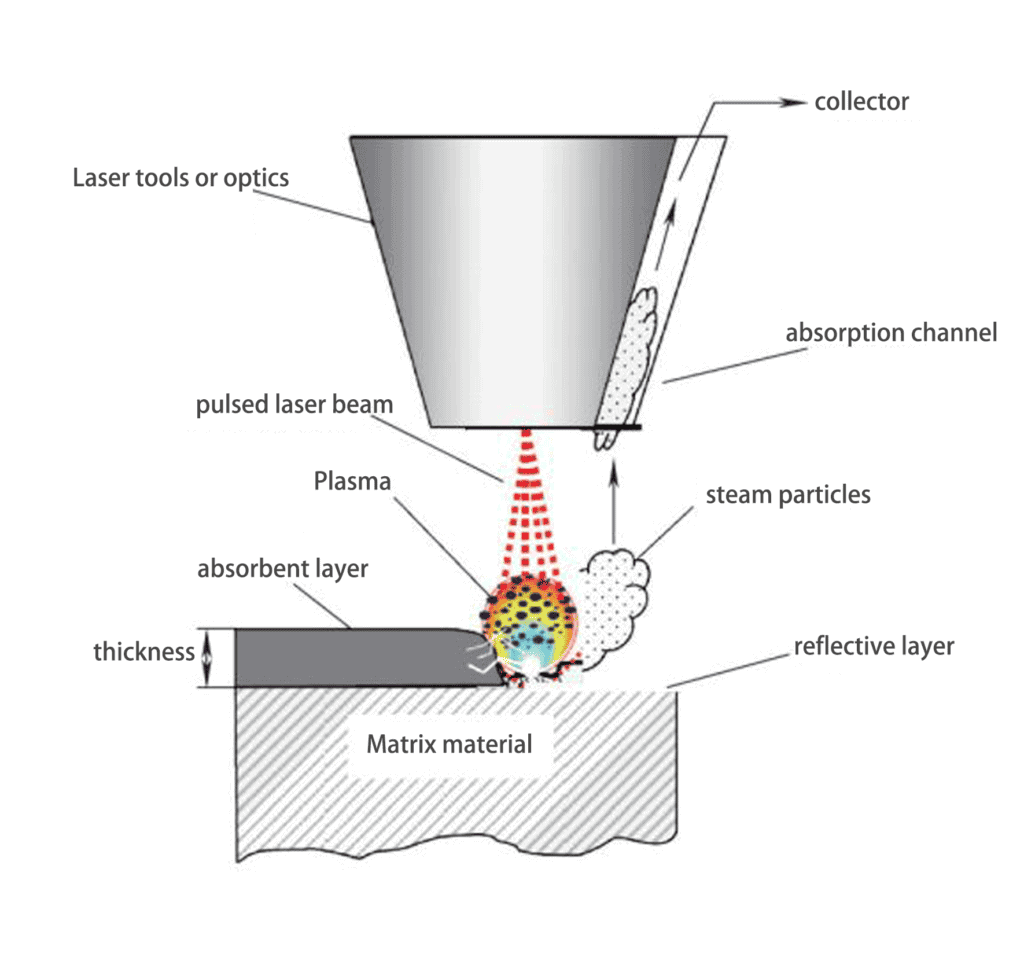
Zasady przemysłowego czyszczenia laserowego
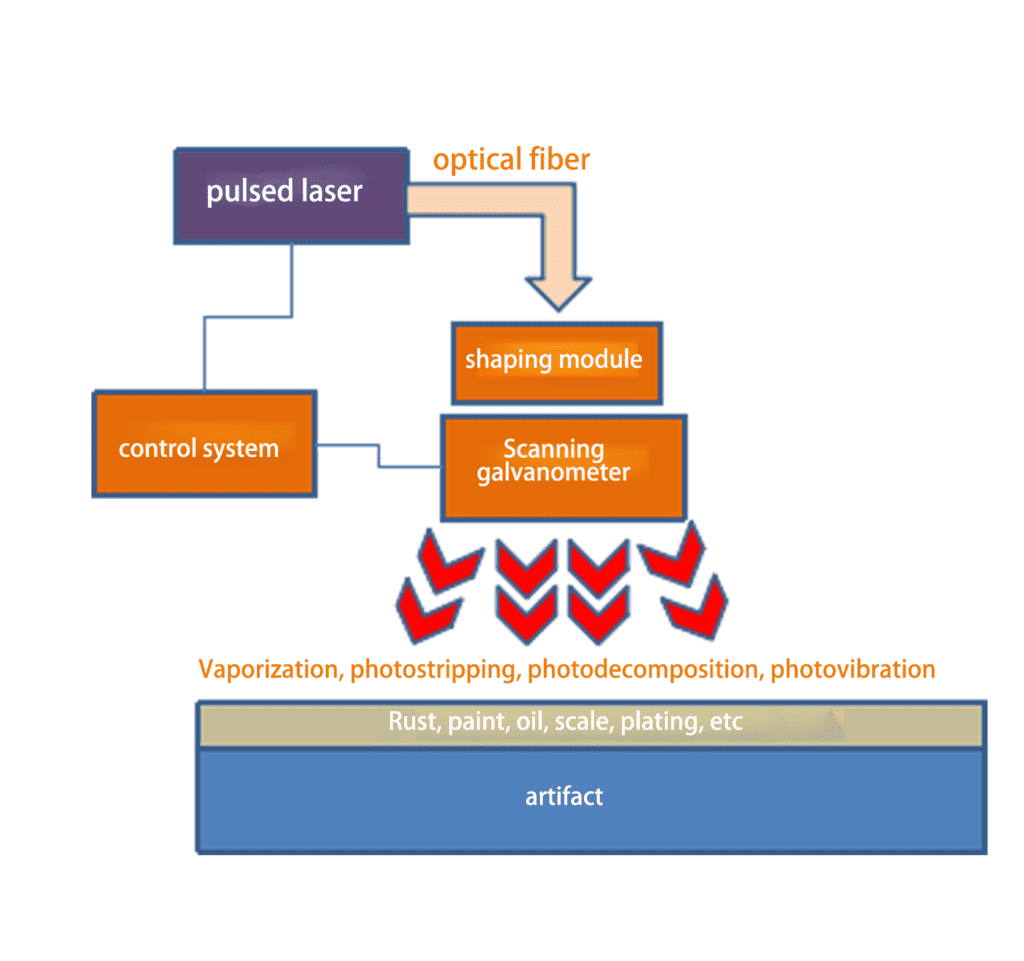
Zasady systemu aplikacji przemysłowych
Test czyszczenia laserowego
Może być elastycznie stosowany do różnych operacji czyszczenia powierzchni w produktach przemysłowych

Ortogonalny eksperyment usuwania farby z podłoży na bazie żelaza
Materiał podstawy: żelazna podstawa
Zanieczyszczenie: warstwa farby
Grubość: 80-100 μm
Wydajność usuwania: 3㎡/h
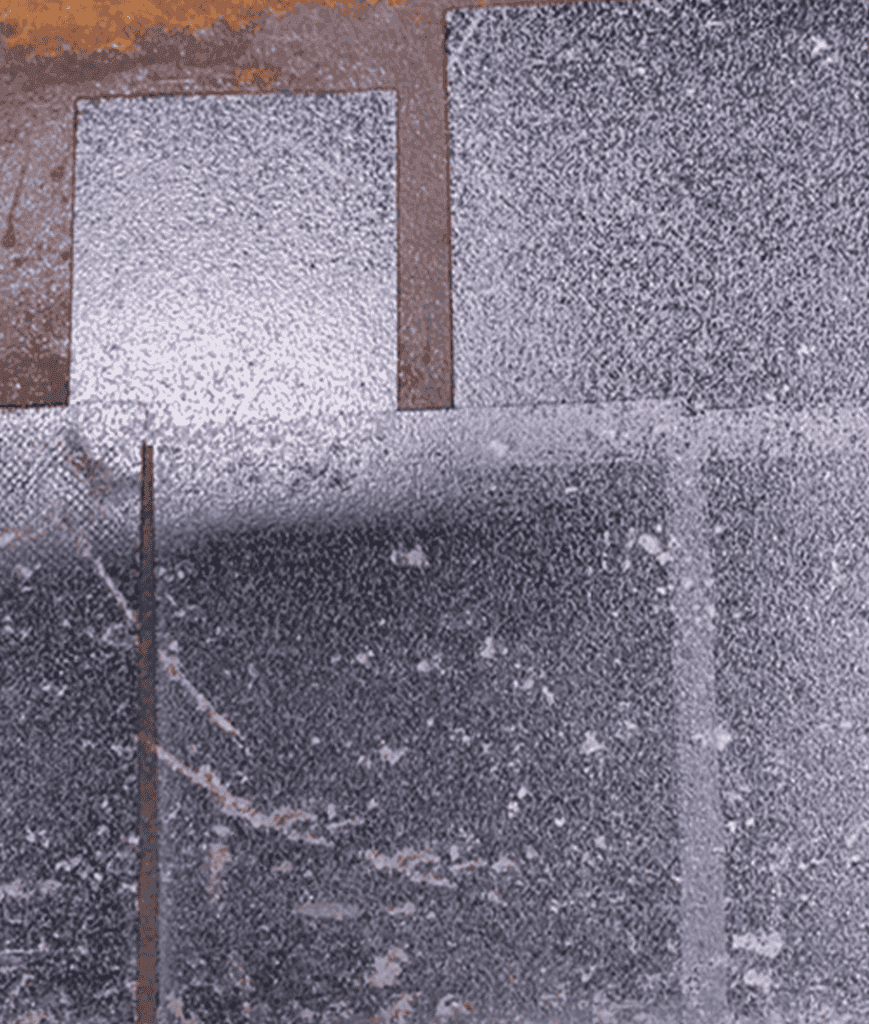
Eksperyment usuwania plam/kamienia z powierzchni podłoża na bazie żelaza
Materiał podstawy: żelazna podstawa
Zanieczyszczenia: rdza, olej, zgorzelina
Wydajność usuwania: 4㎡/h
Laser Cleaning Technology Application Cases
Laser cleaning technology is widely applied across modern industrial sectors for precision surface preparation, selective contaminant removal, coating stripping, oxidation removal, weld preparation, equipment maintenance, and high-value component restoration. By delivering highly localized, non-contact cleaning with minimal thermal impact, laser cleaning offers an ideal solution for industries requiring precision, repeatability, and environmentally sustainable manufacturing.
As an advanced industrial cleaning process, laser cleaning is particularly valuable for high-performance manufacturing, maintenance, and refurbishment applications where conventional cleaning methods may cause substrate damage, excessive waste, or operational inefficiencies.
Industry Application Advantages
Laser cleaning enables manufacturers to improve cleaning precision, reduce hazardous waste, minimize downtime, and significantly lower lifecycle operating costs. Compared to abrasive blasting, chemical stripping, and thermal cleaning, laser cleaning offers superior flexibility for complex geometries, selective treatment zones, and automated production integration.
General Manufacturing Industry
Rust removal, paint stripping, weld seam cleaning, tooling maintenance, and production line cleaning.
Aerospace and Aviation Applications
Aircraft component cleaning, turbine maintenance, oxide removal, coating preparation, and composite-safe cleaning.
Produkcja motoryzacyjna
Brake system cleaning, battery tray preparation, mold cleaning, weld seam pretreatment, and engine component restoration.
Mold and Tooling Industry
Injection molds, die-casting molds, rubber molds, stamping dies, and precision tooling residue removal.
Rail Transportation Systems
Brake disc cleaning, rail surface preparation, wheelset maintenance, corrosion removal, and infrastructure refurbishment.
Power Generation and Heavy Equipment
Turbines, generators, mining equipment, oil & gas components, and industrial machinery maintenance.
Medical Equipment and Precision Devices
Sterilization support, oxide removal, surgical instrument cleaning, and contamination-free surface treatment.
Food and Beverage Industry
Packaging machinery cleaning, production equipment sanitation, and contamination control without chemical residue.
Electronics and Semiconductor Manufacturing
Precision oxide cleaning, circuit preparation, delicate coating removal, and contamination-sensitive applications.
Representative Laser Cleaning Workpiece Cases
Rail brake discs, aerospace panels, molds, gears, engine parts, weld seams, battery trays, food equipment, and precision tooling.
Technical Application Features
- Precision Surface Cleaning for Critical Functional Areas
Removes rust, coatings, oxides, oils, and residues from localized surfaces, weld seams, molds, and sensitive components. - Minimal Thermal Distortion and No Mechanical Stress
Highly controlled energy input protects critical surfaces and prevents deformation. - Superior Cleaning Efficiency and Surface Quality
Delivers repeatable cleaning results while improving adhesion for welding, coating, and bonding applications. - Flexible Automation for Complex Industrial Components
Robotic and CNC-compatible systems support large, irregular, or high-value workpieces. - Environmentally Friendly Manufacturing
Eliminates chemicals, blasting media, and large-scale waste disposal. - High Productivity and Cost Efficiency
Reduces consumables, lowers maintenance requirements, and shortens process cycles.