


Glass mould baffles and other small precision mould components are repeatedly exposed to hot glass, thermal cycling and mechanical contact during glass-forming operations. Over time, their working surfaces can develop localized wear, edge deterioration, dimensional loss and thermal damage.
Because these components require accurate geometry and surface condition, even relatively small amounts of material loss can affect forming consistency and component service life.
Laser cladding provides a precise method for rebuilding worn areas while minimizing unnecessary heat input into the remaining mould body.
Typical Damage on Glass Mould Baffles
Baffles are exposed to repeated contact with high-temperature glass and continuous production cycles. Common deterioration includes:
- Wear of the working face
- Edge and corner material loss
- Localized surface damage
- Thermal fatigue
- Oxidation and surface degradation
- Dimensional deviation after prolonged service
In many cases, the complete component does not need to be replaced. The damage is concentrated on a relatively small functional surface.
This makes the component well suited to localized laser cladding repair.
How Laser Cladding Restores the Baffle
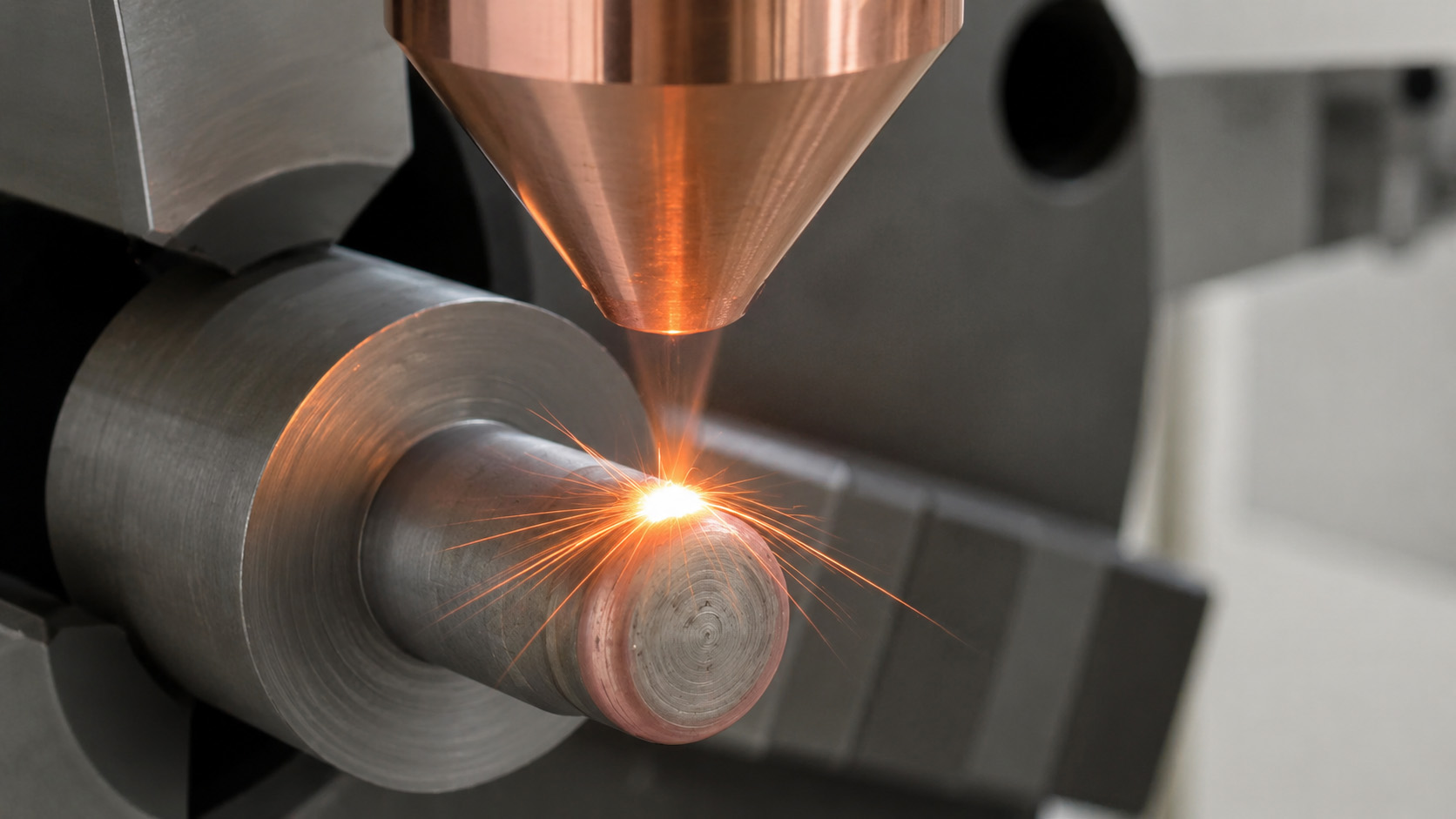
During repair, the worn component is positioned on a controlled rotary or CNC motion system. Metallic powder is delivered into a laser-generated melt pool while the workpiece rotates beneath the processing head.
The repair process typically follows:
Material is deposited only where additional volume is required.
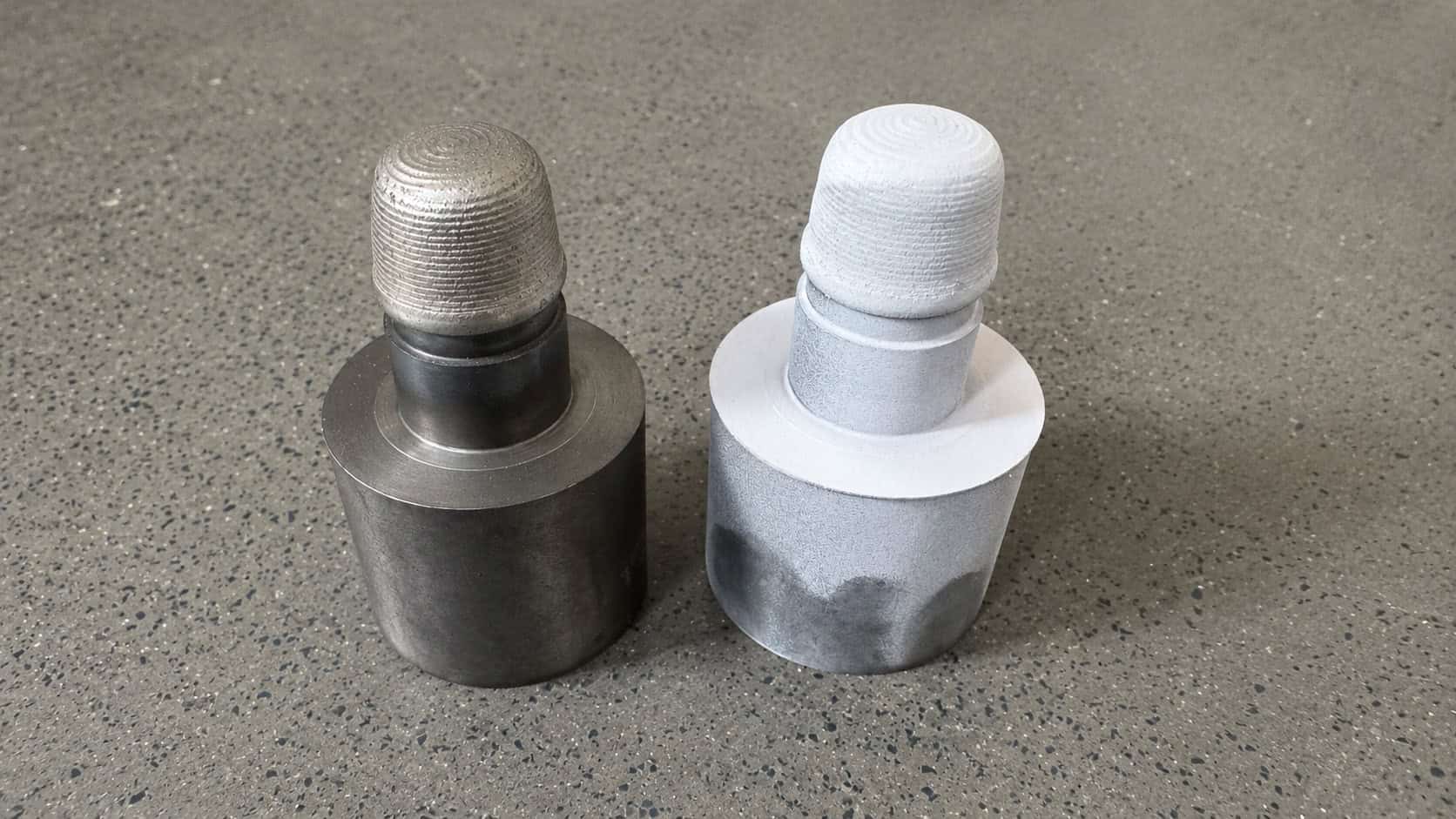
For circular baffles and similar components, coordinated rotation allows a continuous cladding track to be deposited around the worn surface. Multiple tracks or layers can be applied when additional rebuilding thickness is required.
Precision Dimensional Restoration
The purpose of mould repair is not simply to cover the damaged surface with another material.
The deposited layer must provide sufficient material for subsequent machining while maintaining controlled heat input and reliable bonding with the substrate.
Important process variables include:
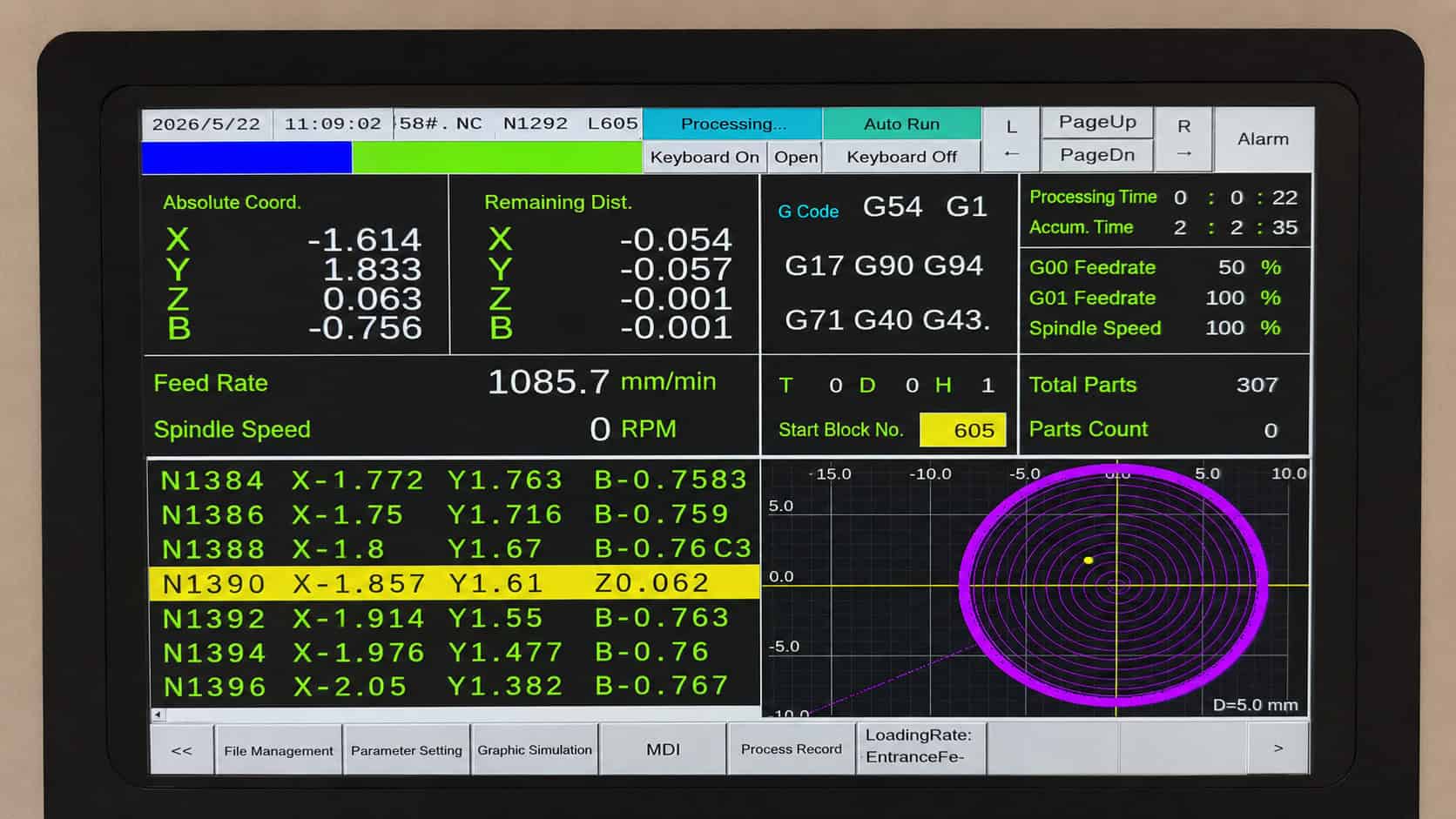
- Laser power
- Beam size
- Travel or rotational speed
- Powder feed rate
- Track overlap
- Layer thickness
- Shielding gas
- Cladding position
These parameters are adjusted according to the base material, component geometry, damage depth and selected cladding alloy.
After deposition, the repaired area can be machined back to the required dimensions and surface condition.
Why Heat Input Matters
Small glass mould components can be sensitive to excessive thermal input.
Conventional repair methods with a relatively large heat-affected zone may increase the risk of distortion or introduce unnecessary thermal stress into the component.
Laser cladding concentrates energy in a relatively small processing area. When the process is properly controlled, this allows material to be added while limiting the thermal influence on surrounding regions.
This characteristic is particularly useful for small mould inserts, baffles and other components requiring localized dimensional restoration.
Material Selection for Glass Mould Repair
The cladding material should be selected according to the mould substrate and actual service conditions rather than hardness alone.
Depending on the application, the deposited alloy may need to provide a combination of:
wear resistance, thermal stability, oxidation resistance, toughness, metallurgical compatibility and machinability.
The ability to machine or finish the deposited layer is especially important because laser cladding is normally followed by precision finishing.
An excessively hard or incompatible alloy can create difficulties during machining or increase cracking risk. Material selection should therefore be considered together with the complete repair process.
Repairing Edges and Localized Worn Areas
One important advantage of laser cladding is the ability to rebuild specific areas rather than depositing material across the entire component.
For a worn baffle, material can be concentrated on the damaged face or perimeter. For other glass mould components, the process can target edges, shoulders, grooves or other localized regions.
This selective approach reduces unnecessary material consumption and post-machining.
It also makes laser cladding particularly suitable for high-value mould components where most of the original component remains serviceable.
From Laser Deposition to Finished Component
A complete mould repair does not end when laser deposition is finished.
The cladded component normally undergoes subsequent machining, grinding or polishing to remove excess material and restore the specified geometry.
Dimensional inspection is then required to confirm that the repaired working surface meets the required tolerance.
A practical repair workflow therefore combines:
Laser cladding + precision motion control + post-machining + dimensional inspection
rather than treating laser deposition as an isolated process.
Applications Beyond Glass Mould Baffles
The same repair principle can be extended to other localized glass mould components, including:
- Baffles
- Mould inserts
- Neck rings
- Bottom plates
- Plungers
- Small mould cores
- Edges and shoulders
- Other worn forming components
The actual repair strategy depends on component geometry, substrate material, damage mechanism and required final dimensions.
GREENSTONE Laser Cladding Solutions for Glass Mould Repair
GREENSTONE provides laser cladding process and equipment solutions for glass mould repair, surface reinforcement and industrial remanufacturing.
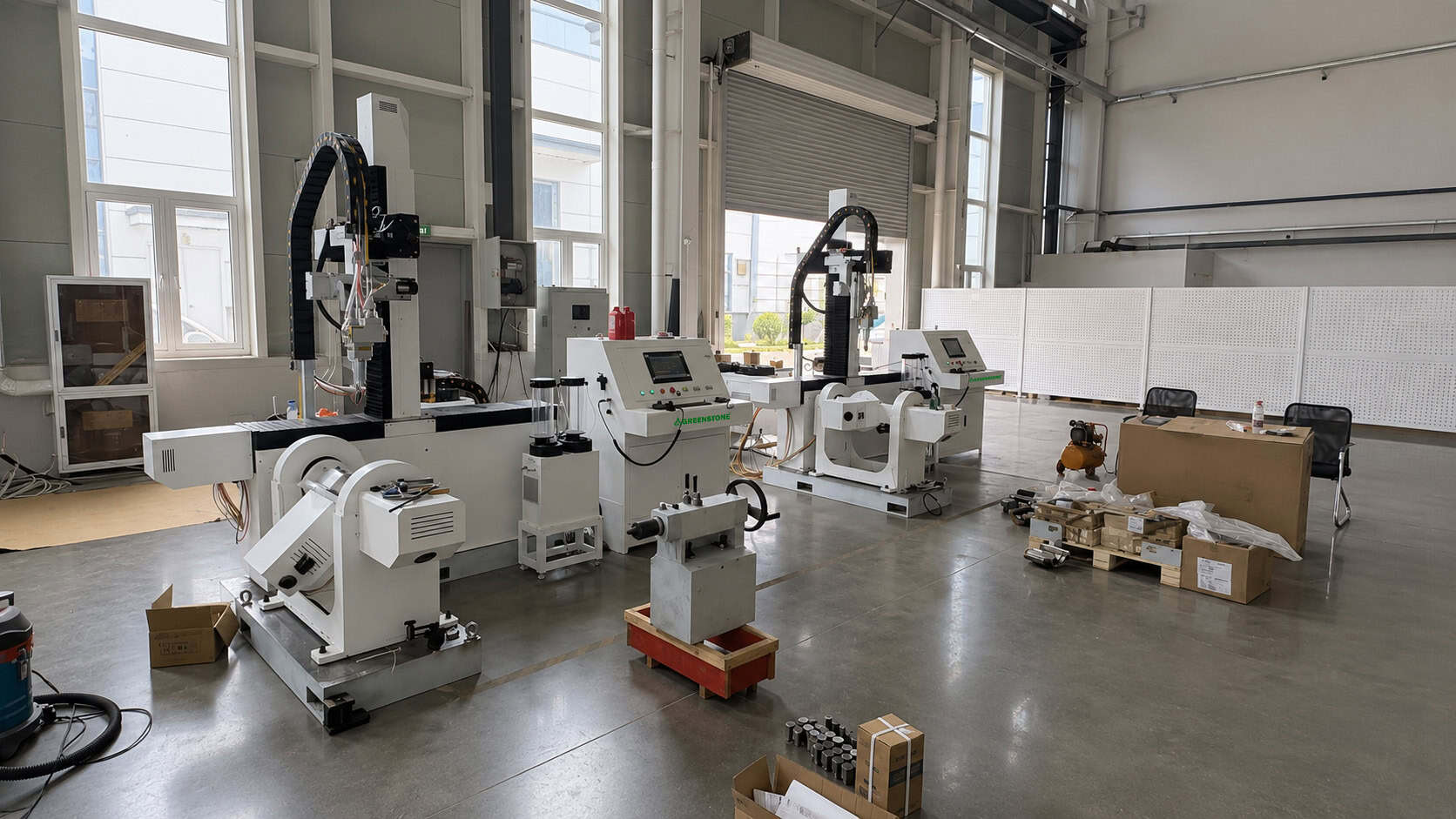
For small rotationally symmetrical mould components such as baffles, the system can combine controlled rotary motion, precision laser processing and powder feeding to achieve stable circumferential deposition.

For larger or more complex mould geometries, multi-axis CNC or robotic configurations can be applied according to the required processing path.
Rather than selecting equipment only by laser power, the complete solution should be determined from the actual workpiece and repair objective.
For process evaluation, provide the component drawing or photographs, base material, damaged position, repair depth, required final dimensions and expected surface performance. These parameters can then be used to determine the appropriate cladding material, deposition strategy and equipment configuration.
David Cheung
Laser Cladding Technology Director & Advanced Manufacturing Process Expert David Cheung serves as Greenstone’s Laser Cladding Technology Director, specializing in advanced surface engineering technologies, laser cladding process development, material optimization, and industrial remanufacturing applications. With extensive experience in laser-based manufacturing technologies and metal surface enhancement processes, David leads the development and optimization of Greenstone’s laser cladding solutions, including powder-fed laser cladding, high-speed laser cladding, internal bore cladding, laser hardening, and integrated repair technologies. His professional expertise covers the complete technical workflow from material analysis, process parameter development, coating performance evaluation, and application validation to industrial implementation. By combining fundamental material…