
Laser Cladding for Tricone Drill Bits: Wear-Resistant Surface Reinforcement of Critical Areas
June 10, 2026


Tricone drill bits operate under severe combinations of abrasive wear, impact loading, friction, high contact stress and drilling-fluid erosion. Critical surfaces around the cone, bearing and adjacent functional areas can therefore experience rapid deterioration during demanding drilling operations.
Laser cladding provides a controlled method for applying wear-resistant metallic material specifically to these high-load regions.
Rather than modifying the entire drill bit, localized laser cladding reinforces selected surfaces while minimizing unnecessary heat input and material consumption, making it suitable for both new-component surface enhancement and selected remanufacturing applications.
Why Tricone Drill Bits Require Localized Surface Protection
During drilling, the cones continuously rotate against the formation while the bit is subjected to substantial axial load, vibration and impact.
Depending on the formation and operating conditions, component surfaces may experience:
- Abrasive wear
- Metal-to-metal friction
- Adhesive wear and galling
- Impact damage
- Drilling-fluid erosion
- Localized surface material loss
- Combined wear and corrosion
The severity of these mechanisms is not uniform across the complete component.
Certain functional surfaces experience significantly higher contact and wear loads than surrounding areas. This makes targeted surface engineering particularly valuable.
Laser Cladding of Critical Wear Areas
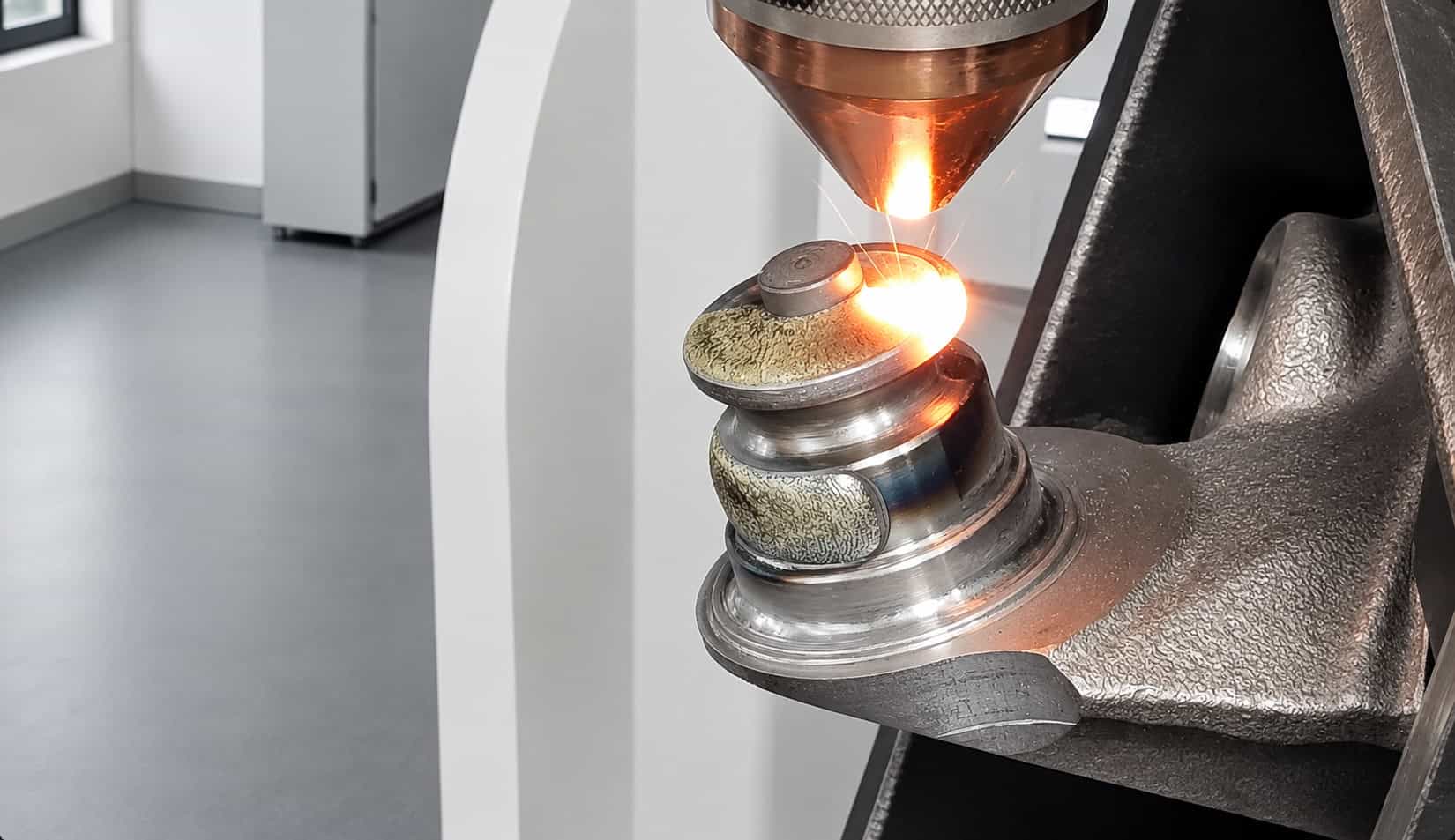
During laser cladding, metallic alloy powder is delivered into a precisely controlled laser-generated melt pool.
A thin region of the substrate and the injected powder melt together, producing a dense deposited layer with metallurgical bonding to the base material.
For tricone bit applications, the laser path can be programmed specifically around selected wear regions.
The objective is to obtain:
Strong metallurgical bonding + controlled dilution + high wear resistance + limited heat input + accurate localized deposition.
This differs from simply applying a thick coating over the entire component. The process is designed around the actual wear mechanism and geometry of the critical area.
Typical Cladding Areas
Depending on the drill-bit design and failure mechanism, laser cladding may be considered for selected regions such as:
- Cone-related wear surfaces
- Bearing-adjacent surfaces
- Journal and support regions
- High-friction contact areas
- Localized erosion zones
- Other surfaces requiring additional wear protection
The exact cladding position should be determined from the component drawing, operating conditions and actual wear pattern.
For complex drilling components, unnecessary deposition should be avoided. Material should be concentrated where additional surface performance provides measurable value.
Wear-Resistant Cladding Materials
Cobalt-based alloys such as Stellite 6 can be used in selected drilling-tool applications where resistance to wear, galling and elevated-temperature degradation is required.
Stellite 6 combines hardness with relatively good toughness and is commonly considered for components subjected to sliding wear and severe contact conditions.
However, alloy selection should always depend on the actual application.
Other cobalt-, nickel- or iron-based systems may be more appropriate depending on:
- Base material
- Wear mechanism
- Impact loading
- Operating temperature
- Corrosive environment
- Required hardness
- Machining requirements
For severe abrasive conditions, hard-phase reinforced material systems may also be evaluated.
The optimum material is therefore not necessarily the alloy with the highest hardness, but the one providing the appropriate balance of wear resistance, toughness, crack resistance and metallurgical compatibility.
Preheating and Crack Control
Drilling components are often manufactured from high-strength alloy steels. When these substrates are combined with relatively hard cladding materials, thermal stress and cracking must be carefully controlled.
Preheating may therefore form an important part of the laser cladding process.
In one representative tricone-bit application, the component was preheated to approximately 300°C before deposition with Stellite 6.
This value should be treated as a project-specific process condition rather than a universal parameter.
The appropriate preheating temperature depends on the:
substrate composition + component geometry + cladding alloy + deposited thickness + heat input + cooling conditions.
Interpass temperature and post-cladding cooling strategy may also require control for demanding material combinations.
Complex Geometry Requires Controlled Motion
Tricone drill-bit components contain curved, inclined and interrupted surfaces that cannot always be processed effectively using simple linear motion.
The cladding head must maintain an appropriate relationship with the target surface while deposition proceeds.
Depending on component geometry, the processing system may require coordinated:
- Rotary motion
- Linear positioning
- Multi-axis interpolation
- Laser-head orientation
- Workpiece positioning
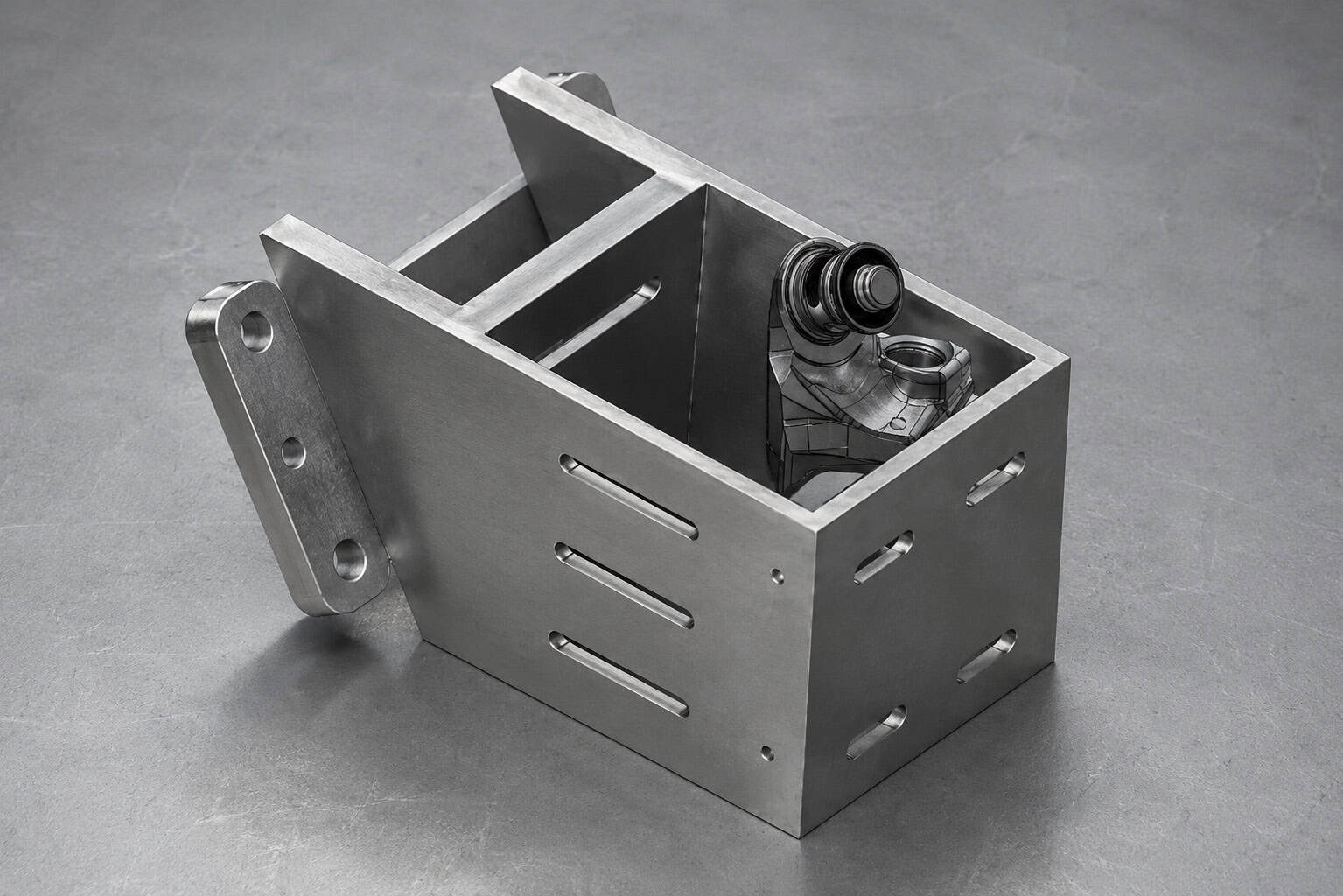
Dedicated fixtures can also be designed to hold the component at an appropriate angle and provide access to difficult cladding regions.
For this type of application, fixture design and motion control are integral parts of the laser cladding process.
Process Parameters Must Be Developed Around the Component
Successful laser cladding requires coordination of multiple variables rather than relying on laser power alone.
Important parameters include:
- Laser power
- Beam size
- Travel speed
- Powder feed rate
- Track overlap
- Deposited thickness
- Shielding gas
- Preheating temperature
- Interpass temperature
- Laser incidence angle
These parameters influence dilution, coating geometry, metallurgical bonding, hardness, cracking tendency and heat input.
For drilling tools, process development should therefore begin with the actual substrate, cladding material and component geometry.
Key Advantages for Drilling Components
When properly engineered, laser cladding can provide several advantages for tricone bits and similar drilling components.
Localized wear protection: Material is deposited specifically on critical surfaces instead of covering the complete component.
Metallurgical bonding: The deposited layer forms a metallurgical interface with the substrate.
Controlled heat input: Localized laser energy reduces unnecessary thermal influence on surrounding areas.
Material efficiency: High-performance alloy powder is concentrated where it is functionally required.
Surface performance enhancement: Appropriate alloys can improve resistance to abrasive wear, galling, erosion and other severe surface degradation mechanisms.
Geometric flexibility: CNC and multi-axis motion allow complex wear areas to be processed with controlled deposition paths.
New Component Reinforcement and Remanufacturing
Laser cladding can be considered at different stages of a drilling component’s lifecycle.
For new components, selected high-wear surfaces can be reinforced before service to improve their resistance to demanding operating conditions.
For service-damaged components, laser cladding may be used to restore selected worn surfaces when the underlying component remains suitable for remanufacturing.
Whether a used drilling component is suitable for repair should be determined through inspection before processing. Components with structural cracking, severe deformation or unacceptable substrate damage should not automatically be considered repairable simply because material can be deposited onto the surface.
Applications Beyond Tricone Bits
The same localized surface-engineering principle can be extended to other drilling and oilfield components subjected to severe wear, including:
- Roller-cone drilling components
- Stabilizers
- Wear sleeves
- Downhole tool surfaces
- Drill-string wear components
- Other high-load oilfield components
Each application requires an individual evaluation of the wear mechanism, substrate, geometry and operating environment.
GREENSTONE Laser Cladding Solutions for Drilling Tools
GREENSTONE provides laser cladding process and equipment solutions for drilling tools and other industrial components requiring localized wear-resistant surface enhancement.
For complex drilling components, solutions can combine precision powder feeding, CNC or multi-axis motion, rotary positioning and customized fixtures according to the geometry of the actual workpiece.
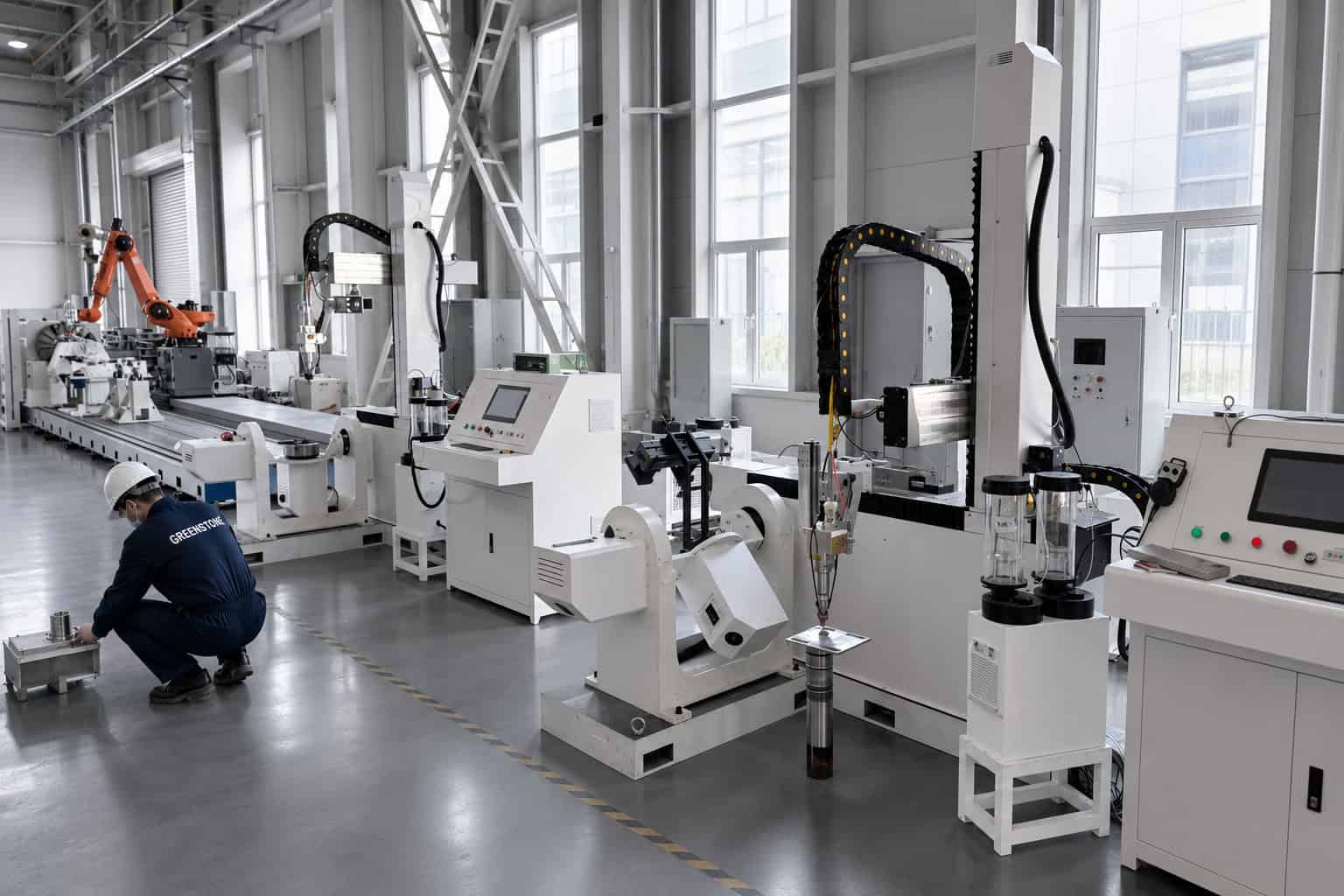

Process development can also include cladding-material selection, preheating strategy, parameter optimization and sample testing before final equipment configuration.
For a drilling-tool laser cladding project, provide the component drawing or photographs, base material, required cladding position, wear mechanism, desired coating thickness, preferred alloy if specified and operating conditions. These parameters can then be used to evaluate the appropriate cladding material, processing strategy and equipment configuration.
Thomas Tong
Laser Cladding Equipment Engineering Director & Industrial System Integration Expert Thomas Tong serves as Greenstone’s Laser Cladding Equipment Engineering Director, focusing on laser processing equipment development, manufacturing integration, automation systems, and turnkey industrial solution implementation. With comprehensive experience in industrial equipment engineering and advanced manufacturing systems, Thomas leads the design, integration, and optimization of Greenstone’s laser cladding equipment platforms, including robotic laser cladding systems, multi-axis processing systems, automated production solutions, and customized industrial equipment. His expertise covers the complete equipment development process, from mechanical structure design, laser system integration, motion control coordination, electrical engineering, automation programming, and final commissioning. Through…