
Low-Dilution Inconel 625 Laser Cladding for Oil & Gas Pipeline Corrosion Protection
Project Overview
GREENSTONE has successfully delivered a laser cladding solution for Inconel 625 corrosion-resistant coating of oil and gas pipeline components, with particular attention to surfaces directly exposed to aggressive process media.
The project was developed for pipeline components operating in demanding oil, gas and chemical environments, where corrosion resistance and long-term surface integrity are critical.
A key objective was to achieve a low-dilution Inconel 625 laser-clad layer while maintaining strong metallurgical bonding with the substrate. This required precise control of laser energy, powder delivery, processing speed and thermal input throughout the cladding process.
Customer Application Requirements
Oil and gas pipeline components can be exposed to combinations of chlorides, corrosive process fluids, erosion and changing operating temperatures. Instead of manufacturing the entire component from an expensive corrosion-resistant alloy, a practical engineering approach is to apply a high-performance alloy only to the surfaces that require protection.
For this project, the customer selected Inconel 625 nickel-based alloy as the cladding material.
The process requirements focused on:
- Low dilution between the Inconel 625 layer and substrate
- Controlled and consistent coating formation
- Strong metallurgical bonding
- Reduced thermal influence on the component
- Reliable processing of pipeline surfaces, including internal areas
- Preservation of the corrosion-resistant characteristics of the deposited alloy
The ability to process internal surfaces was particularly important because these areas can be directly exposed to the transported medium during service.
GREENSTONE Low-Dilution Inconel 625 Laser Cladding Process
GREENSTONE developed the laser cladding process around controlled interaction between the laser beam, Inconel 625 powder and substrate surface.
During processing, the laser creates a controlled molten region while metallic powder is continuously delivered into the interaction zone. The deposited material solidifies rapidly and forms a metallurgically bonded layer on the substrate.
One of the most important aspects of the project was dilution control.
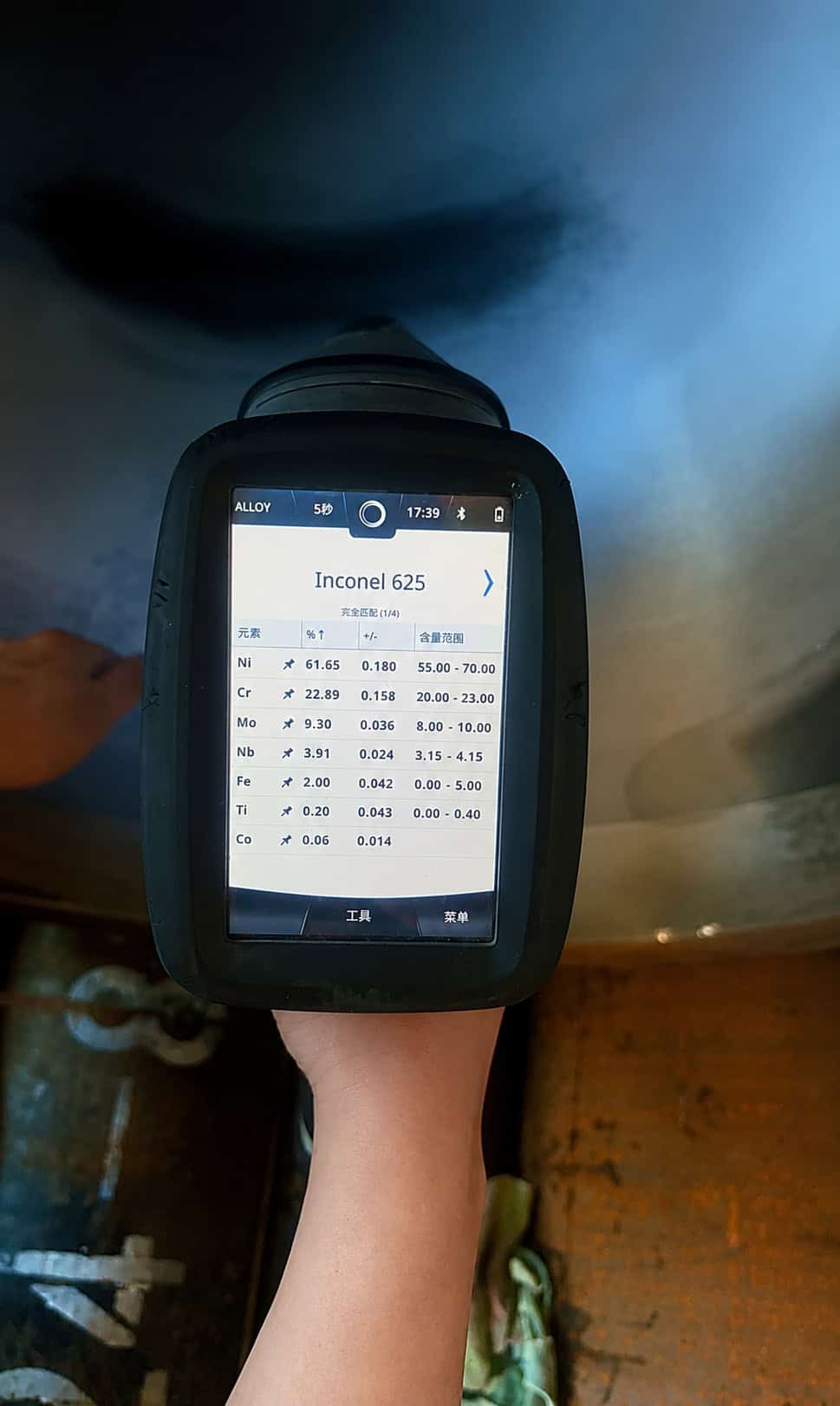
Excessive melting of the substrate can introduce additional substrate elements—particularly iron in the case of ferrous substrates—into the deposited layer, changing its chemistry and potentially affecting the corrosion performance expected from the Inconel 625 alloy system.
GREENSTONE therefore optimized the process to achieve sufficient fusion for reliable metallurgical bonding while limiting unnecessary substrate melting.
Actual coating composition was also verified during the project to confirm the deposited alloy characteristics.
Internal and External Pipeline Laser Cladding
The solution supports laser cladding of both accessible external surfaces and internal surfaces of pipeline components.
Internal laser cladding presents additional challenges because the processing head must operate within a restricted cylindrical space while maintaining appropriate laser focus, powder delivery, shielding and relative motion between the head and workpiece.
GREENSTONE’s internal laser cladding configuration enables controlled deposition along the inner wall while the coordinated motion system produces continuous overlapping tracks across the required surface.
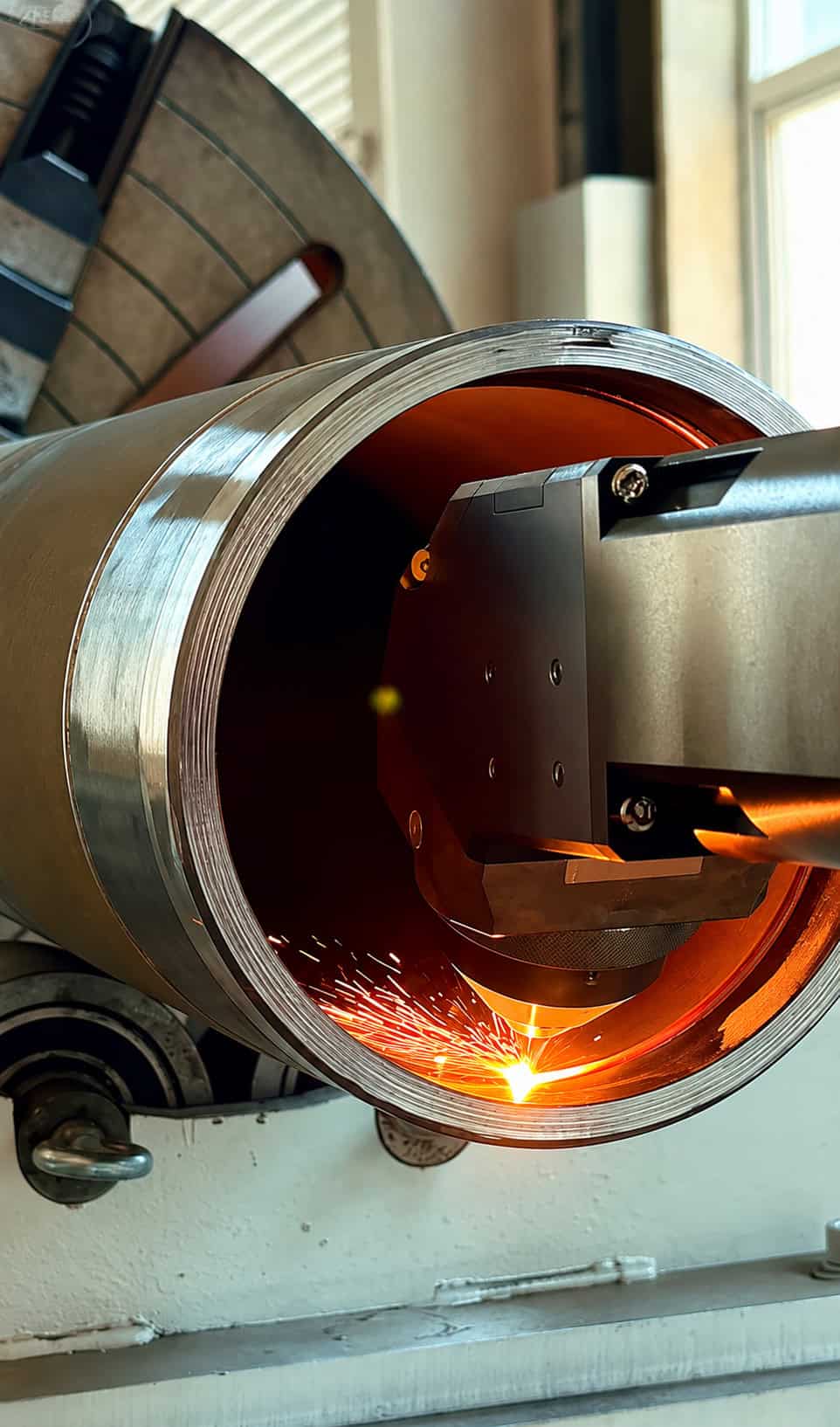
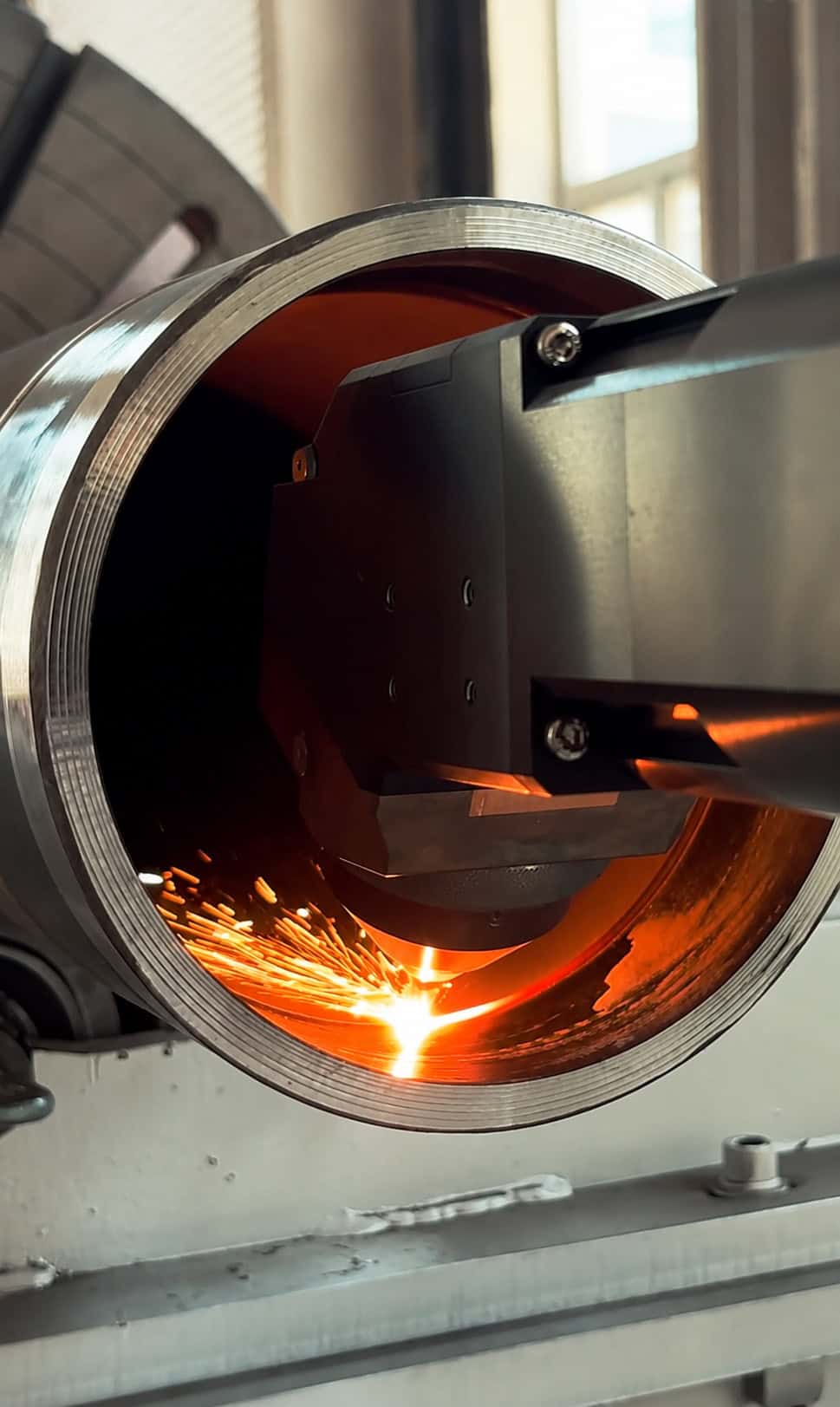
This allows corrosion-resistant alloy to be placed directly on the surfaces exposed to aggressive media without requiring the entire component to be manufactured from Inconel 625.
Process Verification and Coating Results
During project implementation, GREENSTONE completed actual workpiece cladding and process verification before delivery.
The resulting Inconel 625 coating showed continuous and uniform formation with controlled overlap between adjacent tracks. Process optimization focused on reducing dilution, maintaining coating integrity and limiting excessive thermal input into the pipeline component.
For this type of application, GREENSTONE evaluates not only whether a coating can be deposited, but also whether the material composition, deposition stability and resulting coating condition meet the intended engineering objective.
This is particularly important for corrosion-resistant cladding, where the final performance depends on both the selected alloy and how that alloy is deposited onto the substrate.
Successful Project Delivery
Following equipment integration, process development and workpiece verification, the GREENSTONE Inconel 625 laser cladding solution was successfully delivered to the customer.
The project demonstrates GREENSTONE’s capability to combine laser cladding equipment, internal-diameter processing technology, powder delivery, motion control and coating process development for demanding pipeline applications.
The same engineering approach can be adapted to components used in oil and gas processing, petrochemical systems, chemical pipelines and other industrial environments requiring localized corrosion-resistant surfaces.
For similar applications, customers can provide the component drawing, base material, internal or external cladding area, required coating material and service conditions. GREENSTONE can then evaluate the appropriate equipment configuration and laser cladding process.
