
Laser Cladding for Industrial Valves: Ball Valves, Valve Seats and Sealing Surface Enhancement
Application Overview
Industrial valves operate under demanding combinations of pressure, temperature, corrosion, erosion, friction and repeated sealing contact.
Ball valves, gate valves, butterfly valves, valve seats and related sealing components can gradually lose their required surface condition during long-term service.
Typical degradation includes:
- Adhesive wear
- Sliding wear
- Erosion
- Corrosion
- Surface scoring
- Localized material loss
- High-temperature degradation
- Sealing-surface damage
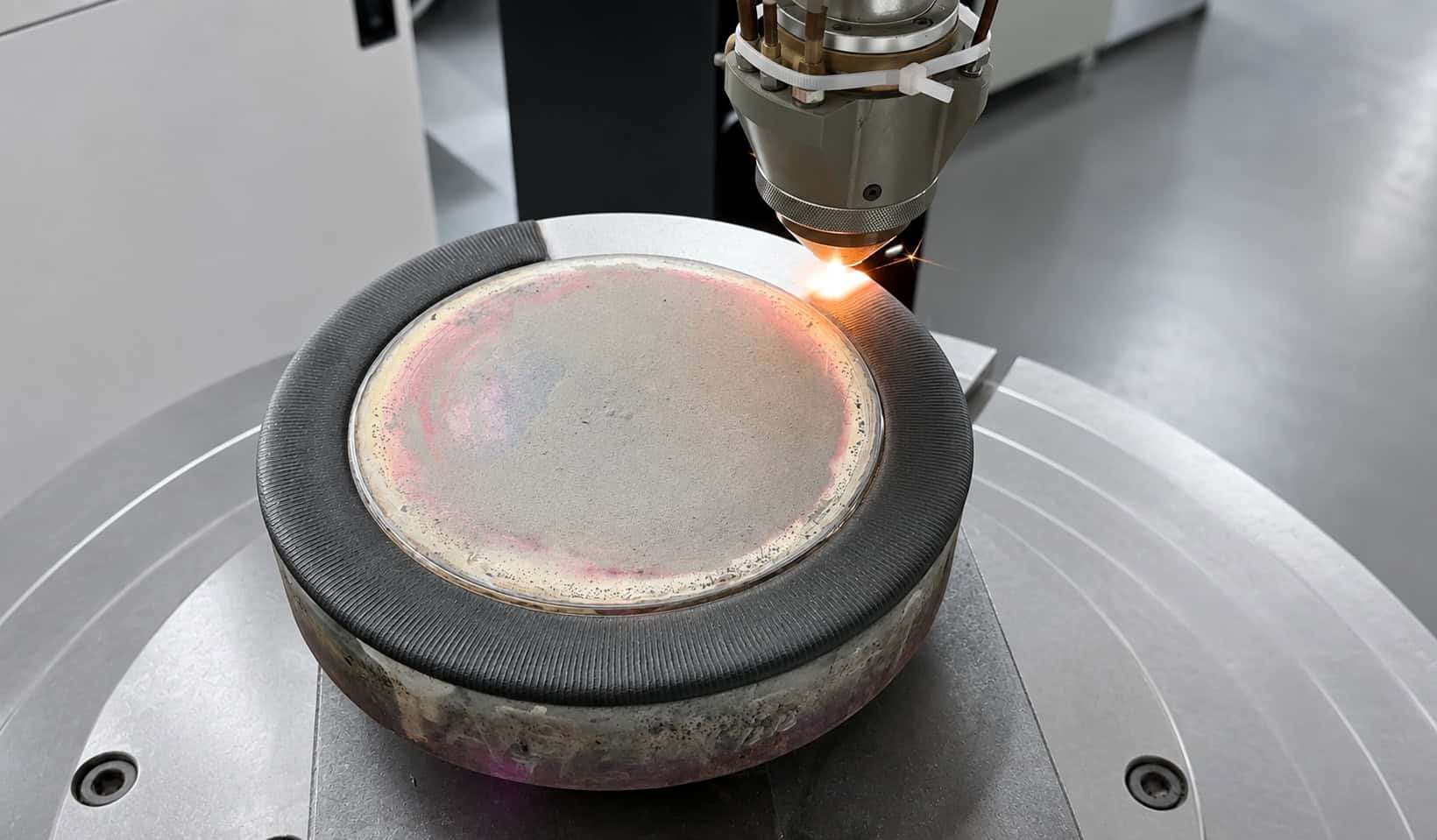
In this industrial application, laser cladding was used to manufacture and restore high-performance valve sealing surfaces using a cobalt-based alloy system.
The primary engineering objectives were:
Wear Resistance + Corrosion Resistance + High-Temperature Performance + Metallurgical Bonding + Sealing Surface Restoration
The actual system used 6000 W and 8000 W rapid laser cladding platforms together with dedicated valve sealing-surface processing equipment.
1. Typical Valve Components
The application covers several valve component types.
Ball Valves
Critical surface:
Valve ball sealing surface
Gate Valves
Critical surfaces:
- Gate sealing surface
- Valve seat
Butterfly Valves
Critical surfaces:
- Disc sealing region
- Seat contact surface
Other Industrial Valves
Including:
- Water valves
- Drain valves
- Flow-control components
- High-temperature valve components
- High-pressure valve components
Although these parts belong to the same valve industry, their geometries and operating environments can differ significantly.
2. Why Valve Sealing Surfaces Fail
Valve sealing surfaces must repeatedly open, close and maintain contact under load.
Depending on the application, the surface may be exposed to:
- High pressure
- Elevated temperature
- Corrosive fluids
- Particulate-containing media
- Sliding friction
- Repeated mechanical contact
- Erosion
- Thermal cycling
Once the sealing surface deteriorates, potential consequences include:
- Leakage
- Reduced sealing reliability
- Increased operating torque
- Surface scoring
- Reduced component life
- Frequent maintenance
This makes the sealing surface one of the most important functional regions of an industrial valve.
3. Why Laser Cladding Was Selected
Valve sealing surfaces can be manufactured or repaired using several technologies, including:
- PTA hardfacing
- Arc surfacing
- Thermal spray
- Conventional welding overlay
- Laser cladding
Laser cladding was selected in this application because it provides:
- Metallurgical bonding
- Controlled material deposition
- Relatively localized heat input
- Good hardness uniformity
- Controlled dilution
- Dense deposited layer
- Flexible alloy selection
- Automated processing capability
- Good suitability for precision sealing surfaces
The process is especially attractive where the sealing surface requires both functional alloy deposition and controlled final geometry.
4. Actual Laser Cladding Material
The actual application used:
Cobalt-Based Alloy
Cobalt-based alloys are widely suitable for severe valve-service conditions because they can provide combinations of:
- Wear resistance
- Galling resistance
- Corrosion resistance
- High-temperature stability
- Retention of mechanical properties at elevated temperature
For valve sealing surfaces, these properties can be more important than simply achieving maximum hardness.
5. Actual Hardness Performance
The original industrial application reports that the cobalt-based laser-cladded sealing surface achieved hardness approximately:
7–10 HRC higher
than comparable PTA or conventional surfacing-welding results used in that application.
This should be understood as application-specific comparative data, not as a universal constant for all valve materials and processes.
Hardness ultimately depends on:
- Alloy composition
- Dilution
- Cooling rate
- Substrate material
- Laser parameters
- Post-processing
6. Hardness Uniformity
One of the advantages reported in the application was improved hardness uniformity across the deposited layer.
This is important for sealing surfaces because local variations in hardness can lead to:
- Uneven wear
- Localized deformation
- Non-uniform sealing contact
- Premature surface failure
A more uniform deposited layer supports more predictable wear behavior.
7. Actual Dilution Rate
The industrial case reports a dilution rate of approximately:
15–20%
Dilution refers to mixing between the substrate material and deposited cobalt-based alloy during laser cladding.
For valve applications, dilution must be controlled because excessive mixing can alter:
- Coating chemistry
- Hardness
- Corrosion resistance
- Wear resistance
- High-temperature performance
The objective is:
Sufficient substrate melting for metallurgical bonding
while avoiding:
Excessive dilution that weakens the intended alloy properties.
8. Metallurgical Bonding
Laser cladding creates a fusion interface between the deposited alloy and the valve substrate.
The process involves controlled melting of:
- Cobalt-based powder
- A thin region of the base material
After solidification, the coating forms a metallurgically bonded layer.
This is particularly important for sealing surfaces exposed to repeated mechanical loading.
9. Reported Coating Density and Porosity
The actual industrial case reports:
No obvious porosity in the deposited layer
under the validated process conditions.
This is important because porosity in a valve sealing surface can potentially:
- Reduce local strength
- Accelerate wear
- Create corrosion initiation sites
- Affect final machining
- Reduce sealing reliability
This result should be treated as the performance achieved within the validated application process rather than as a guarantee for every laser-cladding condition.
10. Element Distribution
The original application also reports:
Uniform elemental distribution
within the laser-cladded cobalt-based alloy layer.
Uniform composition helps maintain consistent:
- Hardness
- Corrosion resistance
- Wear resistance
- High-temperature properties
across the functional sealing area.
11. Dendritic Microstructure
The deposited layer exhibited a:
Dendritic Microstructure
This is consistent with rapid melting and solidification during fusion-based laser processing.
The final microstructure depends on:
- Cooling rate
- Thermal gradient
- Alloy composition
- Melt-pool geometry
- Dilution
- Processing speed
Microstructural control is therefore one of the main reasons laser process parameters must be developed for the specific valve/alloy combination.
12. Ball Valve Laser Cladding
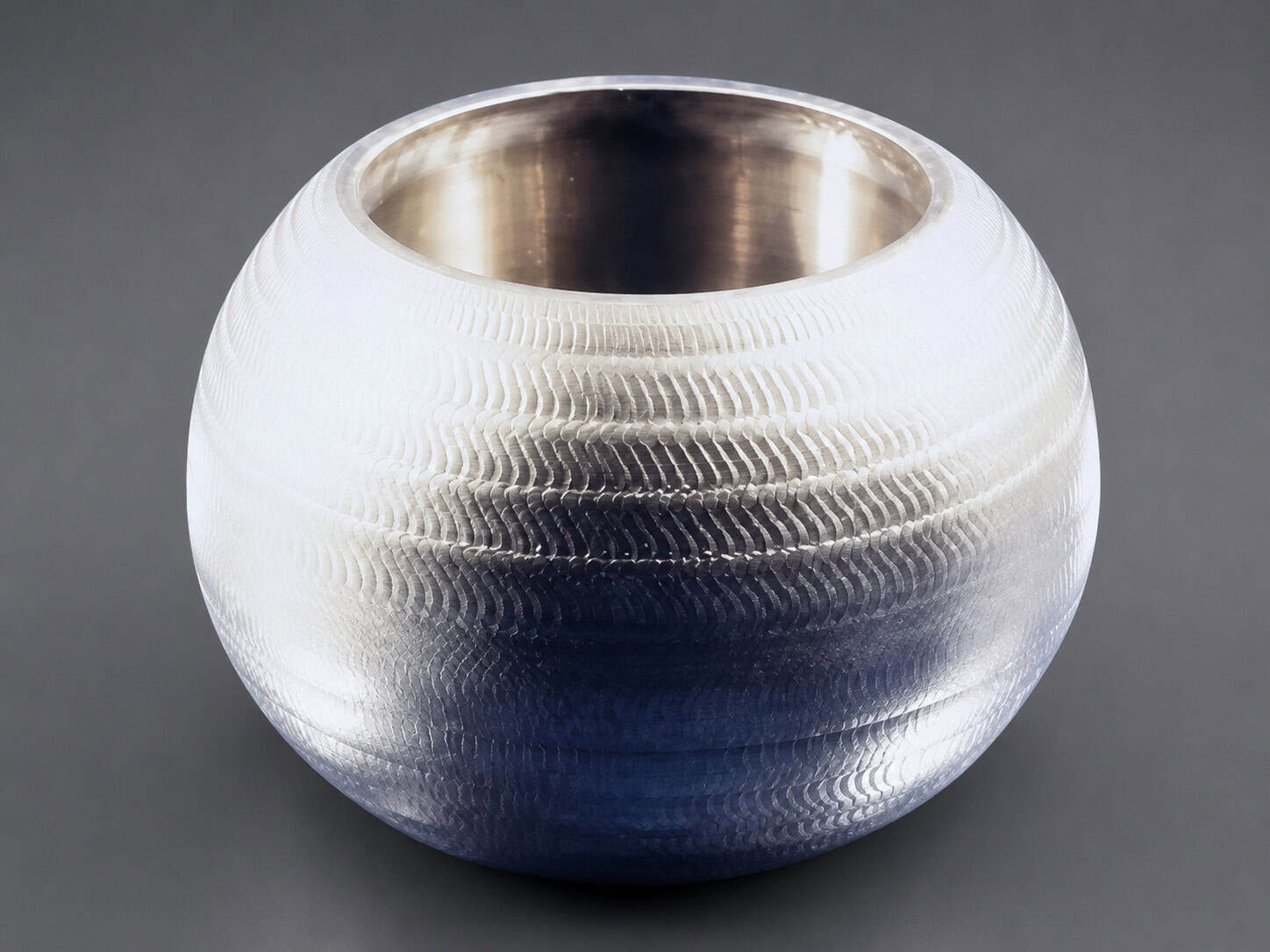
Ball valves are one of the most representative applications.
The valve ball requires:
- Accurate spherical geometry
- Uniform sealing surface
- Strong wear resistance
- Good corrosion resistance
Laser cladding can deposit cobalt-based material onto the functional surface before final machining.
A representative production route is:
Ball Preparation
↓
Surface Cleaning / Pre-Machining
↓
Laser Cladding
↓
Multi-Track Overlapping Deposition
↓
Controlled Cooling
↓
Precision Machining / Grinding
↓
Polishing
↓
Final Sealing-Surface Inspection
13. Valve Seat Laser Cladding
Valve seats experience repeated contact with the closing element.
Typical degradation includes:
- Impact wear
- Sliding wear
- Corrosion
- Erosion
- Surface recession
Laser cladding allows the high-performance cobalt-based alloy to be applied only to the sealing region.
This reduces high-alloy material consumption while providing a metallurgically bonded working surface.
14. Gate and Butterfly Valve Applications
Gate and butterfly valve surfaces can also be processed using laser cladding where the application requires:
- Wear resistance
- Corrosion resistance
- High-temperature resistance
- Surface restoration
The motion architecture depends on geometry.
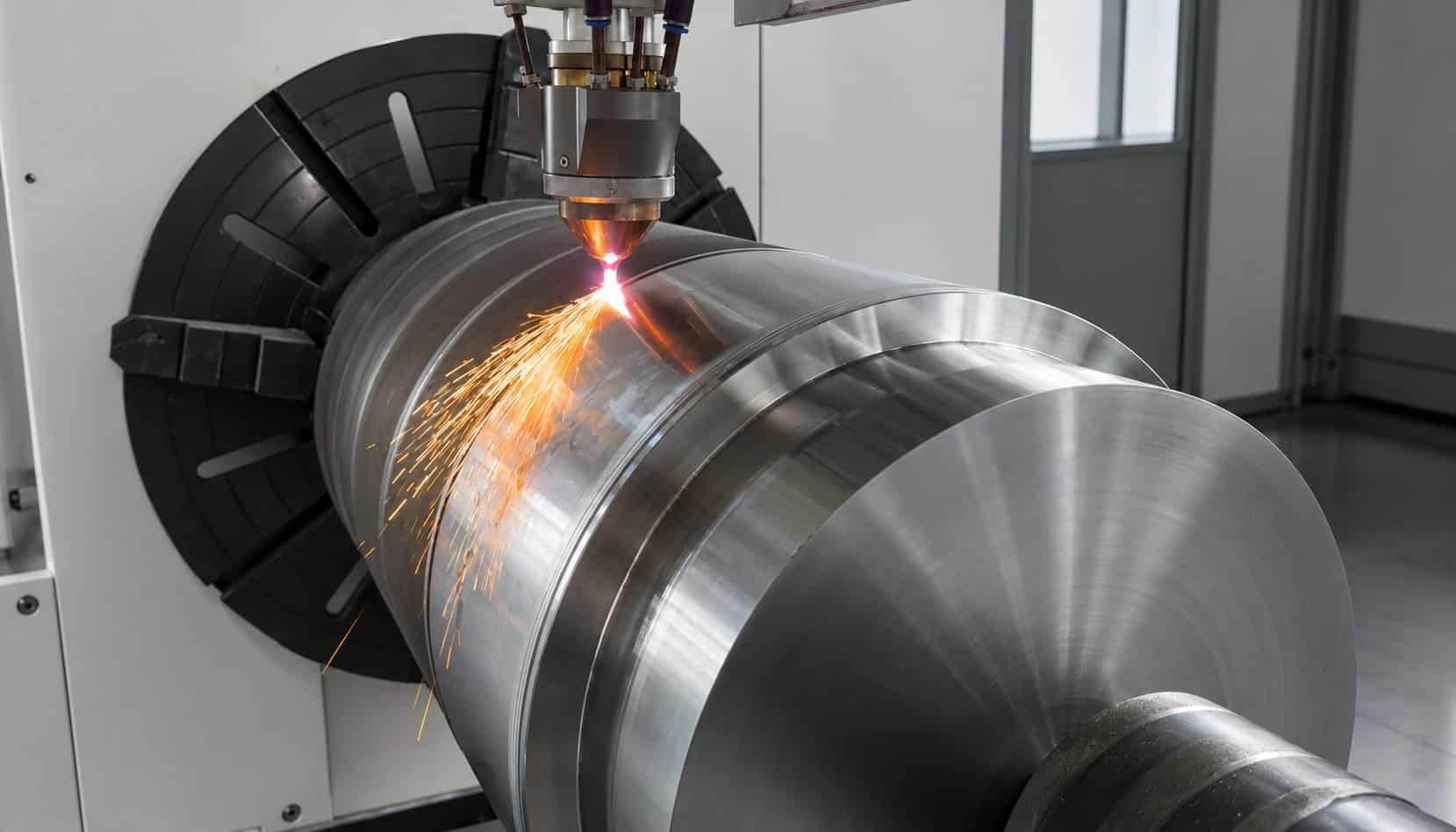
Rotationally symmetric sealing surfaces can use CNC rotary systems.
More complex valve components can use:
Robot / Manipulator + Positioner
15. Actual Laser Power Configuration
The real application used the following rapid laser cladding equipment:
- 6000 W
- 8000 W
Technical Data
| Parameter | Actual Application Data |
|---|---|
| Laser Power | 6000 W / 8000 W |
| Process | Rapid Laser Cladding |
| Main Material | Cobalt-Based Alloy |
| Main Application | Valve Sealing Surfaces |
| Dilution | 15–20% |
| Comparative Hardness | Approx. 7–10 HRC higher than PTA/surfacing welding in this application |
| Porosity | No obvious porosity reported |
| Element Distribution | Uniform |
| Microstructure | Dendritic |
| Bonding | Metallurgical |
| Motion | Dedicated machine / Manipulator + Positioner |
16. Why 6 kW and 8 kW Laser Platforms Are Used
Valve components can require both sufficient deposition capacity and controlled heat input.
A 6–8 kW platform provides an industrial processing window for:
- Higher deposition efficiency
- Larger sealing surfaces
- Rapid cladding
- Batch manufacturing
- Higher productivity
However:
Higher laser power does not automatically produce better sealing surfaces.
The correct result depends on synchronization of:
Laser Power + Powder Feed + Spot Size + Travel Speed + Track Overlap + Substrate
17. Powder Feed Rate
The original case does not disclose a fixed powder-feed rate.
Therefore this parameter must remain project-specific.
The powder feed rate should be matched to:
- Laser power
- Spot size
- Processing speed
- Required layer thickness
- Cobalt-alloy composition
Too much powder can create incomplete melting.
Too little powder can increase dilution and reduce deposition efficiency.
18. Travel Speed
The source case does not disclose a universal numerical travel speed.
Travel speed influences:
- Heat input
- Melt-pool dimensions
- Dilution
- Productivity
- Layer geometry
For rapid laser cladding, the process should be optimized to increase productivity while still maintaining metallurgical quality.
19. Coating Thickness
No universal coating thickness is disclosed in the original application.
Required thickness depends on whether the project involves:
New Valve Manufacturing
Functional coating thickness plus final machining allowance.
Valve Remanufacturing
Existing material loss plus functional layer plus machining allowance.
Therefore:
Cladding Thickness = Functional Requirement + Restoration Requirement + Machining Allowance
20. Rapid Laser Cladding vs. Conventional Laser Cladding
For valve sealing surfaces, different deposition strategies can be selected.
Rapid Laser Cladding
Suitable for:
- Relatively large sealing surfaces
- Batch manufacturing
- High production efficiency
- Controlled functional layers
Conventional Laser Cladding
Suitable where:
- Greater local buildup is required
- Repair depth is larger
- Geometry is complex
- Multiple layers are required
The correct process depends on the valve component.
21. Laser Cladding vs. PTA Hardfacing
PTA is a mature and highly effective valve hardfacing process.
It remains attractive because of:
- High deposition rates
- Mature industrial application
- Good metallurgical bonding
- Competitive cost
Laser cladding provides advantages where the application emphasizes:
- More localized heat input
- Greater processing precision
- Better control of the deposited geometry
- Potentially more uniform hardness
- Controlled dilution
- Automated rapid processing
The actual case reported higher hardness than PTA for the cobalt-based material system used.
However, this should not be interpreted as laser cladding universally replacing PTA.
22. Laser Cladding vs. Conventional Surfacing Welding
Conventional surfacing welding remains suitable for many large valve applications.
Its advantages include:
- Lower equipment cost
- Mature production route
- High deposition capability
Laser cladding becomes especially attractive when:
- Sealing geometry is precise
- Heat input needs tighter control
- Distortion must be minimized
- Batch automation is required
- Functional coating consistency is important
23. Dedicated Sealing-Surface Cladding Machine
The actual application included a:
Specialized Machine for Sealing Surface Cladding
This is important because valve processing should not always be treated as generic robotic cladding.
For repetitive valve-seat geometries, a dedicated machine can provide:
- Higher mechanical rigidity
- More stable positioning
- Better repeatability
- Simplified programming
- Higher batch-production efficiency
A purpose-built CNC architecture can therefore be more economical than a robot for highly repetitive components.
24. Manipulator + Positioner
The actual application also used:
Manipulator + Positioner
This architecture provides greater flexibility for components with more complex geometry.
The manipulator controls the laser processing head while the positioner rotates or tilts the valve component.
This allows better control of:
- Torch angle
- Working distance
- Surface orientation
- Processing trajectory
25. Equipment Architecture
A representative GREENSTONE valve laser-cladding system can integrate:
6–8 kW Industrial Fiber Laser
Powder Feeder
Laser Cladding Head
Dedicated CNC / Manipulator
Rotary or Tilt Positioner
Process Control
Cooling / Shielding / Extraction
Safety Enclosure
The final machine architecture should be selected according to the valve family and production volume.
26. Process Parameters That Must Be Controlled
Even with the actual power and dilution data available, other parameters must still be developed for each project.
| Parameter | Engineering Function |
|---|---|
| Laser Power | Controls melt energy |
| Powder Feed | Controls deposition volume |
| Travel Speed | Controls heat input |
| Rotation Speed | Controls circumferential deposition |
| Spot Size | Controls energy density |
| Track Width | Determines processing width |
| Track Overlap | Controls uniformity |
| Layer Thickness | Defines buildup |
| Shielding Gas | Protects melt pool |
| Stand-Off Distance | Controls powder convergence |
| Preheating | Evaluated according to substrate/alloy |
| Interpass Temperature | Controls thermal accumulation |
27. Preheating and Thermal Control
Cobalt-based alloys can be sensitive to:
- Thermal gradients
- Residual stress
- Cracking
depending on composition and substrate.
For certain valve applications, preheating and interpass-temperature control may therefore be required.
The correct temperature should be developed according to:
- Substrate material
- Component mass
- Alloy chemistry
- Coating thickness
- Geometry
28. Post-Processing
The laser-cladded sealing surface generally requires precision finishing.
Depending on the component:
- Turning
- Grinding
- Lapping
- Polishing
may be required.
For valve sealing surfaces, final geometry and roughness are critical because the coating cannot be evaluated only by hardness.
The ultimate functional requirement is:
Reliable Sealing Contact
29. Quality Control
Valve cladding quality can be evaluated through:
- Visual inspection
- Dimensional measurement
- Hardness testing
- Porosity evaluation
- Metallographic examination
- Dilution measurement
- Crack inspection
- Bonding evaluation
- Chemical composition
- Surface roughness
- Final sealing geometry
For critical valves, additional application-specific qualification may be required.
30. New Valve Manufacturing vs. Valve Remanufacturing
Laser cladding can support two different production strategies.
New Manufacturing
Structural Valve Component
Cobalt-Based Functional Surface
Final Machining
Remanufacturing
Worn Sealing Surface
Damage Removal
Laser Cladding Restoration
Final Machining
Restored Valve Component
This makes laser cladding useful for both OEM valve manufacturing and maintenance/remanufacturing.
31. Why Localized Material Deposition Matters
Cobalt-based alloys can be relatively expensive.
Manufacturing the entire valve component from a high-performance cobalt alloy would generally be uneconomical.
Laser cladding enables:
Low-Cost Structural Base Material + High-Performance Local Surface
This concentrates expensive alloy only where severe wear and corrosion actually occur.
32. Typical Industries Using Laser-Clad Valves
The technology can be evaluated for valve components used in:
- Oil & Gas
- Chemical Processing
- Power Generation
- Petrochemical
- Water Treatment
- Mining
- Heavy Industry
- High-Temperature Process Systems
The exact coating must be selected according to the medium and service environment.
33. Actual Technical Data Summary
| Item | Actual Application Data |
|---|---|
| Industry | Industrial Valve |
| Components | Ball Valve / Gate Valve / Butterfly Valve / Valve Seat / Sealing Surface |
| Process | Laser Cladding / Rapid Laser Cladding |
| Laser Power | 6000 W / 8000 W |
| Main Alloy | Cobalt-Based Alloy |
| Comparative Hardness | Approx. +7–10 HRC vs. PTA/surfacing welding in this application |
| Dilution | 15–20% |
| Porosity | No obvious porosity reported |
| Element Distribution | Uniform |
| Microstructure | Dendritic |
| Bonding | Metallurgical Bonding |
| Equipment | Dedicated Sealing-Surface Cladding Machine |
| Flexible Motion | Manipulator + Positioner |
| Powder Feed Rate | Project-specific; not disclosed |
| Travel Speed | Project-specific; not disclosed |
| Coating Thickness | Project-specific; not disclosed |
| Absolute Hardness | Material/process-specific; not disclosed |
| Post-Processing | Turning / Grinding / Lapping / Polishing as required |
34. Engineering Information Required for a Similar Valve Project
For a new valve application, GREENSTONE would normally require:
- Valve type
- Workpiece drawing
- Base material
- Component diameter
- Weight
- Sealing-surface geometry
- Operating pressure
- Operating temperature
- Process medium
- Corrosion conditions
- Wear mechanism
- Required coating thickness
- Target hardness
- Surface-finish requirement
- Production quantity
- Required cycle time
For ball valves, spherical diameter and exact cladding region are particularly important.
For valve seats, sealing-face dimensions and orientation must be confirmed.
35. From Valve Surface Wear to a Complete Laser Cladding Solution
A successful valve project should follow:
Valve Service Condition Analysis
↓
Failure Mechanism Evaluation
↓
Base Material Identification
↓
Cobalt-Based / Functional Alloy Selection
↓
Laser Process Development
↓
Sealing-Surface Motion Design
↓
Dedicated Fixture / Positioner Design
↓
Automated Laser Cladding
↓
Precision Finishing
↓
Quality Validation
At GREENSTONE, valve projects can therefore be developed as complete surface engineering + laser cladding + precision automation solutions, rather than simply supplying a laser source or generic cladding machine.
Confidentiality Notice
This application case is based on actual industrial laser cladding applications for valve sealing surfaces. The 6000 W and 8000 W rapid laser cladding platforms, cobalt-based alloy system, approximately 7–10 HRC comparative hardness improvement, 15–20% dilution, reported low-porosity condition, uniform elemental distribution, dendritic microstructure, dedicated sealing-surface machine and manipulator-positioner architecture are derived from the actual application. Customer identities, proprietary drawings, undisclosed powder formulations, remaining numerical process parameters and commercial information remain confidential.
Have a Similar Valve Application?
If your project involves a ball valve, gate valve, butterfly valve, valve seat, sealing ring or other industrial valve component, system development should begin with the actual service conditions and sealing geometry.
Send us your workpiece drawing, base material, dimensions, operating pressure and temperature, process medium, sealing area, wear/corrosion condition, required coating properties and production quantity. GREENSTONE’s engineering team can evaluate the alloy system, laser cladding process and appropriate automated equipment architecture for your application.
