


Imprimarea 3D metalică cu fascicul de electroni a reușit să înlocuiască și să depășească piața internă și are un mare potențial de dezvoltare viitoare
In recent years, China’s metal laser 3D printing technology has flourished, with leading companies represented by Polylite, Farsoon High-Tech, and Yijia 3D growing rapidly. In the field of electron beam metal 3D printing, there is also a domestically produced strong manufacturer, that is, our SEBM equipment manufacturer SLAM.
Self-developed electron gun, deeply engaged in electron beam selective melting equipment
Unlike most metal 3D printing manufacturers that use laser as a heat source, SLAM has been deeply engaged in electron beam metal 3D printing technology. As one of the earliest companies in China to develop commercial SEBM equipment, SLAM launched the first commercial SEBM equipment in China in 2015 and achieved sales of multiple units. In 2023, in response to the bottlenecks of electron gun accuracy, cost, and life, SLAM has developed a unique high-precision, high-power, long-life, low-cost indirect-heat electron gun in the industry, and achieved independent control of core components. The maximum power of the electron gun reaches 10kW, which can quickly preheat the wide flour bed to above 1100℃ and greatly improve the printing efficiency; by changing the cross-sectional characteristics of the cathode, the beam spot diameter under high power can be controlled, and the beam spot diameter under wide area can be accurately scanned with a diameter of less than 100μm, meeting the high-precision manufacturing requirements of parts; the service life of the overall cathode assembly of the electron gun is more than 500 hours, which is equivalent to the actual service life of the direct-heated LaB6 cathode, meeting the manufacturing needs of large-size parts or long-term stacking printing; the cathode and auxiliary cathode of the electron gun are both made of tungsten, which has good durability and the cost is less than 30% of the direct-heated LaB6 cathode, meeting the production needs of low-cost batch parts.
At the same time, facing different application scenarios, SLAM has launched a series of SEBM equipment equipped with different power inter-heated electron guns. The equipment is equipped with a variety of material process packages such as titanium alloys, refractory metals and alloys, TiAl and other brittle and difficult-to-process materials, copper and copper alloys, zirconium and zirconium alloys, nickel-based high-temperature alloys, ceramic/metal composite materials, etc. Focus on the three major application areas of medical, automotive and aviation.
●Y150 Plus, electron gun power 3kW, forming accuracy ±0.1mm, forming size 170×170×180mm;
●T200, electron gun power 6kW, forming accuracy ±0.2mm, forming size 200×200×450mm;
●H400, electron gun power 10kW, forming accuracy ±0.3mm, forming size 400×400×400 mm.
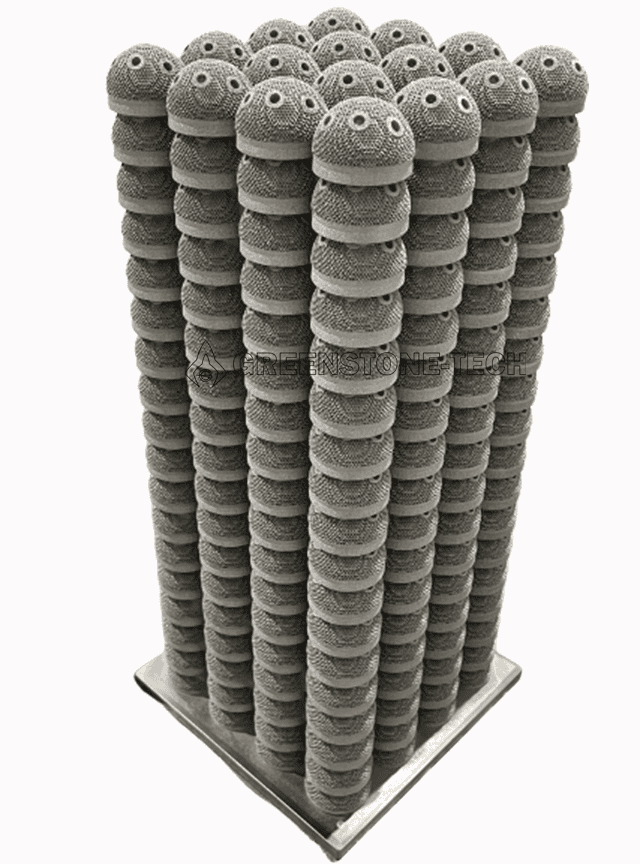
Using SEBM equipment with independent intellectual property rights, SLAM has created three major application scenarios in medical, automotive and aviation, especially in the medical and automotive fields. SEBM orthopedic implants and pure copper induction coils have been mass-applied in many downstream companies. In 2023, SLAM’s “Standardized Trabecular Acetabular Cup Mass Additive Manufacturing” and “Mass Production of Pure Copper High-Frequency Induction Coils for Automobiles” were selected into the list of typical application scenarios for additive manufacturing by the Ministry of Industry and Information Technology. SLAM has established a 3D printing center with more than 50 SEBM equipment installed, providing customers with batch manufacturing of complex metal parts.
In the medical field, SEBM technology has the advantages of high production efficiency, low production cost, high vacuum cleanliness, no need for heat treatment, and wire cutting. Relying on equipment and processes with independent intellectual property rights, SLAM has established a SEBM orthopedic implant production line with an annual production capacity of 100,000 pieces, mainly providing customized and standardized orthopedic implant blanks to medical device companies. The products involve acetabular cups, knee prostheses and intervertebral fusion devices, and the materials involve titanium alloys, tantalum and zirconium-niobium alloys. In addition to the significant reduction in production cycle, after SEBM mass production, the manufacturing cost of orthopedic implant blanks is lower than the traditional machining + spraying method.
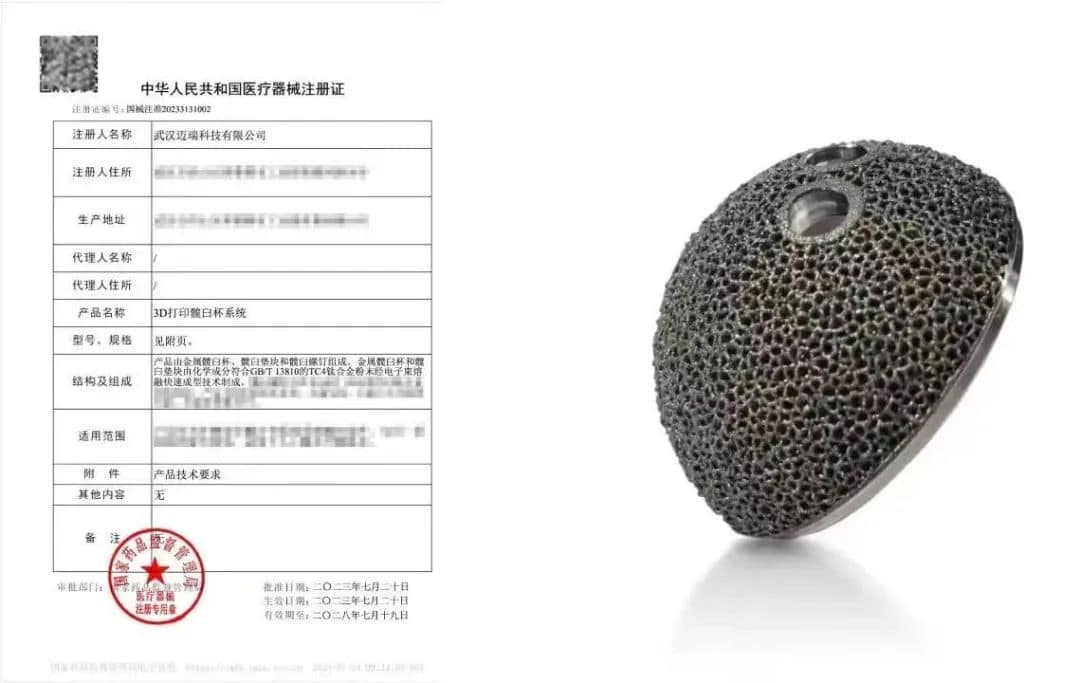
In addition, with the company’s advantages in raw materials, equipment, and technology, SLAM successfully helped Wuhan Mindray Technology Co., Ltd.’s titanium alloy acetabular cup system obtain a Class III medical device registration certificate issued by the State Food and Drug Administration in July 2023 (registration certificate number: National Medical Registration 20233131002). The pore structure of the electron beam 3D printed acetabular cup has 100% three-dimensional connectivity, high porosity, high friction coefficient, and low powder residue. It has excellent bone ingrowth effect and ensures the initial stability of the prosthesis after implantation. The project took only 2 years from project establishment to certification. It is reported that this product is the first orthopedic implant prosthesis product in my country that uses domestic electron beam 3D printing equipment + full-process domestic powder to obtain a Class III medical device registration certificate, marking that domestic electron beam 3D printed orthopedic implants have established an independent, controllable, and innovative R&D and production system. The person in charge of SLAM said that in addition to Mindray, the company also assisted many medical device companies in the registration and certification of SEBM orthopedic implants.
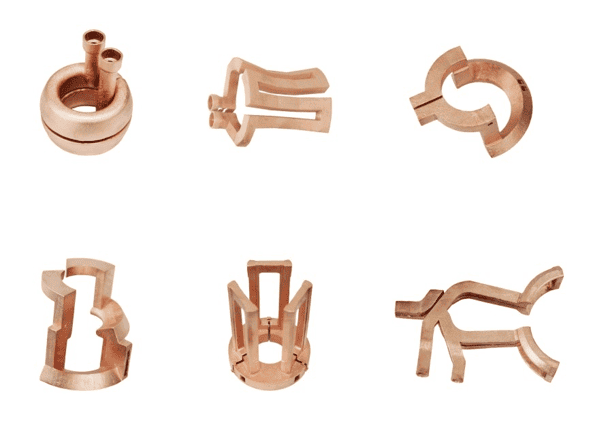
In the automotive field, in response to the technical needs of induction heating of automotive parts, SLAM has developed a forming process package for pure copper and some grades of copper alloys, and has developed electron beam 3D printed pure copper induction coils of various specifications. Compared with the traditional induction coil forming method that relies on turning, milling, drilling, grinding and welding, electron beam 3D printed pure copper induction coils have the advantages of high density (>99.8%), long service life (2-3 times that of traditional processes), excellent conductivity (conductivity 98% IACS), short manufacturing cycle (single part is 1/7 of traditional processes), and good hardening effect.
At present, the pure copper induction coils printed by SLAM’s SEBM technology have been verified and applied in the production lines of more than 20 leading automotive parts companies in China, and the user experience is excellent.
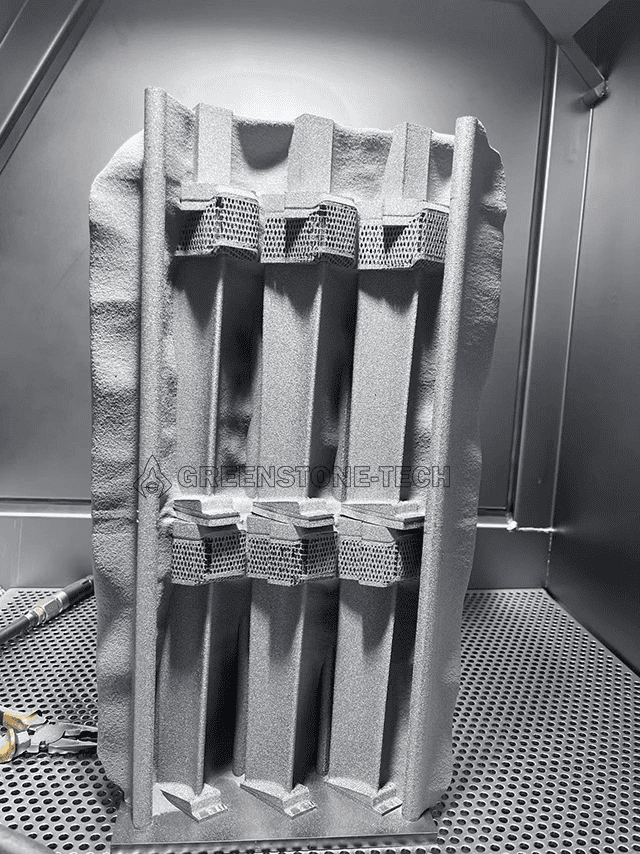
In the aerospace field, in response to the manufacturing needs of engine titanium aluminum blades, SLAM has specially developed the T200 model, and the 450mm printing height can stack two layers of metal blades. The person in charge of SLAM said that if titanium aluminum materials are printed using SLM technology, the stress is very large and it is easy to deform or crack. However, when printed using SEBM technology, the preheating temperature can even reach thousands of degrees Celsius, which can effectively reduce the stress and ensure the stability and efficient molding of the blades. In addition, a large number of applications have been achieved in the rapid design and manufacturing of thin-walled parts, complex structures, lightweight and weight-reducing structures, and structural and functional integration parts.
Unlike SLM equipment, which generally uses imported lasers and galvanometers, EBM equipment manufacturers need to independently master the core components of the electron gun, so they need to face more challenges. As SLM technology is developing towards meter-level size and multi-laser strategy, SLAM hopes to deepen its research in the single electron gun solution, and plans to develop equipment that can achieve a 650mm molding size through a single electron gun in the next step.
Lydia Liu
Dr. Lydia Liu - Cercetător principal, expert în integrarea pieței și a soluțiilor Dr. Lydia Liu este un profesionist hibrid unic, care îmbină perfect expertiza tehnică de top în fabricarea aditivă cu o viziune ascuțită pentru integrarea pieței și a resurselor. În calitate de doctor și cercetător principal în AM, ea posedă cunoștințe tehnice profunde, acționând în același timp ca o punte de legătură esențială între tehnologia de ultimă oră și nevoile pieței. Valoarea sa unică constă în capacitatea sa de a înțelege în profunzime cele mai complexe provocări tehnice cu care se confruntă clienții și, pe baza unei imagini de ansamblu cuprinzătoare a ecosistemului AM global, de a integra cu precizie cele mai bune resurse și soluții tehnice....


