


Aplicação da tecnologia de revestimento a laser no reparo das paredes internas do cilindro de uma máquina de fundição sob pressão.
Março 31, 2023


1. Technical Advantages of Laser Cladding for Die Casting Machine Barrel Repair
Using Greenstone-Tech’s laser cladding technology to repair the inner walls of die casting machine barrels offers the following significant advantages:
- Precision Localized Repair: It allows for targeted repair of damaged areas, avoiding the need to replace the entire barrel and significantly reducing maintenance costs.
- Excelente desempenho de adesão: The cladding layer forms a strong metallurgical bond with the substrate, resulting in high bond strength and excellent peel resistance.
- Flexible Material Selection: The repair material can be chosen based on operational requirements, including various metal-based composite powders and ceramic-enhanced powders, which provide superior wear and corrosion resistance in the repaired barrel.
2. Core Advantages of the Laser Cladding Process
- Rapid Solidification Characteristics: The cooling rate can reach up to 10⁶ °C/s, resulting in an extremely non-equilibrium solidification process that can produce fine-grained structures, metastable phases, and even amorphous structures.
- Controllable Metallurgical Bonding: By precisely controlling the laser focus and process parameters, a metallurgical bond at the interface with a low dilution rate (typically <5%) can be achieved, ensuring the cladding layer’s composition and performance match the design specifications.
- Zona Mínima Afetada pelo Calor: The depth of the heat-affected zone on the substrate can be controlled to 0,1–0,5 mm, resultando numa deformação mínima da peça de trabalho.
- High-Strength Interface Bonding: The cladding layer forms a complete metallurgical bond with the substrate, providing an interface strength comparable to that of the base material.
- Excellent Cladding Layer Quality: The cladding layer can be applied with a thickness range of 0.5–10 mm, with hardness reaching 18–60 HRC, dense microstructure, and no defects such as porosity, inclusions, or cracks.
- Ampla compatibilidade de materiais: A broad selection of powders can be used, including cladding high-melting-point alloys onto low-melting-point substrates.
- On-Site Adaptability: The laser can be transmitted via fiber optics, enabling on-site repair of large components.
- Accessibility of Complex Structures: The non-contact nature of the process makes it suitable for cladding special structures such as grooves, deep holes, and other intricate geometries.
- Convenient Operation: Greenstone-Tech’s handheld laser cladding equipment offers significant advantages for repairing complex curved parts without the need for complex programming or automation equipment.
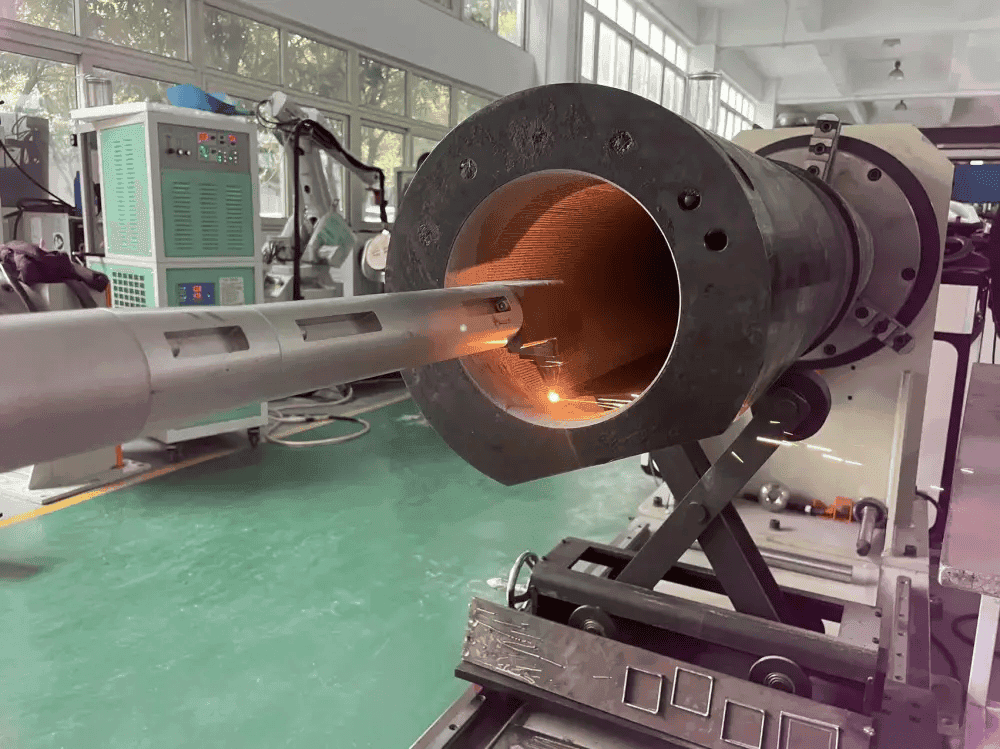
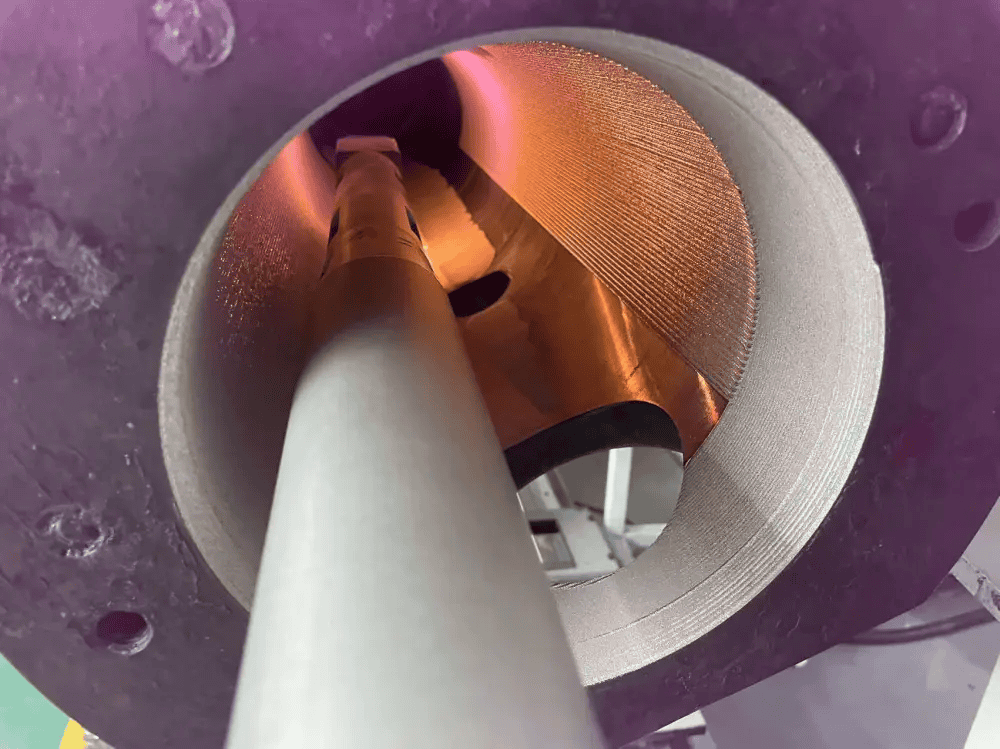
3. Laser Cladding Repair Process for Die Casting Machine Barrels
- Surface Pre-treatment: Thorough cleaning of the repair area is performed to remove oil, oxides, and fatigue layers, ensuring the surface reaches a cleanliness level of Sa 3.0.
- Otimização dos parâmetros do processo: Key parameters such as laser power (typically 1.5–3.0 kW), scanning speed (5-20 mm/s), spot diameter (2–4 mm), and powder feed rate are determined based on material properties and repair requirements.
- Precision Cladding Construction: Using a synchronized powder feeding method, alloy powders are precisely delivered to the molten pool area, where they are melted by the laser beam to form a uniform and dense cladding layer on the substrate surface.
- Post-processing and Finishing: The cladding layer undergoes stress-relieving annealing, followed by grinding, polishing, and other finishing techniques to restore the part’s original dimensions and surface roughness.
4. Conclusão
Greenstone-Tech’s laser cladding technology offers an efficient and reliable solution for repairing die casting machine barrels, significantly extending the equipment’s service life and enhancing its performance. This technology is also suitable for surface strengthening and remanufacturing applications in industries such as aerospace, automotive manufacturing, and mold repair.
In addition to laser cladding, other surface technologies such as plasma spraying and electroplating can also be used for component repair. In practical applications, a comprehensive evaluation of the base material properties, damage types, performance requirements, and economic factors is necessary to select the optimal repair solution through a technical and economic analysis.
Wendy Wang
Wendy Wang – Technical Consultant, Laser Cladding & Additive Manufacturing Solutions Expert Wendy Wang is a highly specialized technical consultant at Greenstone, combining advanced expertise in laser cladding, DED metal additive manufacturing, industrial surface engineering, and high-value manufacturing solutions with strong strategic capabilities in global market integration and technical resource coordination. With deep industry knowledge across laser material processing, additive manufacturing systems, industrial equipment optimization, and advanced manufacturing commercialization, Wendy plays a critical role in bridging cutting-edge engineering technologies with practical industrial applications. Her expertise enables Greenstone’s global clients to successfully navigate complex technical challenges while maximizing manufacturing efficiency, equipment…