
Laser Cladding Repair of a Worn Bearing Raceway: Industrial Remanufacturing Case
Bearing raceways operate under repeated rolling contact, concentrated loads, friction, and cyclic stress. Once the raceway surface becomes worn or locally damaged, the bearing assembly can lose dimensional accuracy and operating stability. For large, expensive, or difficult-to-replace components, replacing the complete part is not always the most economical solution.
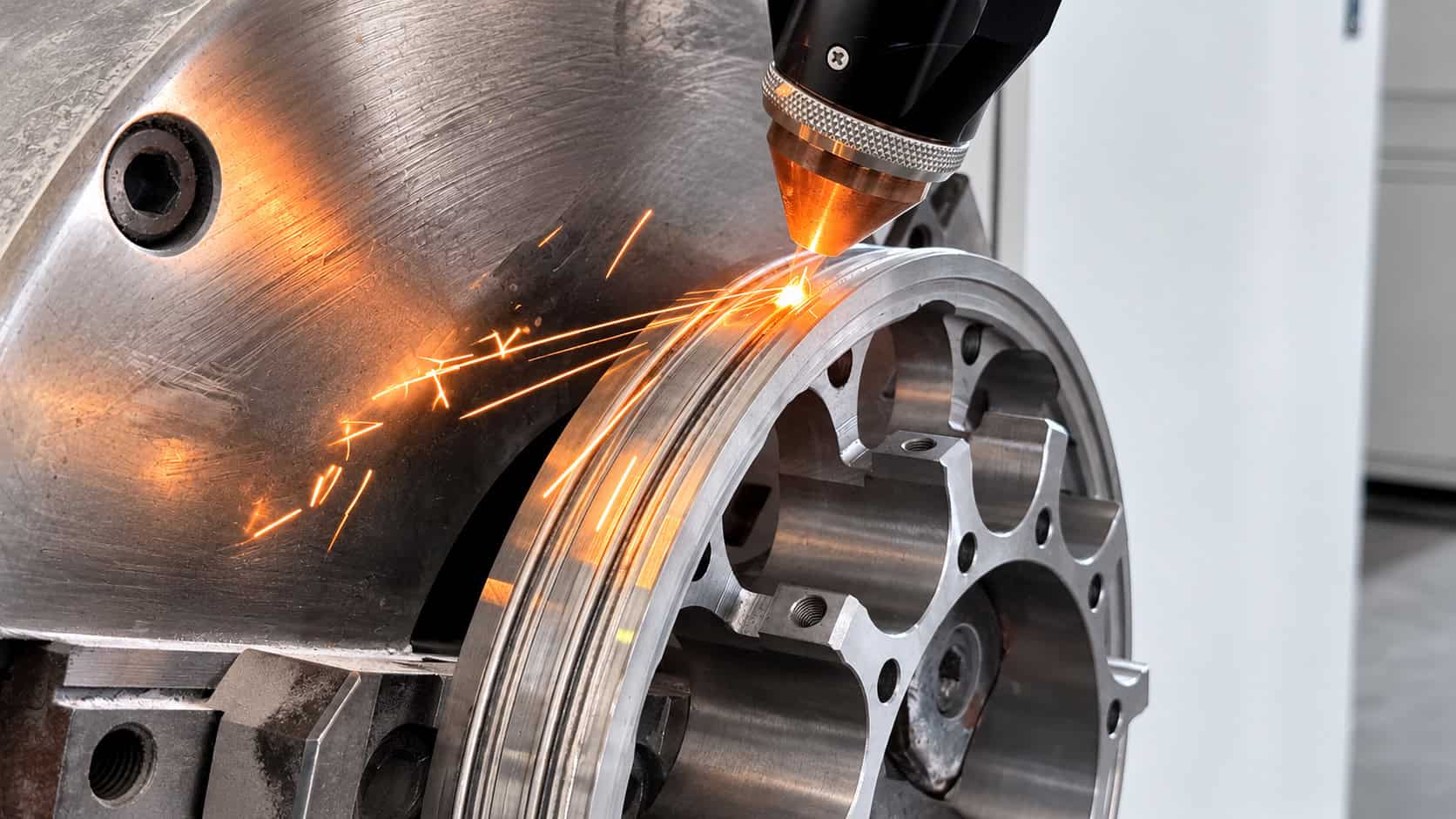
In this industrial repair case, GREENSTONE used a powder-fed laser cladding system to rebuild the worn bearing raceway. The damaged circumferential surface was restored by depositing new metallic material along the raceway, followed by post-cladding machining to recover the required working profile.
The project demonstrates a practical repair route for bearing raceways and other annular wear surfaces where localized material loss must be rebuilt without replacing the complete component.
The Repair Challenge
The workpiece was a large annular mechanical component containing multiple internal cavities and several circumferential raceway features around its outer diameter.
The functional raceway had experienced localized wear during service. Because the damaged region was part of the rolling-contact surface, simply polishing or grinding away the defect would remove additional material and further change the original dimensions.
The repair therefore required a material-addition process.
GREENSTONE’s objective was to rebuild the worn raceway with laser cladding, provide sufficient deposited material for subsequent machining, and finally restore the functional geometry of the bearing surface.
Why Bearing Raceway Repair Is Technically Demanding
A bearing raceway is not simply an ordinary cylindrical surface. It is a functional contact surface that repeatedly carries rolling loads during operation.
Several factors must therefore be considered when developing a repair process.
High Wear Resistance
The repaired region must withstand repeated contact and surface wear. The deposited material must therefore be selected according to the substrate and the actual service conditions of the bearing.
Resistance to Repeated Loading
A bearing raceway experiences cyclic mechanical loading. A repair layer must therefore provide stable bonding with the original component rather than behave like a loosely attached surface coating.
Reliable Metallurgical Bonding
Laser cladding locally melts the deposited powder together with a controlled amount of substrate material. After solidification, the deposited layer forms a metallurgical bond with the base material.
For raceway restoration, stable bonding is one of the fundamental requirements of the repair.
Controllable Repair Geometry
The final raceway dimensions cannot be determined by the raw laser-cladded surface alone.
The deposited material must provide enough machining allowance so that the repaired raceway can subsequently be machined back to the required profile and dimensions.
Why GREENSTONE Used Laser Cladding
The damage was localized to the working surface, while the majority of the original component remained available for continued use.
Laser cladding therefore provided a practical remanufacturing route:
retain the original component → rebuild the worn area → machine the deposited layer → restore the bearing raceway
Unlike a process intended only to modify surface chemistry, this repair required actual material build-up.
Powder-fed laser cladding was selected because the deposition could be accurately concentrated on the worn circumferential region.
GREENSTONE Bearing Raceway Laser Cladding System
The repair was carried out using a GREENSTONE laser cladding system configured for rotational components.
The equipment integrated the major functions required for industrial powder-fed laser cladding:
- fiber laser processing;
- powder delivery;
- laser cladding head;
- CNC-controlled movement;
- workpiece rotation;
- cooling;
- gas delivery;
- integrated process control.
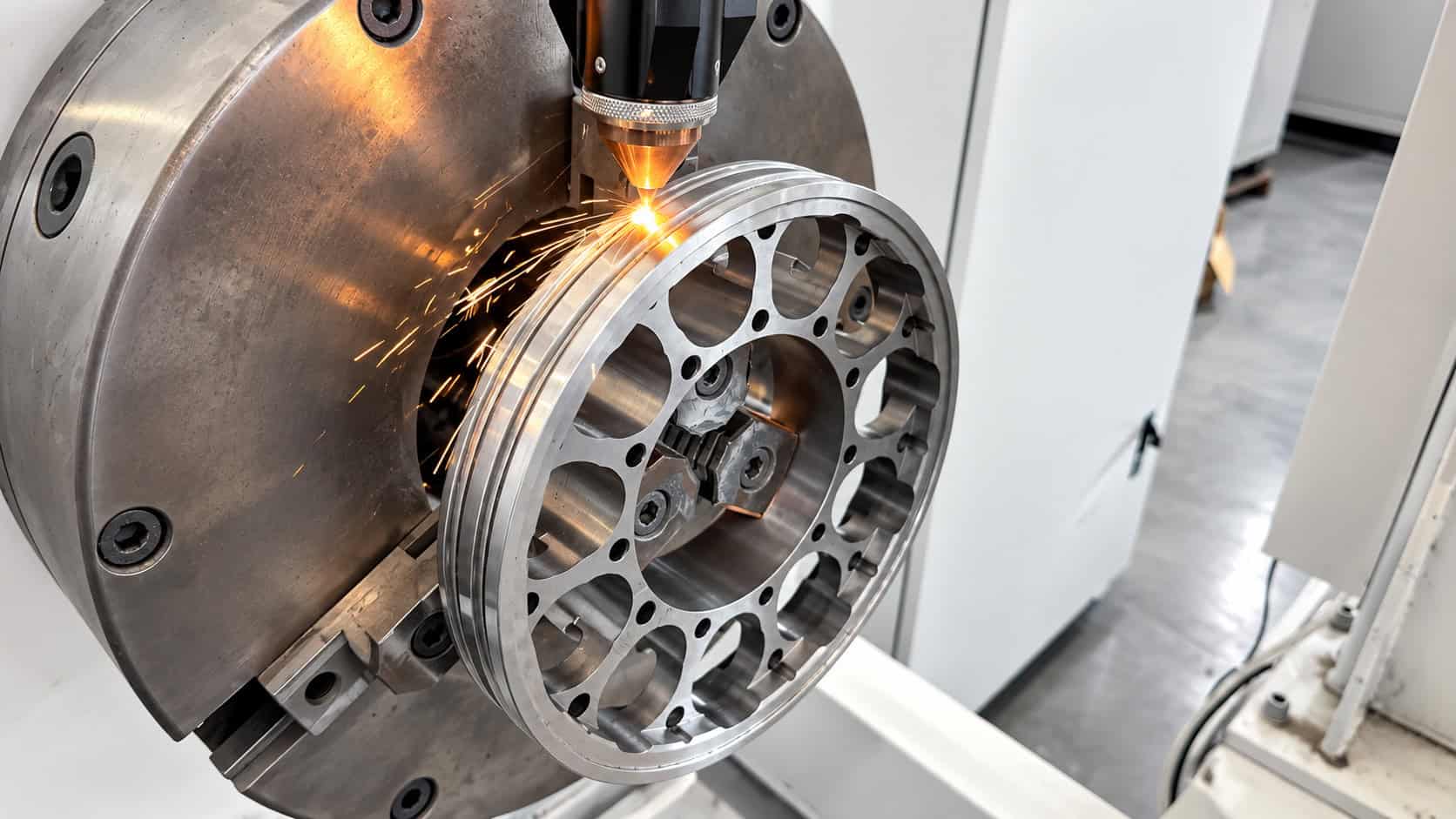
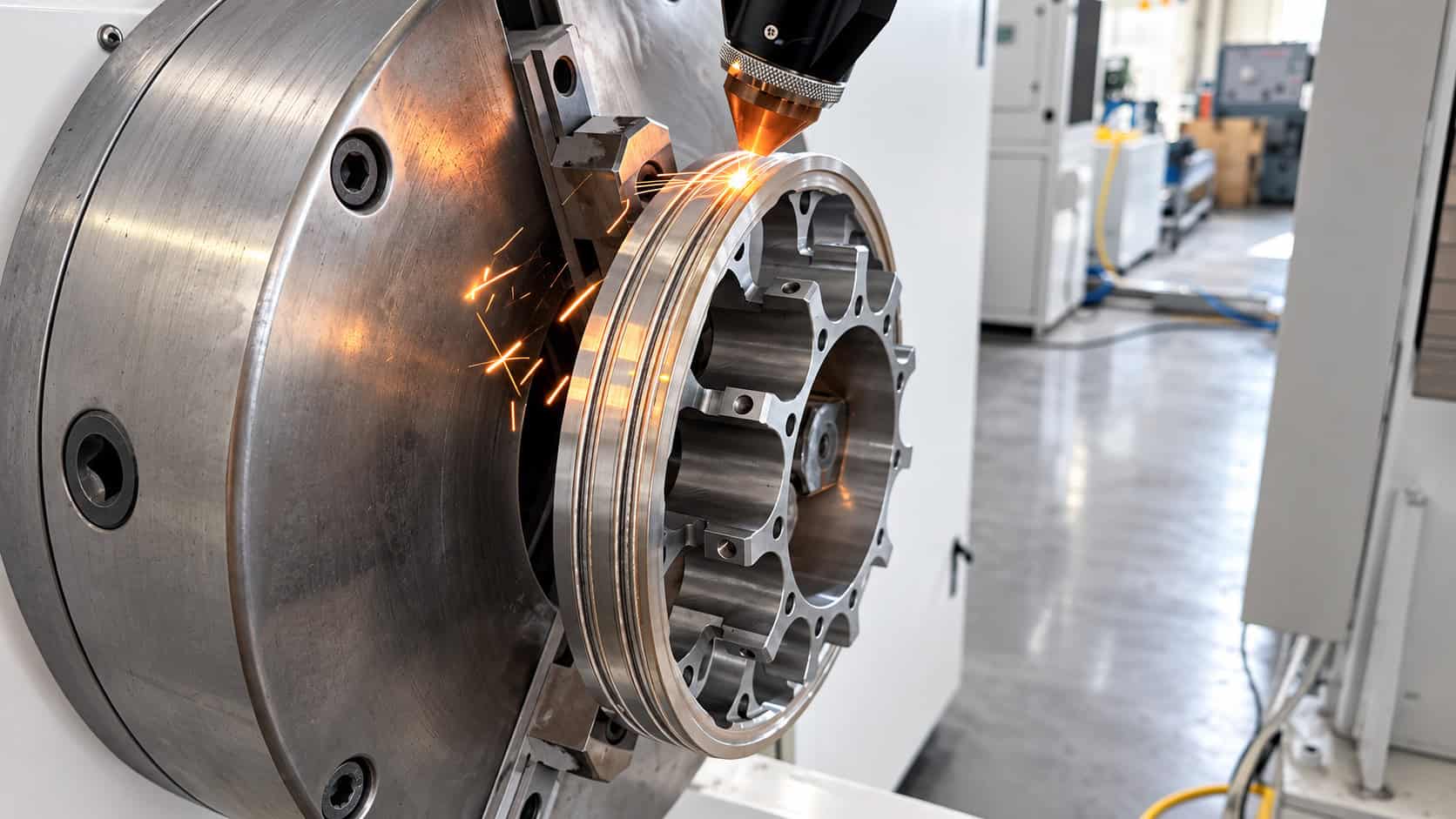
The workpiece was mounted horizontally on the rotary unit. During cladding, the bearing component rotated while the laser head was positioned over the required raceway.
This arrangement allowed the laser processing zone to follow the circumference continuously.
Why Rotary Motion Is Suitable for Bearing Raceway Repair
The geometry of a bearing raceway naturally favors coordinated rotational laser cladding.
Instead of programming the laser head to trace the entire circumference through complex multi-axis movement, the workpiece can rotate beneath a controlled processing head.
The fundamental movement becomes:
Workpiece rotation + controlled laser-head positioning = continuous circumferential cladding
For multiple raceways, the processing head can be repositioned after one circumferential track or repair region is completed.
This approach is also relevant to other rotational components such as shafts, rollers, sleeves, bearing seats, and cylindrical sealing surfaces.
Inspection and Preparation Before Laser Cladding
The first stage of the repair was to evaluate the worn raceway and determine the area requiring restoration.
For a bearing repair, this step is important because the final deposition strategy depends on the depth and distribution of material loss.
The worn area must also be properly prepared before laser processing. Contamination, unstable surface material, and unsuitable damaged material can interfere with the cladding process.
The preparation stage therefore establishes a suitable substrate for subsequent laser deposition.
Setting the Laser Cladding Path
Once the repair region had been defined, the processing path was established around the circumference of the component.
Because the damaged area followed the bearing raceway, the cladding trajectory had to remain aligned with the original annular geometry.
The GREENSTONE system coordinated the rotary axis with the laser processing position so that deposition could continue around the complete raceway.
For wider repair areas or multiple neighboring raceways, several adjacent circumferential tracks were deposited.
Powder-Fed Laser Cladding Process
During processing, metallic powder was delivered continuously into the laser interaction zone.
The laser simultaneously heated the incoming powder and a controlled region of the substrate. A localized molten pool formed at the raceway surface, and the supplied powder became incorporated into the pool.
As the component rotated away from the laser, the molten material rapidly solidified and formed a new deposited track.
The basic process was:
Powder delivery → laser melting → localized melt pool → workpiece rotation → rapid solidification → circumferential cladding track
Continuous rotary movement allowed the deposition process to extend around the complete bearing raceway.
Multi-Track Restoration of the Raceway
A worn raceway may require more material than can be restored with one narrow cladding track.
In this case, adjacent tracks were deposited to rebuild the required circumferential area.
Track positioning is important because each new pass must connect properly with the neighboring deposited material. The purpose is to create a continuous repair zone rather than a series of isolated beads.
The process therefore requires coordination between:
laser energy + powder delivery + rotational speed + track position + overlap
These variables collectively influence the shape and continuity of the deposited material.
Controlling Laser Energy During Bearing Repair
Laser power cannot be considered independently during a raceway repair.
The actual thermal condition of the melt pool depends on the combination of laser energy, movement speed, powder feed, spot condition, substrate material, and component geometry.
Insufficient energy can result in incomplete melting and poor bonding.
Excessive energy can increase substrate melting and thermal influence beyond what is required for the repair.
GREENSTONE therefore develops the cladding process around a stable operating window rather than simply using the highest available laser power.
Stable Powder Feeding Is Essential
Powder delivery directly affects the amount of material deposited onto the raceway.
If the powder flow fluctuates during rotation, the resulting track can develop inconsistent height and geometry. This becomes increasingly important when multiple circumferential tracks are required.
A stable repair therefore depends on coordinated operation of the powder feeder, carrier gas, cladding head, laser, and motion system.
Consistent powder delivery helps create a more predictable deposited layer and provides more uniform material for subsequent machining.
Maintaining the Laser Head Position
The relationship between the cladding head and raceway surface must remain stable during processing.
Changes in stand-off distance can alter the relationship between the laser spot, powder stream, and workpiece. This can influence powder utilization, melt pool behavior, and deposited-track geometry.
Accurate workpiece mounting is therefore important.
The component must be positioned so that the raceway rotates consistently relative to the laser cladding head.
Circumferential Laser Cladding of Multiple Raceway Features
The component contained several neighboring circumferential features.
GREENSTONE processed the required wear surfaces sequentially. After one cladding region was completed, the laser head position was adjusted for the next region while the rotary setup continued to provide the required circumferential movement.
This method allows several parallel or neighboring annular surfaces to be repaired on the same component without changing the fundamental workholding arrangement.
It also demonstrates the advantage of combining a CNC motion platform with a dedicated rotary axis for bearing and shaft-type laser cladding applications.
As-Cladded Surface Condition
After deposition, the repaired raceway showed the characteristic surface profile produced by overlapping laser cladding tracks.
This is an intermediate condition rather than the final bearing surface.
For dimensional restoration projects, the laser-cladded layer is intentionally deposited with enough material to allow the final surface to be machined.
The process can therefore be understood as two complementary manufacturing stages:
Laser cladding restores material.
Machining restores precision.
Expecting the as-cladded surface to directly provide the final bearing finish would not be appropriate for this type of remanufacturing project.
Machining Allowance for Final Raceway Restoration
One of the most important considerations in bearing repair is the amount of material deposited above the final required surface.
If insufficient material is deposited, machining may expose an incompletely restored region.
If excessive material is deposited unnecessarily, processing time, powder consumption, and post-machining requirements increase.
The objective is therefore to build a controlled repair layer that provides sufficient machining allowance for complete dimensional restoration.
The required allowance depends on the actual damage and final machining requirements of the specific component.
Post-Cladding Machining
After laser cladding, the deposited raceway was machined to remove the raw cladding profile and restore the required circumferential geometry.
This step transformed the visibly deposited cladding tracks into a continuous machined working surface.
For bearing raceway remanufacturing, post-processing is particularly important because the final component must recover not only material volume but also the required geometrical relationship between the repaired raceway and the rest of the component.
The final surface therefore results from the integration of laser deposition and precision machining, rather than either process being used alone.
Final Repair Result
After cladding and machining, the previously worn circumferential region was restored as a continuous bearing surface.
The completed component retained its original main body while the damaged working area was rebuilt.
This illustrates one of the primary advantages of laser cladding remanufacturing: a large component does not necessarily need to be discarded because a relatively small functional region has reached its wear limit.
Where the substrate and overall component remain suitable for repair, localized material restoration can extend the useful life of the part.
Why Laser Cladding Is Suitable for Bearing Raceway Remanufacturing
Bearing raceway repair combines several requirements that match the characteristics of laser cladding.
The process provides localized deposition, controlled material addition, metallurgical bonding, compatibility with rotary processing, and the ability to leave a defined machining allowance.
For suitable components, this creates a repair chain that is fundamentally different from simply grinding away damaged material:
Worn raceway
→ inspection
→ preparation
→ powder-fed laser cladding
→ circumferential material rebuilding
→ machining
→ restored raceway
The original component remains the foundation of the remanufactured part.
Key Factors for Stable Bearing Raceway Laser Cladding
Successful bearing raceway repair depends on the complete process rather than a single machine specification. GREENSTONE evaluates the substrate material, wear mechanism, damaged depth, required build-up, cladding material, workpiece diameter, raceway geometry, rotational motion, laser energy, powder feed, track overlap, machining allowance, and final performance requirements together.
This is particularly important for bearing applications because different bearings may operate under very different loads, speeds, lubrication conditions, temperatures, and environments.
A process suitable for one bearing component should therefore not automatically be copied to another without technical evaluation.
Where This Repair Method Can Be Applied
The same rotational laser cladding principle can be used for other high-value mechanical components with localized circumferential wear.
Relevant applications include bearing seats, large bearing components, shafts, rollers, sleeves, sealing surfaces, journals, and other cylindrical or annular working surfaces.
The equipment configuration can be adapted according to workpiece diameter, length, weight, required cladding position, and deposition area.
GREENSTONE’s Approach to Bearing Repair Projects
For GREENSTONE, a bearing raceway laser cladding project begins with the workpiece rather than with a predefined machine configuration.
Before determining the repair process, the engineering team needs to establish the substrate material, component dimensions, damaged location, wear depth, required final dimensions, operating conditions, required hardness or other surface properties, and available post-machining method.
From this information, the appropriate cladding material, laser process, powder delivery system, rotary configuration, cladding path, and machining allowance can be determined.
This approach is important because bearing repair is not simply a matter of applying a hard coating. It is a dimensional and metallurgical remanufacturing process.
Conclusion
This industrial application demonstrates the use of a GREENSTONE powder-fed laser cladding system for bearing raceway repair.
The worn annular working surface was rebuilt through controlled circumferential laser deposition. The component was mounted on a rotary system, metallic powder was deposited into the laser-generated melt pool, and adjacent cladding tracks were used to restore the required repair area. The deposited material was then machined to recover the functional raceway geometry.
The key engineering principle is straightforward:
Laser cladding rebuilds the lost material, while post-machining restores the final precision surface.
For large or high-value bearing components with localized raceway wear, this combination can provide a practical remanufacturing route when the remaining substrate and component condition are suitable for repair.
