
Aircraft Engine Turbine Blade Sample Production
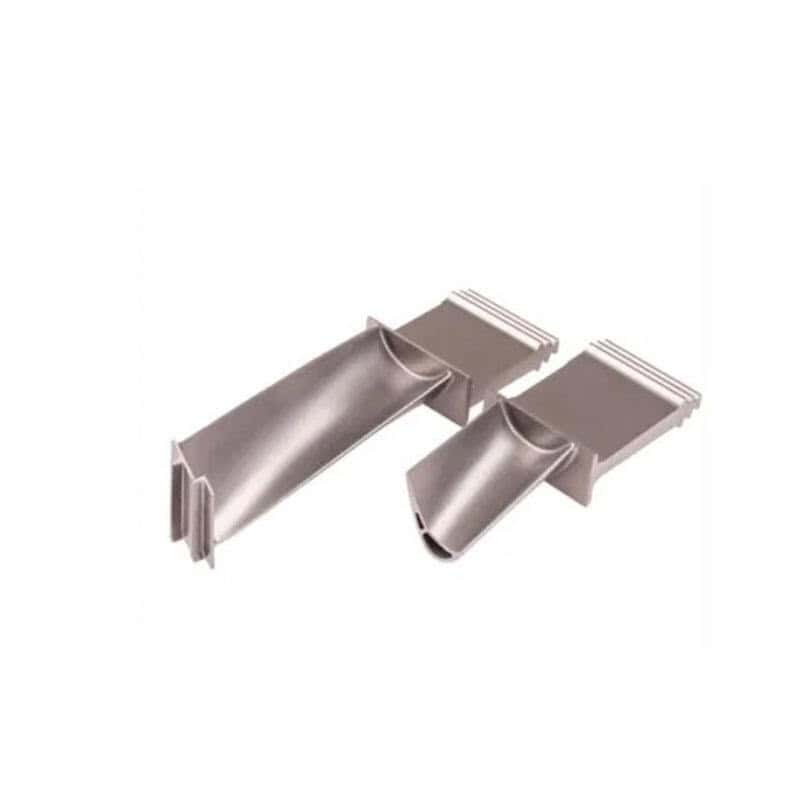
Application case overview
By integrating advanced manufacturing technologies and leveraging cutting-edge materials science, the aerospace engine manufacturer has successfully developed high-performance turbine blade prototypes. These achievements provide critical technical insights and data, significantly contributing to the future design and development of advanced aircraft engines. This project underscores the importance of precision engineering and rigorous testing in the aerospace industry, ensuring that the next generation of aircraft engines meets the highest standards of performance and safety.


Background
An aerospace engine manufacturer is embarking on the production of prototype turbine blades to rigorously test and validate their performance. These prototypes are critical for evaluating key parameters such as aerodynamic efficiency, thermal resistance, and structural integrity. The data gathered from these tests will serve as a foundational reference for the design and development of future aircraft engines.
Challenges
- Design Consistency: The turbine blades must be meticulously designed to align with the operational demands of actual aircraft engines. This includes optimizing aerodynamic profiles, selecting appropriate materials, and ensuring robust structural integrity.
- Precision Manufacturing: The production process demands stringent quality control and rigorous testing protocols to guarantee the precision and reliability of the blades. Any deviation could compromise the blade’s performance and safety.
Solution
- Advanced Design Tools: The engineering team employs state-of-the-art Computer-Aided Design (CAD) and Computer-Aided Manufacturing (CAM) technologies to design and optimize the geometry and structure of the turbine blades. This ensures that the blades meet the exacting standards required for high-performance aerospace applications.
- Material Selection: High-temperature alloy materials are carefully selected to withstand the extreme conditions of high temperatures and high rotational speeds typical in turbine operations. These materials are chosen for their superior thermal stability and mechanical properties.
- Precision Manufacturing Techniques: The blades are manufactured using advanced CNC machining and 3D printing technologies. These methods allow for the production of highly complex geometries with exceptional precision, ensuring that each blade meets the stringent design specifications.
Implementation
- Manufacturing Process: The manufacturing team adheres strictly to the design specifications, employing rigorous quality control measures throughout the production process. Each blade undergoes multiple inspections to ensure dimensional accuracy and material integrity.
- Surface and Heat Treatment: Post-manufacturing, the blades are subjected to specialized surface treatments and heat treatments. These processes enhance the material properties, improving the blades’ durability and performance under operational stresses.
- Experimental Testing: Comprehensive testing is conducted on the turbine blade prototypes, including both static and dynamic tests. These tests evaluate the blades’ performance under simulated operational conditions, assessing factors such as stress distribution, vibrational response, and thermal stability.
Results
- Design Compliance: The manufactured turbine blade prototypes fully comply with the design requirements, demonstrating superior aerodynamic performance and structural strength.
- Operational Stability: Experimental results confirm that the blades can operate reliably under high-temperature and high-speed conditions, exhibiting excellent durability and performance consistency.
Summary
By integrating advanced manufacturing technologies and leveraging cutting-edge materials science, the aerospace engine manufacturer has successfully developed high-performance turbine blade prototypes. These achievements provide critical technical insights and data, significantly contributing to the future design and development of advanced aircraft engines. This project underscores the importance of precision engineering and rigorous testing in the aerospace industry, ensuring that the next generation of aircraft engines meets the highest standards of performance and safety.