
Aluminum Alloy Laser Cladding: Process, Materials, Challenges and Applications
September 28, 2026


Aluminum alloys are widely used in aerospace, automotive, transportation and marine engineering because of their high specific strength, good formability and excellent thermal conductivity. However, relatively low surface hardness, limited wear and corrosion resistance, and poor thermal stability can restrict the service life of aluminum components.
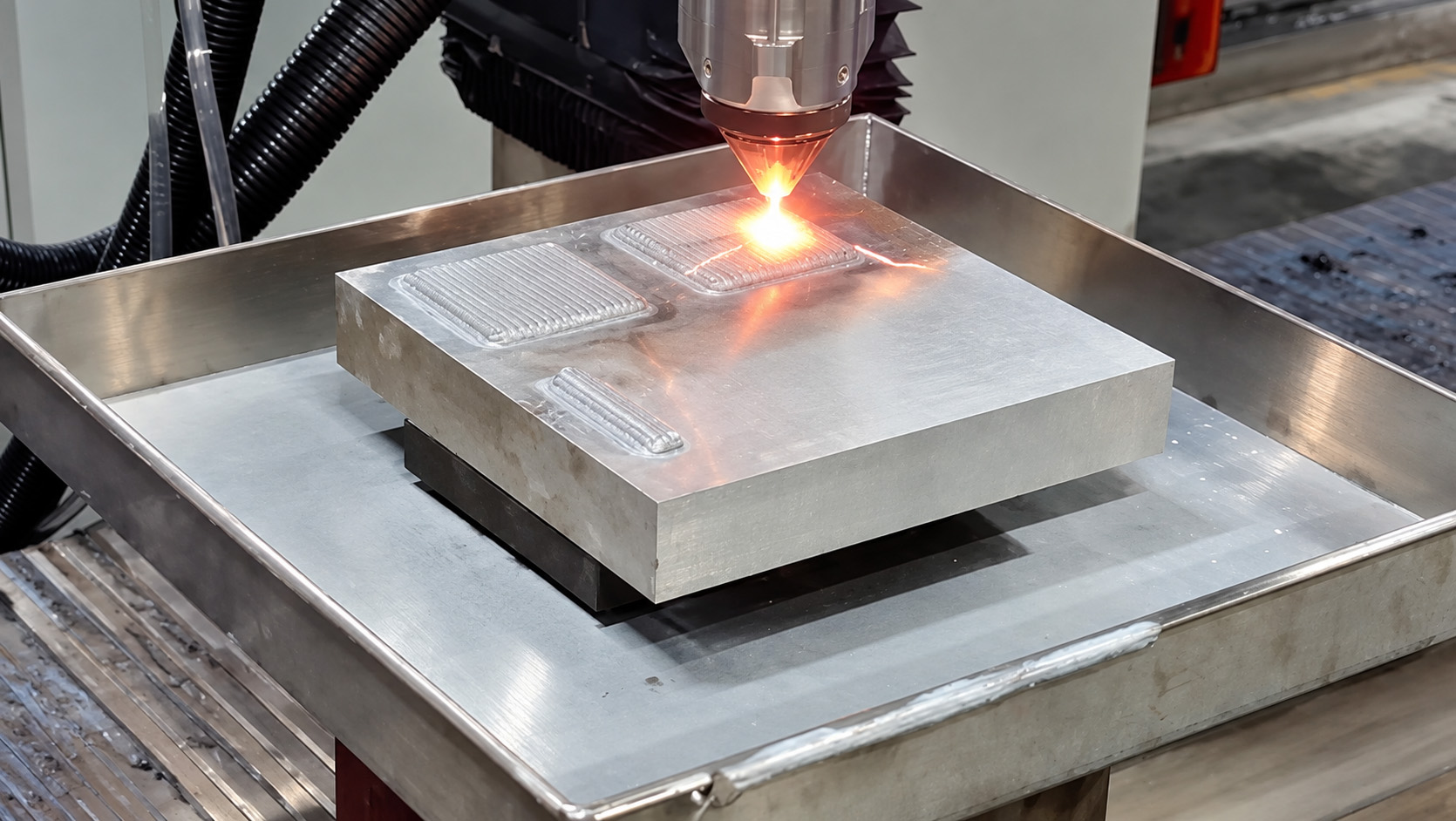
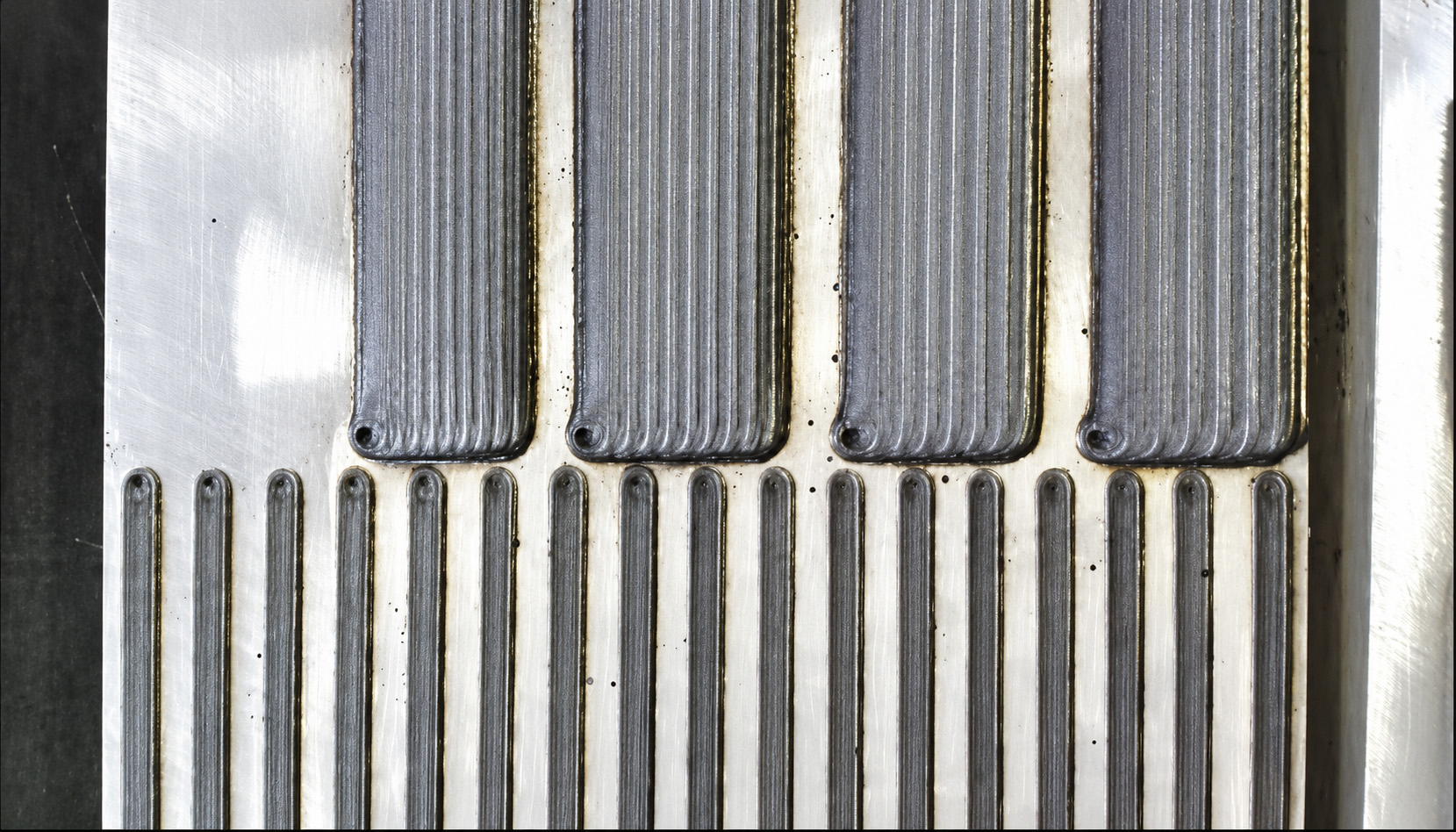
Aluminum alloy laser cladding provides a way to repair damaged surfaces or create functional coatings without replacing the entire component. A concentrated laser beam melts the deposited material together with a thin layer of the aluminum substrate, creating a metallurgically bonded coating after rapid solidification.
Aluminum is more challenging to laser clad than many conventional steels. High thermal conductivity, high laser reflectivity, rapid oxidation, hydrogen-related porosity and sensitivity to thermal cycles create a relatively narrow processing window. Successful aluminum laser cladding therefore depends on the combined control of coating material, laser energy, powder delivery, shielding and melt-pool behavior.
What Is Aluminum Alloy Laser Cladding?
Laser cladding is a surface modification and repair process in which a high-energy laser beam melts the cladding material and a thin surface layer of the substrate. During processing, molten material flows and mixes within the melt pool. As the laser moves forward, rapid heat transfer into the substrate causes the melt pool to solidify, producing a coating metallurgically bonded to the aluminum alloy.
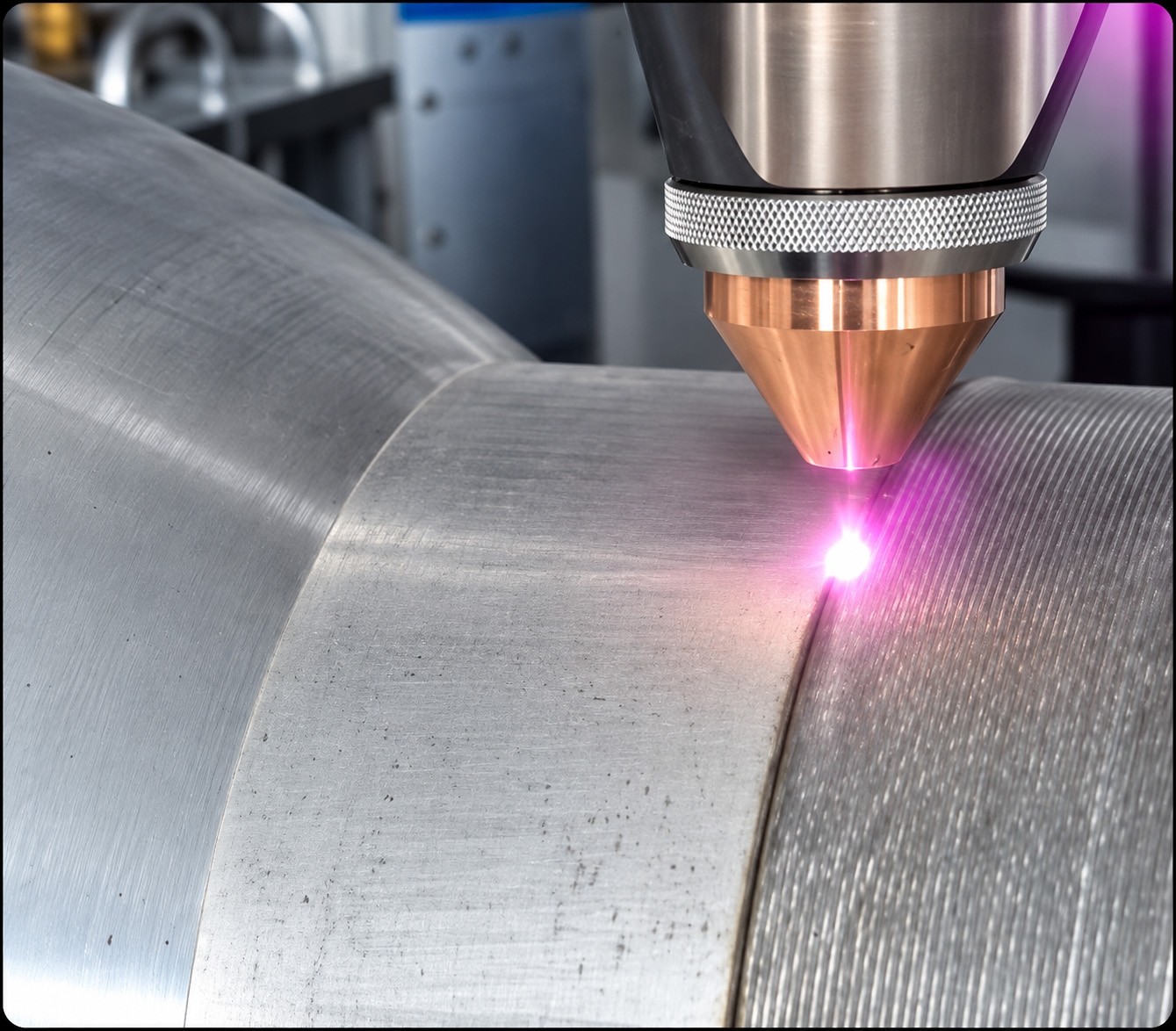
A typical laser cladding system includes a laser source, powder delivery system, cladding head, motion system and gas protection system. Two major material delivery methods are used: coaxial or synchronous powder feeding and preplaced powder cladding.
Coaxial Powder Feeding
In coaxial powder-fed laser cladding, powder is continuously delivered toward the laser processing zone while the laser moves across the component.
This method allows powder flow, laser power and motion to be coordinated in real time. Compared with preplaced powder, it offers higher automation potential and is better suited to continuous industrial production, complex geometries and robotic or CNC laser cladding systems.
The reviewed research notes that synchronous powder feeding provides better laser utilization and is suitable for automated production. Modern high-speed laser cladding systems generally use synchronous powder delivery.
Preplaced Powder Laser Cladding
With the preplaced powder method, the cladding material is first applied to the aluminum surface. The laser subsequently scans the prepared layer, melting the powder and part of the substrate.
The process is relatively simple and requires less complex powder feeding equipment. However, the reviewed research identifies disadvantages including relatively high dilution, lower production efficiency and greater difficulty in controlling penetration depth.
For industrial aluminum repair and automated production, continuous powder feeding is therefore generally more flexible.
Why Is Aluminum Difficult to Laser Clad?
The difficulty of laser cladding aluminum comes primarily from its thermal and metallurgical characteristics. Aluminum responds differently to laser heating than steels and many nickel-based alloys, so parameters developed for those materials cannot simply be transferred to aluminum.
High Thermal Conductivity
Aluminum transfers heat rapidly away from the laser interaction zone.
Sufficient energy is required to establish and maintain a stable melt pool, but increasing energy input too far can enlarge the heat-affected zone, increase substrate melting and cause thermal distortion.
This creates an important process balance:
Insufficient Heat Input → Poor Melting and Bonding
Excessive Heat Input → High Dilution, Large HAZ and Thermal Damage
Precise heat-input control is therefore particularly important when cladding thin-wall or high-strength aluminum components.
High Laser Reflectivity
Aluminum can exhibit high reflectivity to laser radiation, reducing initial energy absorption. The source paper notes that reflectivity can exceed 90% at certain wavelengths, contributing to low laser energy utilization and potentially creating additional risks for optical components.
Stable processing therefore requires an appropriate combination of laser parameters, beam conditions and process control.
Oxidation and Al₂O₃ Formation
Aluminum reacts readily with oxygen and naturally develops an Al₂O₃ oxide film.
This oxide layer has a high melting temperature and can interfere with melt-pool behavior. If oxide films or inclusions remain within the coating, they may affect metallurgical bonding and coating integrity.
The reviewed research identifies aluminum oxidation and the difficulty of removing or breaking Al₂O₃ during laser processing as important factors affecting cladding quality.
Surface preparation and effective shielding are consequently important parts of aluminum laser cladding.
Porosity and Hydrogen
Porosity is another major concern.
Aluminum has a strong affinity for hydrogen in the molten state. Because the laser melt pool solidifies rapidly, gas bubbles may not have enough time to escape before solidification is complete, leaving pores inside the coating.
Powder condition, surface cleanliness, shielding atmosphere and melt-pool stability can therefore significantly affect porosity.
Cracking and Thermal Stress
Rapid heating and cooling create steep thermal gradients. Aluminum also has a relatively high coefficient of thermal expansion.
The resulting shrinkage and thermal stress can promote cracking in the cladding layer or heat-affected zone, especially when the coating and substrate have significantly different thermal and mechanical properties.
Heat-Affected Zone Softening
The coating itself is not the only area that must be considered.
High-strength aluminum alloys such as 7075 can be particularly sensitive to thermal cycles. Laser processing may cause over-aging, dissolution or coarsening of strengthening phases in the heat-affected zone, potentially reducing local hardness and strength.
A successful process must therefore protect the performance of both the coating and the underlying aluminum substrate.
Key Process Parameters for Aluminum Laser Cladding
Laser power, scanning speed, powder feed rate and defocus distance are among the main parameters controlling aluminum laser cladding. They interact with each other and influence melt-pool temperature, cooling rate, dilution, coating geometry, microstructure and defect formation.
Laser Power
Laser power directly controls energy input into the processing zone.
If power is too low, the powder may not melt completely and metallurgical bonding can become insufficient, increasing the risk of lack of fusion and porosity. Excessive power can cause excessive substrate melting, higher dilution, greater thermal stress and cracking.
Increasing laser power can also improve molten-metal fluidity and help reduce some pores and inclusions, meaning that the objective is not simply to minimize power but to identify an appropriate processing window.
Scanning Speed
Scanning speed determines how long the laser interacts with a given area.
Lower scanning speed increases energy input per unit length and generally increases melt-pool residence time. This can improve melting but may also increase dilution, heat-affected-zone size and grain growth.
Excessively high scanning speed reduces interaction time and may cause incomplete melting or lack of fusion.
In one AA6082 Al-SiC study reviewed in the paper, reducing scanning speed from 20 mm/s to 10 mm/s increased coating density and interfacial bonding while reducing the reported wear rate by more than 30%.
Powder Feed Rate
Powder feed rate must be matched with the available laser energy.
Increasing the feed rate provides more material and can increase coating thickness. If too much powder enters the processing zone, however, the available energy per unit material becomes insufficient, potentially causing incomplete melting, inclusions and pores.
A low powder feed rate can improve forming stability but reduces deposition efficiency and may increase dilution.
Defocus Distance and Spot Size
Defocus distance changes laser spot size and energy-density distribution.
A smaller spot can produce higher energy density, greater penetration and higher dilution. Excessive local energy can also cause overheating, microstructural coarsening and cracking.
Increasing positive defocus enlarges the spot and reduces energy density. If it becomes excessive, however, insufficient melting and poor bonding may result.
In an Al-SiC study summarized in the paper, changing defocus from 0 to +5 mm reduced the reported dilution from 18% to 8%, accompanied by improvements in hardness and wear resistance.
How Microstructure Forms During Aluminum Laser Cladding
The properties of an aluminum laser cladding coating are strongly related to its solidification microstructure.
Laser cladding involves rapid heating followed by rapid solidification. The temperature gradient (G) and solidification rate (R) influence grain growth. The reviewed paper describes G × R as an important factor affecting grain size, while G/R influences solidification morphology.
Different regions of the melt pool therefore develop different structures. Planar or cellular structures may occur near the bonding region, dendritic structures can develop through intermediate regions, and finer equiaxed grains may form where cooling conditions favor rapid nucleation.
Laser power, scanning speed and alloy composition all influence this evolution. Microstructure optimization is therefore fundamentally connected to thermal-process control.
Coating Materials for Aluminum Alloy Laser Cladding
There is no universal powder for aluminum alloy laser cladding. Material selection depends on whether the objective is dimensional repair, wear resistance, corrosion resistance, high-temperature performance or a combination of these properties.
Aluminum-Based Alloy Powders
Aluminum-based powders provide relatively good compatibility with aluminum substrates.
Systems such as Al-Si, Al-Mg, Al-Cu and Al-Zn-Mg-Cu can be considered for applications where dimensional restoration and substrate compatibility are important.
Because the coating and substrate are based on similar alloy systems, the mismatch in physical properties can be lower than with some dissimilar-material coatings.
Ni-Based Alloy Coatings
Nickel-based coatings are attractive when higher hardness and wear resistance are required.
However, the significant physicochemical differences between aluminum substrates and Ni-based cladding materials create additional metallurgical challenges. Research reviewed in the paper reports cracking and porosity in Ni-based coatings deposited on aluminum alloys when material and process conditions were unsuitable.
Ni-based aluminum cladding therefore requires careful control of material compatibility, dilution and thermal input.
Ceramic-Reinforced Composite Coatings
Ceramic particles can be introduced to improve hardness and wear resistance.
Common reinforcement phases investigated for aluminum laser cladding include SiC, TiC, TiB₂ and Al₂O₃. These particles can restrict grain growth and provide hard reinforcement within the metallic matrix.
The reviewed research describes composite systems based on an aluminum substrate, reinforcement phase and bonding or matrix phase. Typical matrix systems include Al-Si, Al-Cu and Ni-based alloys.
However, ceramic content must be controlled. Agglomeration, incomplete melting, poor interfacial compatibility and cracking can offset the benefits of higher ceramic reinforcement.
Rare-Earth Modified Coatings
Rare-earth additions can be used to modify melt-pool behavior and microstructure.
In research involving Ni60 laser cladding on 6063 aluminum alloy, rare-earth additions improved melt-pool fluidity and purification. The reported coating showed reduced pores and cracks together with a finer microstructure.
Another study involving CeO₂ reported grain-refinement effects together with improved hardness and reduced average friction coefficient.
High-Entropy Alloy Coatings
High-entropy alloy (HEA) coatings are an emerging direction for aluminum surface modification.
Systems such as AlCoCrFeNi, AlCrCuFeNi and FeCoCrNi-based alloys have been investigated because of their potential wear, corrosion and high-temperature performance.
Depending on composition, these coatings can form FCC, BCC or FCC+BCC structures. The reviewed research notes that single FCC structures generally provide better plasticity but lower strength, whereas BCC structures provide higher strength with lower plasticity. FCC+BCC dual-phase structures offer another route for balancing mechanical properties.
How Laser Cladding Improves Wear Resistance of Aluminum
The relatively low surface hardness of aluminum makes wear resistance one of the main reasons for applying laser cladding.
Improvement can result from several mechanisms working together: grain refinement, hard ceramic reinforcement, dispersion strengthening, formation of strengthening phases and improved surface hardness.
Ceramic particles such as TiC, SiC, TiB₂ and Al₂O₃ can act as hard phases within the metallic matrix and resist abrasive contact.
In one 6082-T6 Al-TiC study summarized in the source paper, increasing powder feed rate from 3 to 7 g/min increased the reported TiC fraction from 15% to 32%. Hardness increased from 350 HV to 520 HV, while the reported wear rate decreased by 64%.
The result illustrates an important principle: wear performance depends on the combined relationship between material composition, reinforcement distribution, microstructure and laser parameters.
How Laser Cladding Improves Corrosion Resistance
Laser cladding can also create a more corrosion-resistant surface while retaining the lightweight aluminum substrate underneath.
Corrosion performance can be improved through suitable alloying elements, dense coating structures, reduced defects and the formation of more protective surface films. Ceramic-reinforced and high-entropy alloy coatings have also been investigated for applications requiring combined wear and corrosion resistance.
This is particularly relevant to marine components, where aluminum structures may experience saltwater, salt spray, wear and impact simultaneously.
However, coating composition alone does not determine corrosion performance. Porosity, cracking, inclusions and poor bonding can create pathways for corrosive media, making defect control equally important.
Common Defects in Aluminum Laser Cladding
Porosity
Porosity can originate from hydrogen, trapped shielding gas, contamination, powder condition or unstable melt-pool behavior. Rapid solidification makes gas removal particularly difficult.
Hot Cracking
High thermal gradients, solidification shrinkage and differences between the thermal properties of the coating and substrate can promote cracking.
Oxide Inclusions
Al₂O₃ and other oxide products can remain within the melt pool and interfere with metallurgical bonding or coating integrity.
Balling
The source paper identifies high surface tension as one reason molten aluminum may have difficulty spreading across the substrate. The liquid can contract into ball-like structures, producing discontinuous deposition and poor surface quality.
Lack of Fusion
Insufficient laser power, excessive scanning speed or an unsuitable powder feed rate can prevent complete melting and bonding between deposited material and the substrate.
Excessive Dilution
Some substrate melting is necessary for metallurgical bonding. Excessive melting, however, changes the designed coating composition and can reduce the intended surface properties.
Heat-Affected Zone Softening
Thermal cycles can modify strengthening precipitates in heat-treatable aluminum alloys, reducing hardness or strength near the cladding layer.
Thermal Deformation
Aluminum’s thermal characteristics make distortion an important concern, especially for thin-wall and precision components. Increasing laser energy simply to stabilize the melt pool may therefore create additional dimensional problems.
How to Reduce Defects in Aluminum Laser Cladding
Defect reduction begins before the laser is switched on.
The aluminum surface should be properly prepared to reduce contamination and oxide-related problems. Powder condition and material compatibility must also be considered. Effective inert-gas shielding helps limit oxidation during processing.
Laser power, scanning speed, powder feed rate and spot size should then be optimized as a coordinated parameter set. The objective is to maintain a stable melt pool while providing sufficient energy for metallurgical bonding without creating excessive dilution or heat input.
For demanding applications, coating development should include evaluation of porosity, cracks, dilution, microstructure, bonding and heat-affected-zone properties rather than relying only on visual surface quality.
Aluminum Laser Cladding Applications
The combination of localized repair and surface-property enhancement makes aluminum laser cladding particularly relevant to high-value components. The reviewed research identifies aerospace, machinery manufacturing, automotive and marine engineering as major application areas.
Aerospace
Aluminum alloys are extensively used in lightweight aerospace structures. Laser cladding can be applied to local surface strengthening and damage repair where replacing an entire high-value component would be costly.
Potential applications include aluminum structural components, frames and other localized damaged areas requiring dimensional restoration.
Automotive
The automotive industry’s transition toward lightweight structures has increased the use of aluminum in engine components, chassis systems, transmission housings and electric-vehicle structures.
Laser cladding can provide localized repair or surface reinforcement while retaining the lightweight bulk material.
Machinery Manufacturing
Aluminum molds, gears, guideways and other mechanical components can suffer from wear, fatigue or localized surface damage.
Laser cladding offers the possibility of simultaneously restoring dimensions and improving local surface properties.
Marine Engineering
Marine aluminum components operate in environments involving saltwater, salt spray, corrosion and mechanical wear.
Research has investigated laser-cladded corrosion- and wear-resistant coatings for offshore structures, ship components and other aluminum parts used in marine environments.
AI Monitoring and Intelligent Process Control
Traditional laser cladding relies heavily on predetermined parameters and process-development experience. Aluminum’s narrow processing window makes real-time monitoring increasingly valuable.
The next stage of process control combines sensors with data analysis and artificial intelligence:
Melt Pool Monitoring → Process Data → AI Prediction → Parameter Adjustment → Quality Control
AI-assisted systems can potentially use melt-pool images, temperature signals and other process data to identify abnormal conditions and predict coating quality.
The reviewed paper identifies artificial-intelligence monitoring and prediction as an important direction for process optimization, defect analysis and precise quality control in aluminum laser cladding.
The long-term objective is to move from fixed parameter settings toward more adaptive and closed-loop laser cladding processes.
Numerical Simulation of Aluminum Laser Cladding
Numerical simulation provides another route for understanding and optimizing aluminum laser cladding.
A typical model can connect:
Laser Parameters → Heat Transfer → Temperature Field → Melt Pool Behavior → Solidification → Stress and Deformation
This approach can help engineers study thermal history, melt-pool geometry, fluid behavior, cooling and defect mechanisms that are difficult to observe directly during processing.
Simulation does not eliminate the need for physical testing, but combining experimental validation, numerical simulation and process monitoring can reduce the amount of trial-and-error required when developing parameters for new aluminum alloys or coating materials.
How to Develop a Stable Aluminum Laser Cladding Process
A stable process should begin with the component and service requirement rather than with a fixed laser parameter set.
The aluminum alloy grade should first be identified because different alloys respond differently to thermal cycles. The engineering objective must then be defined: dimensional repair, wear resistance, corrosion protection or combined performance.
An appropriate Al-based, Ni-based, ceramic-reinforced or other coating system can then be selected. Surface preparation and shielding conditions should be established before laser power, spot size, scanning speed and powder feed rate are optimized together.
The resulting coating should be evaluated for metallurgical bonding, dilution, porosity, cracking, microstructure, hardness and the required service performance.
This is particularly important for aluminum because the interaction between material properties and process parameters creates a relatively narrow operating window. The reviewed research identifies metallurgical defect control, heat-affected-zone degradation and multi-parameter optimization as major challenges for further industrial application.
There is therefore no universal set of aluminum laser cladding parameters. Parameters developed for one alloy, coating material or component geometry should not automatically be transferred to another application.
Future Development of Aluminum Alloy Laser Cladding
Future development is moving beyond individual improvements in laser power or powder composition toward integrated control of the complete manufacturing process.
One important direction is intelligent precision control, where sensors, process monitoring, artificial intelligence and closed-loop adjustment work together to maintain a stable melt pool.
Another direction is green remanufacturing. Repairing high-value aluminum components instead of replacing them can reduce material consumption and extend component service life.
The third direction is closer integration between coating material design and manufacturing process design. Ceramic reinforcement, rare-earth modification, high-entropy alloys, numerical simulation and intelligent process control can increasingly be considered as parts of one complete engineering system.
These directions are consistent with the reviewed paper’s outlook toward intelligent precision control, green remanufacturing and greater integration of materials and processing technologies.
Conclusion
Aluminum alloy laser cladding is a promising technology for repairing damaged aluminum components and improving surface wear and corrosion performance. Its localized heat input, metallurgical bonding and flexible coating-material selection make it particularly attractive for high-value lightweight components.
However, aluminum should not be processed using the same assumptions as conventional steel substrates.
High thermal conductivity, high laser reflectivity, rapid oxidation, hydrogen-related porosity, thermal stress and heat-affected-zone softening all make aluminum laser cladding technically demanding.
A reliable process therefore requires coordinated control of coating material, laser power, scanning speed, powder feed rate, spot size, shielding conditions, dilution and thermal history.
For industrial applications, aluminum laser cladding should be treated as a complete material-and-process system. Matching the coating material and processing strategy to the aluminum grade, component geometry and actual service conditions is the foundation for achieving repeatable coating quality and reliable component repair.
David Cheung
Laser Cladding Technology Director & Advanced Manufacturing Process Expert David Cheung serves as Greenstone’s Laser Cladding Technology Director, specializing in advanced surface engineering technologies, laser cladding process development, material optimization, and industrial remanufacturing applications. With extensive experience in laser-based manufacturing technologies and metal surface enhancement processes, David leads the development and optimization of Greenstone’s laser cladding solutions, including powder-fed laser cladding, high-speed laser cladding, internal bore cladding, laser hardening, and integrated repair technologies. His professional expertise covers the complete technical workflow from material analysis, process parameter development, coating performance evaluation, and application validation to industrial implementation. By combining fundamental material…