
Oilfield Male and Female Threaded Long Plunger Ni60 Laser Cladding Strengthening Project
Project Overview
Long plungers with male and female threaded connections are critical wear components used in oilfield production, injection and other high-pressure fluid-handling equipment. During long-term operation, these components may be exposed to a combination of high pressure, reciprocating friction, erosive media and corrosive service environments, placing demanding requirements on surface hardness, wear resistance, corrosion resistance and dimensional stability.
The geometry itself creates an additional manufacturing challenge. Long plungers typically have a high length-to-diameter ratio and relatively limited structural rigidity. During conventional high-heat surface treatment or deposition processes, uneven thermal input can lead to distortion, residual stress and coating defects.
The threaded connection areas require even tighter process control. Repeated loading, fluid erosion and surface wear can gradually affect thread geometry and mating performance, potentially contributing to leakage, reduced sealing reliability and premature component replacement.
To address these challenges, GREENSTONE developed and delivered a Ni60 nickel-based alloy laser cladding solution for long oilfield plungers and threaded components.
This project represents one of multiple similar laser cladding applications successfully implemented by GREENSTONE for oil & gas components. Experience accumulated across different plunger geometries, materials and operating conditions has enabled us to establish a mature process-development methodology for long-shaft and high-wear oilfield components.
Technical Challenges
1. Laser Cladding on High Aspect-Ratio Long Plungers
Long plungers are susceptible to thermal distortion because of their high length-to-diameter ratio.
During laser cladding, improper heat accumulation can generate uneven thermal expansion and residual stress, potentially resulting in distortion or cracking.
The challenge is therefore not simply depositing a hard alloy, but maintaining a controlled thermal history throughout the entire processing length.
2. Precision Requirements for Male and Female Threads
Male and female threaded sections require accurate geometry to maintain proper engagement and functional performance.
Excessive deposition, uncontrolled dilution or thermal deformation can increase subsequent machining requirements or affect the dimensional accuracy of the threaded connection.
For this reason, deposition thickness, heat input and machining allowance must be considered together when developing the process.
3. Combined Wear, Erosion and Corrosion Conditions
Oilfield components rarely experience a single failure mechanism.
Depending on the application, the plunger surface can be simultaneously exposed to reciprocating wear, erosive particles, corrosive media and mechanical loading.
The surface engineering solution therefore requires a suitable balance between hardness, wear resistance, corrosion resistance, metallurgical compatibility and coating integrity.
Ni60 Laser Cladding Solution
For this project, GREENSTONE developed a dedicated Ni60 laser cladding process according to the plunger geometry, substrate characteristics and target service conditions.
Ni60 is a nickel-based self-fluxing alloy widely used for wear- and corrosion-resistant surface engineering applications. Its combination of relatively high hardness and resistance to several forms of surface degradation makes it suitable for selected demanding industrial components when appropriately matched to the substrate and operating conditions.
The process was optimized around several interconnected parameters, including:
- laser power and energy density;
- scanning speed;
- powder feed rate;
- laser spot characteristics;
- track overlap;
- deposition thickness;
- rotational and axial motion;
- thermal accumulation; and
- cooling strategy.
Rather than maximizing laser power or hardness alone, the objective was to establish a stable processing window that could produce the required Ni60 layer while controlling thermal stress in the long plunger.
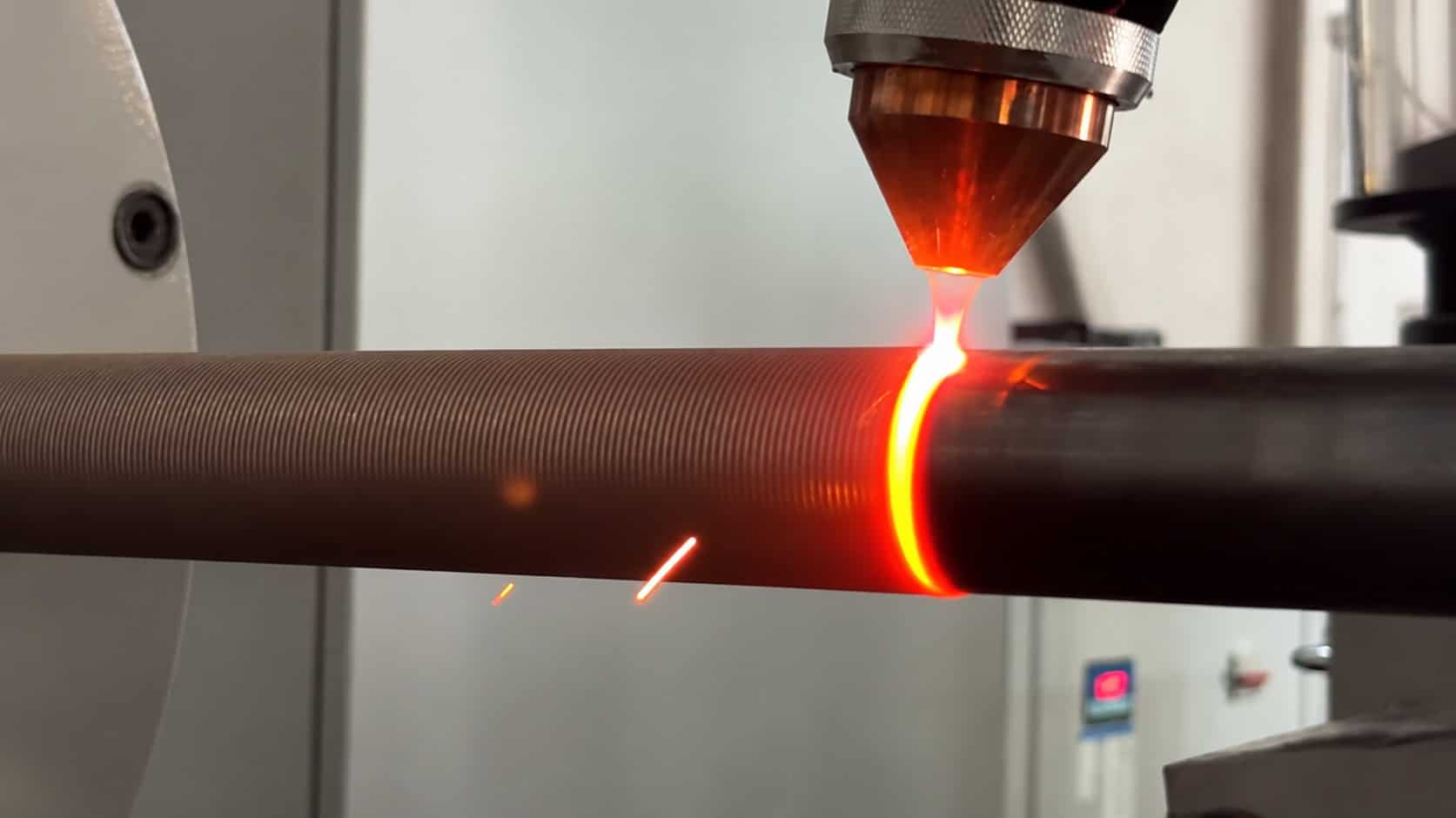
Through coordinated control of laser energy, powder delivery and workpiece motion, GREENSTONE achieved stable deposition along the required surfaces while maintaining the dimensional conditions necessary for subsequent precision finishing.
Thermal Management for Long-Shaft Laser Cladding
Thermal management was one of the most important elements of this project.
Because the plunger has a high aspect ratio, uncontrolled continuous deposition can progressively accumulate heat along the workpiece. This may increase residual stress and dimensional distortion.
The process therefore required careful coordination between laser heat input, deposition sequence, scanning speed and cooling intervals.
By controlling these variables as a complete process rather than independently, the thermal history of the workpiece could be maintained within an appropriate operating window.
This approach is particularly important for long plungers, piston rods, shafts and other slender components where coating quality alone is not sufficient—the straightness and dimensional stability of the complete component must also be considered.
Key Technical Advantages
1. High-Hardness Ni60 Wear-Resistant Surface
Under the validated process conditions used for this application, the Ni60 cladding layer achieved a hardness of approximately HRC 58–62.
The hardened surface significantly improves resistance to abrasive and sliding wear compared with an untreated substrate, making the process particularly suitable for selected high-wear areas of oilfield plungers.
Actual hardness and final properties depend on powder chemistry, dilution, substrate material and processing conditions and are therefore verified according to individual project requirements.
2. Strong Metallurgical Bonding
Laser cladding produces a metallurgical interface between the Ni60 deposited layer and the substrate.
Compared with surface layers that primarily depend on mechanical adhesion, the metallurgical bonding mechanism provides high interface integrity and is well suited to components exposed to repeated mechanical loading.
Through appropriate dilution and melt-pool control, the process can achieve reliable bonding while maintaining the required properties of the deposited alloy.
3. Crack and Porosity Control
For long-shaft laser cladding, avoiding cracks is one of the principal process-development challenges.
GREENSTONE optimized the relationship between laser energy, powder delivery, scanning strategy and thermal accumulation to control residual stress and stabilize the melt pool.
For this delivered application, the resulting cladding layer demonstrated dense and continuous deposition without observed cracking, significant porosity or detrimental inclusions under the applied inspection criteria.
This process experience provides an established technical foundation for similar long-plunger and shaft cladding projects.
4. Controlled Processing of Threaded Areas
The threaded sections were treated as precision functional areas rather than ordinary cylindrical surfaces.
Deposition strategy and machining allowance were coordinated with the final thread requirements so that the strengthened areas could subsequently be finished to the specified dimensions.
This enables laser cladding to be integrated into a complete workflow:
Surface Preparation → Ni60 Laser Cladding → Dimensional Restoration → Precision Machining → Final Inspection
5. Wear and Corrosion Protection in Demanding Service
Ni60 nickel-based alloy provides a useful combination of hardness, wear resistance and corrosion resistance for suitable oilfield applications.
The material can therefore be applied selectively to surfaces where conventional substrate materials may experience accelerated degradation.
Final alloy selection is always based on the actual operating medium, temperature, load, substrate and failure mechanism rather than using one material specification for every oil & gas application.
Quality and Performance Results
Following process optimization and production validation, the delivered components achieved the required surface and functional characteristics for the project.
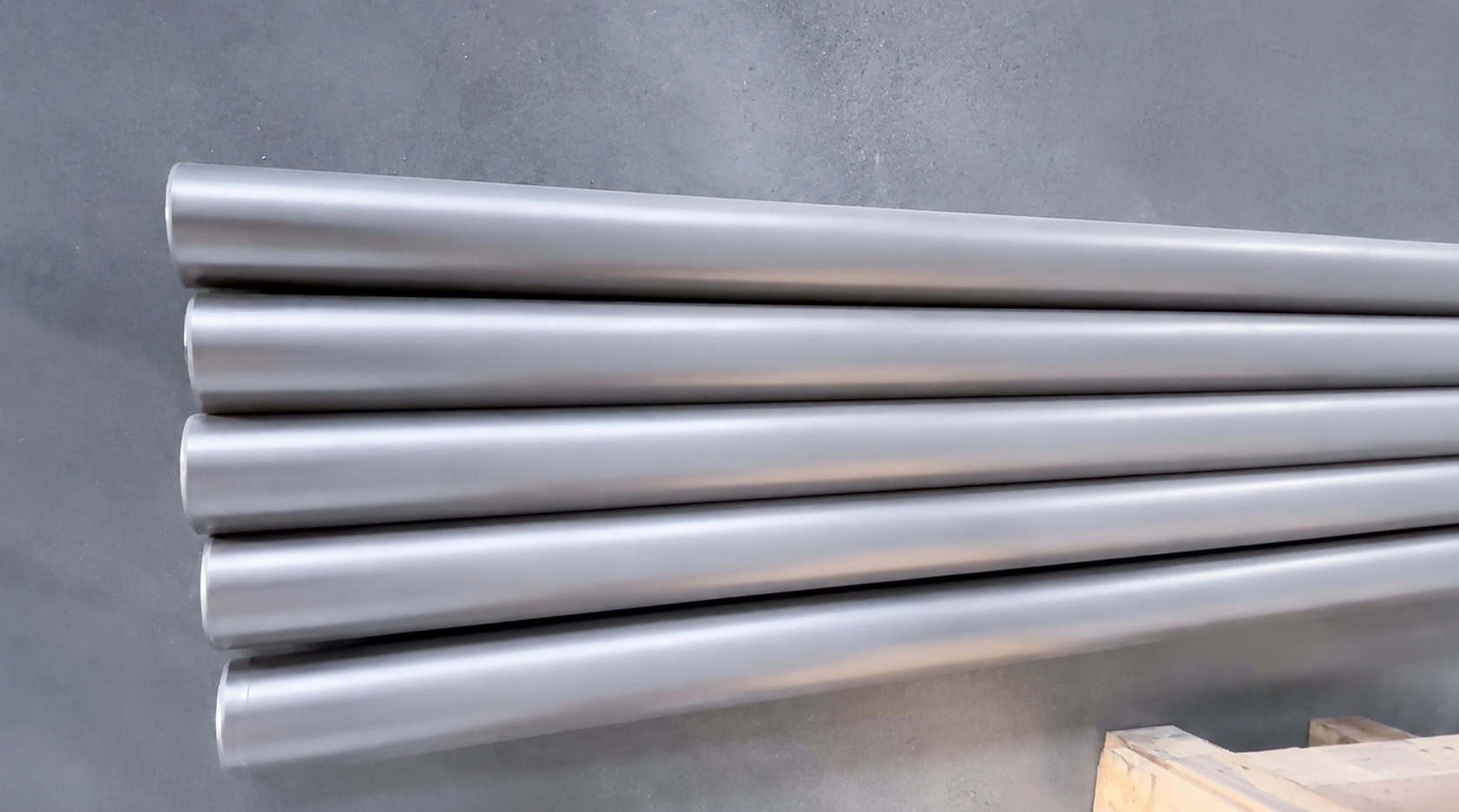
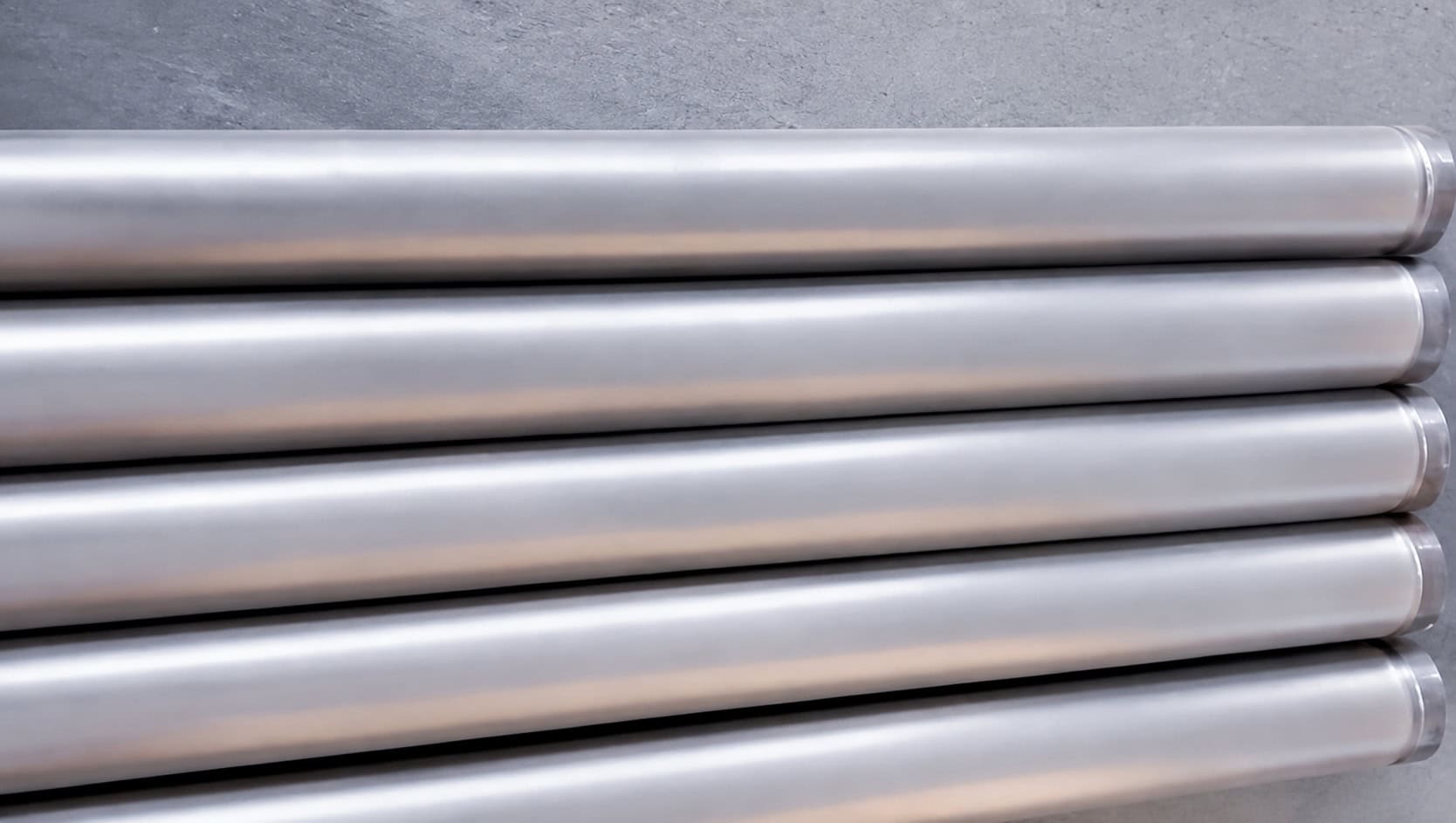
The Ni60 laser cladding layer exhibited a dense and consistent deposited structure with reliable metallurgical bonding to the substrate. Under the validated processing conditions, the cladding hardness was maintained at approximately HRC 58–62, providing a substantial improvement in surface wear resistance.
At the same time, controlled thermal input helped limit unnecessary distortion of the slender workpiece.
The project demonstrated that high-hardness Ni60 laser cladding can be successfully applied to long oilfield plungers when material selection, heat management, powder delivery, motion control and finishing requirements are engineered as one integrated process.
Typical Applications
The process methodology developed through this and other GREENSTONE oil & gas laser cladding projects can be adapted to components such as:
- oilfield long plungers;
- pump plungers and plunger rods;
- male and female threaded components;
- piston rods and long shafts;
- high-wear cylindrical components;
- sealing and mating surfaces;
- oilfield pump components; and
- other components requiring localized wear and corrosion protection.
Each application requires independent evaluation of substrate material, component geometry, service medium, dimensional tolerance and dominant failure mechanism.
Project Value
This Ni60 long-plunger project is one of a number of oil & gas laser cladding solutions delivered by GREENSTONE, rather than a single isolated demonstration.
The practical value of this experience lies in the repeatable process-development methodology established across different component geometries and service requirements.
By integrating laser cladding equipment, Ni60 powder deposition, thermal management, precision motion control, process development and post-cladding machining requirements, GREENSTONE can provide an engineering solution covering both new-component surface strengthening and worn-component remanufacturing.
For oilfield operators and component manufacturers, this approach can help improve wear resistance, restore valuable worn components, reduce replacement frequency and extend service intervals where the application is technically suitable.
GREENSTONE continues to develop laser cladding solutions for long shafts, plungers, threaded components and other demanding industrial parts, providing customers with stable, repeatable and production-oriented surface engineering technology.
