
Laser Cladding Repair of Marine Shafts and Ship Components
Project Overview
GREENSTONE has successfully delivered one of its laser cladding repair and remanufacturing solutions for marine components, covering shaft components and other critical parts used in ship propulsion, steering, hydraulic and mechanical systems.
The customer’s components had experienced different degrees of corrosion, surface wear and localized material loss during service. Instead of replacing high-value components that remained structurally serviceable, the project used laser cladding to rebuild damaged surfaces and restore the required material allowance for subsequent finishing.
The project focused particularly on marine shaft components, where repair quality, dimensional control and resistance to the marine operating environment are critical.
Customer Repair Requirements
Marine components operate in demanding conditions involving seawater exposure, moisture, mechanical loading and, depending on the component location, erosion, cavitation or abrasive wear.
For large shafts and precision mechanical components, replacement can involve significant component cost and long procurement lead times. Repair is therefore attractive when inspection confirms that the component remains suitable for remanufacturing.
The customer required a process capable of:
- Rebuilding worn and corroded surfaces
- Restoring dimensional allowance for final machining
- Achieving reliable metallurgical bonding with the substrate
- Controlling heat input and distortion on large precision components
- Applying corrosion- and wear-resistant materials according to the actual service environment
- Providing stable and repeatable repair quality
Based on these requirements, GREENSTONE developed the laser cladding process around the actual component geometry, substrate condition and required restoration area.
GREENSTONE Laser Cladding Repair Process
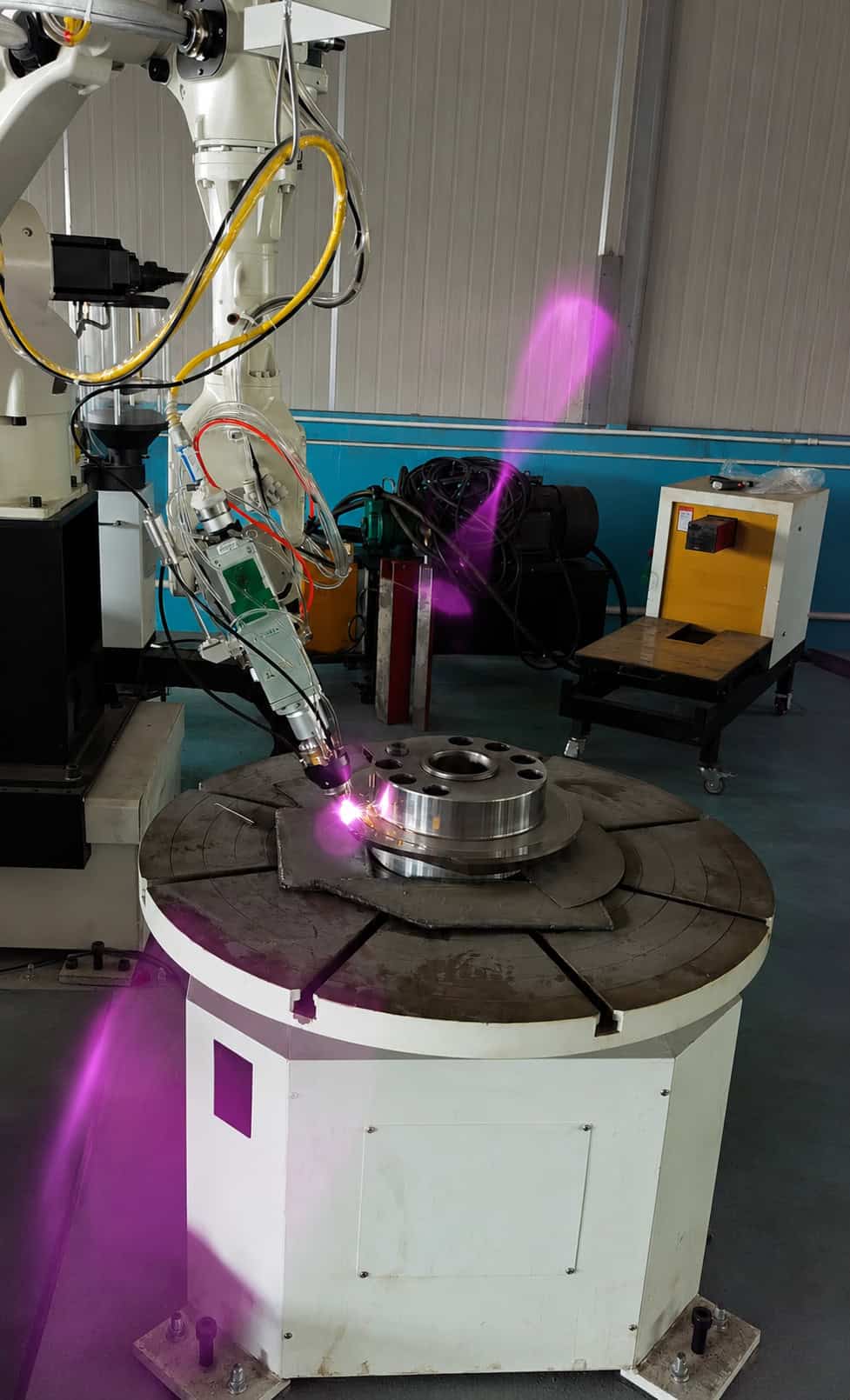
Before cladding, the damaged areas are evaluated and prepared to provide a suitable substrate for deposition. The laser cladding process then deposits selected metallic material only where restoration or surface enhancement is required.
A concentrated laser beam creates a controlled molten region while alloy material is introduced into the processing zone. The deposited material forms a metallurgical bond with the substrate, distinguishing the process from coating technologies that rely primarily on mechanical or physical adhesion.
For marine shaft components, GREENSTONE carefully controls laser energy, deposition rate, cladding path, track overlap and overall heat input. This is particularly important for long shafts and precision mating surfaces, where excessive thermal input can increase distortion and subsequent machining requirements.
After cladding, the restored area can be machined to the required final dimensions and surface condition.
Repair of Marine Shafts and Other Critical Components
The project included laser cladding of shaft-type marine components and precision mechanical parts with localized wear or corrosion damage.
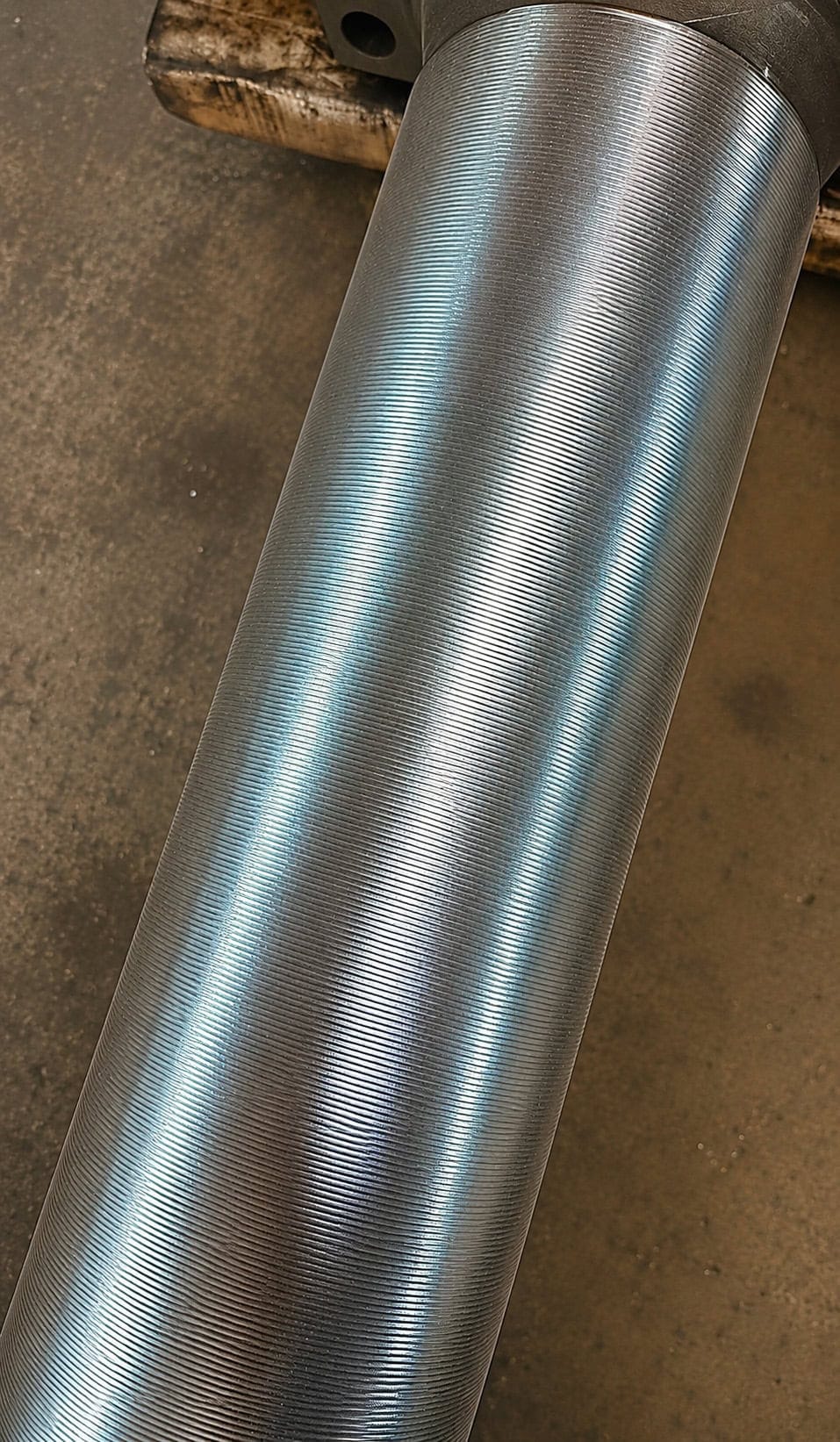
For rotational components, coordinated workpiece rotation and axial movement enable continuous cladding along cylindrical surfaces. Multiple overlapping tracks can be deposited to rebuild the required area while maintaining consistent coverage around the component.
Depending on component material and actual service conditions, suitable alloy systems can also be selected to provide additional corrosion, wear or erosion resistance beyond simple dimensional restoration.
The same engineering approach can be adapted to repairable components associated with:
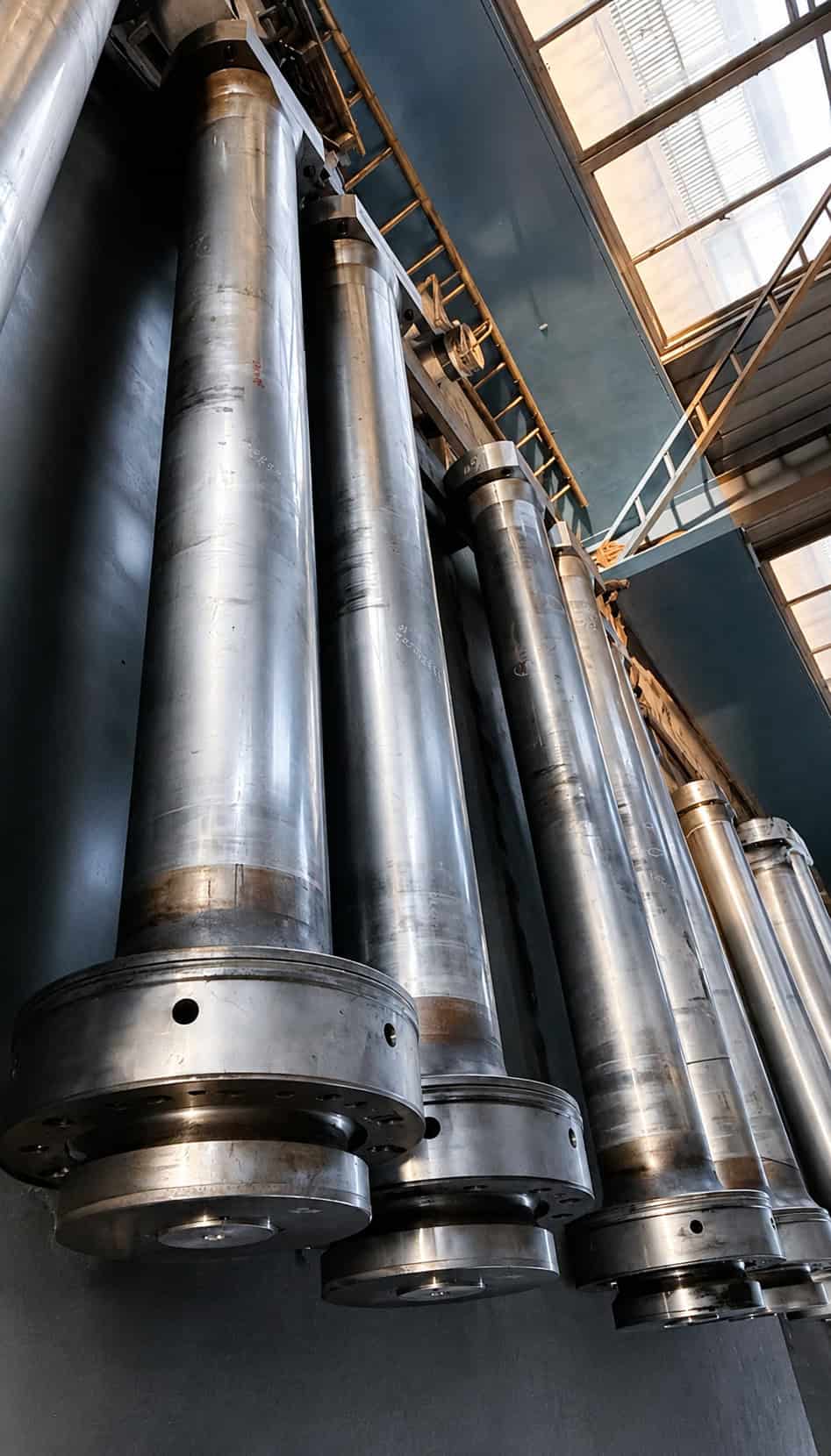
- Propeller and tail shaft systems
- Rudder and steering systems
- Marine hydraulic components
- Main and auxiliary machinery
- Other high-value cylindrical and mechanical components
Whether a specific component is suitable for laser cladding repair is determined by its substrate material, damage depth, structural condition, dimensional requirements and service environment.
Actual Repair Results
GREENSTONE completed actual component processing and process verification as part of the project.
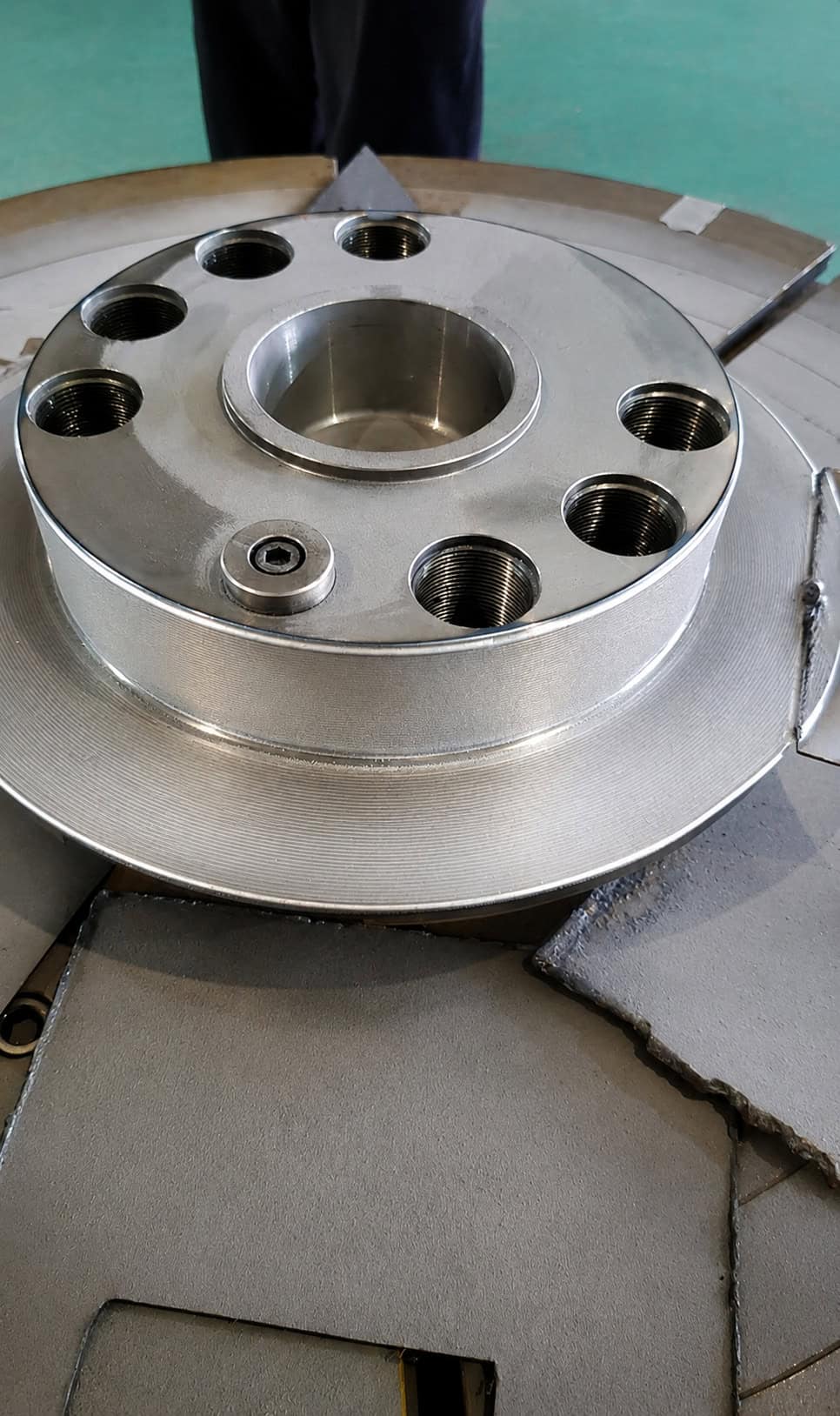
The repaired surfaces showed continuous cladding formation and controlled track overlap, providing sufficient deposited material for subsequent dimensional restoration and finishing.
For the customer, the significance of the project was not simply applying another surface coating. The objective was to establish a practical remanufacturing route:
This allows structurally serviceable, high-value components to be considered for restoration rather than automatically being replaced because of localized surface damage.
Successful Project Delivery
Following process development, actual workpiece verification and system commissioning, the GREENSTONE marine component laser cladding solution was successfully delivered to the customer.
The project demonstrates GREENSTONE’s capability to combine laser cladding equipment, repair process development, precision motion control and material deposition for the remanufacturing of large and high-value industrial components.
For marine shafts, propulsion components, steering-system parts and other worn or corroded ship components, customers can provide the component drawing, base material, damaged-area information, service conditions and required final dimensions. GREENSTONE can evaluate the feasibility of laser cladding repair and develop the corresponding process and equipment solution.
