
Laser Cladding for Boiler Water-Wall Tubes: Corrosion and Erosion Protection in Power Generation
August 1, 2026


Boiler water-wall tubes operate continuously under high temperature, corrosive combustion gases, ash deposits and erosive particles. In waste-to-energy, biomass and other severe boiler environments, these combined conditions can cause accelerated tube-wall thinning, localized corrosion and premature failure.
Laser cladding provides a metallurgically bonded protective alloy layer on the tube surface, improving corrosion and erosion resistance while retaining the structural function of the original tube.
For power-generation applications, the technology can be applied to both new water-wall panels and localized repair or remanufacturing of service-damaged tube sections.
Why Boiler Water-Wall Tubes Fail
Water-wall tubes form part of the furnace heat-transfer surface and are directly exposed to the combustion environment.
Depending on fuel composition and operating conditions, deposits and flue gases may contain chlorine, sulfur compounds, alkali salts and other aggressive species. Combined with elevated temperature and particle impact, these conditions can produce several degradation mechanisms:
- High-temperature corrosion
- Chloride-related corrosion
- Sulfidation and oxidation
- Fly-ash and particle erosion
- Localized tube-wall thinning
- Combined corrosion-erosion damage
As tube-wall thickness decreases, maintenance frequency and the risk of unplanned shutdown increase.
Instead of changing the entire tube material to an expensive corrosion-resistant alloy, laser cladding allows a protective material to be deposited only on the surface exposed to the aggressive environment.
How Laser Cladding Protects Water-Wall Tubes
During laser cladding, alloy powder is delivered into a controlled laser-generated melt pool on the tube surface. The deposited material forms a dense metallurgical bond with the substrate.
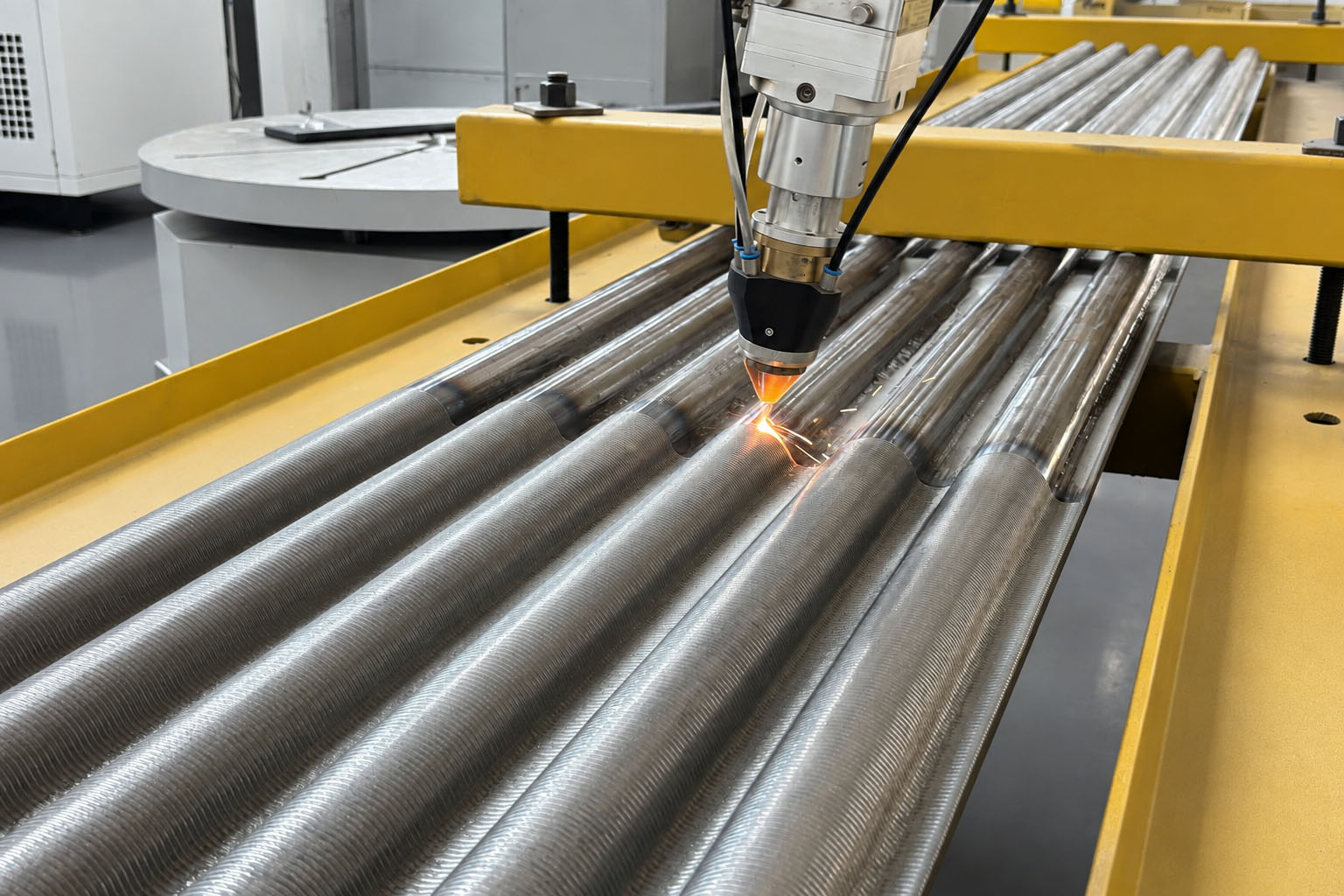
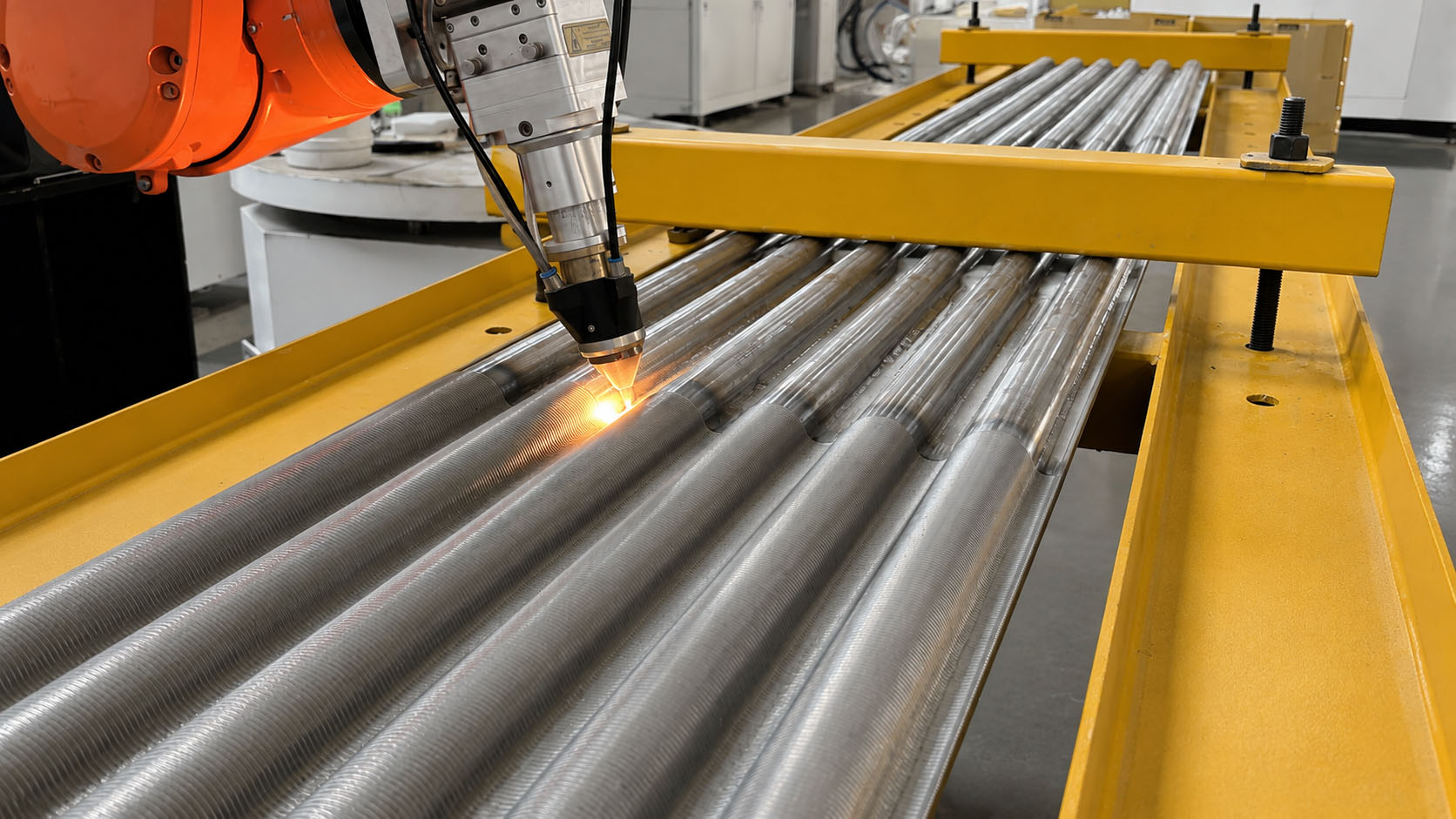
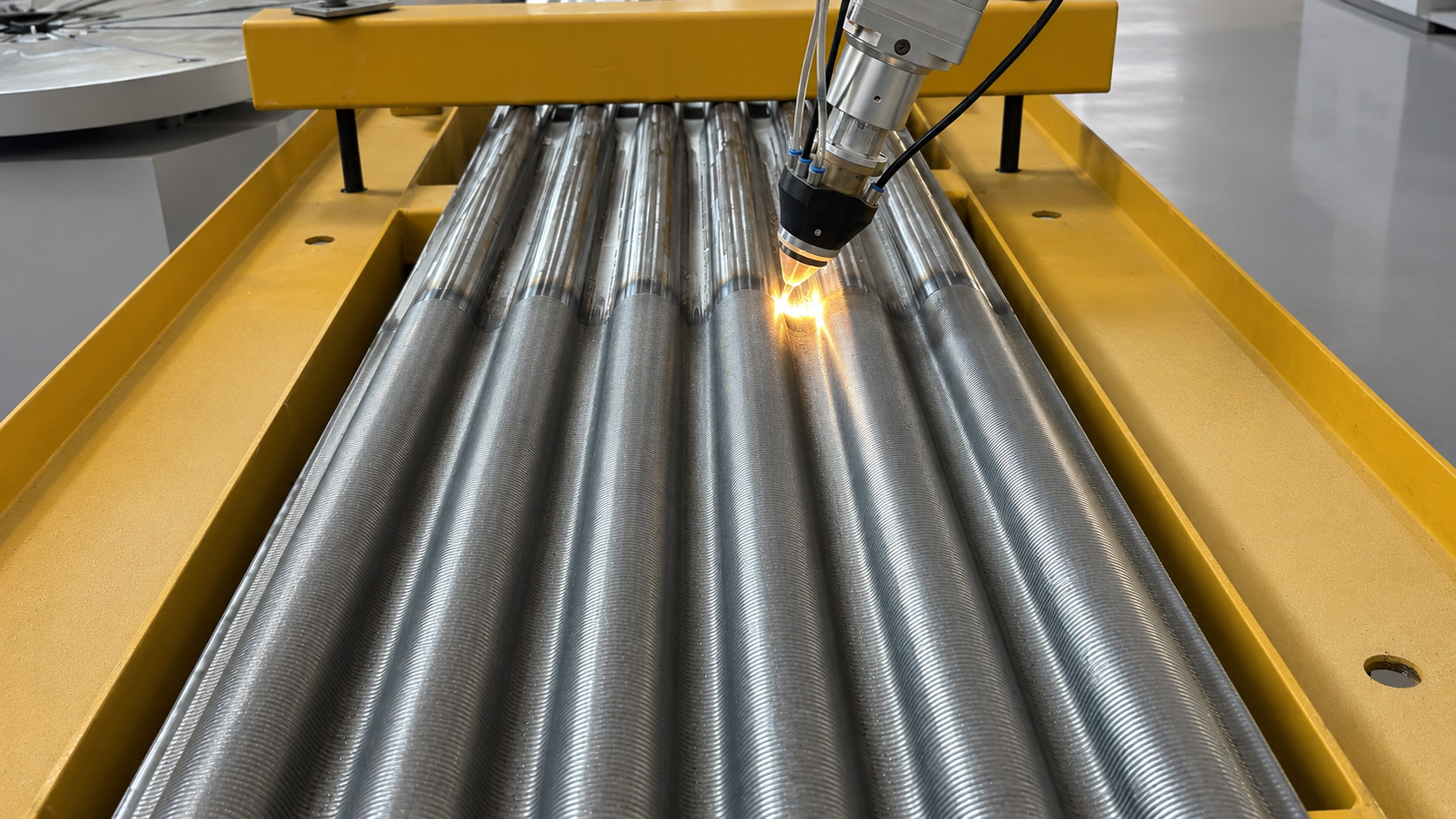
For water-wall applications, multiple overlapping tracks are deposited along the tube surface to create continuous protection over the required area.
The objective is to achieve:
Uniform coverage + strong metallurgical bonding + low dilution + controlled heat input + minimum defects.
Compared with replacing the complete tube with a high-alloy material, this approach combines the mechanical and economic advantages of the base tube with the surface properties of a corrosion-resistant alloy.
Typical Cladding Materials
Inconel 625
Nickel-based Alloy 625 is widely used for surface protection in severe industrial environments because of its combination of corrosion resistance, high-temperature performance and mechanical properties.
Its Ni-Cr-Mo-Nb alloy system makes it particularly suitable for applications involving aggressive combustion environments and elevated temperatures.
For boiler water-wall protection, Alloy 625 can be considered where resistance to high-temperature corrosion and combined corrosion-erosion attack is required.
Alloy 59
Alloy 59 is another nickel-based corrosion-resistant material that can be considered for particularly aggressive environments.
Its high chromium and molybdenum content provides strong resistance to localized corrosion and chemically aggressive conditions.
The final alloy selection should not be based solely on hardness or nominal corrosion resistance. Fuel composition, operating temperature, chlorine and sulfur content, tube material, existing corrosion mechanism and expected service conditions should all be evaluated before selecting the cladding material.
Dilution Control Is Critical
For corrosion-resistant laser cladding, dilution is one of the most important process variables.
Excessive melting of the carbon-steel substrate introduces iron into the deposited alloy and changes its designed chemical composition. If dilution becomes too high, the corrosion resistance of the final cladding layer can decrease significantly.
For this reason, laser power, travel speed, beam characteristics, powder feed rate, overlap and layer strategy must be optimized together.
The goal is not simply to achieve maximum deposition speed. The process must maintain sufficient metallurgical bonding while minimizing unnecessary substrate melting.
Depending on the material system and process specification, low single-digit dilution levels are commonly targeted for high-performance corrosion-resistant overlays, but the acceptable value should ultimately be determined by the required coating chemistry and service conditions.
Coating Thickness and Multi-Layer Deposition
Required cladding thickness depends on the corrosion allowance, service environment and expected operating life.
A single layer may be sufficient for some protection requirements, while more demanding applications may require multi-layer deposition.
The effective finished thickness should therefore be determined together with:
- Expected corrosion rate
- Required service life
- Alloy composition after dilution
- Surface machining requirements
- Tube geometry
- Production efficiency
For large water-wall panels, maintaining consistent coating thickness across multiple tubes is particularly important.
Automated Laser Cladding of Water-Wall Panels
Water-wall panels contain repeated parallel tube geometries, making them well suited to automated laser cladding.
A properly configured system can coordinate the laser cladding head, powder feeding and motion platform to produce continuous overlapping tracks along multiple tubes.
For larger panels, automated processing provides several advantages:
- Stable travel speed
- Consistent track overlap
- Repeatable powder delivery
- Controlled stand-off distance
- More uniform coating thickness
- Improved processing efficiency over large areas
Depending on panel dimensions and production requirements, the system can use gantry, multi-axis or robotic motion architectures.
Surface Preparation and Quality Control
Successful boiler-tube cladding begins before the laser process.
Rust, oxide scale, oil, moisture and other contaminants should be removed from the processing area. Poor surface preparation can contribute to porosity, unstable melting and bonding defects.
After cladding, quality control can include:
Visual inspection for surface defects and track consistency.
Thickness measurement to verify the required effective deposited layer.
Dye penetrant testing where appropriate for surface-breaking defects.
Metallographic examination for process qualification and evaluation of dilution, bonding and microstructure.
Additional inspection methods can be specified according to the applicable project standard and service requirements.
Continuous cracking, severe porosity, lack of fusion or other defects that compromise coating integrity should not be accepted in critical service areas.
Where Laser Cladding Adds the Most Value
Laser cladding is particularly attractive for boiler components where the substrate still provides adequate structural performance but the exposed surface requires substantially better corrosion or erosion resistance.
Typical applications include:
- Waste-to-energy boiler water walls
- Biomass boiler tubes
- High-corrosion furnace zones
- Superheater and heat-exchanger tube sections
- Localized tube repair
- New water-wall panel surface protection
- Boiler components exposed to combined corrosion and erosion
This makes laser cladding both a surface protection technology for new components and a remanufacturing solution for damaged components.
GREENSTONE Laser Cladding Solutions for Boiler Water-Wall Applications
GREENSTONE provides laser cladding systems and process solutions for boiler tubes, water-wall panels and other industrial components requiring corrosion- and wear-resistant metallic surfaces.
System configuration can be adapted according to tube diameter, panel dimensions, substrate material, cladding alloy, required coating thickness, processing area and production capacity.
Depending on the application, solutions can incorporate high-power laser sources, automated powder feeding, multi-axis or robotic motion systems and customized processing strategies for continuous tube and panel cladding.
For a water-wall laser cladding project, provide the tube or panel drawings, base material, operating environment, corrosion mechanism, preferred alloy if specified, required coating thickness and target production capacity. These parameters can then be used to evaluate the appropriate material, cladding process and equipment configuration.
Thomas Tong
Laser Cladding Equipment Engineering Director & Industrial System Integration Expert Thomas Tong serves as Greenstone’s Laser Cladding Equipment Engineering Director, focusing on laser processing equipment development, manufacturing integration, automation systems, and turnkey industrial solution implementation. With comprehensive experience in industrial equipment engineering and advanced manufacturing systems, Thomas leads the design, integration, and optimization of Greenstone’s laser cladding equipment platforms, including robotic laser cladding systems, multi-axis processing systems, automated production solutions, and customized industrial equipment. His expertise covers the complete equipment development process, from mechanical structure design, laser system integration, motion control coordination, electrical engineering, automation programming, and final commissioning. Through…