
Laser Cladding Repair and Surface Enhancement for Glass Molds
Application Overview
Glass molds operate under repeated thermal cycling, mechanical contact, friction, oxidation, and wear during high-temperature glass forming.
Common glass mold materials include cast iron and copper alloys. Cast iron provides good toughness and thermal stability but relatively limited surface hardness and wear resistance. Copper alloys provide excellent thermal conductivity but generally have lower hardness and weaker resistance to long-term adhesive and abrasive wear.
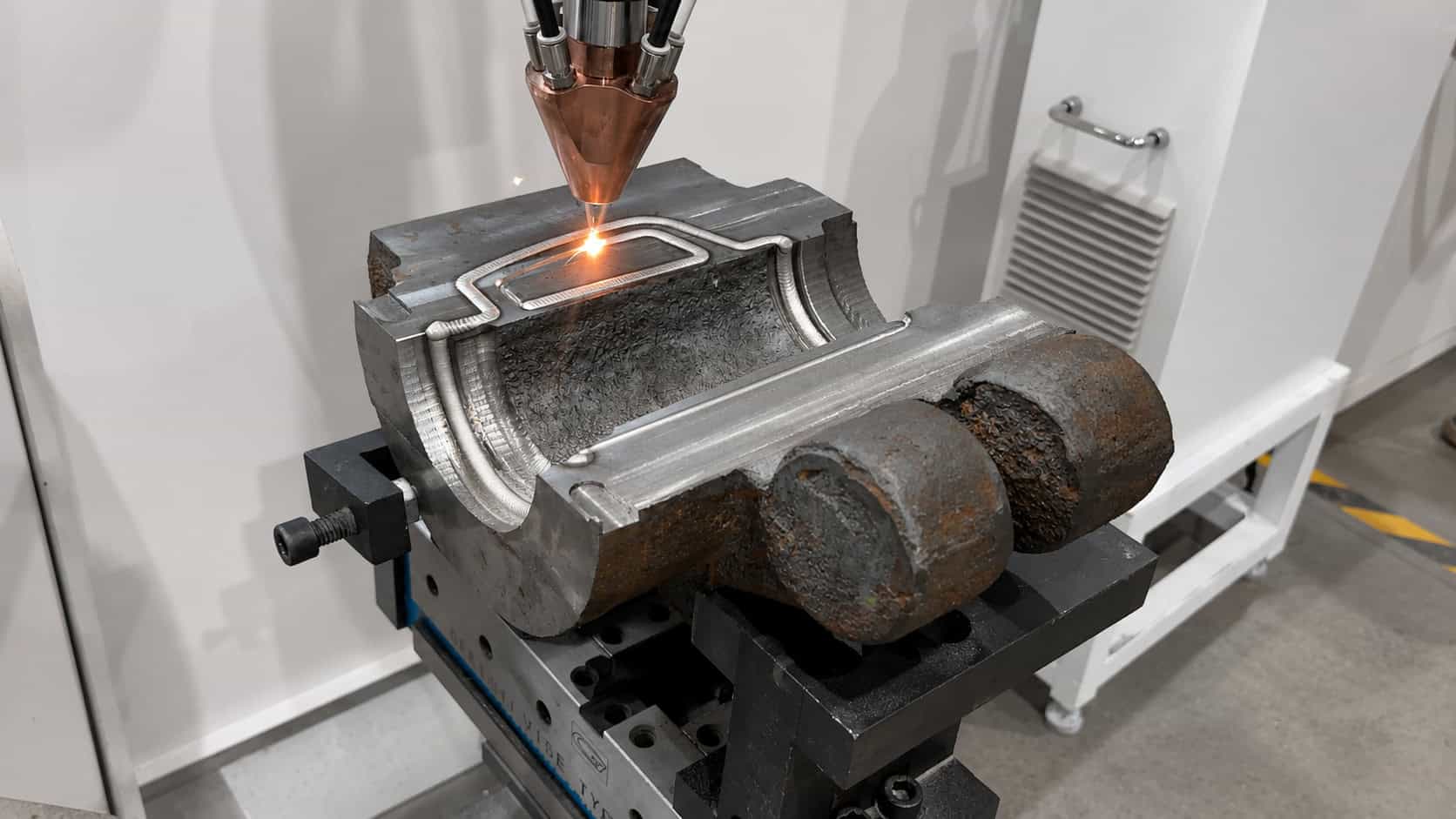
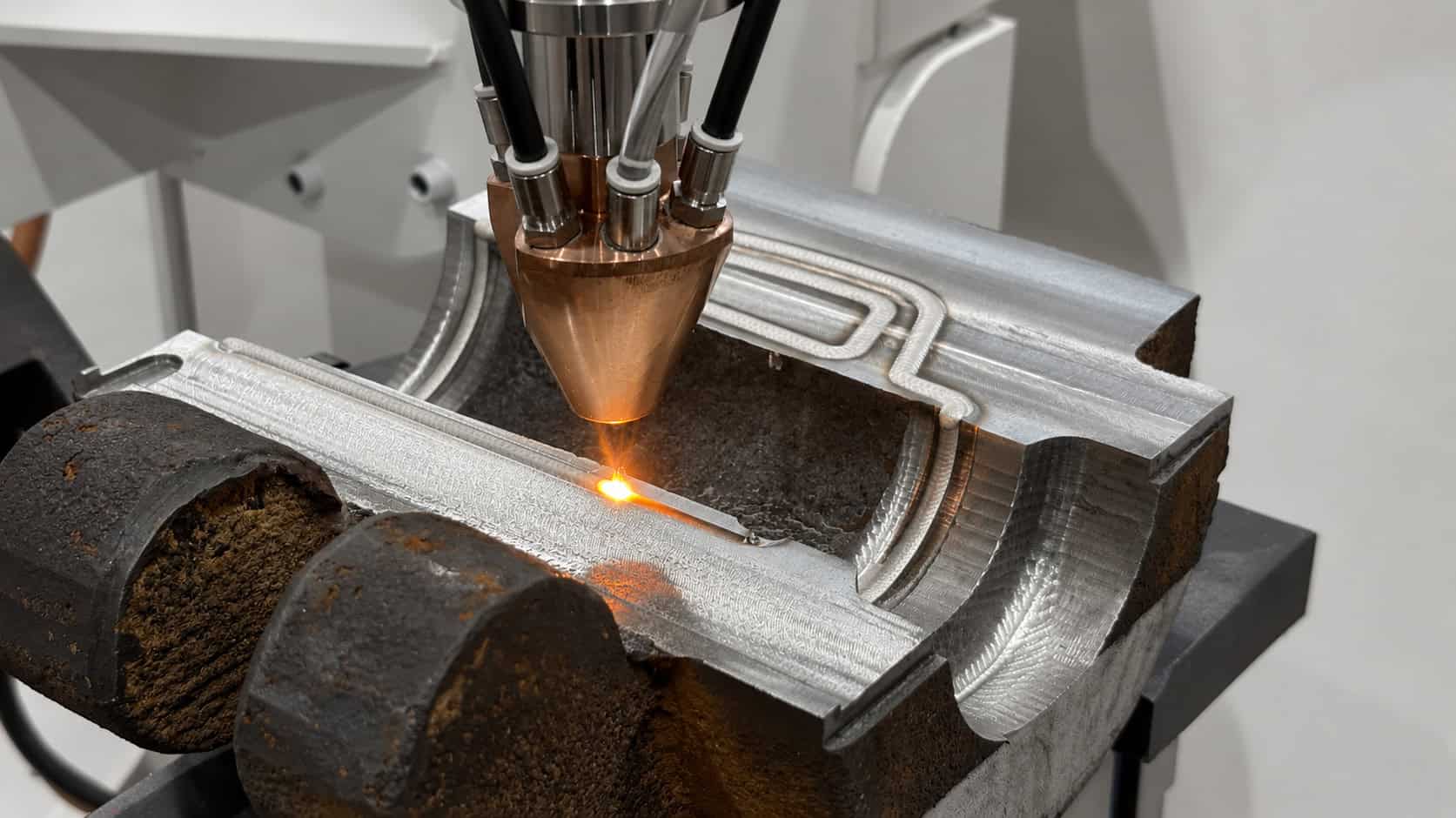
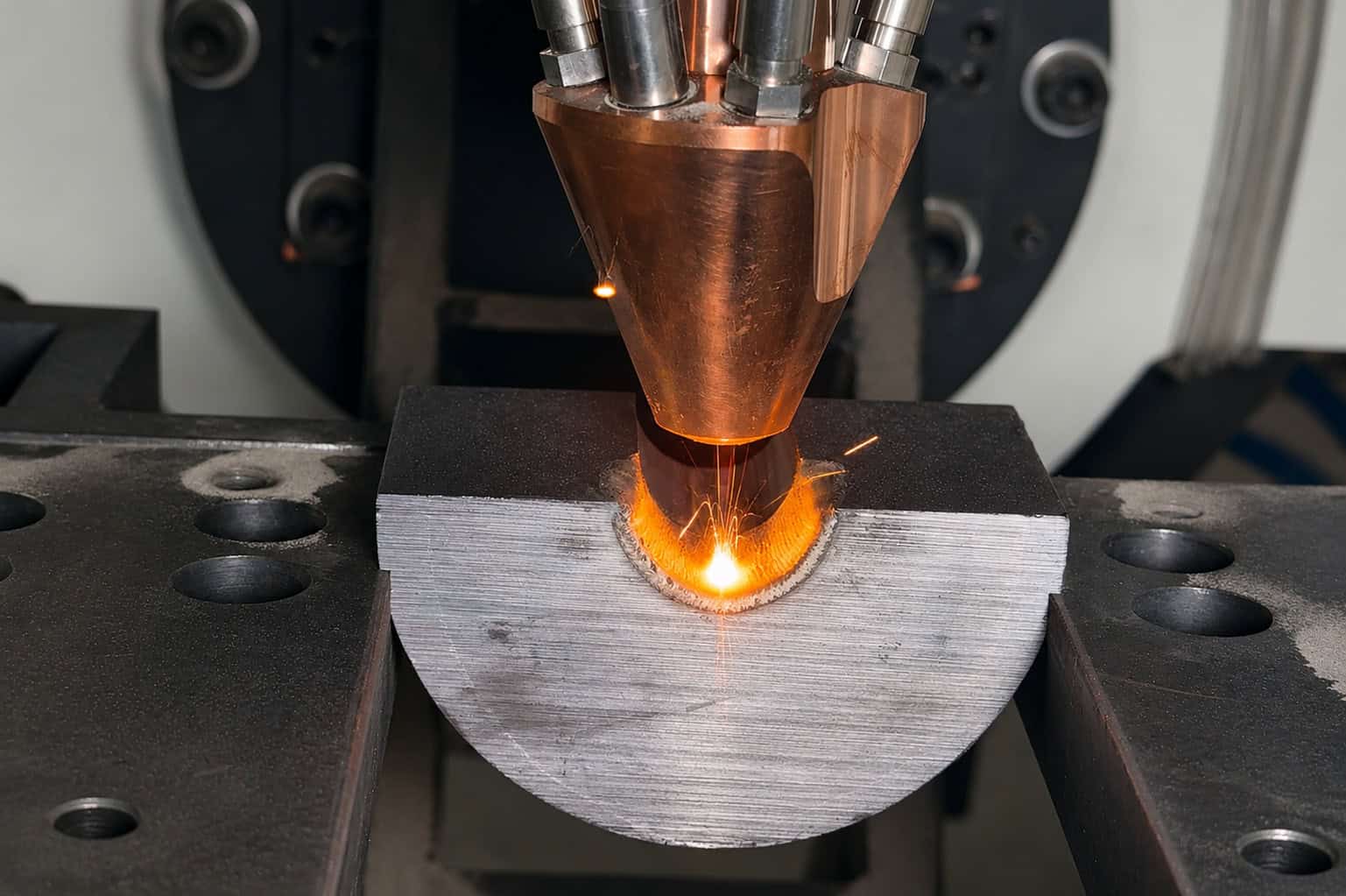
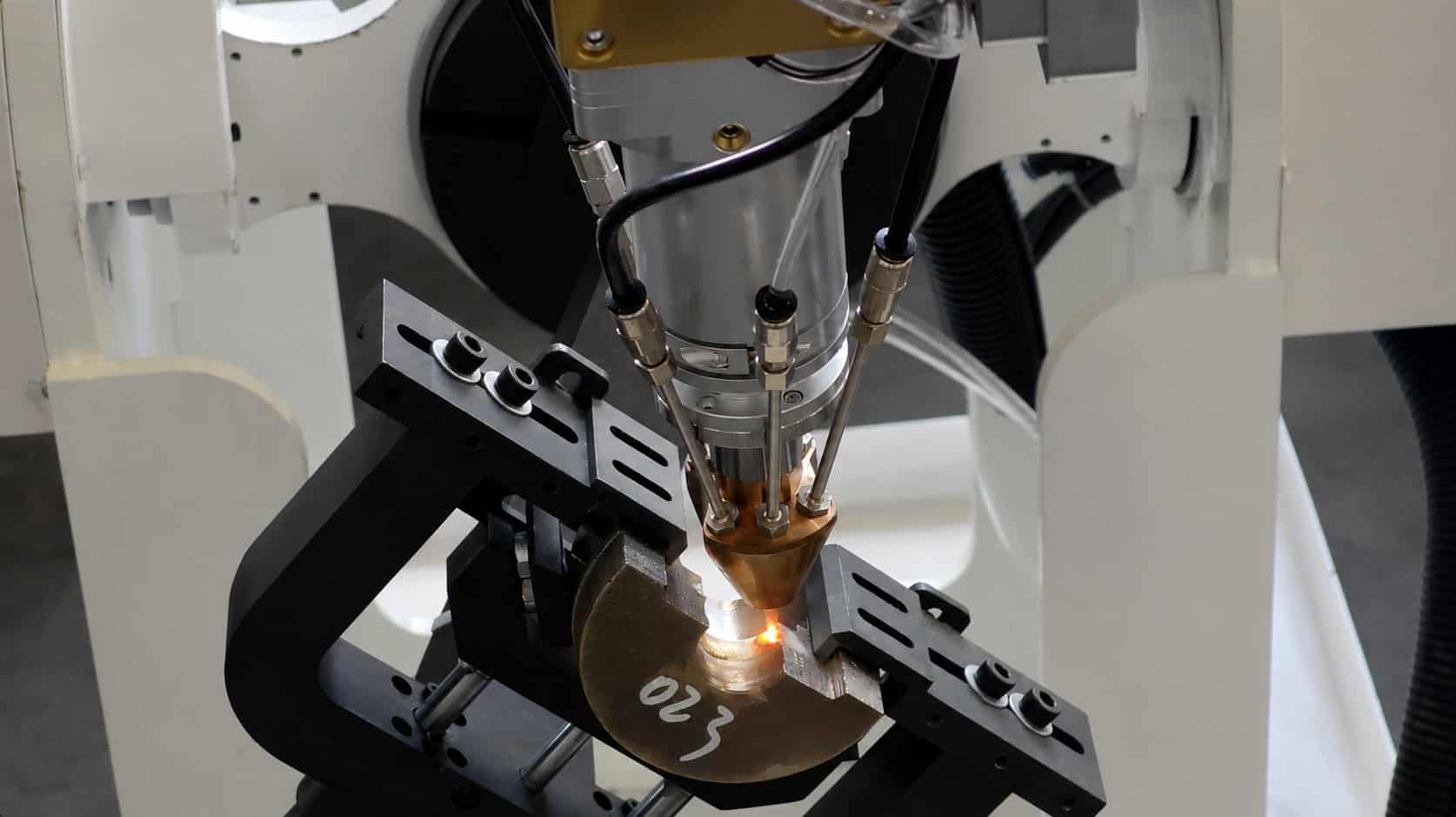
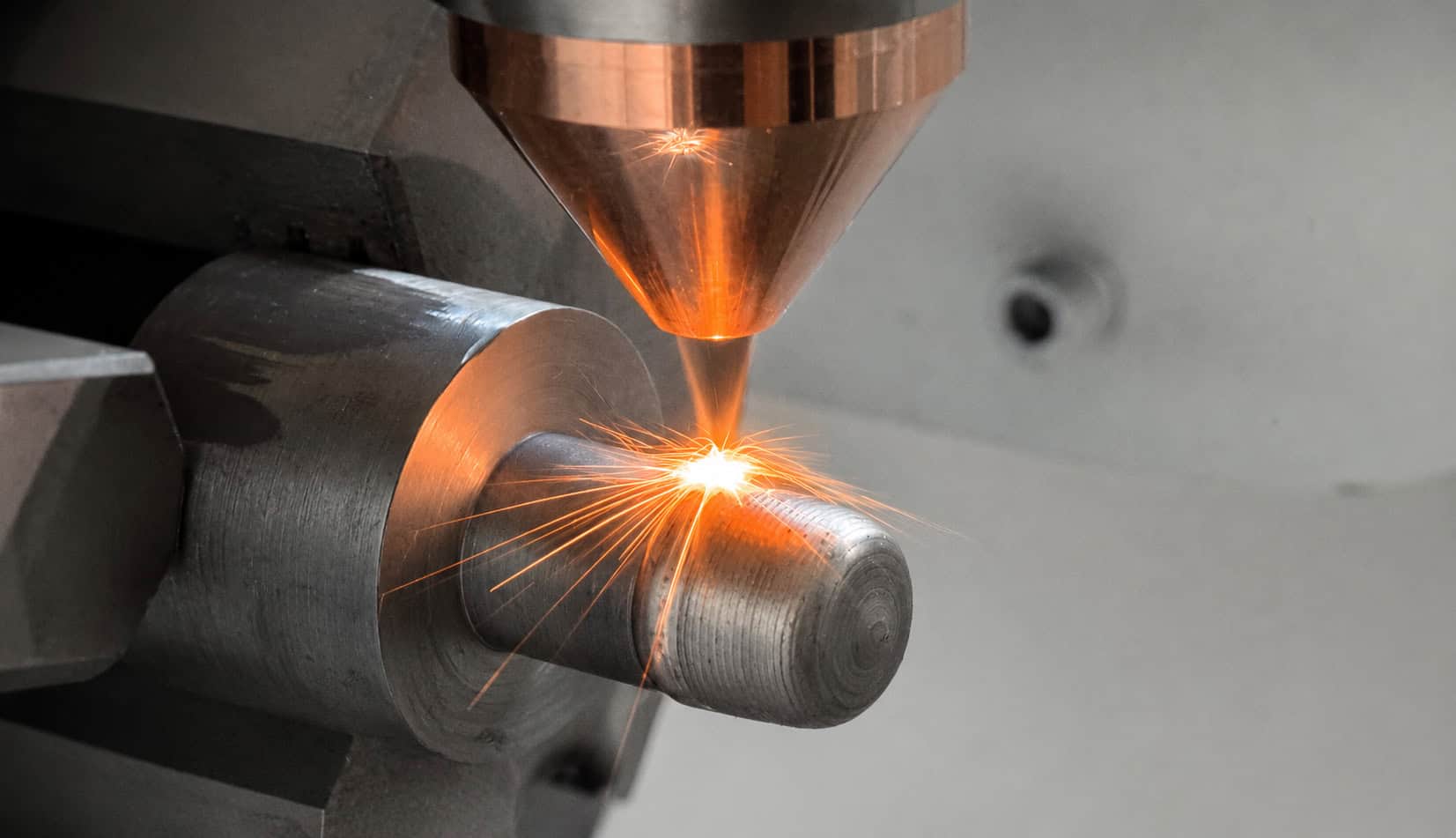
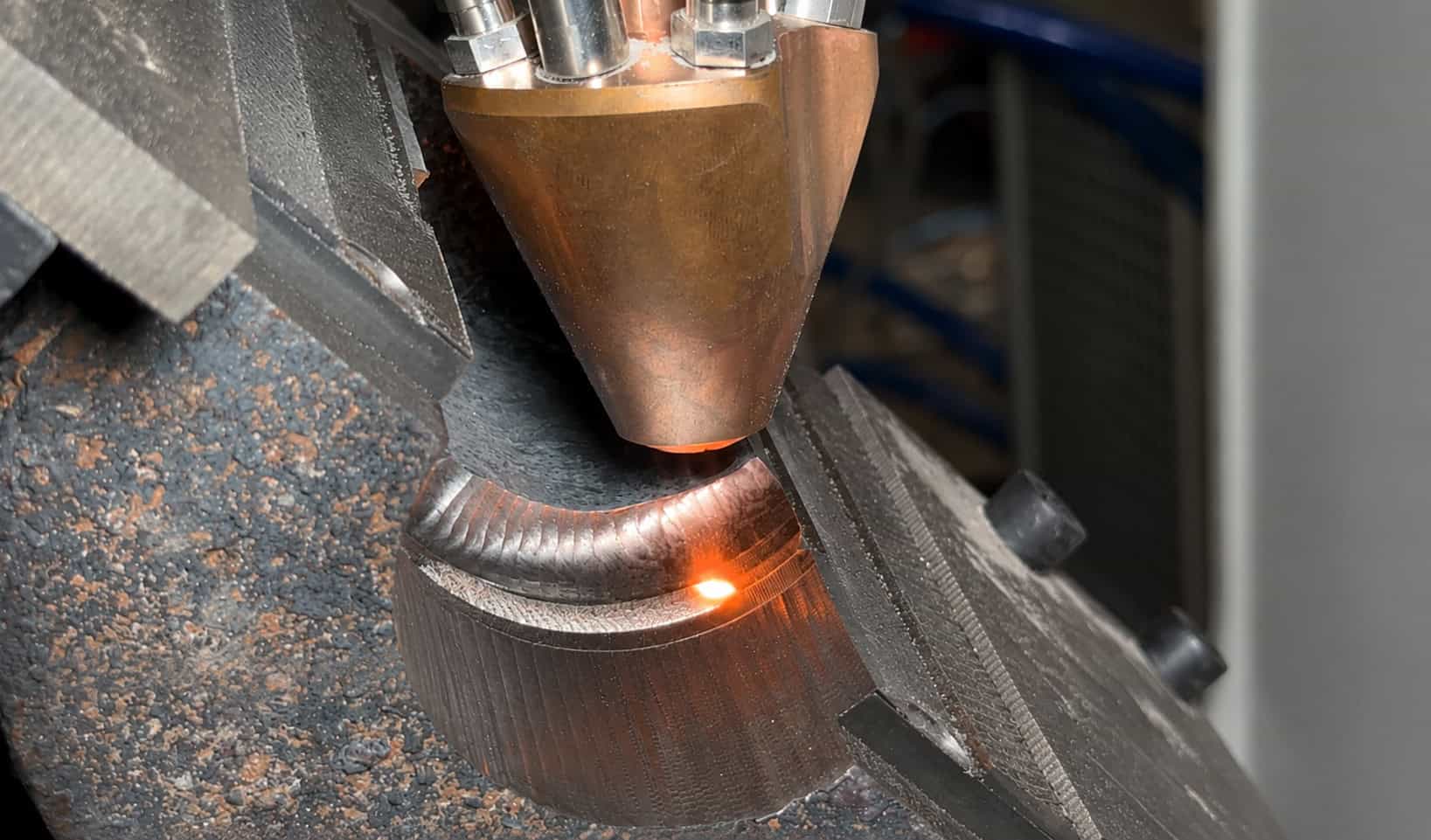
In this industrial application, laser cladding was used to improve and restore functional surfaces on multiple types of glass mold components.
The main objectives were:
Wear Resistance + Corrosion Resistance + Reduced Friction + Dimensional Restoration + Longer Mold Service Life
The application covered:
- Blank molds
- Forming molds
- Neck molds
- Bottom molds
- Neck rings
- Plungers
- Baffles
1. Why Glass Molds Require Surface Engineering
Glass molds operate under demanding repeated cycles.
Typical service conditions include:
- High-temperature glass contact
- Rapid heating and cooling
- Repeated mechanical closing and opening
- Sliding and contact wear
- Surface adhesion
- Oxidation
- Localized corrosion
- Dimensional wear
As the working surface deteriorates, mold performance can be affected by:
- Increased friction
- Poorer release behavior
- Surface defects
- Dimensional instability
- More frequent repair
- Shorter mold life
Laser cladding provides a way to reinforce or restore only the functional surface without replacing the complete mold.
2. Typical Glass Mold Base Materials
The original application primarily involved:
Cast Iron
Advantages:
- Good toughness
- Good thermal stability
- Suitable cost
Limitations:
- Relatively low surface hardness
- Limited wear resistance
Copper Alloys
Advantages:
- Excellent thermal conductivity
- Efficient heat transfer
Limitations:
- Lower hardness
- Limited resistance to long-term adhesive wear
- Reduced performance under repeated high-temperature friction
This makes both material families suitable candidates for localized surface enhancement.
3. Why Laser Cladding Was Selected
Laser cladding was selected because the mold required a combination of:
- Metallurgical bonding
- Low dilution
- Localized heat input
- Precise material placement
- Wear-resistant alloy deposition
- Controlled dimensional buildup
- Compatibility with automated mold processing
The original industrial application achieved:
Bond Strength >300 MPa
and:
Dilution Rate <5%
These characteristics are especially important for mold applications where the deposited layer must remain firmly bonded under repeated thermal and mechanical cycling.
4. Actual Technical Performance
The real application data include the following:
| Technical Item | Actual Application Data |
|---|---|
| Bond Strength | >300 MPa |
| Dilution Rate | <5% |
| Main Powder System | Nickel-Based Alloy Powder |
| Typical Cladding Hardness | HRC 23–30 |
| Plunger Mold Material Strategy | Nickel-Based Powder + Tungsten Carbide Reinforcement |
| Main Process | Powder-Fed Laser Cladding |
| Main Purpose | Wear / Corrosion / Friction Reduction / Surface Restoration |
These values are supported by the original industrial application.
5. Why Low Dilution Matters for Glass Molds
Dilution refers to the amount of base material that mixes into the deposited alloy during cladding.
For mold applications, excessive dilution can alter:
- Coating chemistry
- Hardness
- Corrosion resistance
- Wear behavior
- Thermal performance
The actual application maintained:
Dilution <5%
This allows the deposited alloy to retain more of its intended functional properties while still forming a strong metallurgical bond with the mold substrate.
6. Bond Strength Above 300 MPa
The original case reports:
Bond Strength >300 MPa
This is important because glass mold surfaces experience repeated thermal cycles and mechanical loading.
A weakly bonded coating could fail through:
- Delamination
- Cracking
- Edge separation
- Localized spalling
Metallurgical bonding created by laser cladding provides a more integrated surface layer than many non-fusion coating processes.
7. Nickel-Based Alloy Powder for Glass Molds
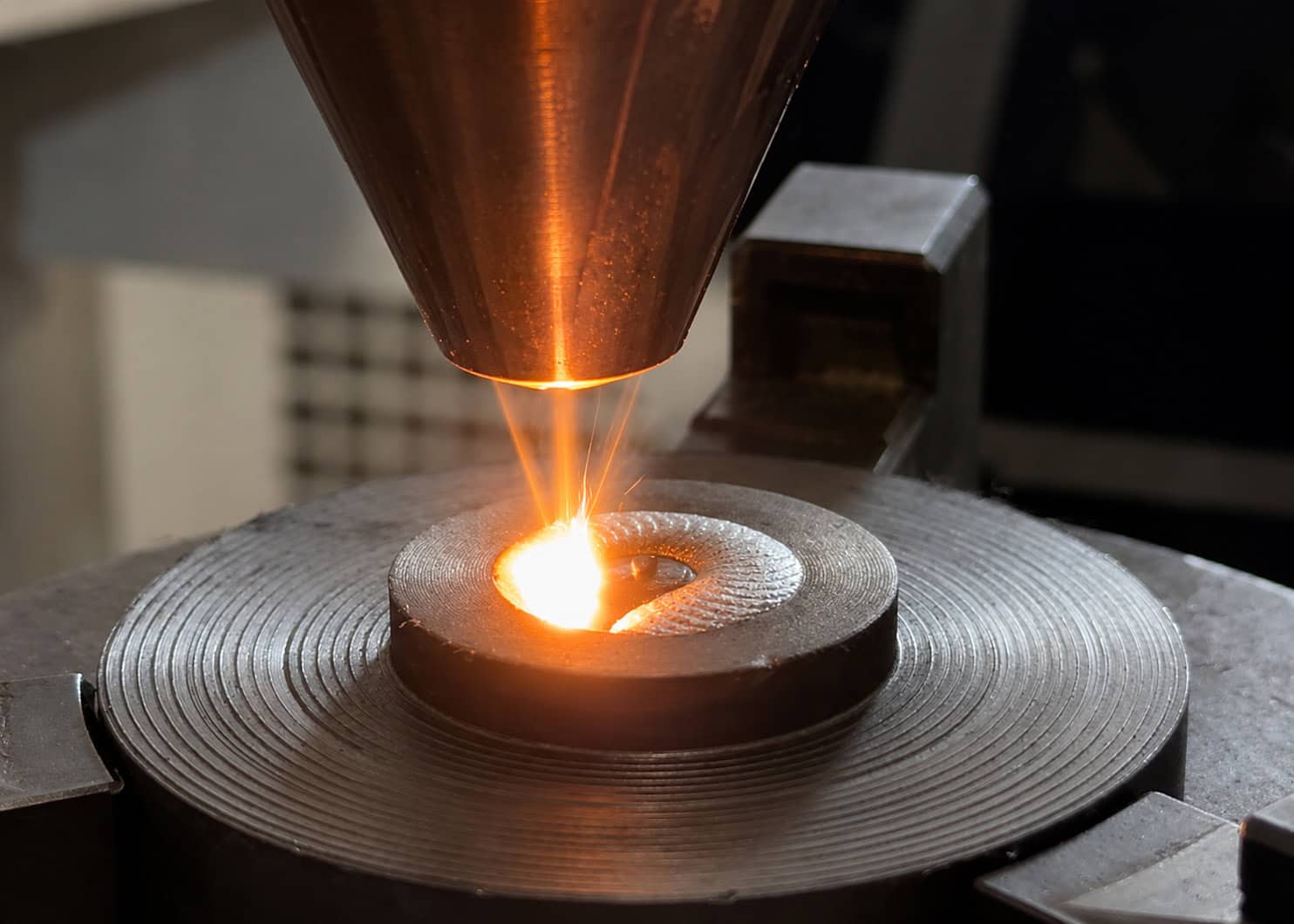
Nickel-based alloy powder was the primary cladding material used in the original application.
This material family can provide combinations of:
- Wear resistance
- Corrosion resistance
- Thermal stability
- Low friction characteristics
- Good metallurgical compatibility
The actual hardness range reported for the glass mold cladding was:
HRC 23–30
This relatively moderate hardness is important.
For glass molds, the engineering objective is not necessarily maximum hardness.
The coating must balance:
Wear Resistance + Toughness + Thermal Cycling + Friction Behavior + Crack Resistance
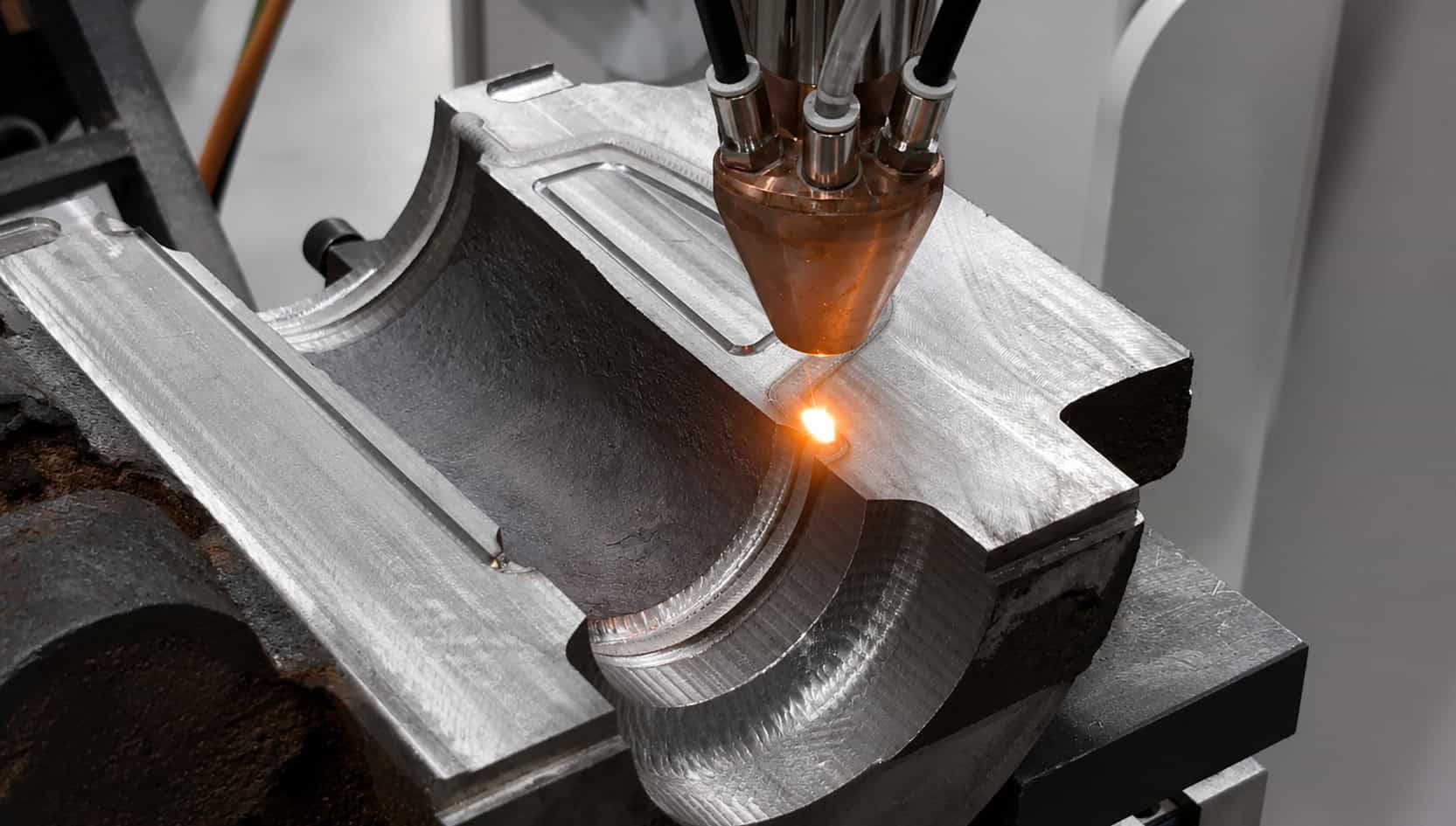
8. Tungsten Carbide Reinforcement for Plunger Molds
For plunger molds, the original application used:
Nickel-Based Powder + Tungsten Carbide
The tungsten carbide reinforcement was introduced to further improve surface hardness and wear resistance.
This type of composite material can be particularly useful where the working surface experiences more severe friction or abrasion.
However, carbide content must be carefully controlled because excessive hard-phase content can increase:
- Brittleness
- Crack sensitivity
- Thermal mismatch
The final material system should therefore be optimized around the specific mold and service conditions.
9. Blank Mold Laser Cladding
Blank molds form the initial glass shape and operate under repeated high-temperature contact.
Typical degradation can include:
- Surface wear
- Adhesion
- Oxidation
- Localized material loss
Laser cladding can reinforce critical working areas while maintaining the original mold body.
A typical process route is:
Surface Preparation → Localized Cladding → Cooling → Machining / Finishing
The cladding area should be limited to the actual functional region to reduce unnecessary heat input.
10. Forming Mold Laser Cladding
Forming molds require consistent surface geometry and good release behavior.
Laser cladding can be used to:
- Restore worn regions
- Improve wear resistance
- Improve corrosion resistance
- Reduce friction
- Maintain dimensional accuracy
Because forming surfaces directly influence the final glass product, deposition precision and post-machining quality are especially important.
11. Neck Mold and Neck Ring Laser Cladding
Neck molds and neck rings are typically smaller but highly wear-sensitive components.
Their functional surfaces experience repeated:
- Contact
- Sliding
- Thermal cycling
- Localized wear
Laser cladding can selectively reinforce these high-wear areas.
The small geometry makes precise CNC motion and stable powder delivery especially important.
12. Bottom Mold Laser Cladding
Bottom molds can experience both thermal and mechanical wear.
Laser cladding can be used for:
- Localized wear restoration
- Surface reinforcement
- Corrosion resistance improvement
- Dimensional correction
Because bottom mold geometry is often rotationally symmetric or semi-regular, CNC or rotary-assisted processing can be highly efficient.
13. Plunger Mold Laser Cladding
Plunger molds are among the more demanding glass mold applications.
The original industrial case specifically used:
Nickel-Based Alloy Powder + Tungsten Carbide Reinforcement
for these components.
The objective was to improve:
- Wear resistance
- Surface hardness
- Long-term dimensional stability
Plunger processing also requires careful control of:
- Coating thickness
- Track overlap
- Heat accumulation
- Surface finishing
14. Baffle Laser Cladding
Baffles also undergo repeated high-temperature interaction and mechanical wear.
Laser cladding can be used to reinforce localized surfaces rather than replacing the entire component.
This is particularly useful when wear occurs repeatedly in predictable functional zones.
15. Dedicated CNC Laser Cladding System for Glass Molds
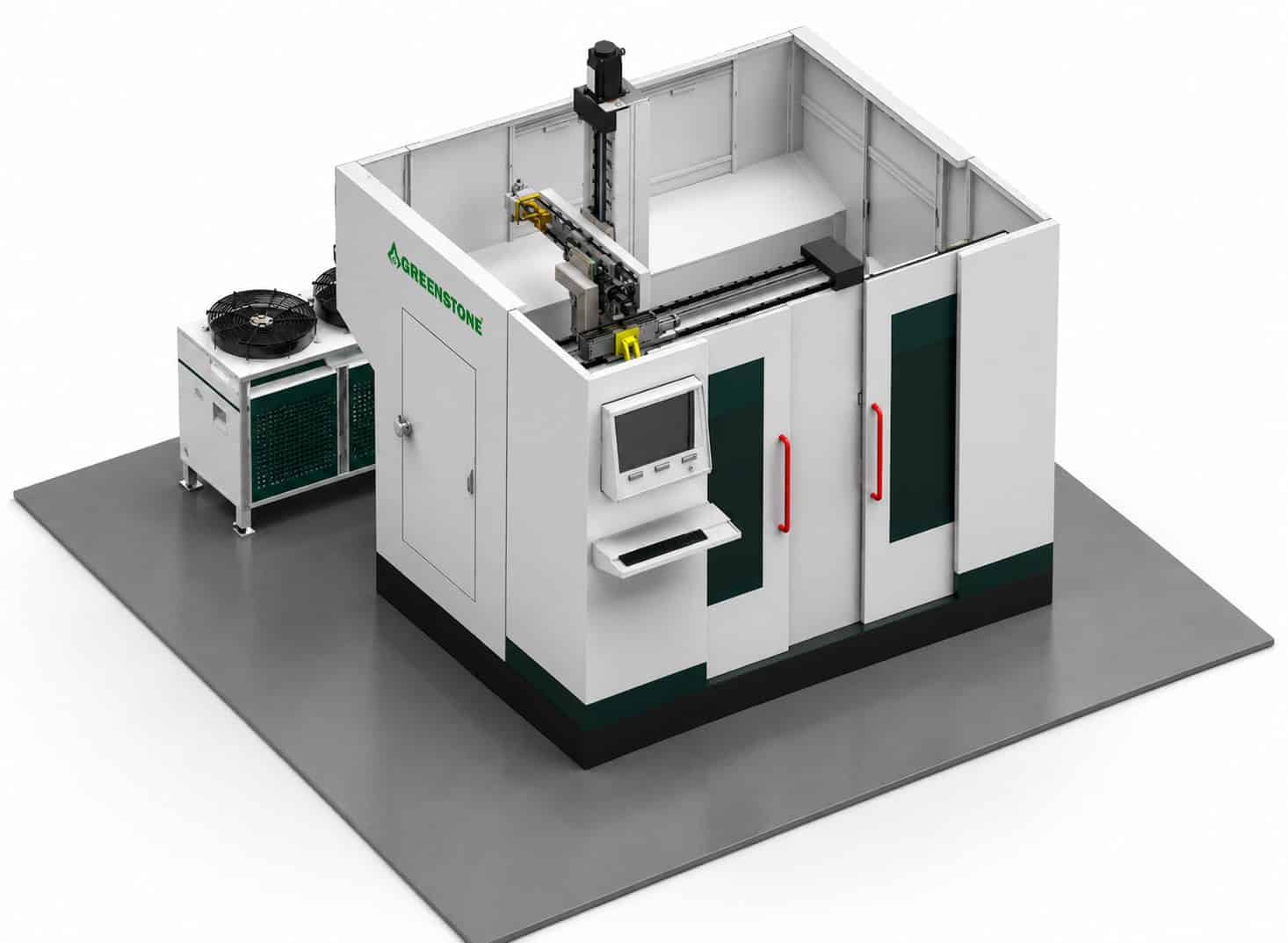
The original industrial application used a dedicated CNC laser cladding machine designed specifically for glass molds.
This is an important engineering point.
Glass molds differ significantly in:
- Shape
- Size
- Cladding location
- Surface orientation
- Loading method
A dedicated system therefore needs to provide:
- Stable workpiece positioning
- Accurate multi-axis motion
- Repeatable cladding trajectories
- Flexible fixture compatibility
- Consistent stand-off distance
The system was designed to process multiple mainstream glass mold types on one platform.


16. Actual Equipment Capabilities
The industrial application included:
- Dedicated CNC laser cladding equipment
- Broad glass mold compatibility
- High-efficiency automated processing
- Stable process repeatability
- Mold preheating system
- Robotic automatic loading and unloading
This means the solution was not simply a laser plus a powder feeder.
It was a complete automated mold-remanufacturing platform.
17. Mold Preheating System
A matched mold preheating system was used as part of the application.
Preheating can help control:
- Thermal gradients
- Crack risk
- Residual stress
- Melt-pool stability
- Metallurgical compatibility
The required preheating temperature depends on:
- Base material
- Mold size
- Coating alloy
- Geometry
- Cladding area
The correct preheating condition should therefore be developed during process validation.
18. Robotic Automatic Loading and Unloading
The system also supported:
Robotic Automatic Loading & Unloading
This improves:
- Production consistency
- Batch efficiency
- Operator safety
- Repeatability
- Cycle-time control
For glass mold factories processing large quantities of standardized mold components, automation can transform laser cladding from a repair operation into a production process.
19. Processing Route
A representative glass mold remanufacturing route is:
Incoming Inspection
↓
Wear / Damage Evaluation
↓
Surface Preparation
↓
Preheating
↓
Workpiece Positioning
↓
Powder-Fed Laser Cladding
↓
Controlled Cooling
↓
Machining / Grinding
↓
Dimensional Inspection
↓
Surface Finishing
The exact sequence depends on the mold type and repair objective.
20. Process Parameters That Must Be Controlled
Although the original case does not disclose fixed laser power, powder-feed rate or travel speed, the following parameters are critical:
| Parameter | Engineering Function |
|---|---|
| Laser Power | Controls melt-pool energy |
| Spot Size | Controls energy density and track width |
| Powder Feed Rate | Controls deposited material volume |
| Travel Speed | Controls heat input and deposition |
| Track Overlap | Controls layer uniformity |
| Layer Thickness | Controls restoration amount |
| Preheating Temperature | Controls thermal stress |
| Shielding Gas | Protects the molten pool |
| Stand-Off Distance | Maintains powder focus |
| Cooling Rate | Influences microstructure and crack risk |
These parameters must be developed according to the actual mold.
21. Processing Quality Requirements
For glass mold laser cladding, coating appearance alone is insufficient.
Important quality criteria include:
- Metallurgical bonding
- Dilution
- Crack control
- Porosity
- Layer thickness
- Hardness
- Surface geometry
- Machinability
- Thermal cycling behavior
- Final dimensional accuracy
The reported application performance includes:
Bond Strength >300 MPa
Dilution <5%
Hardness HRC 23–30
These values provide direct technical support for the process.
22. Why Moderate Hardness Can Be Better Than Maximum Hardness
For glass molds, excessive hardness can be counterproductive.
The surface must also tolerate:
- Repeated thermal cycling
- Impact
- Contact stress
- Thermal expansion mismatch
Therefore, a coating that is too brittle may crack prematurely.
The actual HRC 23–30 range reflects a balanced engineering strategy:
Moderate Hardness + Toughness + Thermal Stability + Wear Resistance
For more severe wear regions such as plungers, carbide reinforcement can be introduced selectively.
23. Laser Cladding vs. Conventional Repair
Conventional repair methods may include:
- Manual welding
- Arc surfacing
- Thermal spray
- Mechanical rebuilding
- Component replacement
Laser cladding provides advantages where the application requires:
- Low dilution
- Localized heat input
- Precision deposition
- Metallurgical bonding
- Controlled dimensional restoration
- Automation
However, for very low-value molds or simple repairs, conventional methods may still be more economical.
The correct process should be selected according to component value and production volume.
24. Laser Cladding vs. Thermal Spray for Glass Molds
Thermal spray can provide low-heat functional coatings.
Laser cladding provides a stronger advantage when the application requires:
- Metallurgical bonding
- Dimensional restoration
- Localized material buildup
- Machining after repair
If only a thin low-heat coating is required, thermal spray may remain appropriate.
If the mold surface has already experienced material loss, laser cladding becomes more attractive.
25. Equipment Architecture for Glass Mold Processing
A representative automated system can include:
Industrial Fiber Laser
Powder Feeder
Laser Cladding Head
Multi-Axis CNC Platform
Dedicated Mold Fixture
Preheating System
Robot Loading / Unloading
Process Control
Safety Enclosure
The exact mechanical architecture should be selected according to the mold family.
26. Recommended GREENSTONE System Concept
For similar glass mold applications, GREENSTONE can configure a system around:
Laser Source
Multi-kW industrial fiber laser selected according to mold size and process.
Powder Feeding
Stable powder feeder suitable for nickel-based and composite powders.
Cladding Head
Coaxial or application-specific laser cladding head.
CNC Motion
Multi-axis CNC motion platform for different mold geometries.
Fixtures
Dedicated fixtures for:
- Neck rings
- Plungers
- Bottom molds
- Blank molds
- Baffles
Preheating
Integrated mold preheating system.
Automation
Optional robotic loading and unloading for batch production.
Control
Integrated control of:
Laser + Powder + Motion + Preheating + Process Parameters
27. Technical Data Summary
| Item | Actual / Application Data |
|---|---|
| Application | Glass Mold Repair and Surface Enhancement |
| Main Base Materials | Cast Iron / Copper Alloy |
| Main Powder | Nickel-Based Alloy Powder |
| Plunger Reinforcement | Tungsten Carbide + Nickel-Based Powder |
| Bond Strength | >300 MPa |
| Dilution Rate | <5% |
| Typical Hardness | HRC 23–30 |
| Main Mold Types | Blank Mold / Forming Mold / Neck Mold / Bottom Mold / Neck Ring / Plunger / Baffle |
| Deposition Process | Powder-Fed Laser Cladding |
| Equipment | Dedicated CNC Laser Cladding System |
| Preheating | Integrated Mold Preheating System |
| Automation | Robotic Loading & Unloading |
| Main Objectives | Wear Resistance / Corrosion Resistance / Friction Reduction / Dimensional Restoration |
28. Why Glass Mold Laser Cladding Is Suitable for Automation
Glass mold production has several characteristics that support automation:
- Repetitive component geometries
- Large quantities of similar molds
- Predictable wear areas
- Repeatable cladding paths
- High demand for dimensional consistency
Once validated, the process recipe can be stored and reused for repeated production.
This transforms repair into a standardized remanufacturing workflow.
29. Engineering Information Required for Similar Projects
For a new glass mold project, the engineering team should confirm:
- Mold type
- Base material
- Drawing / 3D model
- Dimensions
- Weight
- Worn area
- Required restoration thickness
- Target hardness
- Operating temperature
- Required surface finish
- Production quantity
- Existing heat treatment
- Preheating limitations
For batch processing, the number of mold types and fixture-change frequency should also be evaluated.
30. From Mold Repair to Automated Remanufacturing
A successful glass mold laser cladding project requires:
Failure Analysis
↓
Base Material Evaluation
↓
Powder Selection
↓
Preheating Strategy
↓
Laser Process Development
↓
Fixture Design
↓
CNC Path Development
↓
Automation Integration
↓
Final Machining
↓
Quality Validation
At GREENSTONE, this type of project can be developed as a complete glass mold surface engineering and automated remanufacturing solution, rather than simply as a standard laser cladding machine.
Confidentiality Notice
This application case is based on actual industrial laser cladding applications for glass molds. The reported bond strength above 300 MPa, dilution below 5%, HRC 23–30 hardness range, nickel-based alloy material strategy, tungsten-carbide-reinforced plunger solution, dedicated CNC processing, mold preheating, and robotic loading/unloading are derived from the actual application. Customer identities, proprietary drawings, undisclosed laser parameters, and commercial information remain confidential.
Have a Similar Glass Mold Application?
If your project involves blank molds, forming molds, neck molds, bottom molds, neck rings, plungers, baffles or other glass-forming components, the process should be developed around the actual mold material and wear mechanism.
Send us your mold drawings, base material, dimensions, worn area, required restoration thickness, operating conditions, target surface properties and production quantity. GREENSTONE’s engineering team can evaluate the alloy system, laser cladding process, preheating strategy and automated equipment configuration for your application.
