
Laser Cladding for Bimetallic Metallurgical Clad Pipes and Energy Storage Pipelines
Application Overview
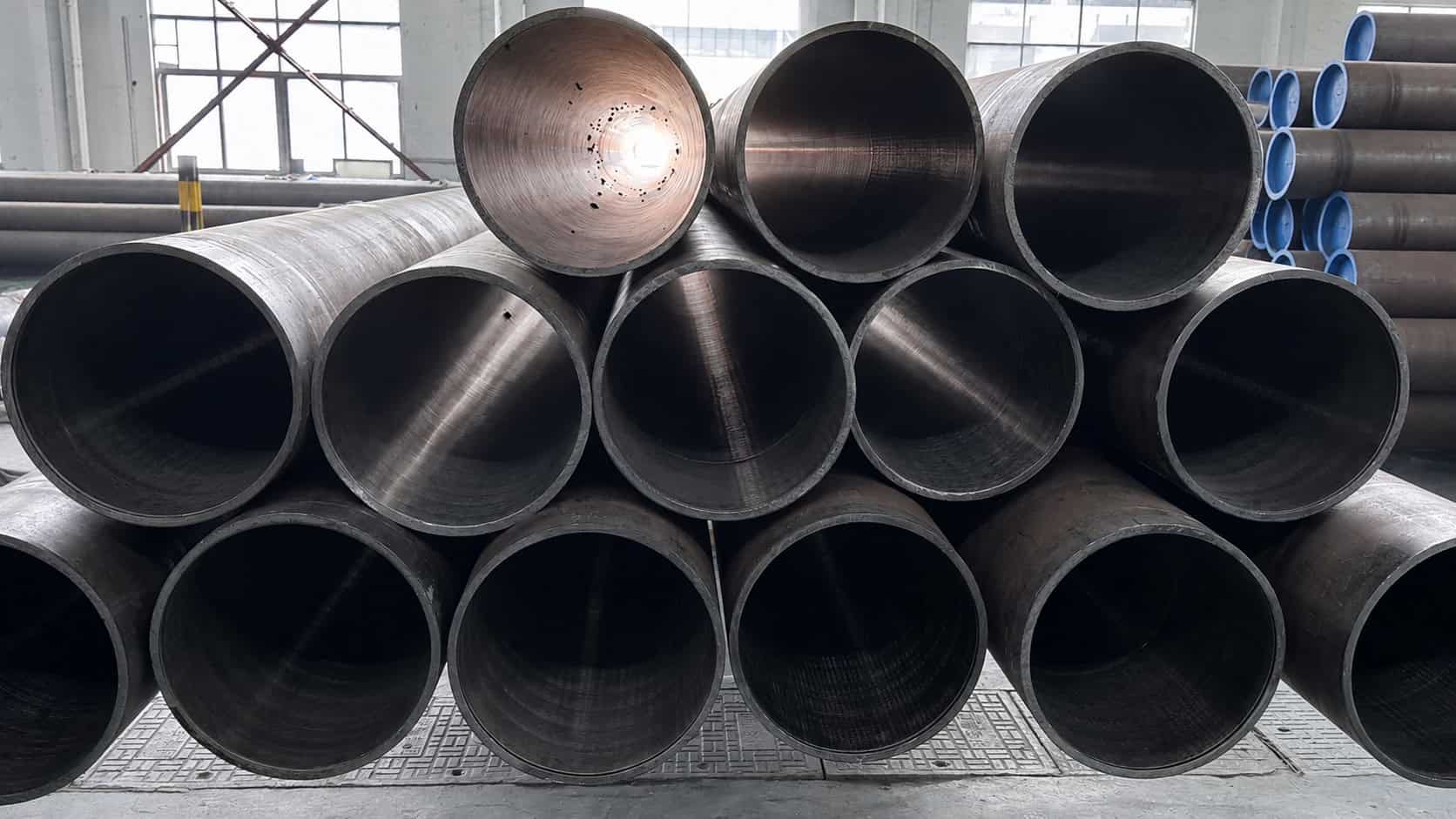
Bimetallic metallurgical clad pipes are widely used in energy, oil and gas, chemical processing, and other industries where pipelines must transport highly corrosive fluids while maintaining sufficient structural strength and pressure-bearing capability.
A typical engineering concept is:
Carbon Steel Structural Pipe + Corrosion-Resistant Inner Alloy Layer
Instead of manufacturing the entire pipe from an expensive corrosion-resistant alloy, a lower-cost high-strength carbon steel pipe is used as the structural body, while a functional corrosion-resistant alloy is applied to the internal surface.
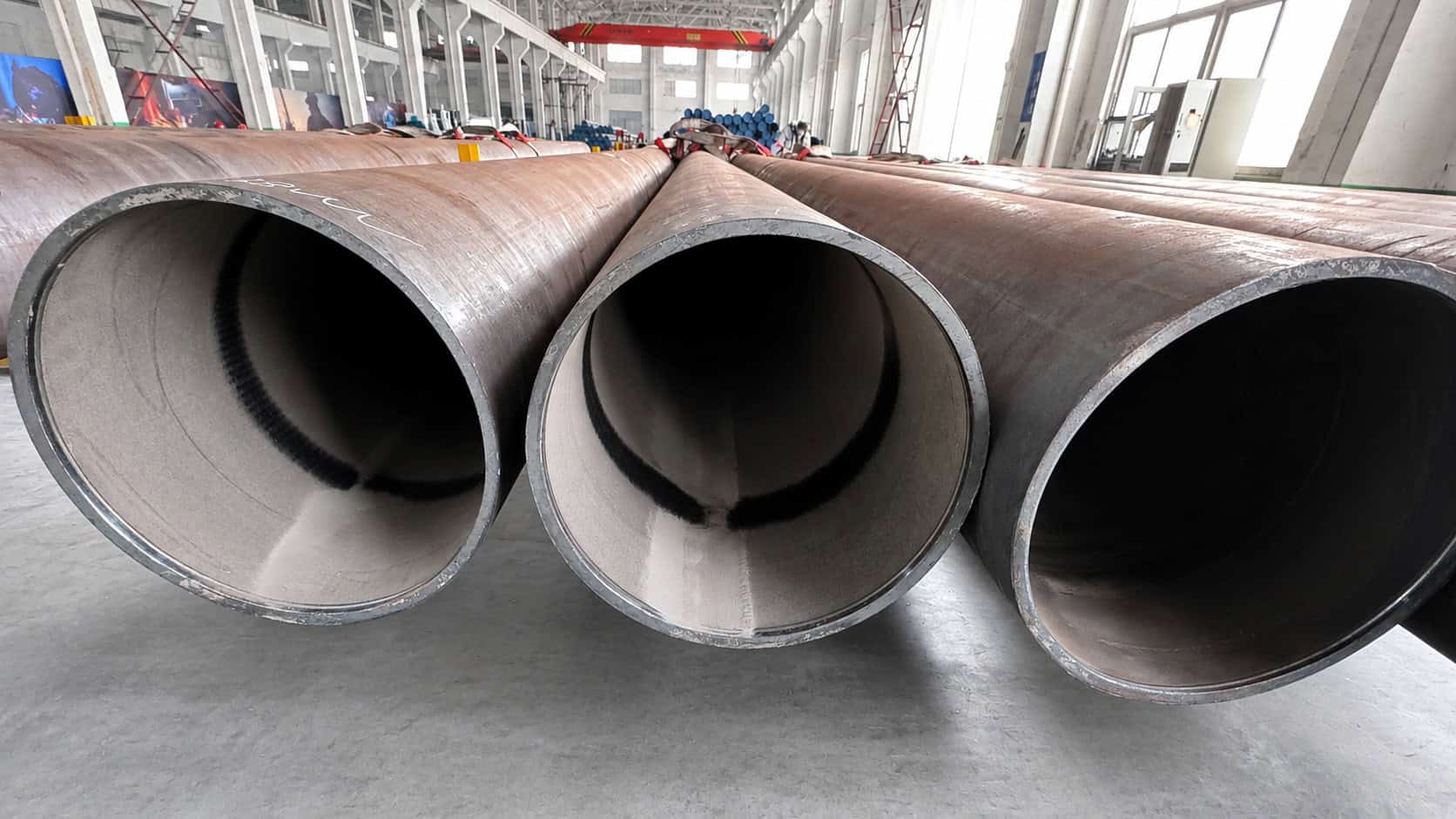
In this industrial application, laser cladding was used to produce metallurgically bonded corrosion-resistant inner layers for bimetallic clad pipes and related energy-storage pipeline applications.
The actual application involved:
- Stainless steel 316
- Nickel-based Alloy 625
- Nickel-based Alloy 825
as representative corrosion-resistant inner-layer materials.
The primary engineering objective was:
Structural Strength + Corrosion Resistance + Metallurgical Bonding + Long-Distance Internal Surface Processing
1. What Is a Bimetallic Metallurgical Clad Pipe?
A bimetallic metallurgical clad pipe combines two different material functions in one structure.
The outer or structural body is typically manufactured from carbon steel or another pressure-bearing structural material.
The internal surface is covered with a corrosion-resistant alloy.
A representative structure is:
Carbon Steel Base Pipe
↓
Laser-Cladded Corrosion-Resistant Inner Layer
Typical inner-layer materials can include:
- Stainless steel 316
- Nickel Alloy 625
- Nickel Alloy 825
- Other corrosion-resistant alloys selected according to the transported medium
This approach reduces the need to manufacture the entire pipe from an expensive high-alloy material.
2. Why Laser Cladding Is Used for Internal Pipe Surfaces
The internal surface of a pipeline is often the region directly exposed to the transported medium.
In corrosive service environments, common degradation mechanisms can include:
- General corrosion
- Localized corrosion
- Pitting
- Chemical attack
- Erosion-corrosion
- Flow-assisted degradation
If the complete pipe were manufactured from a high-nickel alloy, material cost could become extremely high.
Laser cladding provides an alternative:
Use a lower-cost structural pipe for strength
Apply a high-performance alloy only to the internal functional surface
This is one of the clearest economic and technical advantages of metallurgical clad pipe technology.
3. Typical Material Combination
The actual industrial application involved carbon steel pipe combined with corrosion-resistant internal materials.
Representative combinations include:
| Structural Base | Internal Cladding Material | Main Function |
|---|---|---|
| Carbon Steel | Stainless Steel 316 | General corrosion resistance |
| Carbon Steel | Nickel Alloy 625 | Severe corrosion and high-performance service |
| Carbon Steel | Nickel Alloy 825 | Corrosion resistance in demanding chemical environments |
The final alloy must be selected according to:
- Fluid chemistry
- Chloride content
- Temperature
- Pressure
- Flow velocity
- Corrosion mechanism
- Required service life
A single alloy should not be assumed suitable for every pipeline application.
4. Laser Cladding Process for Pipe Inner Walls
Internal-wall laser cladding is more technically demanding than external cylindrical cladding.
The processing head must extend inside the pipe while maintaining stable:
- Laser delivery
- Powder delivery
- Shielding
- Stand-off distance
- Focal position
- Melt-pool stability
- Heat management
A specialized internal-wall cladding system is therefore required.
The basic process route is:
Pipe Preparation
↓
Internal Surface Cleaning / Machining
↓
Internal Cladding Head Positioning
↓
Powder-Fed Laser Cladding
↓
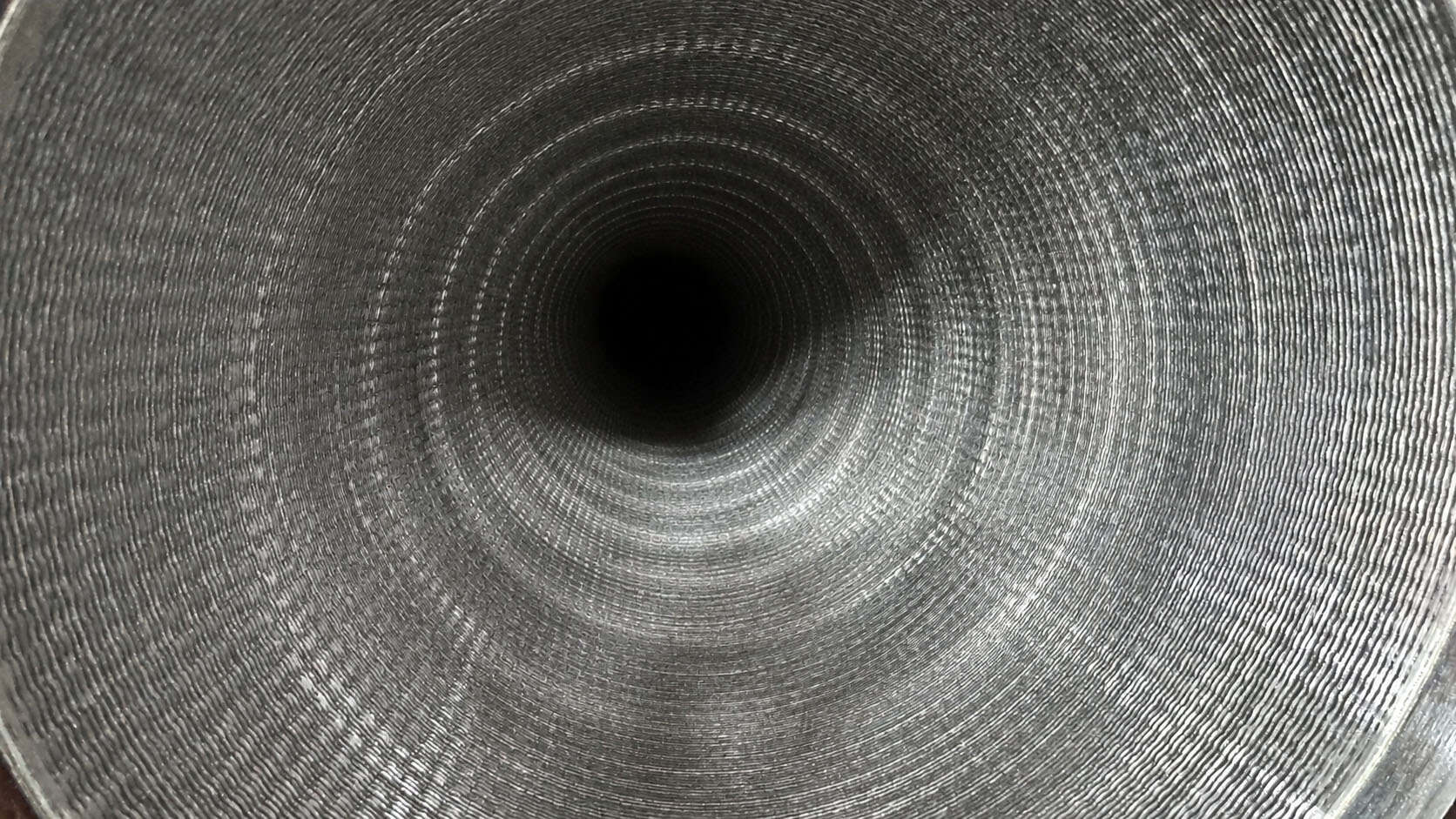
Helical Multi-Track Deposition
↓
Inspection
↓
Final Surface Evaluation
5. Internal-Wall Motion Principle
For long cylindrical pipes, the deposition path typically relies on synchronized rotational and axial movement.
A representative motion concept is:
Pipe Rotation + Internal Cladding Head Axial Movement
or, depending on machine architecture:
Internal Cladding Head Rotation + Axial Feed
The objective is to create a continuous helical coating path along the internal wall.
Stable synchronization is critical because track spacing directly affects:
- Overlap
- Coating uniformity
- Thermal accumulation
- Surface quality
- Final thickness
6. Actual Laser Power Used in the Industrial Application
The original industrial case used the following equipment power configurations:
Outer-Wall / General Rapid Laser Cladding Platforms
- 6000 W
- 9000 W
- 12000 W
Inner-Wall Laser Cladding Platform
- 6000 W
These configurations were used for different external and internal laser cladding requirements.
Actual Application Data
| Technical Item | Actual Data |
|---|---|
| External / Rapid Cladding Laser Power | 6000 W / 9000 W / 12000 W |
| Internal-Wall Cladding Laser Power | 6000 W |
| Deposition Method | Powder-Fed Laser Cladding |
| Internal Surface | Corrosion-Resistant Metallurgical Cladding |
| Main Materials | 316 / Alloy 625 / Alloy 825 |
| Base Pipe | Carbon Steel |
| Main Application | Energy / Oil & Gas / Corrosive Fluid Pipeline |
| Main Objective | Corrosion-Resistant Metallurgical Inner Layer |
7. Why 6000 W Is Suitable for Internal-Wall Cladding
Internal pipe processing places additional constraints on the cladding head and thermal environment.
Compared with open external cladding, internal processing must manage:
- Limited working space
- Heat accumulation inside the bore
- Powder delivery distance
- Shielding effectiveness
- Optical path constraints
- Head size
- Minimum pipe diameter
A 6000 W class laser provides sufficient industrial processing capacity for many internal-wall cladding applications while allowing the internal processing system to maintain a practical equipment architecture.
However, required power should always be selected according to:
Pipe Diameter + Layer Thickness + Alloy + Travel Speed + Powder Feed + Thermal Conditions
rather than using a fixed number for all pipe applications.
8. Why Higher-Power 9000 W and 12000 W Systems Are Used
For external surfaces, larger working areas, or high-efficiency cladding, 9000 W and 12000 W systems can provide additional process capacity.
Higher laser power can support:
- Higher deposition rates
- Faster travel speeds
- Larger cladding tracks
- Higher powder feed rates
- Greater production throughput
But again:
Higher Power ≠ Automatically Better Coating
The process must remain balanced between:
Laser Power + Powder Feed + Spot Size + Travel Speed + Track Overlap + Material
9. Actual Motion System Architectures
The industrial application did not rely on one single machine configuration.
The following motion structures were used or provided for different types of clad-pipe processing:
Four-Axis Laser Cladding Machine Tool
Suitable for controlled cylindrical and multi-axis deposition.
Robot Arm + Slide + Large Rotary Table
Provides flexible multi-axis movement for larger components or varying geometries.
Robot Arm + Positioner
Suitable for coordinated robot and workpiece motion.
Gantry-Type Large Motion System
Suitable for large components and long processing ranges.
Long-Pipeline Internal-Wall Cladding Motion System
Specifically used where internal cladding must extend deep into long pipes.
This is a key engineering point:
Long-pipeline internal cladding is not only a laser process problem; it is also a motion, stiffness, support, and positioning problem.
10. Long-Pipeline Internal Cladding Challenges
The deeper the processing head must enter the pipe, the more difficult the system becomes.
Important challenges include:
- Long cantilever distance
- Mechanical deflection
- Vibration
- Optical stability
- Powder delivery stability
- Internal cooling
- Shielding gas distribution
- Positioning accuracy
- Head collision avoidance
- Repeatable stand-off distance
For long pipes, the motion system may require:
- Extended internal cladding arm
- Linear guide system
- Structural support
- Intermediate support mechanisms
- Closed-loop position control
The machine architecture must therefore be designed according to actual pipe length and bore diameter.
11. Minimum Internal Diameter
Internal-wall cladding equipment is constrained by the physical size of the cladding head.
Before system design, the following must be confirmed:
- Minimum pipe internal diameter
- Required insertion depth
- Pipe curvature, if any
- Internal steps or transitions
- Required coating length
The internal head must physically enter the bore while preserving enough clearance for:
- Laser optics
- Powder channels
- Shielding gas
- Cooling channels
- Protective structure
This is why minimum bore diameter is one of the first parameters required for an internal pipe project.
12. Corrosion-Resistant Alloy 625
Nickel Alloy 625 is widely used where severe corrosion resistance is required.
Its application advantages can include:
- Excellent corrosion resistance
- Chloride resistance
- Good high-temperature performance
- Good resistance to aggressive chemical environments
For pipeline service, Alloy 625 can be particularly valuable where transported media are highly corrosive.
Laser cladding allows this expensive alloy to be applied only to the internal surface instead of using it for the entire pipe wall.
13. Alloy 825 Internal Cladding
Nickel Alloy 825 is another corrosion-resistant material used in demanding industrial environments.
Its performance can make it suitable for:
- Acid-containing environments
- Chemical processing
- Corrosive fluids
- Oil and gas service
As with Alloy 625, its high material value makes selective internal deposition economically attractive.
14. Stainless Steel 316 Internal Cladding
Stainless steel 316 provides a more economical corrosion-resistant option for many environments.
It can be selected where:
- General corrosion resistance is required
- Chloride exposure is moderate
- The service environment does not justify a higher-cost nickel alloy
The material decision should always be based on the actual medium rather than simply selecting the most expensive alloy.
15. Metallurgical Bonding
One of the primary reasons laser cladding is used for bimetallic pipe is its ability to create a metallurgically bonded inner layer.
The laser melts:
- The deposited alloy powder
- A controlled thin region of the base pipe
After solidification, a fusion interface is formed.
The objective is to achieve:
- Strong metallurgical bonding
- Low dilution
- Dense coating structure
- Controlled chemical transition
- Uniform coverage
This differs fundamentally from mechanically lined or loosely bonded internal structures.
16. Dilution Control
Dilution is particularly important for corrosion-resistant cladding.
If excessive carbon steel substrate mixes into the corrosion-resistant alloy, the chemistry of the deposited layer may be altered.
This can reduce the intended corrosion performance.
Therefore, the process must carefully balance:
- Laser power
- Powder feed
- Travel speed
- Layer thickness
- Track overlap
- Melt-pool depth
The objective is:
Enough substrate melting for reliable bonding
but:
Not so much melting that the corrosion-resistant alloy becomes excessively diluted
This is one of the core technical advantages of controlled laser cladding.
17. Multi-Layer Deposition
Depending on required corrosion performance and final coating thickness, one or more layers may be used.
A multi-layer strategy can help:
- Reduce substrate influence on the outermost functional layer
- Increase total corrosion-resistant thickness
- Improve final composition control
However, additional layers also increase:
- Material consumption
- Processing time
- Heat accumulation
- Cost
The optimal number of layers should therefore be selected according to technical requirements rather than maximizing thickness.
18. Coating Thickness
The original application page does not disclose a single fixed coating thickness.
This is appropriate because internal clad-pipe thickness varies according to:
- Alloy
- Corrosion allowance
- Pipe service conditions
- Post-machining
- Final chemical composition
- Customer specification
In engineering practice, coating thickness should therefore be treated as a design variable rather than a universal value.
19. Powder Feed Rate and Travel Speed
The original industrial application does not publish a fixed powder-feed rate or travel-speed range.
These values must be determined according to:
- Laser power
- Alloy type
- Powder particle size
- Spot size
- Desired coating thickness
- Pipe diameter
- Rotation speed
- Track pitch
- Heat accumulation
For a 6000 W internal-wall system, the correct processing window should be established through sample testing.
20. Process Parameters That Must Be Validated
A complete internal pipe cladding process requires validation of:
| Parameter | Engineering Purpose |
|---|---|
| Laser Power | Controls available melt energy |
| Powder Feed Rate | Controls deposited material volume |
| Travel Speed | Controls heat input and productivity |
| Pipe Rotation Speed | Controls helical track formation |
| Track Pitch | Controls overlap |
| Spot Size | Influences energy density |
| Layer Thickness | Defines total corrosion protection |
| Shielding Gas | Protects melt pool |
| Powder Particle Size | Influences feeding and melting |
| Stand-Off Distance | Controls powder focus |
| Internal Head Position | Controls processing geometry |
| Cooling Strategy | Manages internal heat accumulation |
| Number of Layers | Controls thickness and chemistry |
The final quality depends on the complete:
Laser–Powder–Material–Motion–Thermal Process Window
21. Surface Quality Requirements
A high-quality internal cladding layer should be evaluated for:
- Continuous coverage
- Metallurgical bonding
- Low dilution
- Uniform thickness
- Low porosity
- No unacceptable cracking
- Stable chemical composition
- Corrosion resistance
- Surface geometry
Depending on end-use requirements, additional inspection can include:
- Metallography
- Chemical composition analysis
- Hardness
- Bonding evaluation
- Corrosion testing
- Thickness measurement
- Non-destructive inspection
22. Internal Surface Inspection
Inspection of long internal bores can be challenging.
Potential methods include:
- Borescope inspection
- Video inspection
- Internal dimensional measurement
- Coating thickness measurement
- Sample section analysis
- Endoscopic visual systems
For automated production, vision or monitoring systems can also be integrated into the equipment architecture.
23. Laser Cladding vs. Mechanical Lining
Bimetallic pipelines can also be produced using mechanically lined structures.
Mechanical lining can be cost-effective for certain applications.
However, laser cladding creates a continuous metallurgical interface between the corrosion-resistant alloy and the structural pipe.
The advantages of laser cladding can include:
- Metallurgical bonding
- No separate inner liner movement
- Localized thickness control
- Flexible alloy selection
- Strong suitability for complex transition regions
The correct technology depends on pipe size, service condition, economics and required bond type.
24. Laser Cladding vs. Weld Overlay
Conventional weld overlay can also produce corrosion-resistant internal layers.
It remains highly effective in many applications.
Laser cladding provides advantages where the project prioritizes:
- Lower dilution
- More localized heat input
- Greater thickness control
- Lower thermal distortion
- Automated precision deposition
Conventional arc overlay may remain more economical for large, thick, cost-sensitive surfaces.
The correct process must therefore be selected according to the actual pipe and production requirements.
25. Laser Cladding vs. Thermal Spray
Thermal spray can provide corrosion-resistant surface coatings with lower substrate heat input.
However, it does not intentionally create the same fusion-bonded interface as laser cladding.
For applications requiring a metallurgically bonded internal corrosion-resistant layer, laser cladding can provide a strong technical advantage.
26. Energy Storage Pipeline Applications
Energy-storage pipeline systems may require corrosion-resistant internal surfaces depending on the transported medium and operating conditions.
Potential applications can include systems associated with:
- Compressed gases
- Energy storage fluids
- Corrosive process media
- High-pressure transport
- Industrial energy infrastructure
The appropriate alloy and process must be selected according to the specific energy-storage medium.
The term “energy storage pipeline” should therefore not be treated as a single fixed application.
27. Oil & Gas Applications
Bimetallic metallurgical clad pipes are particularly relevant to oil and gas applications involving:
- Corrosive production fluids
- Chloride-containing media
- Aggressive chemical environments
- High pressure
- Long service requirements
The ability to combine carbon-steel structural strength with a corrosion-resistant internal alloy can provide an attractive balance between performance and material cost.
28. Chemical Processing Applications
Chemical plants can also benefit from metallurgically clad pipe systems where process fluids would rapidly attack conventional carbon steel.
Alloy selection should be based on:
- Chemical composition
- Concentration
- Temperature
- Pressure
- Flow rate
- Presence of chlorides or acids
316, 625 and 825 serve different corrosion environments and should not be treated as interchangeable.
29. Equipment Architecture for Long Internal Pipes
A representative long-pipeline internal cladding system can include:
6000 W Fiber Laser
Powder Feeder
Dedicated Internal Cladding Head
Long-Travel Linear Axis
Pipe Rotary System
Internal Head Support Structure
Cooling System
Shielding Gas
Integrated CNC Control
Safety Enclosure
The machine should be designed according to:
Pipe ID + Pipe OD + Pipe Length + Weight + Internal Processing Depth + Required Layer Thickness
30. External / Large-Surface Cladding Equipment
For other bimetallic pipe or related surface-processing applications, the industrial case also used:
- 6000 W
- 9000 W
- 12000 W
rapid laser cladding equipment.
Possible motion architectures include:
- Four-axis CNC system
- Robot + slide + large rotary table
- Robot + positioner
- Gantry-type motion system
This demonstrates that the final equipment structure should follow the workpiece rather than using a single standard machine for every pipeline application.
31. Recommended System Configuration
For a similar internal corrosion-resistant clad-pipe project, a representative GREENSTONE system may include:
Laser Source
6000 W industrial fiber laser for internal-wall cladding.
Powder Feeding
Industrial powder feeder suitable for 316, Alloy 625, Alloy 825 or other corrosion-resistant powders.
Internal Cladding Head
Dedicated long-reach internal-diameter laser cladding head with integrated powder and shielding delivery.
Motion System
Pipe rotary system + synchronized long-travel linear axis.
Support
Heavy-duty pipe support and alignment system.
Control
Integrated control of:
Laser + Powder + Rotation + Axial Feed + Shielding + Cooling
Monitoring
Optional vision or internal monitoring system for process inspection.
32. Engineering Information Required for a Similar Project
For a new clad-pipe project, the engineering team should first confirm:
- Pipe outer diameter
- Pipe inner diameter
- Pipe length
- Pipe weight
- Base material
- Required internal alloy
- Required coating thickness
- Processing depth
- Fluid chemistry
- Operating pressure
- Operating temperature
- Corrosion mechanism
- Required surface finish
- Production quantity
- Required cycle time
For long internal cladding, the two most important geometric parameters are:
Minimum Internal Diameter + Required Internal Processing Depth
33. Technical Data Summary
| Item | Actual / Application Data |
|---|---|
| Application | Bimetallic Metallurgical Clad Pipe / Energy Storage Pipeline |
| Base Pipe | Carbon Steel |
| Inner Cladding Materials | Stainless Steel 316 / Alloy 625 / Alloy 825 |
| Inner-Wall Laser Power | 6000 W |
| External / Rapid Cladding Power | 6000 W / 9000 W / 12000 W |
| Deposition Process | Powder-Fed Laser Cladding |
| Main Surface | Pipe Inner Wall |
| Bonding | Metallurgical Fusion |
| Main Objective | Corrosion Resistance |
| Motion | Rotation + Axial Motion / Dedicated Long-Pipe Internal Motion |
| Other Motion Options | 4-Axis / Robot + Slide + Rotary Table / Robot + Positioner / Gantry |
| Coating Thickness | Project-specific |
| Powder Feed Rate | Project-specific |
| Travel Speed | Project-specific |
| Track Pitch | Project-specific |
| Shielding | Inert gas according to material |
| Main Industries | Energy / Oil & Gas / Chemical Processing |
| Main Technical Benefit | Carbon-Steel Structural Strength + Corrosion-Resistant Alloy Inner Layer |
34. From Bimetal Pipe Concept to Complete Laser Cladding System
A successful clad-pipe project requires much more than a laser source.
The complete engineering route is:
Corrosion Environment Analysis
↓
Base Pipe Selection
↓
Cladding Alloy Selection
↓
Internal Geometry Evaluation
↓
Laser Process Development
↓
Internal Cladding Head Design
↓
Long-Travel Motion System
↓
Pipe Support and Rotation
↓
Thermal and Shielding Control
↓
Quality Validation
This is particularly important for long pipelines, where equipment stiffness and access can become as important as the metallurgical process itself.
GREENSTONE can therefore evaluate bimetallic pipe projects as complete corrosion-resistant surface engineering + internal laser processing + automation systems, rather than treating them as a simple standard laser cladding machine application.
Confidentiality Notice
This application case is based on actual industrial laser cladding applications for bimetallic metallurgical clad pipes and energy-related pipelines. The 6000 W internal-wall system, 6000/9000/12000 W external or rapid cladding platforms, representative alloy systems and motion architectures presented here are derived from the actual application. Customer identities, proprietary drawings, undisclosed process parameters and commercial information remain confidential.
Have a Similar Bimetallic Pipe or Internal Cladding Project?
If your project involves corrosion-resistant internal cladding, energy-storage pipelines, oil and gas transport pipes, chemical-processing pipelines or long internal bores, the equipment should be designed around the actual pipe geometry and service environment.
Send us your pipe drawing, base material, outer and inner diameter, length, required internal cladding depth, corrosion medium, operating temperature and pressure, target alloy, coating thickness and production requirement. GREENSTONE’s engineering team can evaluate the material, laser process, internal cladding head and complete automated system architecture for your project.
