
Laser Cladding for Energy & Power Industry: Boiler Tubes, Water-Cooled Walls and Fan Blade Surface Protection
Application Overview
Power generation equipment operates continuously under demanding combinations of high temperature, corrosion, erosion, particle impact and mechanical wear.
In thermal power generation, waste-to-energy plants and other industrial energy systems, boiler tubes, water-cooled wall panels and fan components are particularly vulnerable to progressive surface degradation.
Once the protective surface deteriorates, wall thickness can gradually decrease, potentially increasing maintenance frequency and reducing equipment availability.
In this industrial application, laser cladding was applied to three representative energy and power components:
- Boiler Tubes
- Water-Cooled Wall Tubes / Panels
- Industrial Fan Blades
The primary engineering objective was:
High-Temperature Corrosion Protection + Erosion Resistance + Wear Resistance + Localized Surface Reinforcement + Extended Component Service Life
For boiler tube and water-wall applications, 6000 W and 8000 W high-efficiency laser cladding systems were used as the principal equipment platform.
1. Why Laser Cladding Is Used in Power Generation Equipment
The failure mechanisms of power-generation components differ substantially from ordinary mechanical wear.
Boiler and furnace components can be exposed simultaneously to:
- Elevated temperature
- Combustion products
- Oxidizing or corrosive atmospheres
- Fly ash
- Solid-particle erosion
- Thermal cycling
- Localized abrasion
- Long continuous operating cycles
Under these conditions, conventional base materials may provide sufficient structural strength but insufficient long-term surface resistance.
Laser cladding provides another engineering strategy:
Structural Base Material + Metallurgically Bonded Functional Surface Layer
Instead of manufacturing the complete component from an expensive corrosion-resistant alloy, a functional material can be deposited only onto the exposed working surface.
2. Components Covered by This Application Case
Boiler Tubes
Long cylindrical tubes exposed to high-temperature combustion environments and erosive particles.
Water-Cooled Wall Tubes
Large furnace-wall tube structures requiring protection across extensive continuous surfaces.
Fan Blades
Large curved components subjected to particle erosion, wear and potentially corrosive operating environments.
Although all three applications use laser cladding, their motion systems, coating strategies and equipment architectures are different.
3. Boiler Tube Laser Cladding
Application Background
Boiler tubes are critical heat-transfer components in thermal power generation and waste-to-energy systems.
Depending on furnace design, fuel composition and operating conditions, their external surfaces can experience:
- High-temperature oxidation
- High-temperature corrosion
- Fly-ash erosion
- Particle impact
- Localized wall thinning
- Combined erosion-corrosion
Continuous material loss can gradually reduce tube-wall thickness.
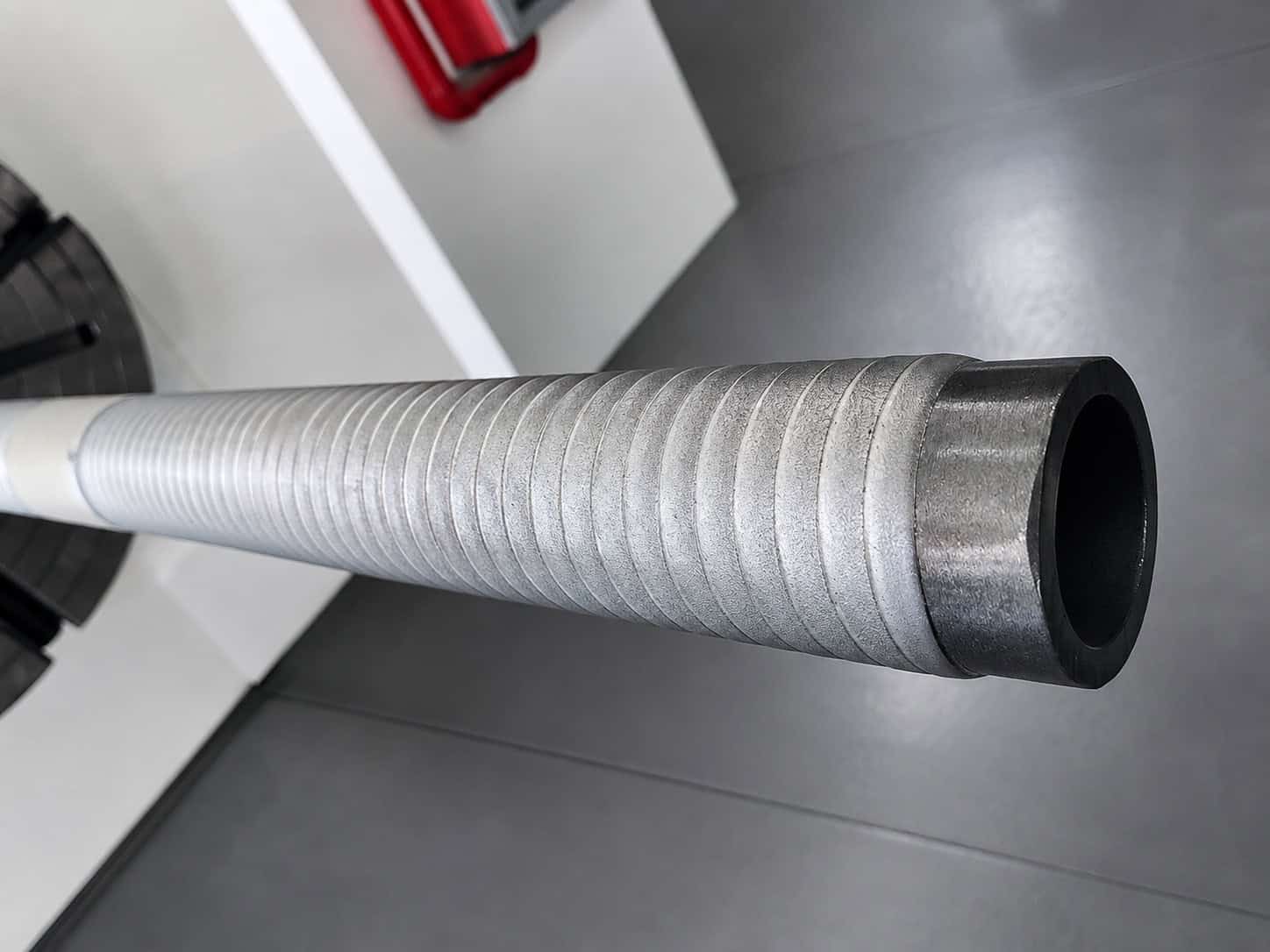
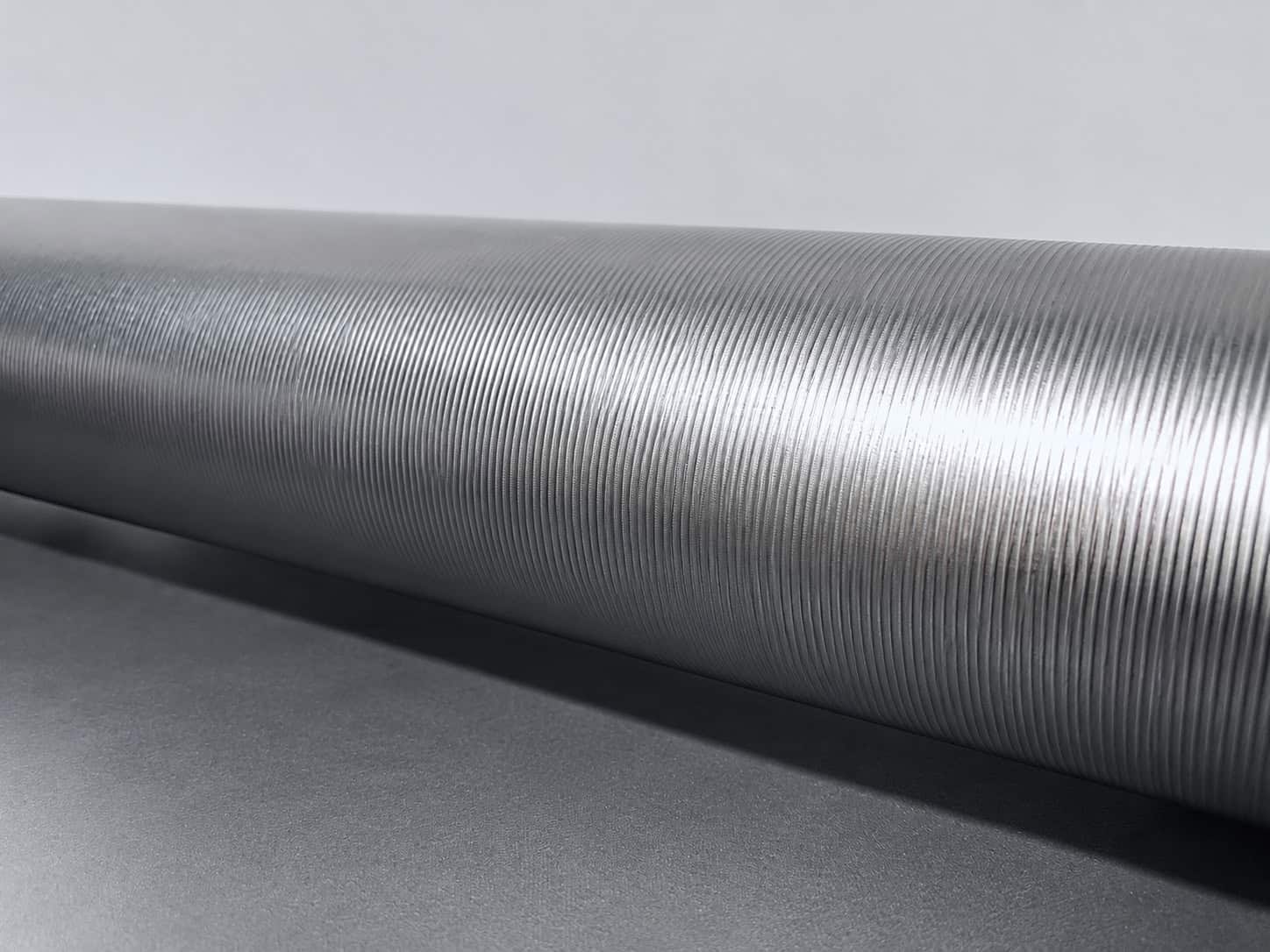
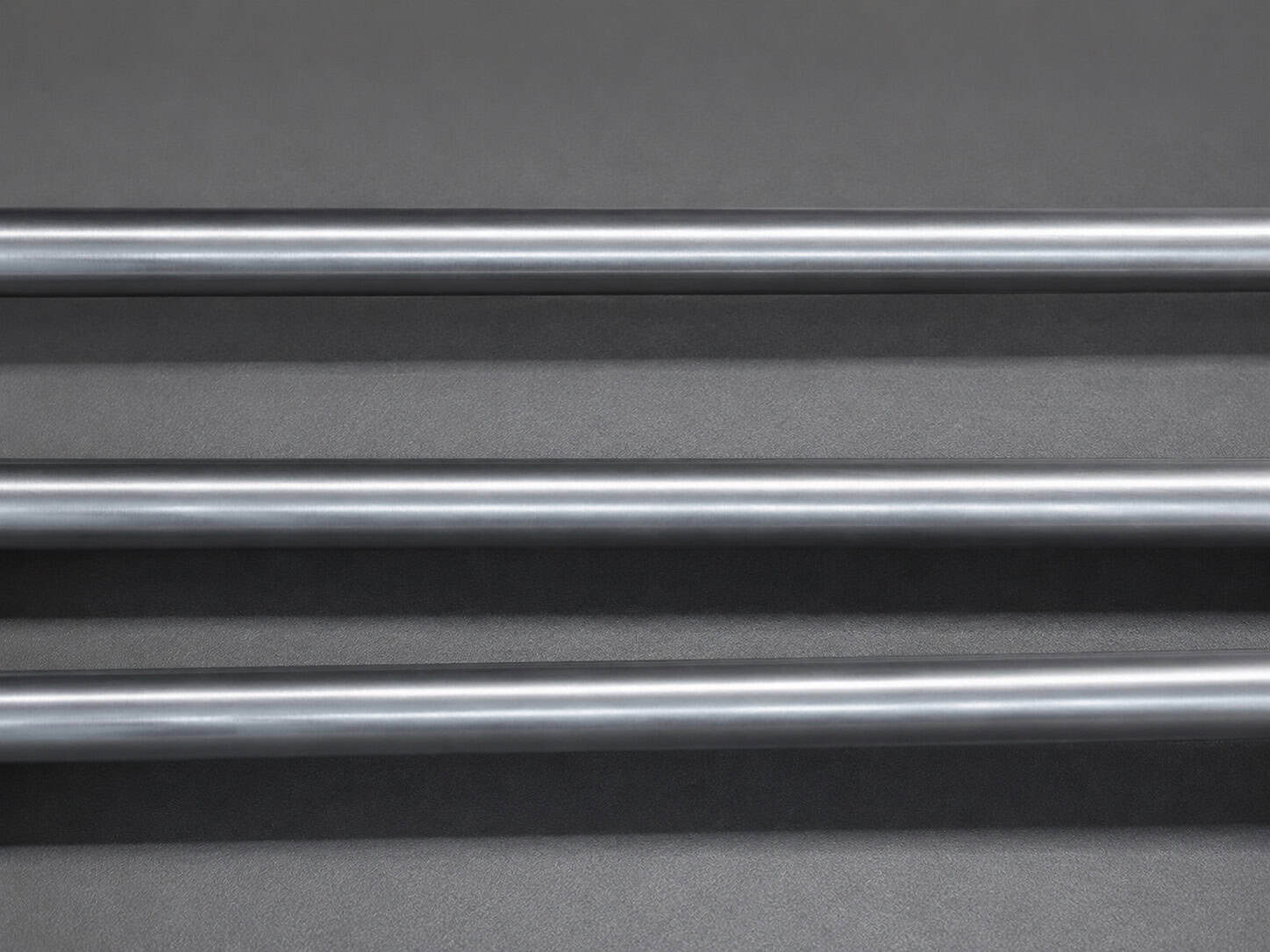
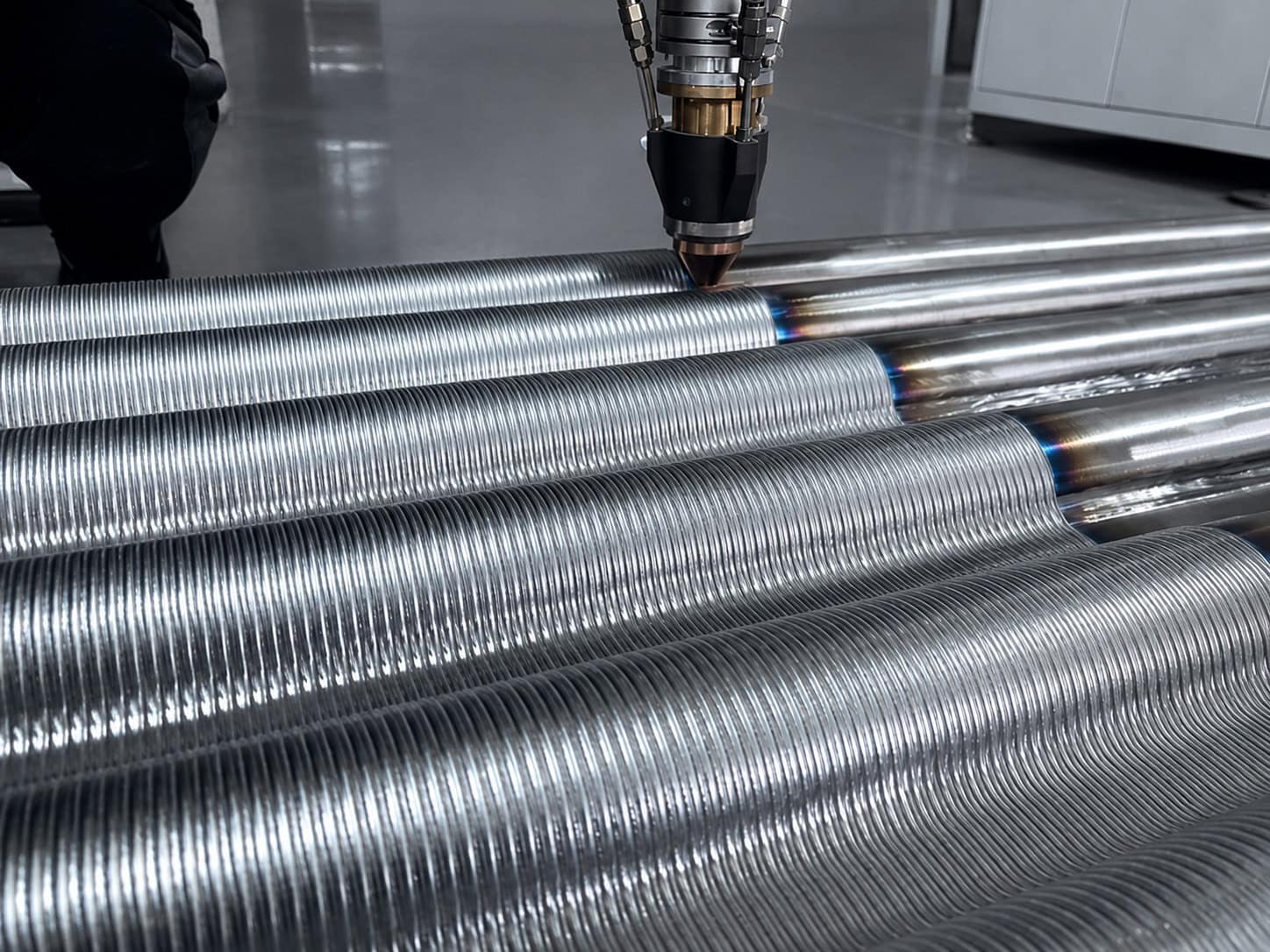
Laser cladding can create a corrosion- and erosion-resistant functional layer on the external tube surface while retaining the structural properties of the original tube.
4. Boiler Tube Processing Strategy
For cylindrical boiler tubes, the workpiece is rotated while the laser processing head travels along the tube axis.
This creates a continuous helical deposition path:
Tube Rotation + Axial Laser Movement → Continuous Overlapping Cladding Layer
The process requires synchronization between:
- Laser output
- Powder feeding
- Tube rotation
- Axial movement
- Track overlap
- Shielding
- Thermal management
For long boiler tubes, maintaining consistent coating geometry across the complete processing length is particularly important.
5. Actual Boiler Tube Equipment Parameters
The industrial application used high-efficiency outer-surface laser cladding equipment with the following laser power configurations:
| Technical Item | Actual Application Data |
|---|---|
| Application | Boiler Tube External Surface |
| Laser Power | 6000 W / 8000 W |
| Deposition Technology | Powder-Fed Laser Cladding |
| Processing Surface | Tube Outer Diameter |
| Motion Principle | Rotation + Synchronized Axial Movement |
| Deposition Path | Continuous Helical / Overlapping Tracks |
| System Type | Dedicated Boiler Tube Laser Cladding System |
| Main Objective | High-Temperature Corrosion and Erosion Protection |
The original industrial application does not disclose a single universal powder-feed rate, travel speed or layer thickness because these parameters depend on tube material, coating alloy and required surface properties.
They should therefore be established through process validation for each application.
6. Why 6 kW and 8 kW Systems Are Suitable for Boiler Tubes
Large-scale boiler tube processing requires a balance between coating quality and production efficiency.
Higher laser power provides a larger available processing window for:
- Higher powder deposition rates
- Increased travel speed
- Wider processing tracks
- Continuous long-length production
- Industrial batch processing
However:
Higher Laser Power ≠ Better Coating by Itself
Laser power must remain coordinated with:
Powder Feed Rate + Beam Geometry + Travel Speed + Track Overlap + Tube Rotation + Material Properties
The objective is stable metallurgical deposition rather than simply maximizing energy input.
7. Boiler Tube Material Strategy
The deposited alloy must be selected according to the actual degradation mechanism.
Typical engineering objectives include:
- High-temperature corrosion resistance
- Oxidation resistance
- Erosion resistance
- Metallurgical compatibility
- Thermal cycling resistance
- Crack resistance
Potential coating families can include:
- Nickel-based corrosion-resistant alloys
- Iron-based corrosion-resistant alloys
- Other application-specific high-temperature alloy systems
The final powder composition should be selected according to:
Base Material + Furnace Atmosphere + Operating Temperature + Fuel/Ash Chemistry + Erosion Conditions
A single coating material should not be assumed suitable for every power plant.
8. Water-Cooled Wall Laser Cladding
Application Background
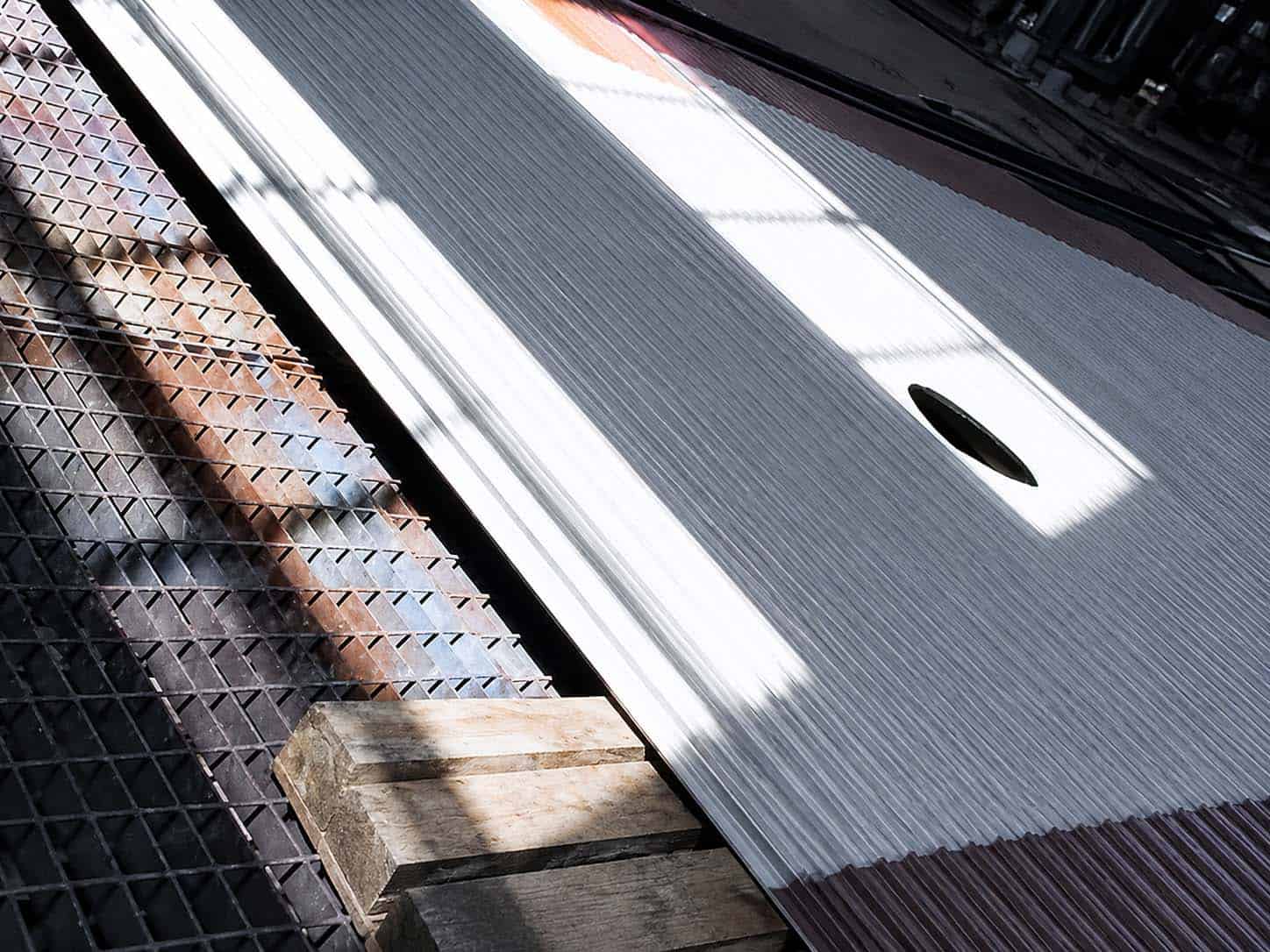
Water-cooled walls form extensive heat-transfer surfaces inside industrial boilers and furnaces.
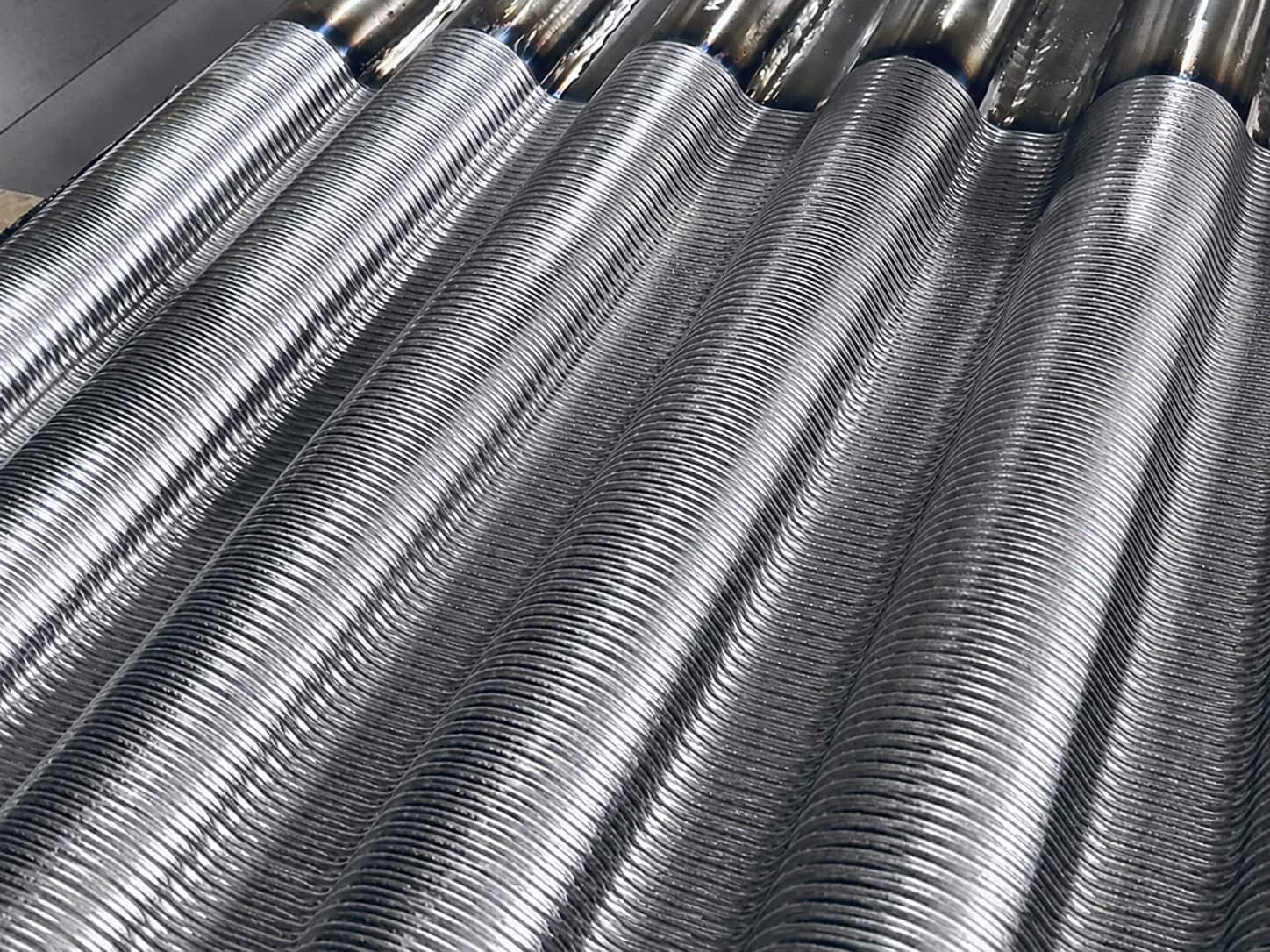
Unlike an individual straight boiler tube, water-wall structures typically consist of multiple parallel tubes connected by membrane sections.
Their large surface area creates a different laser processing challenge.
Potential degradation includes:
- High-temperature corrosion
- Oxidation
- Fly-ash erosion
- Localized wall thinning
- Combustion-related chemical attack
Laser cladding can provide a metallurgically bonded protective layer over selected high-risk regions.
9. Water-Wall Processing Architecture
Because water-cooled wall panels are large, relatively flat multi-tube structures, a conventional rotary machine is generally unsuitable.
A dedicated system can instead use:
Laser Cladding Head + Large-Area Linear/Gantry Motion + Powder Feeder + Panel Fixture + Process Control
The laser head moves across the water-wall surface according to a programmed trajectory.
The system must compensate for the repeating geometry of:
Tube Crown → Tube Side → Membrane Region → Adjacent Tube
This requires greater motion coordination than simple cylindrical outer-surface cladding.
10. Actual Water-Cooled Wall Application Data
| Technical Item | Actual Application Data |
|---|---|
| Component | Boiler Water-Cooled Wall |
| Laser Power Platform | 6000 W / 8000 W class |
| Technology | Powder-Fed Laser Cladding |
| Processing Mode | Large-Area Automated Surface Deposition |
| Motion Architecture | Dedicated CNC / Gantry-Type System |
| Main Surface | Furnace-Facing Tube/Panel Region |
| Main Objective | High-Temperature Corrosion + Erosion Protection |
| Automation | Programmed Multi-Track Processing |
The exact coating alloy and process window must be determined according to the furnace environment and substrate material.
11. Water-Wall Cladding Process
A representative industrial process sequence is:
Surface Inspection
↓
Surface Preparation
↓
Panel Positioning
↓
Laser Path Calibration
↓
Powder-Fed Laser Cladding
↓
Multi-Track Overlapping Deposition
↓
Visual / Dimensional Inspection
↓
Coating Quality Evaluation
Unlike component remanufacturing where several millimeters of material may need to be restored, water-wall cladding is primarily a functional surface-protection process.
The objective is therefore to create sufficient protective thickness without introducing unnecessary heat or material.
12. Fan Blade Laser Cladding
Application Background
Industrial fan blades used in power plants can experience continuous interaction with particle-laden gas flows.
Depending on operating conditions, degradation may include:
- Particle erosion
- Abrasive wear
- Edge wear
- Corrosion
- Localized material loss
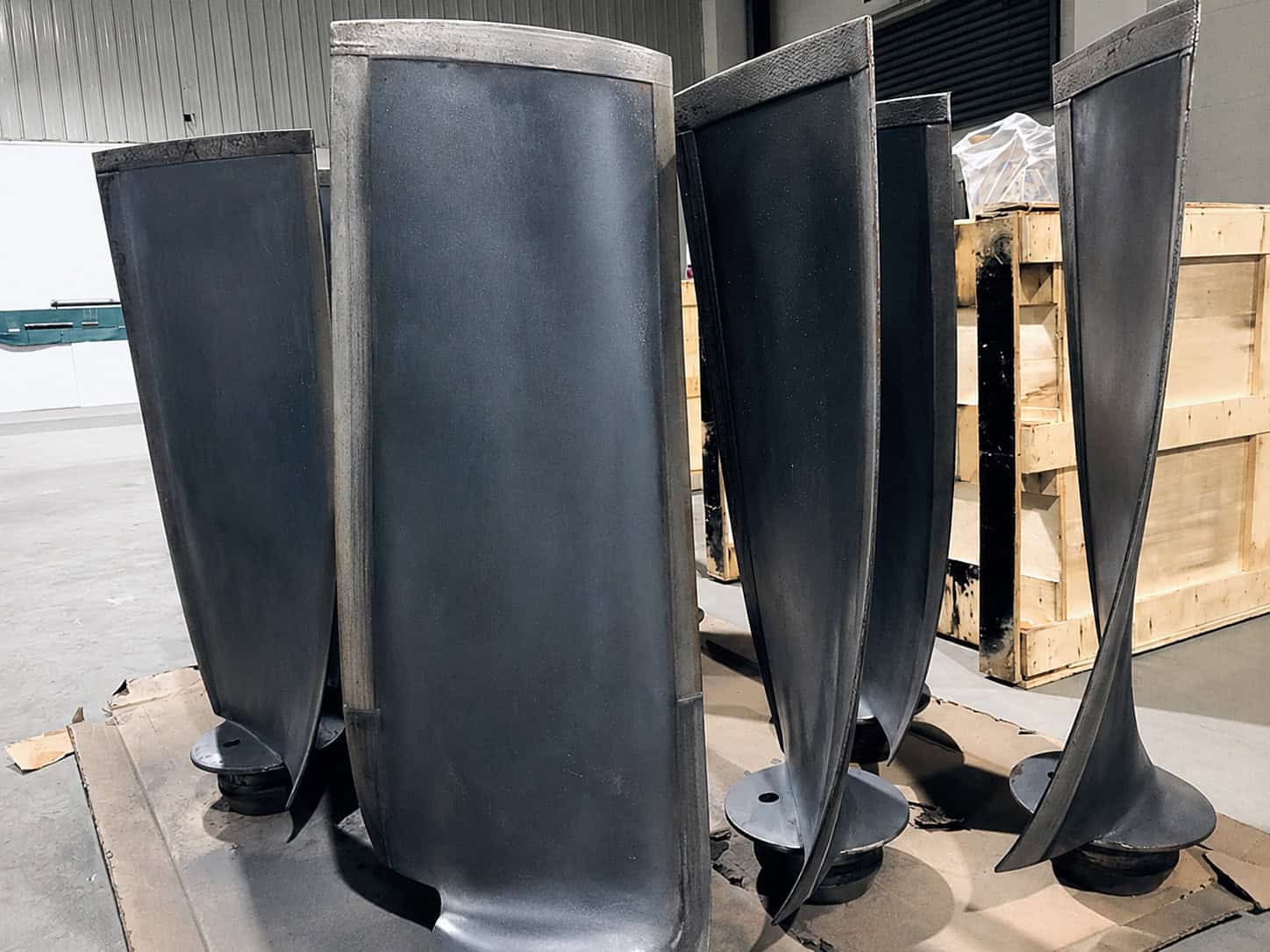
Because fan blades have complex curved surfaces, their processing requirements differ significantly from boiler tubes.
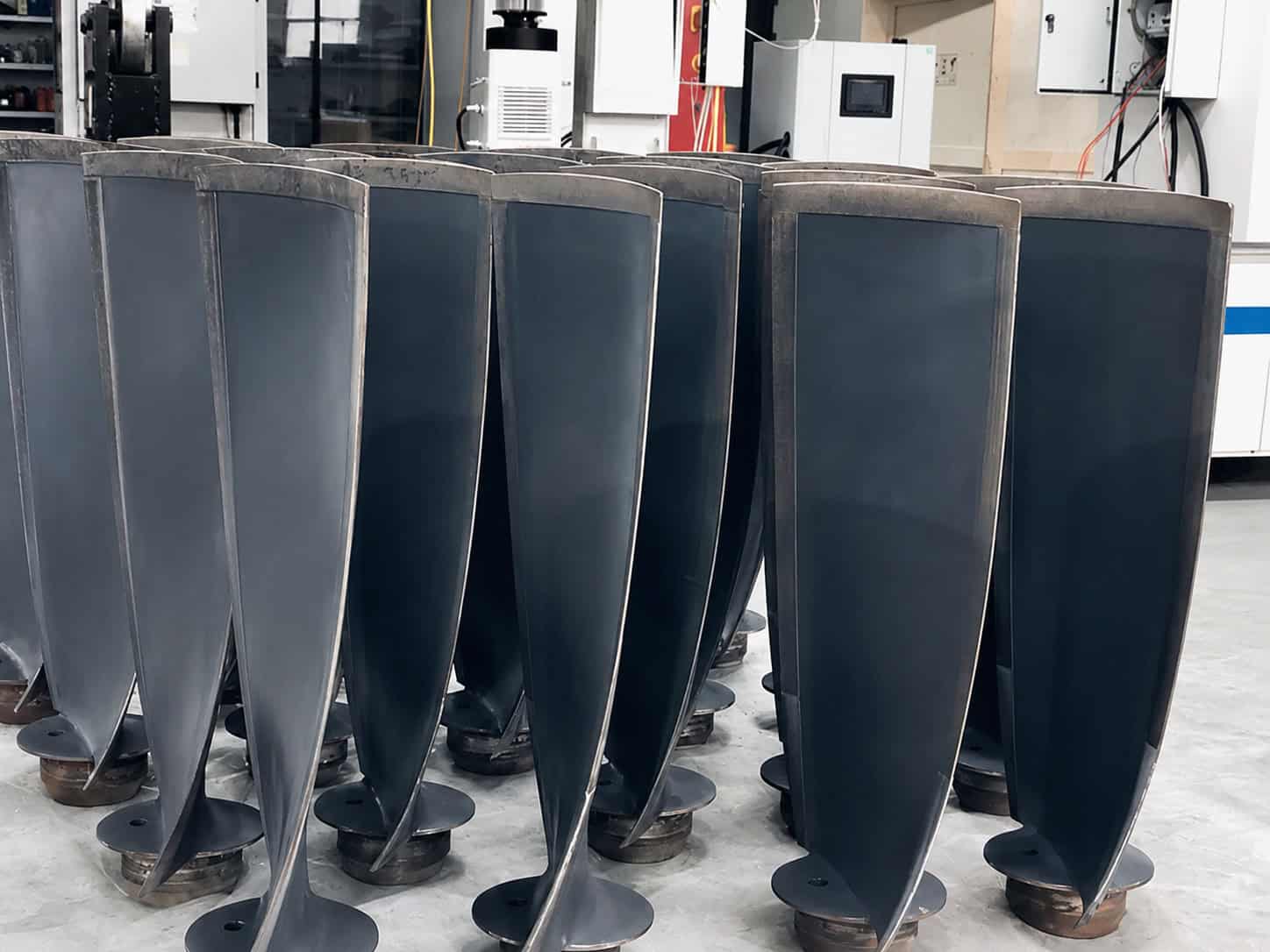
13. Fan Blade Processing Challenge
A fan blade cannot simply be rotated like a cylindrical tube.
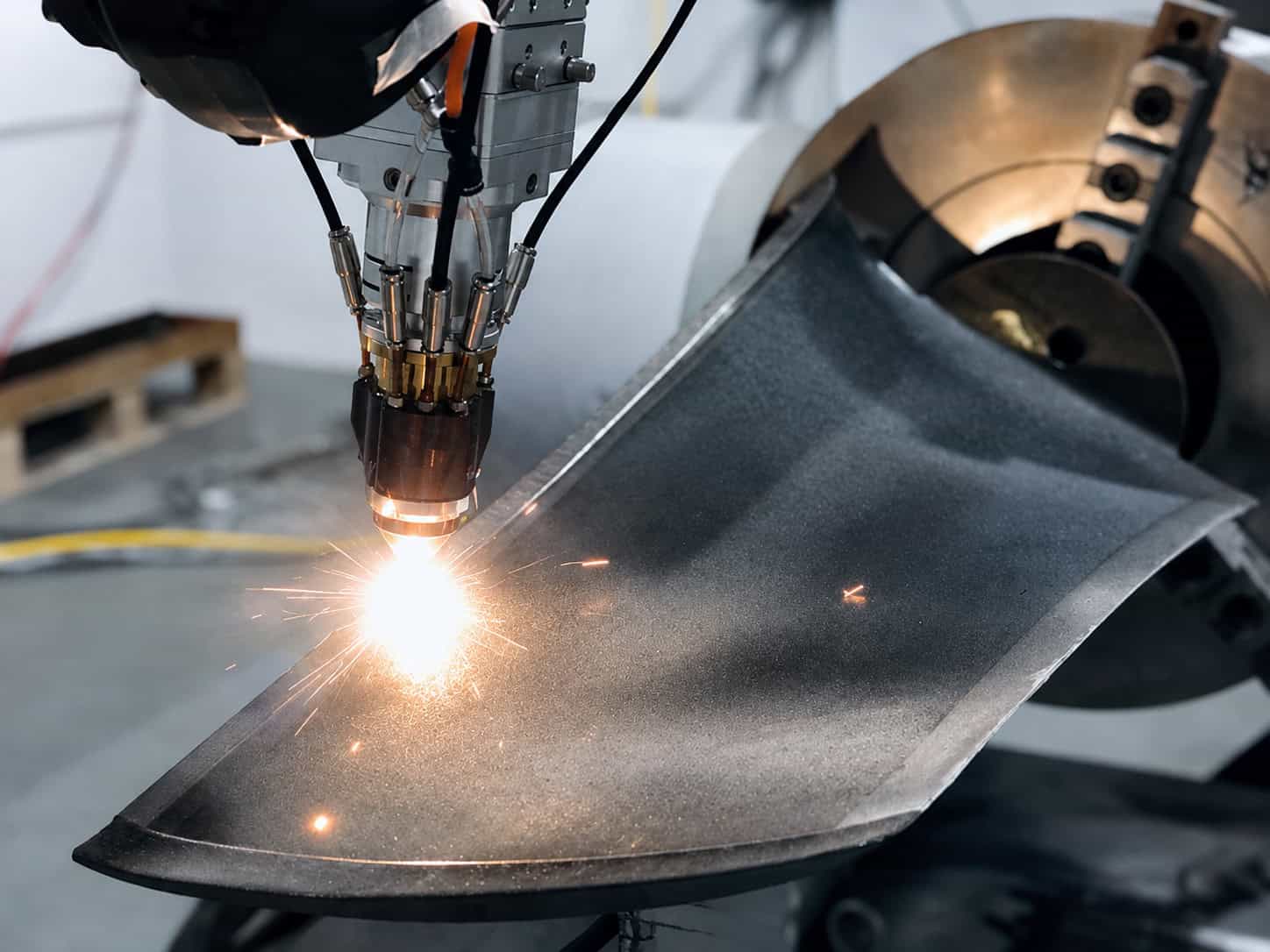
The laser processing head must maintain appropriate:
- Working distance
- Beam orientation
- Powder convergence
- Travel speed
- Surface-normal relationship
- Track overlap
across a three-dimensional curved surface.
For this reason, robotic or multi-axis laser cladding is particularly suitable.
A representative architecture is:
Industrial Robot + Laser Cladding Head + Powder Feeder + Positioner + Process Control
The robot follows the blade geometry while maintaining the required processing orientation.
14. Fan Blade Surface Engineering Strategy
Laser cladding can be applied selectively to regions experiencing the highest erosion or wear.
This is important because it is often unnecessary to coat the entire blade.
A localized strategy can focus material deposition on:
- Leading edges
- High-velocity particle-impact zones
- Localized wear regions
- Other critical surfaces
This reduces powder consumption and unnecessary thermal input.
The engineering concept is:
Apply High-Performance Material Where the Failure Actually Occurs
rather than coating every surface indiscriminately.
15. Actual Technical Parameters Available from the Industrial Case
The publicly available technical data associated with this real application are summarized below.
| Parameter | Application Data |
|---|---|
| Industry | Energy / Electric Power |
| Main Components | Boiler Tubes / Water-Cooled Walls / Fan Blades |
| Laser Power | 6000 W / 8000 W |
| Laser Cladding Type | Powder-Fed Laser Cladding |
| Boiler Tube Motion | Rotation + Axial Linear Motion |
| Water-Wall Motion | Dedicated Large-Area CNC/Gantry Motion |
| Fan Blade Motion | Multi-Axis / Robotic Processing |
| Boiler Tube Processing | Outer-Surface Cladding |
| Water-Wall Processing | Large-Area Surface Cladding |
| Fan Blade Processing | Complex 3D Surface Cladding |
| Primary Objective | Wear / Erosion / High-Temperature Corrosion Protection |
These are the technical parameters and system characteristics explicitly supported by the original industrial application.
16. Process Parameters That Must Be Developed for Each Project
Although laser power is known, a complete industrial process requires additional parameters to be established during process development.
These include:
| Process Parameter | Engineering Function |
|---|---|
| Laser Power | Controls available thermal energy |
| Beam / Spot Size | Influences track width and energy density |
| Powder Feed Rate | Controls deposited material volume |
| Travel Speed | Influences heat input and deposition |
| Rotation Speed | Determines helical processing geometry on tubes |
| Track Pitch | Controls overlap |
| Layer Thickness | Determines coating buildup |
| Powder Particle Size | Influences feeding and melting behavior |
| Shielding Gas Flow | Protects melt pool and powder stream |
| Stand-Off Distance | Influences powder focus and process stability |
| Preheating | Evaluated according to material and crack sensitivity |
| Interpass Temperature | Controls thermal accumulation |
| Cooling Strategy | Controls component temperature during long processing |
These parameters should not be copied from an unrelated application.
They form an integrated:
Laser–Powder–Material–Motion–Thermal Process Window
for each component.
17. Coating Quality Requirements
For energy and power components, coating quality should not be evaluated by appearance alone.
Important engineering characteristics include:
- Metallurgical bonding
- Dilution
- Porosity
- Cracking
- Coating thickness
- Chemical composition
- Microstructure
- Hardness where relevant
- Corrosion resistance
- Erosion resistance
- Thermal cycling performance
For boiler applications, corrosion performance can be more important than maximum coating hardness.
A very hard coating is not necessarily the correct coating for a high-temperature corrosive furnace environment.
18. Laser Cladding vs. Thermal Spray for Power Components
Both technologies have important roles in the energy sector.
| Factor | Thermal Spray | Laser Cladding |
|---|---|---|
| Bonding | Primarily mechanical/interfacial | Metallurgical |
| Substrate Heat Input | Low | Localized Fusion |
| Coating Thickness | Thin–Medium | Medium–Thick |
| Dilution | None | Low |
| Deposition Efficiency | High | Application-dependent |
| Complex Surface Capability | Excellent | Excellent with multi-axis automation |
| Dimensional Restoration | Limited–Moderate | Strong |
| High-Temperature Alloy Deposition | Yes | Yes |
| Metallurgical Bond Required | Limited | Strong advantage |
Thermal spray can be highly effective when low substrate heat input and surface protection are the priorities.
Laser cladding becomes particularly attractive where a dense metallurgically bonded functional layer is required.
19. Laser Cladding vs. PTA for Power Components
PTA hardfacing is another viable technology for heavy industrial surface protection.
PTA can provide:
- High deposition rates
- Thick hardfacing layers
- Strong metallurgical bonding
- Attractive economics for suitable large surfaces
Laser cladding provides advantages when the application requires:
- Lower dilution
- More localized heat input
- Greater precision
- Lower distortion
- Automated processing of defined surface regions
Neither process is universally superior.
Process selection should depend on the component and service conditions.
20. Equipment Architecture for Boiler Tube Production
A dedicated boiler tube laser cladding line can include:
6–8 kW Fiber Laser
Powder Feeding System
Laser Cladding Head
Tube Rotary Drive
Long-Travel Linear Axis
Tube Supports
Integrated CNC Control
Cooling / Shielding / Extraction
For long tubes, multiple adjustable supports can be required to maintain straightness and rotational stability.
Production-line design should consider not only maximum tube dimensions but also:
- Loading
- Unloading
- Batch quantity
- Changeover
- Powder refill
- Process monitoring
- Cycle time
21. Equipment Architecture for Water-Cooled Walls
A dedicated water-wall system can use:
6–8 kW Laser Source
Powder Feeder
Laser Cladding Head
Large CNC/Gantry Motion System
Panel Fixture
Integrated Process Control
The working envelope should be designed according to the maximum panel dimensions.
For large panels, machine rigidity, path accuracy and uniform travel speed are essential for maintaining consistent coating quality.
22. Equipment Architecture for Fan Blades
A fan blade solution can use:
Industrial Fiber Laser
Powder Feeder
Robot / Multi-Axis Motion
Rotary Positioner
Laser Cladding Head
Offline Programming / Path Control
Safety System
This provides greater freedom for processing large three-dimensional surfaces.
For repetitive production, workpiece fixtures and robot programs can be standardized to improve repeatability.
23. Process Monitoring and Quality Control
An industrial system can integrate monitoring of:
- Laser output
- Powder feeding
- Motion speed
- Workpiece rotation
- Process temperature
- Melt-pool condition
- System alarms
After deposition, quality control may include:
- Visual inspection
- Penetrant testing where appropriate
- Coating thickness measurement
- Hardness testing
- Metallographic examination
- Dilution measurement
- Porosity evaluation
- Corrosion testing
- Erosion testing
The exact inspection plan depends on component criticality and customer requirements.
24. Why Automation Matters
Boiler tubes and water walls involve large processing areas.
Manual processing would make it difficult to maintain consistent:
- Travel speed
- Track spacing
- Layer thickness
- Powder deposition
- Thermal conditions
Automation transforms the process into a repeatable production method.
For tube processing:
Rotation + Linear Axis + Laser Parameters = Repeatable Helical Deposition
For water walls:
CNC/Gantry Path + Laser Parameters = Repeatable Large-Area Deposition
For blades:
Multi-Axis Robot + Positioner + Laser Parameters = Repeatable 3D Deposition
25. Other Energy and Power Industry Applications
The same engineering platform can be evaluated for other suitable power-generation components, including:
- Boiler wear components
- Furnace components
- Pump shafts
- Valve components
- Large shafts
- Bearing positions
- Wear plates
- Turbomachinery auxiliary components
- Other erosion- or corrosion-damaged industrial parts
The correct technology and alloy should always be selected according to the actual failure mechanism.
26. When Does Laser Cladding Make Sense?
Laser cladding should be considered when the application requires one or more of the following:
- High-temperature corrosion protection
- Erosion resistance
- Metallurgical bonding
- Localized surface reinforcement
- Controlled heat input
- Low dilution
- Automated coating of large surfaces
- Restoration of high-value components
However, it is not automatically the most economical process for every power-generation component.
The decision should consider:
Component Value + Failure Mechanism + Required Coating + Service Temperature + Processing Area + Production Volume + Total Lifecycle Cost
27. Engineering Information Required for a Similar Project
For boiler tube projects:
- Tube material
- Outer diameter
- Wall thickness
- Tube length
- Required coating length
- Required coating thickness
- Furnace temperature
- Corrosion environment
- Fuel / ash conditions
- Production quantity
For water-cooled walls:
- Panel drawing
- Tube diameter
- Tube pitch
- Panel dimensions
- Membrane geometry
- Coating area
- Base material
- Operating environment
For fan blades:
- 3D model or drawing
- Blade material
- Blade dimensions
- Wear region
- Failure mechanism
- Required coating area
- Operating conditions
This information allows the process and equipment to be developed around the actual component.
28. Technical Data Summary
| Item | Technical Data |
|---|---|
| Industry | Energy / Electric Power |
| Main Applications | Boiler Tubes / Water-Cooled Walls / Fan Blades |
| Laser Power Platform | 6000 W / 8000 W |
| Deposition Process | Powder-Fed Laser Cladding |
| Boiler Tube Surface | Outer Diameter |
| Boiler Tube Motion | Rotation + Axial Linear Motion |
| Water-Wall Motion | CNC / Gantry Large-Area Processing |
| Fan Blade Motion | Robot / Multi-Axis Processing |
| Main Surface Function | Corrosion + Erosion + Wear Protection |
| Bonding | Metallurgical Bonding |
| Dilution | Controlled through process optimization |
| Powder Feed Rate | Developed according to coating/process requirement |
| Travel Speed | Developed according to component and deposition target |
| Track Pitch | Matched to cladding track width and overlap requirement |
| Layer Thickness | Selected according to service requirement |
| Shielding | Inert gas protection according to alloy/process |
| Automation | Dedicated CNC / Rotary / Gantry / Robotic architecture |
| Process Monitoring | Laser, powder, motion and thermal parameters as required |
29. From Surface Protection to an Automated Energy-Industry Solution
A successful power-industry laser cladding project is not simply:
Laser + Powder
The complete engineering chain is:
Failure Analysis
↓
Base Material Evaluation
↓
Coating Alloy Selection
↓
Laser Process Development
↓
Motion Architecture
↓
Fixture Design
↓
Thermal Management
↓
Automation Integration
↓
Quality Validation
For boiler tubes, water-cooled walls and complex fan components, each motion architecture must be designed around the workpiece.
GREENSTONE can therefore evaluate the application as a complete surface engineering and automated laser processing project, rather than treating every component as a standard laser cladding machine application.
Confidentiality Notice
This application case is based on actual industrial laser cladding applications in the energy and power industry. The 6000 W and 8000 W laser power configurations, component categories and processing architectures presented here are derived from the actual application. Customer identities, proprietary drawings and undisclosed project-specific process data remain confidential. Representative images may be used for technical illustration where original customer images cannot be published.
Have a Similar Energy or Power Industry Application?
Whether the requirement involves boiler tubes, water-cooled walls, fan blades or other high-temperature corrosion and erosion components, the process should begin with the actual operating conditions rather than simply selecting a laser power.
Send us your workpiece drawings, base material, dimensions, operating temperature, corrosion or erosion conditions, required coating area, target surface properties and production volume. GREENSTONE’s engineering team can evaluate the coating material, laser cladding process and appropriate automated equipment architecture for your application.
