
Case Study: Precision Deep Bore Coaxial Powder-Fed Laser Cladding Remanufacturing of a Die Casting Shot Sleeve
Restoring High-Value HPDC Components Through Advanced Internal Bore Laser Cladding Technology
Project Background
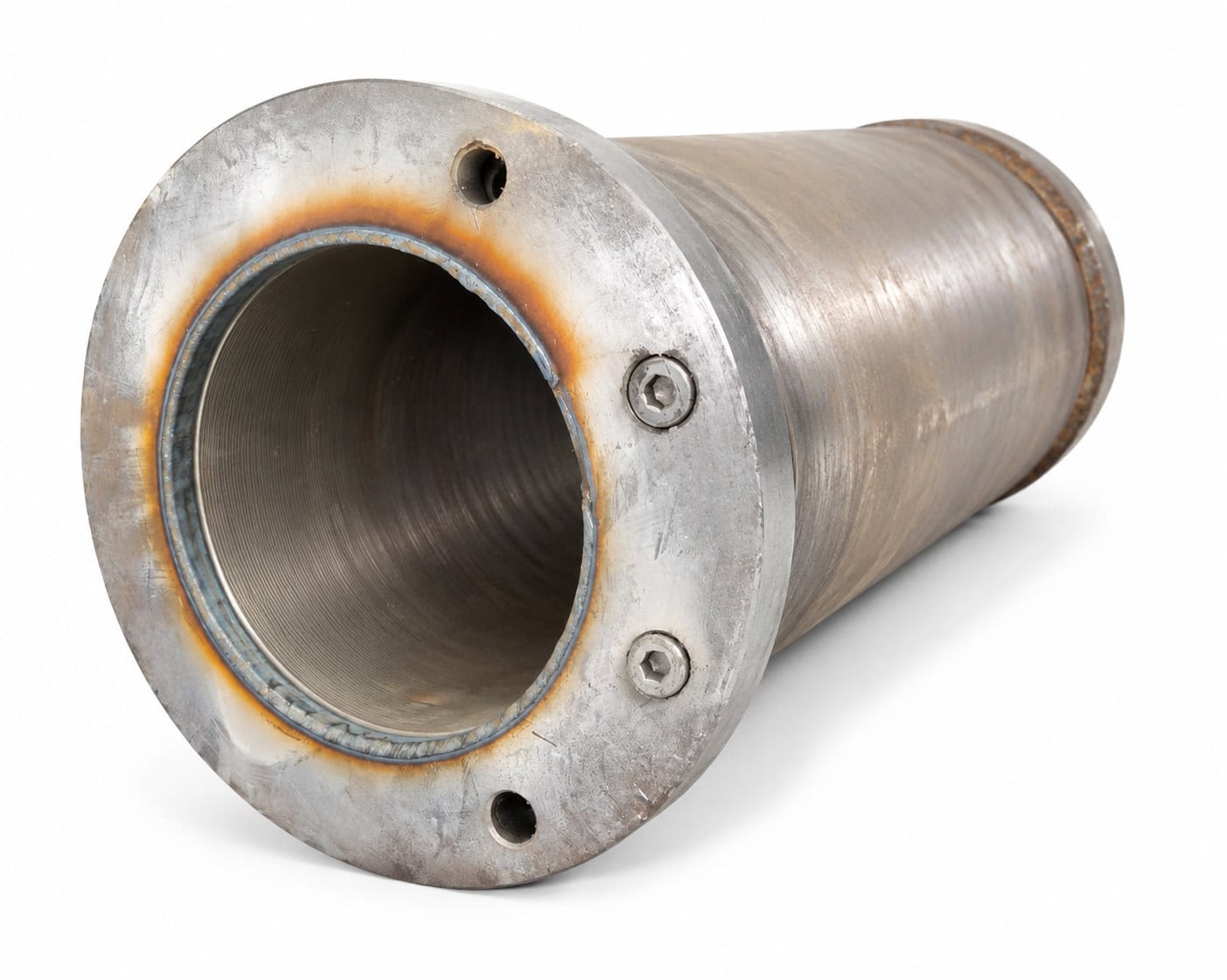
Shot sleeves are among the most critical wear components in high-pressure die casting (HPDC) machines. During production, the inner bore is continuously exposed to molten aluminum, repeated plunger movement, and severe thermal cycling. These harsh operating conditions gradually lead to inner bore wear, aluminum erosion, adhesive soldering, thermal fatigue, and dimensional enlargement, eventually affecting injection stability, casting quality, and production efficiency.
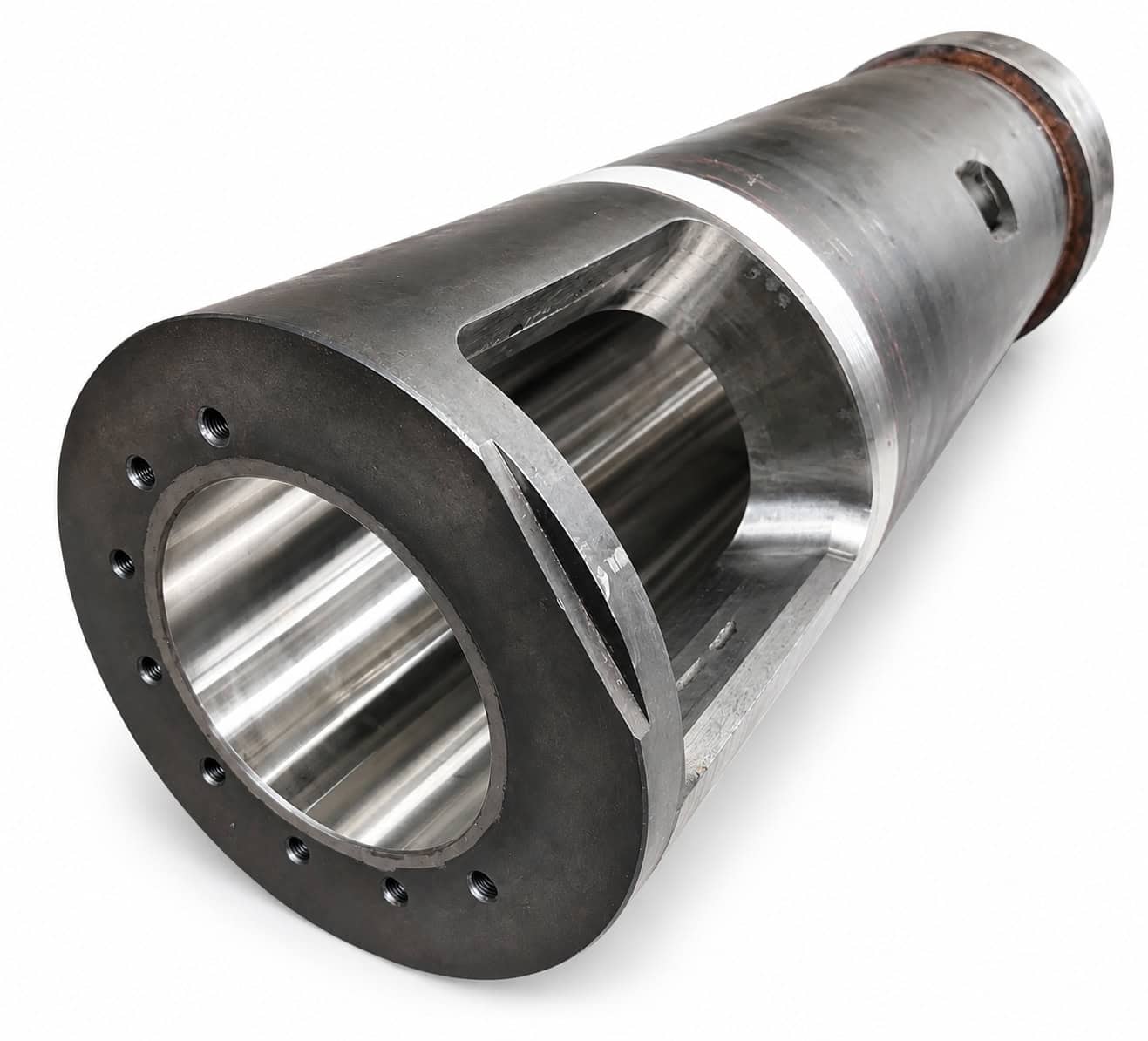
For large shot sleeves manufactured from H13 hot-work tool steel, complete replacement is costly and often results in extended production downtime. Greenstone developed a dedicated Deep Bore Coaxial Powder-Fed Laser Cladding Remanufacturing Solution to restore worn shot sleeves while simultaneously upgrading their surface performance beyond the original component.
Unlike conventional external laser cladding, this solution is specifically engineered for deep internal bores, combining a dedicated internal laser processing head, precision coaxial powder feeding, CNC multi-axis synchronization, controlled preheating, stress relief heat treatment, and precision finish machining into a complete remanufacturing process.
Customer Challenge
The customer submitted a large H13 die casting shot sleeve that had experienced long-term service under aluminum alloy die casting conditions.
The primary damage included:
- Severe inner bore wear caused by continuous plunger movement
- Local aluminum erosion and soldering
- Surface scoring and adhesive wear
- Thermal fatigue damage
- Dimensional deviation beyond production tolerance
Replacing the shot sleeve would significantly increase maintenance costs and production downtime. The customer’s objective was not only to restore the original dimensions but also to improve wear resistance for future service.
Engineering Assessment
Before repair, the shot sleeve underwent a complete inspection and damage evaluation.
The engineering process included:
- Ultrasonic inspection for subsurface defects
- Visual examination of the internal bore
- Dimensional measurement
- Wear profile analysis
- Repair feasibility assessment
After confirming that the base material remained structurally sound, the component was approved for laser remanufacturing.
Step 1 — Precision Pre-Machining
The damaged layer was completely removed using precision boring equipment.
This operation eliminated:
- Fatigue-affected material
- Surface cracks
- Adhesive wear zones
- Aluminum contamination
- Deep scoring marks
A uniform cylindrical bore was produced to provide a stable substrate for metallurgical bonding during laser cladding.
Step 2 — Controlled Preheating
To minimize thermal gradients and residual stress, the entire shot sleeve was uniformly preheated before laser processing.
Uniform preheating significantly reduces the risk of:
- Thermal cracking
- Distortion
- Residual stress accumulation
- Coating delamination
This step is especially important for large H13 shot sleeves with thick wall sections.
Step 3 — Deep Bore Coaxial Powder-Fed Laser Cladding
This stage represents the core technology of the entire remanufacturing process.
Unlike conventional laser cladding systems designed for external surfaces, Greenstone utilizes a dedicated internal bore laser processing system with an extended coaxial powder feeding nozzle.
During processing:
- The shot sleeve rotates under CNC control.
- The internal laser head travels steadily along the bore.
- Alloy powder is injected concentrically into the laser-generated melt pool through the coaxial powder delivery system.
- Laser power, powder feed rate, rotational speed, and travel speed are synchronized in real time.
This coordinated process enables stable layer-by-layer deposition throughout the entire bore length while maintaining excellent coating consistency inside a deep cavity.
Compared with conventional side powder feeding, the coaxial powder-fed process provides several advantages:
- Stable powder capture efficiency
- Excellent coating uniformity
- Reduced powder loss
- Superior dimensional consistency
- No inaccessible blind zones inside deep bores
- Programmable local thickness enhancement for severely worn regions
Depending on the service requirements, different wear-resistant alloy powders can be selected, including iron-based, nickel-based, or cobalt-based materials for high-temperature wear and aluminum erosion resistance.
Step 4 — Stress Relief Heat Treatment
Immediately after laser cladding, the shot sleeve underwent controlled stress relief heat treatment.
This process further stabilized the metallurgical structure and reduced residual stress within the cladding layer, helping ensure long-term coating integrity under cyclic thermal loading.
Step 5 — Precision Finish Machining
Following heat treatment, the remanufactured bore was finish machined by precision boring and honing.
The objective was to restore:
- Original bore diameter
- Roundness
- Straightness
- Surface finish
- Plunger running clearance
The finished component fully met the required dimensional specifications for production use.
Quality Verification
After machining, the remanufactured shot sleeve underwent final quality inspection, including:
- Dimensional inspection
- Surface quality inspection
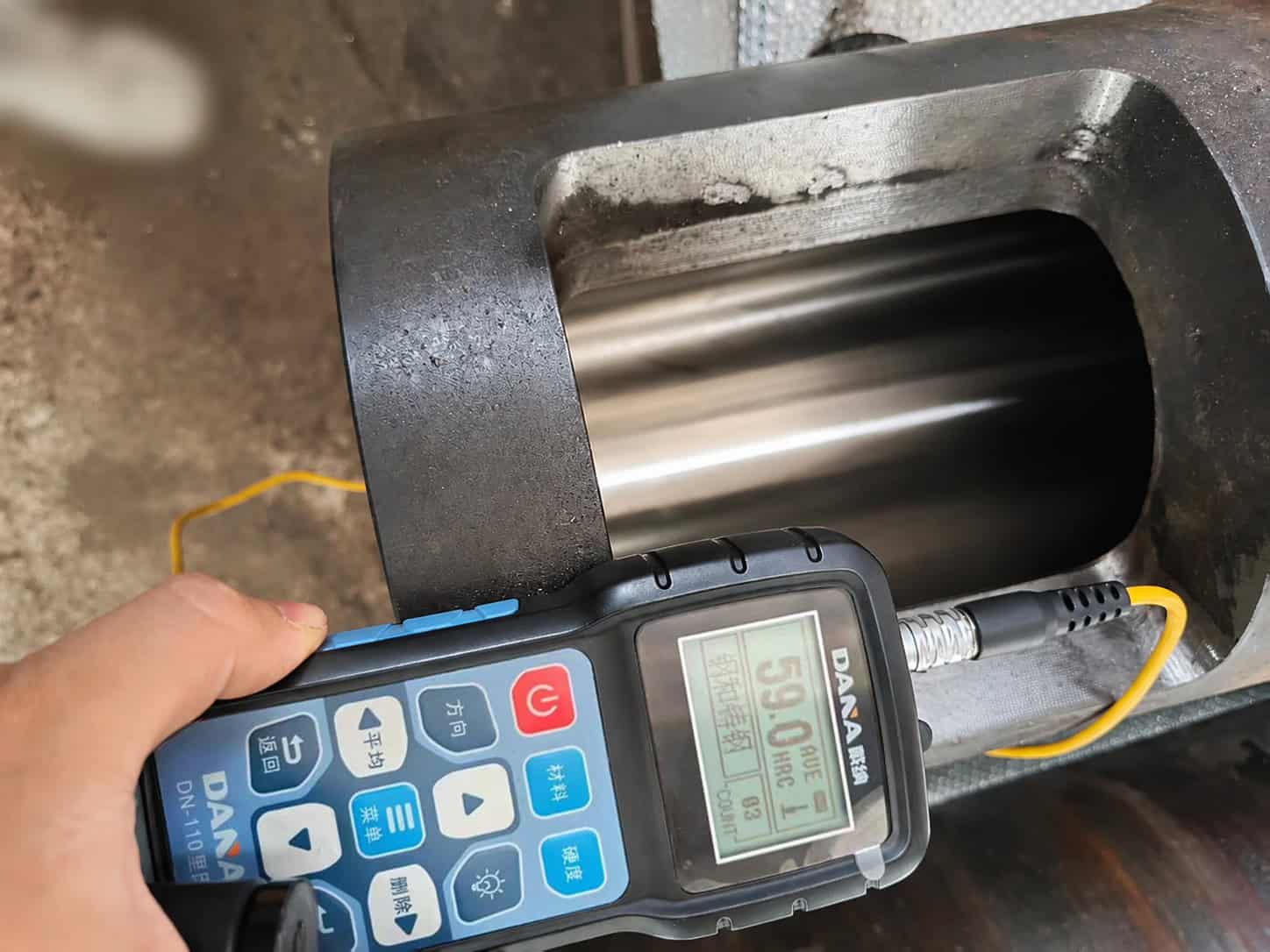
- Hardness testing
The laser-clad repair layer achieved a surface hardness of 59 HRC, providing significantly improved resistance to wear, aluminum adhesion, and high-temperature erosion compared with the original H13 substrate.
Technical Advantages
Compared with conventional repair methods, the Deep Bore Coaxial Powder-Fed Laser Cladding process offers several important advantages:
Dedicated Deep Bore Processing
A specially designed internal laser head enables stable processing of long, narrow bores that are difficult to access using conventional laser cladding equipment.
Precision Coaxial Powder Feeding
The concentric powder delivery system directs alloy powder precisely into the melt pool, ensuring uniform coating formation throughout the internal bore.
Excellent Dimensional Control
Layer thickness remains highly consistent, allowing predictable machining allowance and precise restoration of the original geometry.
Metallurgical Bonding
The deposited alloy forms a true metallurgical bond with the H13 substrate, providing excellent adhesion and long-term structural reliability.
Low Heat Input
Localized laser processing minimizes distortion while preserving the mechanical properties of the base component.
Surface Performance Upgrade
Rather than simply restoring worn material, the remanufactured inner surface provides enhanced resistance to abrasion, aluminum soldering, thermal fatigue, and erosion under demanding HPDC operating conditions.
Customer Benefits
By adopting Greenstone’s deep bore laser remanufacturing technology, the customer achieved:
- Restoration of the original shot sleeve dimensions
- Significant reduction in replacement costs
- Reduced production downtime
- Improved wear resistance for future production cycles
- Enhanced resistance to aluminum erosion and soldering
- Laser-clad repair layer hardness reaching 59 HRC
- Extended service life of a high-value die casting component
Conclusion
Deep internal bore components remain one of the most challenging applications in laser remanufacturing due to restricted accessibility, powder delivery stability, and coating consistency requirements.
Greenstone’s Deep Bore Coaxial Powder-Fed Laser Cladding Technology overcomes these limitations through dedicated internal processing equipment, precision coaxial powder feeding, synchronized CNC control, optimized thermal management, and precision finish machining.
The result is a complete remanufacturing solution capable of restoring worn H13 die casting shot sleeves while delivering a high-performance internal surface engineered for long-term service in demanding high-pressure die casting environments.
Whether for maintenance service providers, die casting manufacturers, or equipment OEMs, this technology offers an effective pathway to reduce lifecycle costs, extend component service life, and improve overall production reliability.
