
Laser Wire Feeding Cladding Technology: An Innovative Solution to Overcome Traditional Manufacturing Bottlenecks
May 14, 2024


1. Technology Background and Industry Challenges
In the application of traditional laser powder cladding technology, the manufacturing industry faces three prominent technical challenges: high powder material costs, low powder utilization rates, and difficulties in achieving stable thick coatings. These issues significantly hinder the large-scale adoption of this technology and limit its economic benefits in industrial applications.

2. Greenstone-Tech Laser Wire Feeding Cladding Equipment Specifications
Equipment Specifications:
- Model Series: GST-WF6000 / GST-WF12000
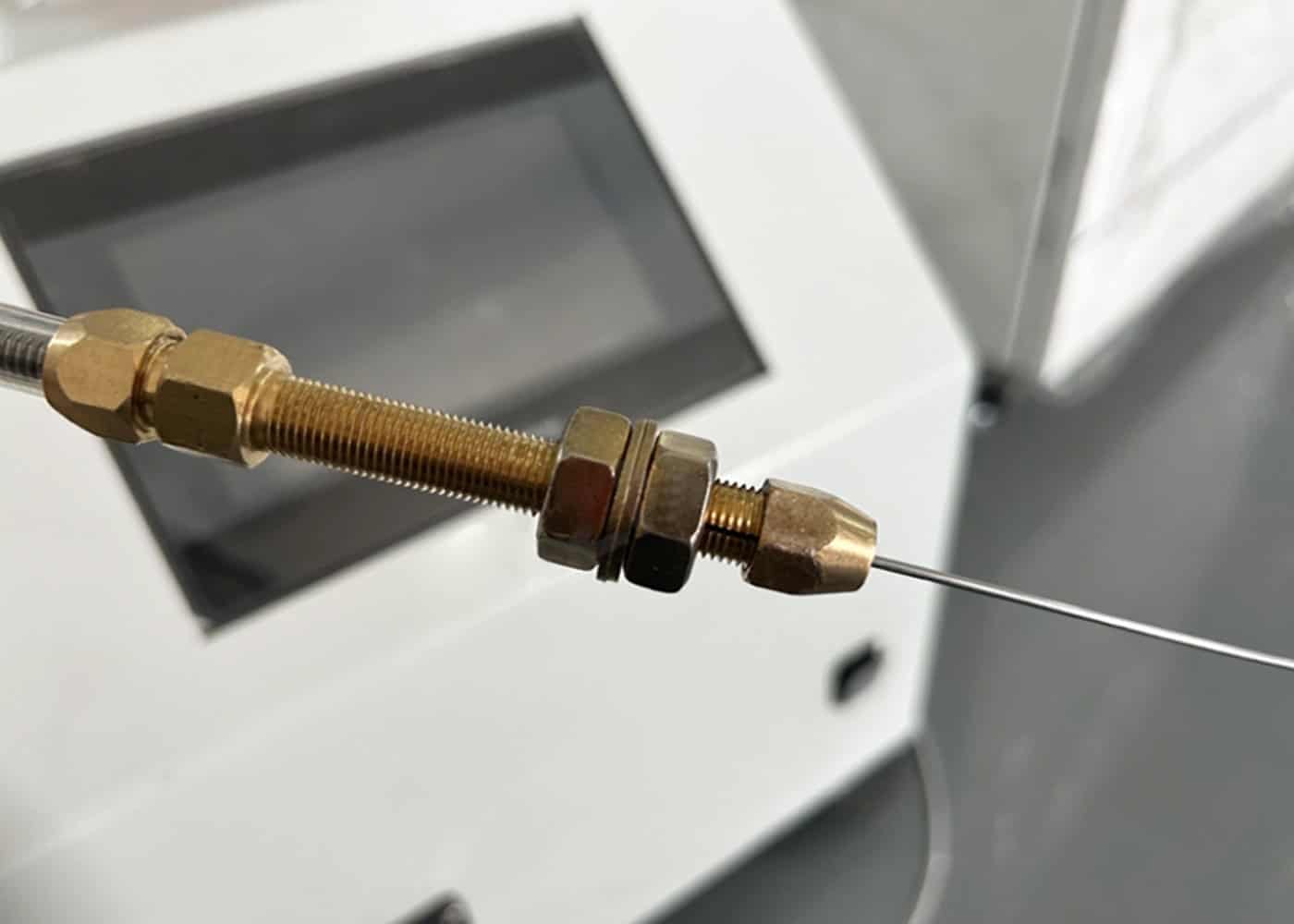
- Wire Feeding Method: Innovative center wire feeding technology
- Power Adjustment Range: 1% – 100%, infinitely adjustable
- Motion System Compatibility: Supports integration with various industrial robots
- Output Fiber Length: Standard 20 meters
- Single Layer Cladding Thickness: Adjustable from 1-4mm
- Wire Diameter Compatibility: 1.2mm – 3.0mm
- Laser Power Configuration: 6000W/12000W dual-platform

3. Core Technological Advantages
1. Outstanding Material Utilization
Traditional powder feeding laser cladding often results in significant powder waste, limiting material utilization. In contrast, Greenstone-Tech’s wire feeding laser cladding technology achieves nearly 100% wire material utilization, drastically reducing raw material consumption and associated costs.
2. Significant Cost Advantages
The cost of metal wire is only about half that of powder materials for the same alloy. Compared to traditional powder cladding technology, center wire feeding laser cladding reduces overall costs by approximately 50%, offering a significant competitive advantage in production costs.
3. Superior Cladding Thickness Performance
In traditional powder feeding laser cladding, the single-layer thickness is typically less than 2mm. However, wire feeding laser cladding technology allows for cladding thicknesses of 3-5mm per layer. This feature makes it particularly suitable for the cladding repair of heavy-duty equipment such as rollers and wear-resistant parts, with the added benefit of compatibility with traditional welding materials.
4. Wide Range of Wire Materials Compatibility
Unlike side wire feeding techniques, Greenstone-Tech’s center feeding technology supports a broader range of wire diameters, with a maximum of 3.0mm, offering greater flexibility in material selection for various application scenarios.
5. Excellent Motion Flexibility
The center wire feeding cladding head offers omnidirectional motion capability, making it adaptable to various workpiece shapes and sizes. Whether the surface is flat or curved, precise cladding can be achieved, providing previously unavailable process possibilities for diverse industrial applications.

4. Technological Mechanism
Greenstone-Tech’s center wire feeding laser cladding technology uses a unique coaxial wire feeding design, where the laser beam and wire material are precisely aligned in space to achieve optimal energy coupling efficiency. This design ensures the stability and consistency of the cladding process while eliminating the common issues of dust splatter and material waste seen in traditional powder feeding technologies.
5. Application Prospects and Market Value
This technology has vast application potential in fields such as:
- Equipment Remanufacturing
- Major Equipment Repair
- High-End Component Manufacturing
Particularly in heavy machinery, mining equipment, and metallurgical rollers—where thick coatings are required—Greenstone-Tech’s laser wire feeding cladding technology offers a reliable and cost-effective solution.
6. Conclusion
Greenstone-Tech’s laser wire feeding cladding technology, through its innovative center wire feeding design and optimized process parameters, successfully addresses the technical bottlenecks of traditional laser cladding technology in terms of material utilization, cost, and coating thickness. This technological breakthrough not only delivers significant economic benefits to enterprises but also provides a new technical pathway for the green, sustainable development of manufacturing. As the technology continues to be applied in industrial fields, it is expected to have a profound impact on equipment manufacturing and remanufacturing industries.
Thomas Tong
Laser Cladding Equipment Engineering Director & Industrial System Integration Expert Thomas Tong serves as Greenstone’s Laser Cladding Equipment Engineering Director, focusing on laser processing equipment development, manufacturing integration, automation systems, and turnkey industrial solution implementation. With comprehensive experience in industrial equipment engineering and advanced manufacturing systems, Thomas leads the design, integration, and optimization of Greenstone’s laser cladding equipment platforms, including robotic laser cladding systems, multi-axis processing systems, automated production solutions, and customized industrial equipment. His expertise covers the complete equipment development process, from mechanical structure design, laser system integration, motion control coordination, electrical engineering, automation programming, and final commissioning. Through…