Laser-3D-Metalldruck und Wiederaufbereitung für hochwertige Luft- und Raumfahrtkomponenten

Los geht's!
Laser-3D-Metalldruck und Wiederaufbereitung für hochwertige Luft- und Raumfahrtkomponenten

Übersicht über die Anwendungsfälle

In der Luft- und Raumfahrt sind die Kernkomponenten oft extrem wertvoll und stellen hohe Anforderungen an die Fertigung. Heißprofilteile wie Turbinenschaufeln und integral beschaufelte Rotoren (IBRs/Blisks) können jeweils Hunderttausende bis Millionen RMB kosten. Ihre Herstellung erfordert fortschrittliche Materialien, präzise Fertigungsverfahren und lange Lieferzyklen. Diese Bauteile arbeiten unter extremen Bedingungen, so dass Verschleiß, Risse und thermische Erosion im Laufe der Zeit unvermeidlich sind.

Ohne fortschrittliche 3D-Metalldrucktechnologie für die Wiederaufbereitung stehen Betreiber und Triebwerkshersteller vor einem schwierigen Dilemma: Entweder sie investieren viel und warten lange auf neue Ersatzteile, was die Betriebskosten in die Höhe treibt und kritische Anlagen stilllegt, oder sie verschrotten diese extrem teuren Komponenten aufgrund mangelnder Reparaturmöglichkeiten, was zu einer massiven finanziellen und materiellen Verschwendung führt. Abgesehen von den wirtschaftlichen Verlusten wirkt sich dies auch direkt auf die Verfügbarkeit und Einsatzbereitschaft der Flotte aus. Daher ist die Entwicklung und Einführung von hochpräzisen 3D-Druck-Reparaturtechnologien für die Luft- und Raumfahrt von entscheidender Bedeutung, um einen nachhaltigen und effizienten Betrieb mit hoher Bereitschaft zu gewährleisten.

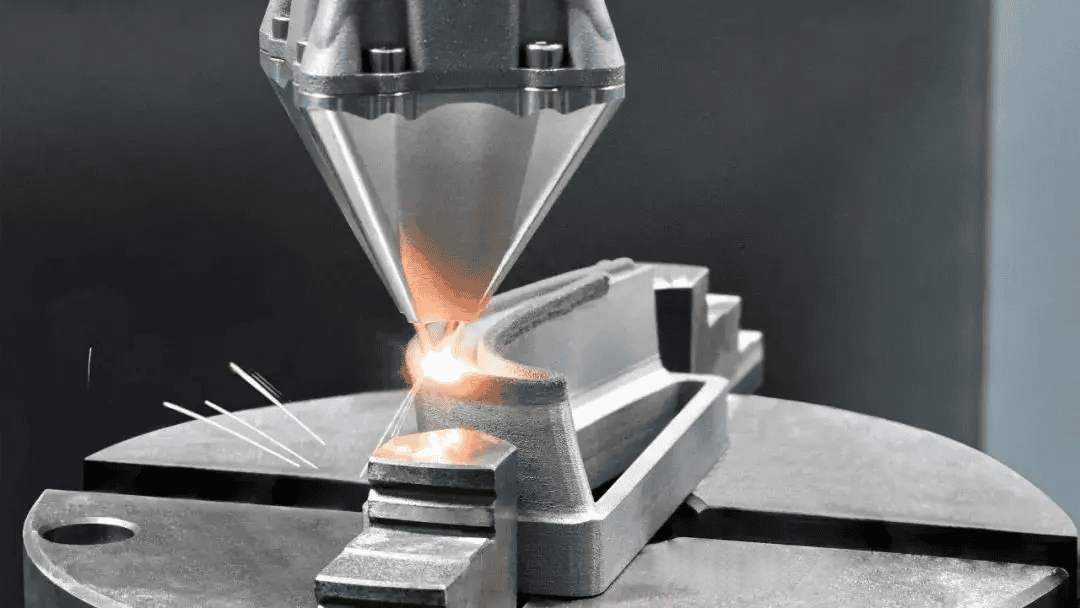
Case Study 1: Titanium Alloy Integrally Bladed Rotor (IBR/Blisk) Repair and Strengthening for Aero Engines

Technische Herausforderung
The integrally bladed rotor (IBR/blisk) is a core compressor component in aero engines, valued at approximately RMB 3–5 million per unit. During high-speed operation, leading edges are prone to foreign object damage (FOD). Traditional repair processes create large heat-affected zones and uncontrollable deformation, resulting in high scrap rates and significant maintenance costs.

Lösung

  • Five-axis DED (Direct Energy Deposition) laser cladding system with inert-gas protection chamber

  • Aviation-grade titanium alloy powders such as TC4 / Ti-6242, composition-matched to the substrate

  • 3D scanning to precisely locate damaged areas and generate adaptive repair toolpaths

  • Layer-thickness precision control up to 0.1 mm, followed by adaptive CNC machining to restore aerodynamic profile

Performance Results

  • Repair cost reduced to 20% of new-part manufacturing

  • Fatigue life restored to over 90% of a new component

  • Deformation controlled within 0.15 mm

  • 92% pass rate achieved on a specific engine model, saving more than RMB 2 million per part

This successful application demonstrates the significant economic and performance advantages of high-precision metal 3D printing remanufacturing technology in modern aerospace maintenance and life-extension programs.

Laser-3D-Metalldruck und Wiederaufbereitung für hochwertige Luft- und Raumfahrtkomponenten

Laser-3D-Metalldruck und Wiederaufbereitung für hochwertige Luft- und Raumfahrtkomponenten

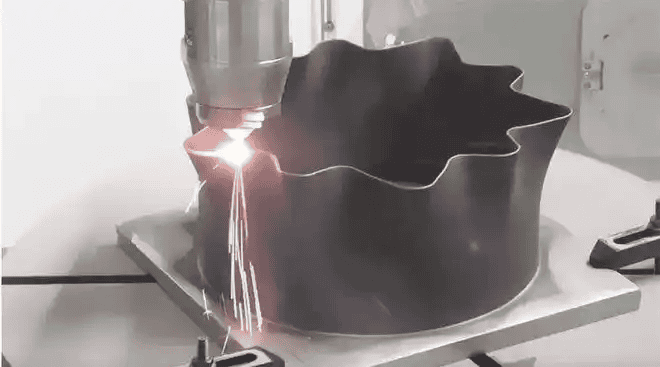
Case Study 2: Integrated Additive Manufacturing of Large Aerospace Aluminum Alloy Brackets

Technical Bottleneck
A satellite load-bearing bracket featured highly complex geometry. Traditional machining required 7-series high-strength aluminum billets, resulting in a material utilization rate of less than 8%. The production cycle reached four months, and anisotropic mechanical properties posed reliability risks for space applications.

Breakthrough Process

  • Development of a dedicated high-strength Al-Si alloy powder (AlSi10Mg)

  • Zoned thermal-stress stratified control strategy

  • Integrated in-situ morphology monitoring with real-time parameter optimization

  • Innovative scan-path planning to effectively suppress aluminum alloy cracking

Manufacturing Achievements

  • One-step forming of an 800 mm-diameter large space structure

  • Material utilization increased to 85%

  • Production cycle shortened to three weeks

  • 35% weight reduction with a 20% increase in static stiffness

  • Unit cost reduced by 60%

  • Successfully passed aerospace-grade vibration and thermal-vacuum qualification tests

This case demonstrates the transformative value of high-precision metal additive manufacturing in aerospace lightweight structures, unlocking faster production, structural performance improvement, and dramatic cost efficiency.

Laser-3D-Metalldruck und Wiederaufbereitung für hochwertige Luft- und Raumfahrtkomponenten

Laser-3D-Metalldruck und Wiederaufbereitung für hochwertige Luft- und Raumfahrtkomponenten

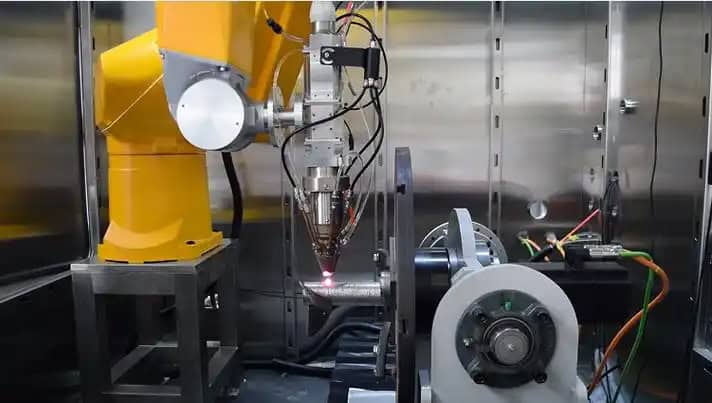
Case Study 3: Nickel-Based Thermal Protection System for Hypersonic Vehicles

Extreme Operating Conditions
The leading-edge section of a next-generation hypersonic aircraft must endure sustained aerodynamic heating up to 1600 °C. Conventional cast high-temperature alloys are unable to meet the structural and active-cooling requirements for this environment.

Technical Breakthroughs

  • DED-based fabrication of a dual-layer IN718/C263 structure with embedded complex cooling channels

  • Gradient oxidation-resistant material system on the outer surface

  • Micro-channel cooling network engineered in the internal layer

  • Real-time thermal monitoring with adaptive control of microstructure and mechanical properties

Performance Results

  • Maintained structural integrity under cyclic thermal loading from room temperature to 1600 °C

  • Cooling efficiency increased by a factor of five compared to traditional designs

  • Service life extended to over 300 hours

  • Successfully validated in Mach-7 wind tunnel testing

This achievement demonstrates the capability of advanced laser additive manufacturing to enable extreme-temperature, actively cooled thermal protection systems for new-generation hypersonic platforms.

Laser-3D-Metalldruck und Wiederaufbereitung für hochwertige Luft- und Raumfahrtkomponenten

Laser-3D-Metalldruck und Wiederaufbereitung für hochwertige Luft- und Raumfahrtkomponenten

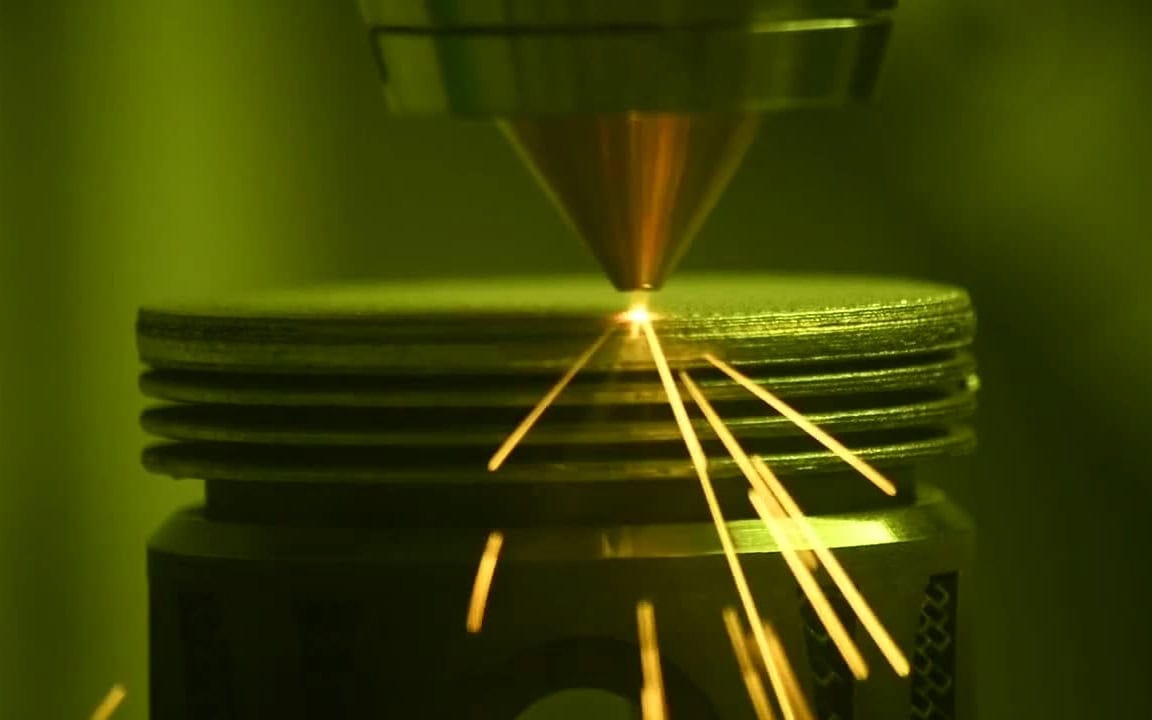
Case Study 4: Remanufacturing of Helicopter Transmission System Gear Components

Application Scenario
A main-rotor drive bevel gear (material: AMS6265 steel) exhibited surface wear. Procurement of a new replacement required an 18-month lead time, severely impacting fleet readiness and mission availability.

Remanufacturing Solution

  • Development of a dedicated high-hardness gear steel powder (HRC 58–62)

  • Hybrid process combining localized induction preheating and laser cladding

  • Dilution rate strictly controlled below 3%

  • Tooth-surface accuracy restored to AGMA Grade 12

Value and Performance

  • Remanufacturing cycle reduced to only 3 weeks

  • Cost equivalent to 30% of a new gear

  • Service-life validation demonstrated >85% life of a new component

  • Emergency remanufacturing capability for critical gears successfully established

This program provides a rapid, cost-effective, and high-reliability solution for extending the service life of helicopter drivetrain components and ensuring operational readiness.

Laser-3D-Metalldruck und Wiederaufbereitung für hochwertige Luft- und Raumfahrtkomponenten

Laser Metal 3D Printing and Remanufacturing for High-Value Aerospace Components www.huirui-laser.com

Technical Summary
DED laser metal 3D printing technology demonstrates unique advantages in high-value aerospace component applications:

  • Enables fabrication of complex structures and advanced materials that are difficult or impossible to process using conventional methods

  • Provides precise, efficient remanufacturing solutions for in-service equipment

  • Greatly improves material utilization and shortens supply-chain lead times

  • Substantially reduces life-cycle cost while maintaining required performance

These successful cases signify a major shift: additive manufacturing has progressed from prototype production to direct manufacturing and remanufacturing of critical load-bearing aerospace components.