


Industrial Laser Cladding Solutions
Delivering advanced powder-fed laser cladding technologies, Greenstone provides industrial-grade solutions for surface enhancement, repair, remanufacturing, and additive manufacturing. Our systems are engineered for demanding global industries requiring precision, durability, and continuous high-performance operation.
What is Laser Cladding Technology?
Laser cladding technology is an advanced surface engineering and additive manufacturing process that uses a high-energy laser beam to melt and deposit metallic powders or wires onto the surface of a substrate. During the process, both the coating material and the base material are partially fused, creating a dense metallurgical bond with superior adhesion, low dilution, and excellent structural integrity.
This process is widely recognized for enhancing surface properties such as wear resistance, corrosion resistance, oxidation resistance, heat resistance, and mechanical durability. By precisely controlling material deposition, laser cladding enables surface modification, component repair, dimensional restoration, and the production of functional coatings tailored to specific industrial performance requirements.
Unlike conventional welding, electroplating, or thermal spraying technologies, laser cladding provides highly localized heat input, resulting in minimal thermal distortion, reduced residual stress, and limited heat-affected zones. These characteristics significantly improve coating quality while minimizing post-processing requirements.
Laser cladding supports a broad range of metallic materials, including steels, nickel-based alloys, cobalt-based alloys, titanium alloys, and other advanced engineering materials. The process also allows independent control of feed rates, material composition, and deposition parameters, offering exceptional flexibility for customized applications.
Due to its precision, efficiency, and sustainability, laser cladding technology is widely applied across industries such as aerospace, power generation, oil and gas, mining, marine engineering, rail transportation, mold manufacturing, and heavy industrial equipment. It is increasingly used for extending component lifespan, reducing material waste, improving operational efficiency, and supporting sustainable remanufacturing practices.
As a high-performance manufacturing technology, laser cladding continues to play a critical role in modern industrial production by delivering cost-effective, durable, and environmentally responsible solutions for advanced component surface engineering.
Advantages of Laser Cladding Technology
Laser cladding technology offers significant advantages over conventional welding, plating, and thermal spray processes by delivering superior surface enhancement, precision material deposition, and long-term component performance. As an advanced additive manufacturing and surface engineering solution, laser cladding is widely recognized for its ability to improve operational efficiency, reduce lifecycle costs, and extend the service life of critical industrial components.
Why Laser Cladding Matters
Compared to traditional repair or coating technologies, laser cladding provides a more advanced, efficient, and cost-effective solution for modern manufacturing. It is increasingly used across aerospace, oil and gas, power generation, mining, rail transportation, marine engineering, tooling, and heavy industrial sectors where performance, reliability, and long-term value are critical.
By combining precision engineering, advanced material science, and sustainable manufacturing principles, laser cladding technology has become a leading solution for high-performance component protection, repair, and additive manufacturing worldwide.
Strong Metallurgical Bonding
Laser cladding creates a dense metallurgical bond between the coating material and substrate, ensuring exceptional adhesion strength far superior to traditional surface coating methods.
Minimal Heat Input and Low Distortion
Highly localized laser energy minimizes the heat-affected zone (HAZ), reducing thermal distortion, residual stress, and the need for extensive post-processing or heat treatment.
Low Material Dilution
Precise control of laser parameters allows for minimal mixing between the substrate and cladding material, preserving the desired material properties and ensuring consistent coating quality.
Performanță îmbunătățită a suprafeței
Laser-cladded surfaces provide outstanding wear resistance, corrosion resistance, oxidation resistance, fatigue resistance, and high-temperature durability, making them ideal for demanding industrial environments.
Flexible Material Compatibility
A wide variety of metallic powders and alloys can be used, including stainless steel, nickel-based alloys, cobalt-based alloys, titanium alloys, and carbide-reinforced materials, enabling customized solutions for diverse applications.
Precision Repair and Remanufacturing
Laser cladding is highly effective for restoring worn or damaged components, repairing expensive parts, and adding new functional layers without replacing entire components.
Near-Net Shape Manufacturing
The process enables precise deposition with minimal material waste, reducing machining requirements and significantly improving material utilization efficiency.
Automation and Process Control
Laser cladding systems can be integrated with robotics, CNC controls, and intelligent closed-loop monitoring technologies for repeatable, automated, and highly accurate production.
Improved Sustainability
By extending component lifespan, reducing raw material consumption, minimizing waste, and supporting remanufacturing, laser cladding contributes to more sustainable industrial manufacturing practices.
Reduced Operational Downtime
Fast repair capabilities and durable coatings help industries minimize equipment downtime, improve productivity, and lower maintenance costs.
Caracteristicile procedeelor de placare ultra-rapidă și ale procedeelor tradiționale de placare
Tehnologia de placare ultra-rapidă a Greenstone-Tech este în fruntea industriei
Caracteristici tehnice:
Tehnologie de placare cu laser cu viteză ultra-rapidă este utilizat în principal pentru a îmbunătăți rezistența la uzură, rezistența la coroziune, rezistența la temperaturi ridicate și rezistența la oxidare a suprafeței pieselor, astfel încât să se atingă obiectivul de modificare sau reparare a suprafeței și să se îndeplinească cerințele clienților privind proprietățile specifice ale suprafeței materialelor.
În procesul convențional de placare cu laser, energia laser este utilizată în principal pentru a topi materialul de bază pentru a forma un bazin topit. Pulberea este injectată în bazinul topit, topită și apoi solidificată pentru a forma un strat protector.
Caracteristicile procesului:
Viteza de placare a stratului de acoperire cu viteză ultra-rapidă este mai mare: Tehnologia de placare ultra-rapidă poate placa stratul de suprafață al substratului cu două ordine de mărime mai rapid decât tehnologia tradițională de placare cu laser. Acoperirile de înaltă eficiență de peste 1,5 metri pătrați/oră pot reduce costul placării cu laser la același cost ca și cromarea dură.
Grosimea stratului de placare ultra-rapidă este mai groasă: grosimea stratului de placare ultra-rapidă este de cel puțin 120 μm și poate ajunge până la 1000 μm, în timp ce stratul de galvanizare este o combinație fizică, iar grosimea stratului este în general de 20-60 μm; strat de acoperire cu laser și substrat Lipirea materialelor este o lipire metalurgică, rezistența de lipire este de câteva ori mai mare decât cea a stratului de acoperire galvanizat, iar durata de viață a stratului este mai lungă.
Placarea la viteză ultra-rapidă nu provoacă ușor deformarea sau crăparea materialului de bază: Placarea ultra-rapidă provoacă zone afectate de căldură și tensiuni termice mai mici asupra materialului de bază decât procesele tradiționale de placare și este mai puțin probabil să provoace deformări și fisuri.

Principiile tehnice ale placării cu laser (în stânga imaginii) și ale placării cu laser cu viteză ultra-rapidă (în dreapta imaginii)
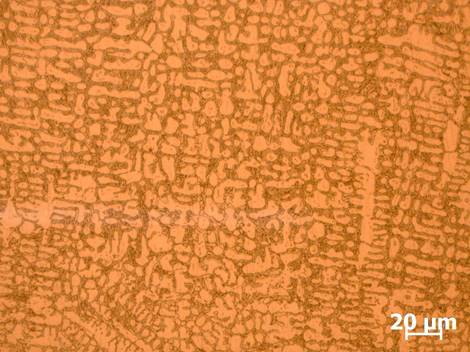
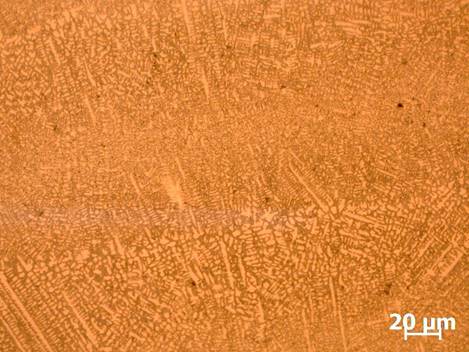
Metalografie de acoperire prin placare cu laser (stânga) și placare cu laser ultrarapidă (dreapta)
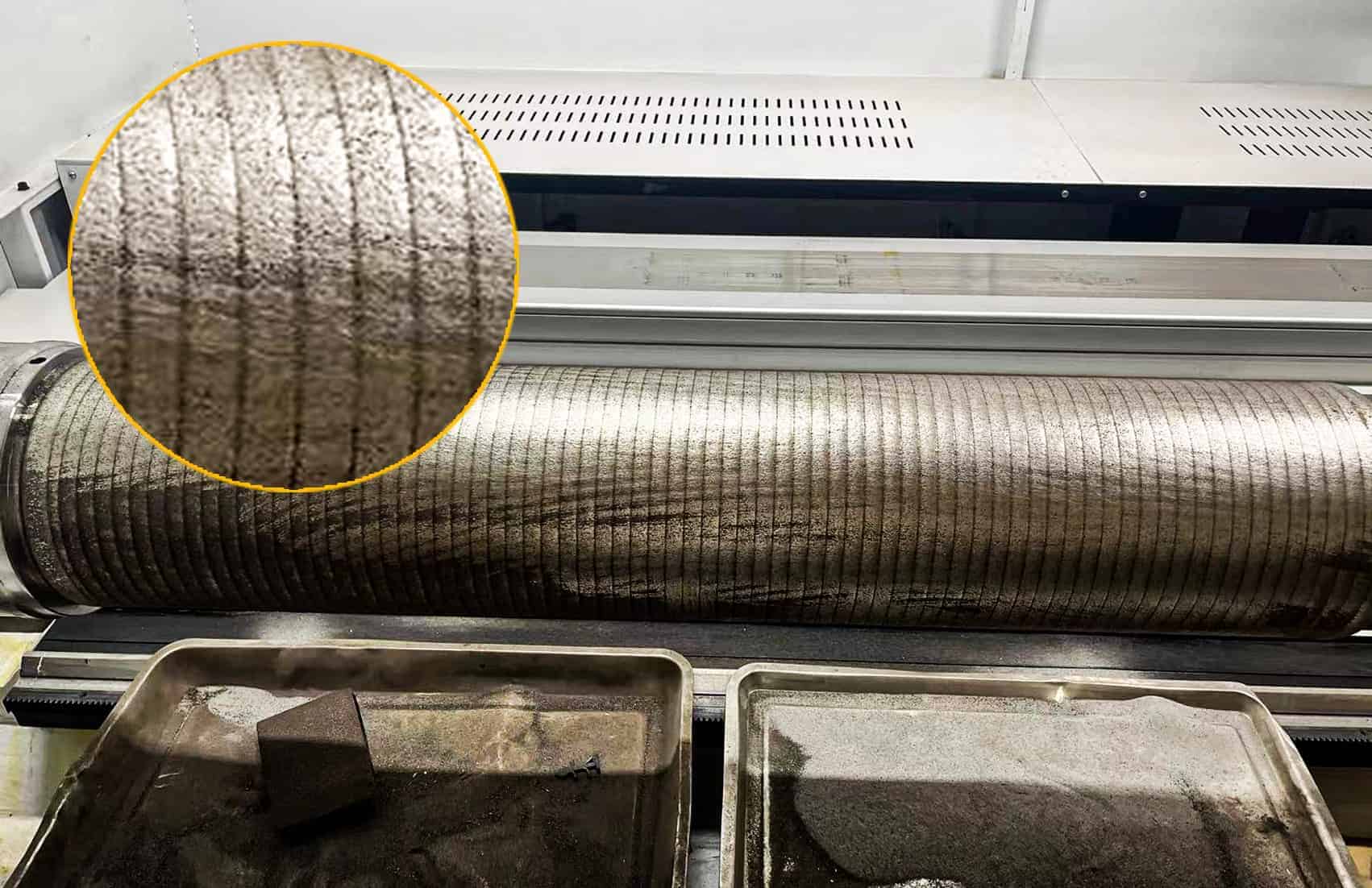
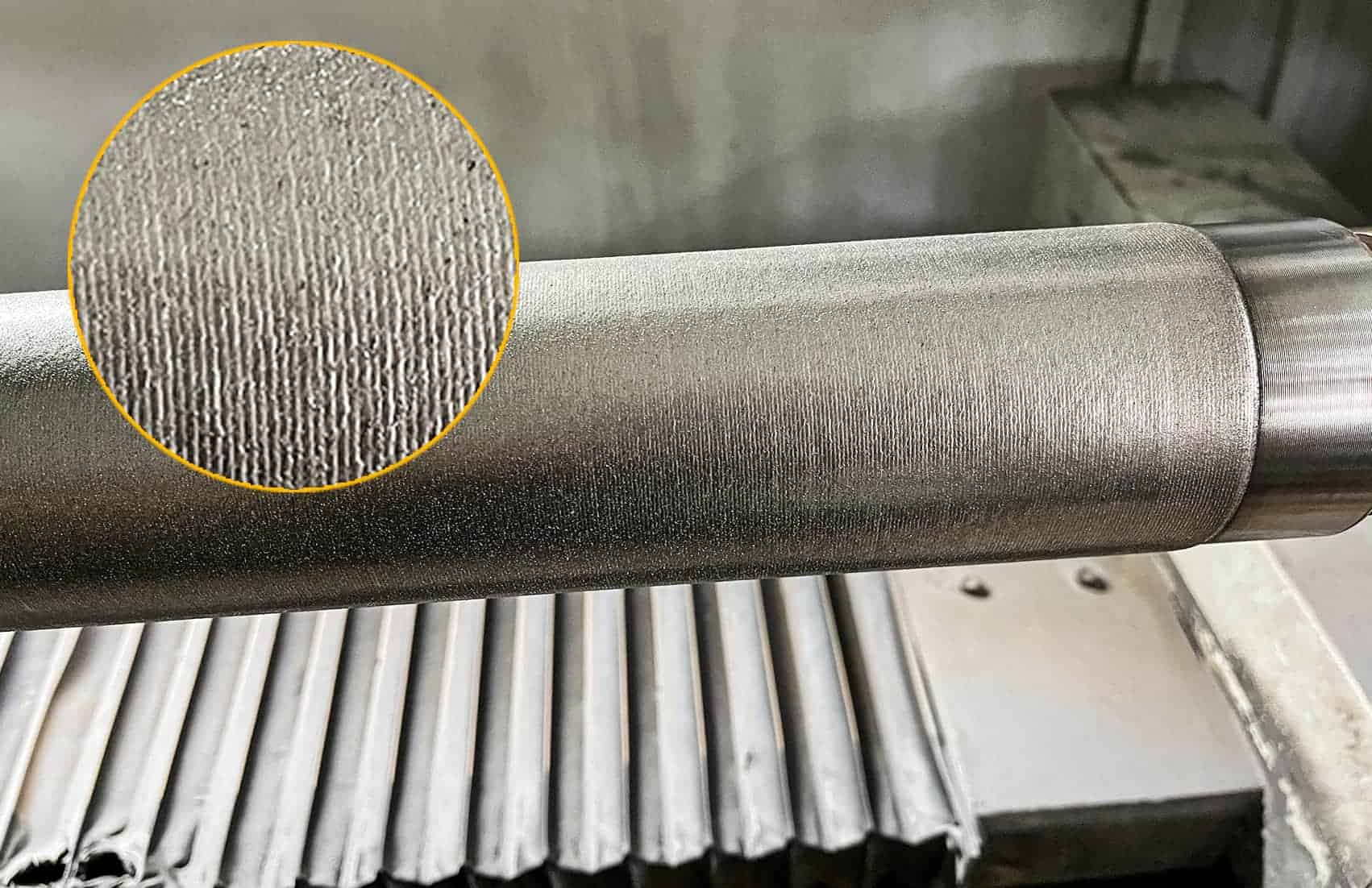
Suprafețe de acoperire cu placare cu laser (stânga) și placare cu laser cu viteză ultra-rapidă (dreapta)
Domeniul de aplicare al procesului
Răspund nevoilor diverse ale clienților și au o gamă largă de aplicații
Domeniul de aplicare al procesului | ||
Gama de putere (W) | 1000-10000 | |
Rata de scanare (mm/s) | 0-1000 | |
Cantitatea de alimentare cu pulbere (g/min) | 0-150 | |
Rata de suprapunere (%) | 15-50 | |
Debit de gaz de protecție (L/min) | 10-20 | |
Tip duză | În afara axei | Coaxial |
Metoda de livrare a pulberii | Alimentare prin gravitație/conducție pneumatică | Transport pneumatic |
Pre-setare pe o singură parte în afara axei bazin de topire pe o singură parte în afara axei | Bazin de topire coaxial simetric pe ambele părți | |
Compararea tehnologiilor de acoperire existente
Tehnologia de placare ultra-rapidă a devenit direcția de dezvoltare a industriei
Clasificare | Electroplacarea cromului | Pulverizare cu plasmă | Pulverizare supersonică cu flacără | Placare tradițională cu laser | Placare cu laser cu viteză ultra-înaltă |
Material | Cr | pulbere de aliaj | pulbere de aliaj | pulbere de aliaj | pulbere de aliaj |
Grosime | <0.1 | 3-4 | 0.1-0.4 | 1-2 | 0.02-0.4 |
Duritate | >700 | Cr-Fe 300 | Acoperire WC-Cr>1000 | Cr-Fe 500-600 | Cr-Fe 500-600 |
Rezistență la uzură | sărac | bun | bun | bun | bun |
Combinarea cu materialul de bază | combinație fizică | lipire metalurgică | lipire metalurgică | lipire metalurgică | lipire metalurgică |
aportul de căldură al substratului | nu | înalt | scăzut | scăzut | foarte scăzut |
Compatibilitate ecologică | rău | amendă | sărac | bun | bun |
Durata de viață (ani) | 1-1.5 | 2-3 | 2-3 | >5 | >3 |
Costul de producție | scăzut | mediu | mediu | înalt | scăzut |
Materials for Laser Cladding: Advanced Alloy Solutions for High-Performance Surface Engineering
Laser cladding technology enables the precise deposition of advanced metallic and composite materials onto critical component surfaces, delivering tailored performance enhancements for wear resistance, corrosion protection, thermal stability, and dimensional restoration. By selecting the appropriate cladding alloy, manufacturers can significantly extend component lifespan, reduce maintenance costs, and optimize operational efficiency across demanding industrial environments.
Unlike conventional coating or welding methods, laser cladding offers precise material control, low dilution, minimal heat input, and strong metallurgical bonding, making it ideal for both surface enhancement and high-value component remanufacturing.
What Materials Can Be Used in Laser Cladding?
Greenstone’s advanced laser cladding systems support a broad spectrum of industrial-grade materials, including:
- Aliaje pe bază de nichel
- Aliaje pe bază de cobalt
- Stainless Steels
- Aliaje pe bază de fier
- Copper-Based Alloys
- Aliaje de titan
- Aliaje de aluminiu
- Ceramic-Reinforced Composite Powders
Each material category offers distinct mechanical, chemical, and thermal advantages depending on the target application, operating environment, and required performance characteristics.
Aliaje pe bază de nichel
Nickel-based alloys are widely recognized for their exceptional corrosion resistance, oxidation resistance, and high-temperature mechanical stability. These materials are ideal for components operating in severe environments such as:
- Aerospace engine components
- Oil & gas drilling systems
- Power generation turbines
- Petrochemical equipment
- High-temperature molds and dies
Key Benefits:
- Outstanding high-temperature strength
- Rezistență excelentă la oxidare și coroziune
- Superior resistance to thermal fatigue
- Long-term performance under extreme service conditions
Aliaje pe bază de cobalt
Cobalt-based cladding materials provide exceptional hardness, wear resistance, and hot corrosion resistance, particularly in high-temperature or abrasive environments.
Typical Applications:
- Valve seats
- Pump shafts
- Extrusion screws
- Cutting tools
- Turbine components
Key Benefits:
- Excellent abrasive wear resistance
- High hardness retention at elevated temperatures
- Strong corrosion and oxidation resistance
- Superior performance in aggressive industrial environments
Stainless Steel Alloys
Stainless steels offer a highly versatile balance between corrosion resistance, structural strength, and cost-effectiveness.
Common Uses:
- Food processing equipment
- Chemical industry systems
- General industrial machinery
- Marine applications
- Hydraulic components
Key Benefits:
- Reliable corrosion protection
- Good mechanical performance
- Cost-efficient repair and coating solution
- Broad industrial adaptability
Aliaje pe bază de fier
Iron-based cladding alloys are often selected for economical large-scale wear protection and component rebuilding.
Typical Applications:
- Heavy equipment
- Mining machinery
- Agricultural machinery
- Steel mill components
- Construction equipment
Key Benefits:
- Cost-effective material solution
- Strong wear resistance
- Suitable for high-volume industrial repairs
- Excellent for dimensional restoration
Copper-Based Alloys
Copper and copper-alloy cladding materials provide unique thermal and electrical conductivity benefits.
Aplicații:
- Electrical contact surfaces
- Thermal management systems
- Specialized corrosion-resistant components
- Mold repair
Key Benefits:
- High thermal conductivity
- Excellent electrical performance
- Targeted corrosion resistance
- Specialized industrial functionality
Aliaje de titan
Titanium alloys combine lightweight performance with exceptional corrosion resistance and biocompatibility.
Typical Industries:
- Industria aerospațială
- Medical devices
- Marine engineering
- Precision engineering
Key Benefits:
- High strength-to-weight ratio
- Excellent corrosion resistance
- Lightweight structural performance
- Superior biocompatibility
Aliaje de aluminiu
Although more technically challenging due to reflectivity and thermal conductivity, aluminum laser cladding offers strategic advantages in lightweight engineering sectors.
Aplicații:
- Aerospace structures
- Transportation systems
- Lightweight industrial components
- Corrosion-resistant surfaces
Key Benefits:
- Lightweight performance
- Improved corrosion resistance
- Enhanced structural longevity
- Advanced lightweight manufacturing capability
Ceramic-Reinforced Materials
Composite powders containing carbides or ceramics (such as WC, SiC) are used for ultra-high wear applications.
Key Benefits:
- Extreme hardness
- Maximum abrasion resistance
- Ideal for severe wear conditions
- Enhanced service life in mining and heavy industry
Performance Benefits of Laser Cladding Materials
Regardless of base material, properly selected cladding materials can significantly improve:
- Rezistență la uzură
- Rezistență la coroziune
- Oxidation resistance
- Rezistența la oboseală termică
- Surface hardness
- Mechanical strength
- Dimensional recovery
- Service life extension
- Operational reliability
Why Cladding Material Selection Is Critical
Selecting the correct laser cladding material directly impacts:
- Component performance
- Coating lifespan
- Maintenance intervals
- Downtime reduction
- Cost efficiency
- Environmental resistance
- Overall return on investment
Material engineering is therefore a critical factor in maximizing the full potential of laser cladding technology.
The Strategic Value of Advanced Cladding Materials
Laser cladding materials form the foundation of advanced surface engineering success. From nickel superalloys for aerospace to iron-based alloys for heavy industry, material selection determines the functional performance, durability, and economic value of every cladding application.
By leveraging a comprehensive portfolio of industrial cladding materials, laser cladding technology provides manufacturers with highly flexible, scalable, and performance-driven solutions for modern manufacturing, repair, and remanufacturing challenges.
Laser Cladding FAQ & Technology Comparison
Laser cladding technology has become one of the most advanced surface engineering and metal restoration solutions for modern industry, offering superior precision, low thermal distortion, and exceptional metallurgical bonding compared to conventional hardfacing and surfacing methods.
By utilizing a high-energy laser beam to fuse metallic powders or wire feedstock onto a substrate surface, laser cladding creates dense, high-performance coatings with minimal dilution and highly controlled heat input. This process significantly improves wear resistance, corrosion protection, oxidation resistance, dimensional restoration, and overall component lifespan.
Compared to traditional technologies such as MIG/TIG welding, PTA, thermal spray, and arc spray, laser cladding provides:
- Higher precision deposition
- Lower heat-affected zones
- Stronger metallurgical bonding
- Reducerea deșeurilor de materiale
- Minimal post-processing
- Enhanced automation capability
- Superior repeatability for industrial-scale applications
These advantages make laser cladding particularly valuable in aerospace, oil & gas, mining, power generation, heavy machinery, rail transportation, and advanced manufacturing industries where component performance, reliability, and lifecycle cost are critical.
What is laser cladding?
Laser cladding is an advanced manufacturing and repair process that uses a focused laser beam to deposit metallic material onto a component surface, creating a metallurgically bonded protective or restorative layer.
What are common synonyms for laser cladding?
Laser cladding is also commonly referred to as:
- Laser metal deposition (LMD)
- Directed energy deposition (DED)
- Laser additive manufacturing
- Laser hardfacing
- Laser surface engineering
Can laser cladding repair damaged components?
Yes. Laser cladding is widely used for restoring worn, corroded, or dimensionally damaged parts while often extending service life beyond original specifications.
Can coating thickness be precisely controlled?
Yes. Laser cladding offers highly accurate control over deposition thickness, geometry, and material placement through programmable process parameters.
Are laser cladding coatings machinable?
Yes. Most laser clad layers can be machined, ground, or finished to precise tolerances depending on material selection.
What type of bond does laser cladding create?
Laser cladding forms a true metallurgical bond with the substrate, providing significantly stronger adhesion than mechanical or sprayed coatings.
What is dilution in laser cladding?
Dilution refers to the mixing ratio between clad material and substrate. Laser cladding typically maintains very low dilution, preserving coating integrity and material performance.
How does laser cladding compare to conventional welding?
Laser cladding generally offers:
- Capacitate termică mai mică
- Less distortion
- Better precision
- Reduced dilution
- Longer coating life
- Higher material efficiency
Can thermal input be controlled?
Yes. Precise laser parameter control minimizes heat input and protects sensitive substrates from excessive thermal damage.
Why is laser cladding the preferred solution for advanced industrial surface engineering?
Laser cladding is considered the superior modern solution for advanced industrial surface engineering because it combines precision repair, surface enhancement, high wear resistance, corrosion protection, low thermal distortion, and long-term lifecycle optimization within a single process. Unlike conventional surfacing technologies, laser cladding provides precise material deposition with minimal heat input, creates strong metallurgical bonds, reduces post-processing requirements, and significantly extends component service life. These advantages make it especially valuable for industries requiring high-performance restoration, durability, and operational efficiency.
Tehnologie | Precision | Heat Input | Bond Strength | Material Efficiency | Distortion | Post-procesare |
Placare cu laser | Excelentă | Scăzut | Metallurgical | Înaltă | Minimal | Minimal |
MIG/TIG Welding | Moderat | Înaltă | Metallurgical | Moderat | Higher | Significant |
PTA | Bun | Moderate-High | Metallurgical | Moderat | Moderat | Moderat |
Thermal Spray | Moderat | Scăzut | Mechanical | Înaltă | Scăzut | Surface Prep Required |
Arc Spray | Moderat | Moderat | Mechanical | Moderat | Moderat | Surface Prep Required |