
Electron Beam Physical Vapor Deposition (EB-PVD): Principles, Equipment, Thermal Barrier Coatings and Industrial Applications
2026 년 7 월 4 일


추상
As modern aerospace, energy, semiconductor, and advanced manufacturing industries continue to push the limits of operating temperature, efficiency, and component reliability, conventional metallic materials alone are no longer sufficient to withstand increasingly severe service environments. Surface engineering technologies have therefore become indispensable for extending component life, improving thermal efficiency, and reducing maintenance costs.
Among numerous advanced coating technologies, 전자빔 물리 기상 증착(EB-PVD) has established itself as one of the most important manufacturing processes for producing 열 차단 코팅(TBC) used in aircraft engines and industrial gas turbines. Compared with conventional coating technologies, EB-PVD produces a unique columnar ceramic microstructure that provides exceptional thermal strain tolerance, superior cyclic oxidation resistance, and outstanding durability under extreme thermal shock conditions. These characteristics have made EB-PVD the preferred coating process for turbine blades operating in next-generation aero engines.
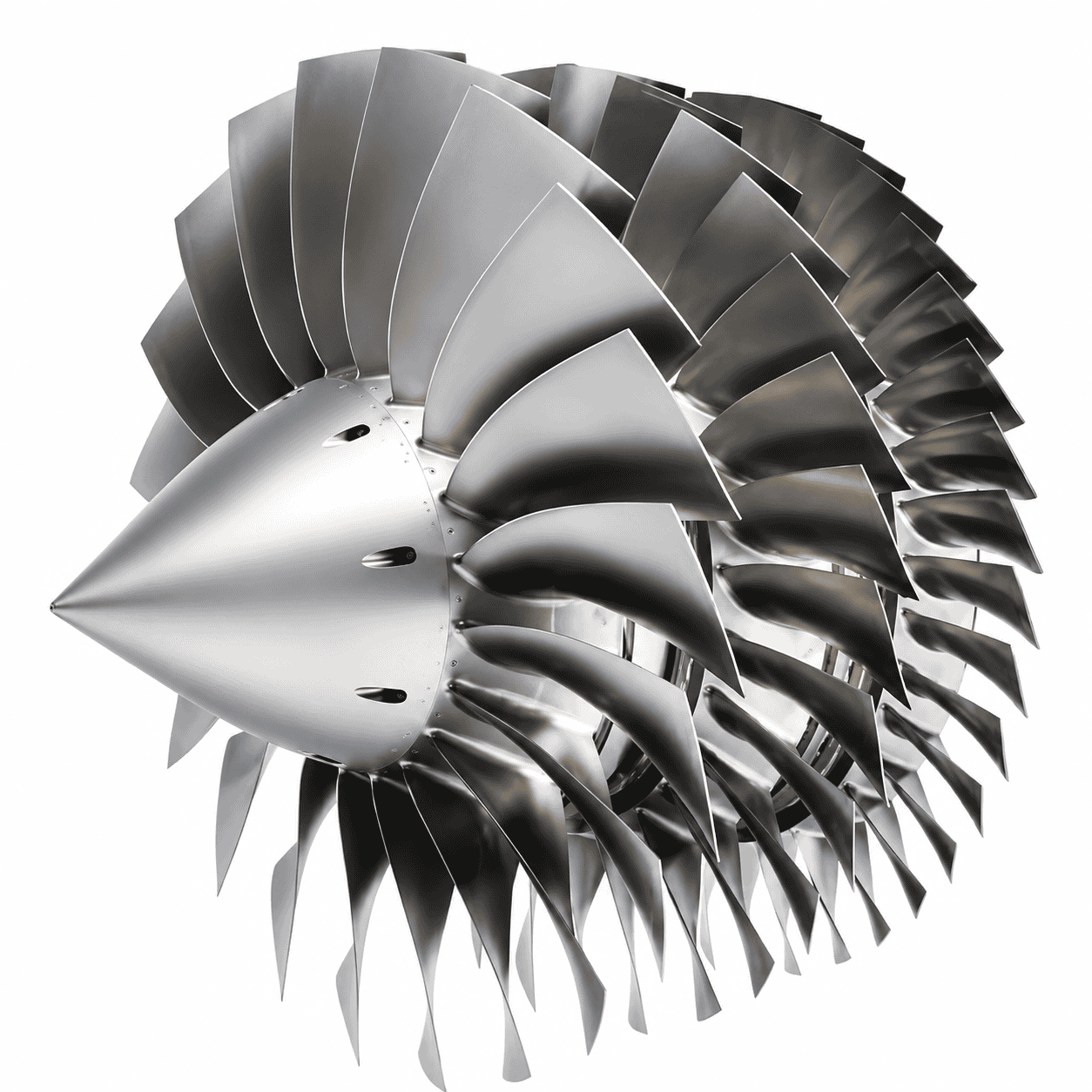
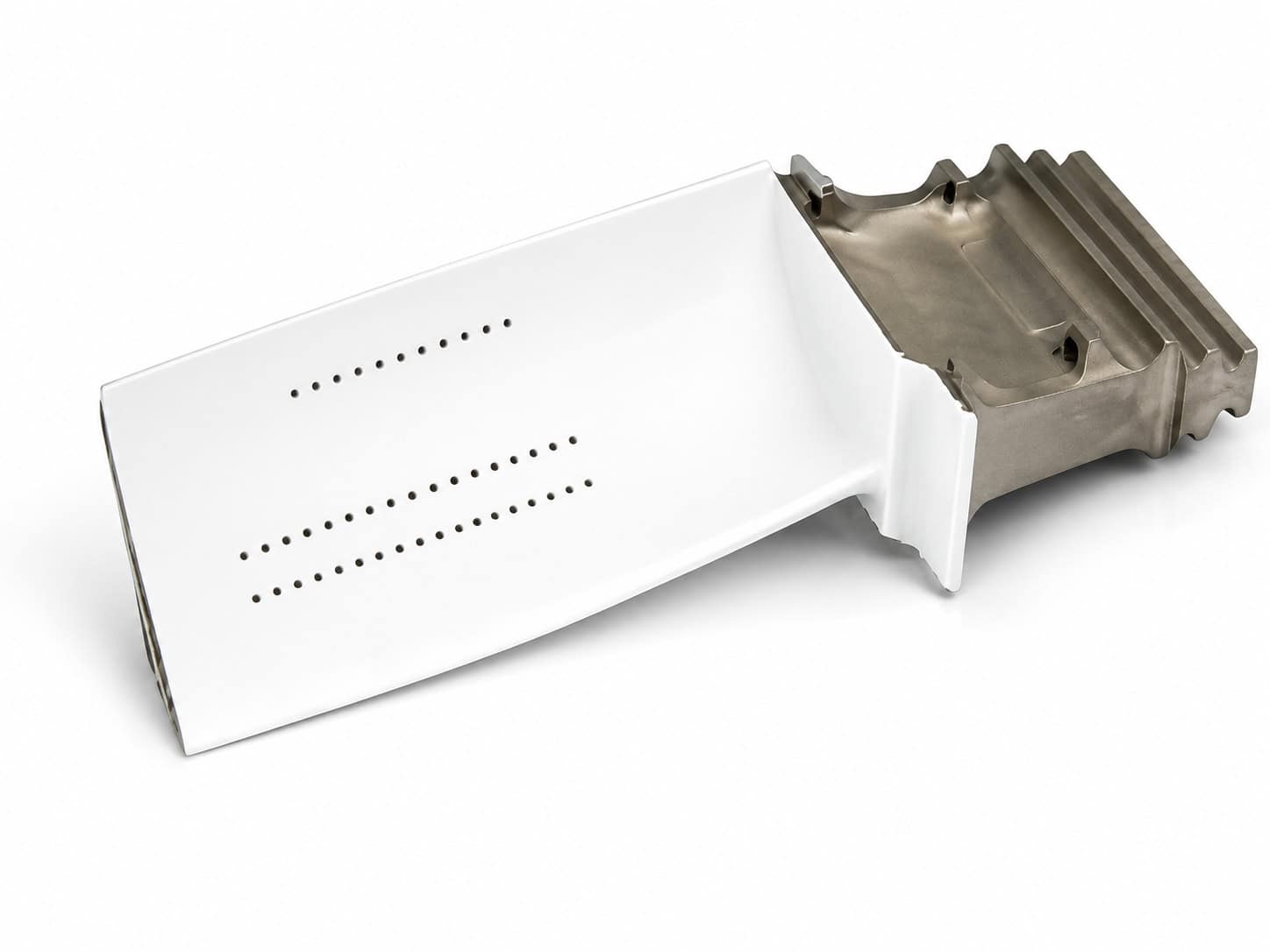
Today, EB-PVD is widely employed throughout the aerospace industry for coating single-crystal superalloy blades, guide vanes, combustor liners, afterburner components, and other hot-section parts. Beyond aviation, the technology is rapidly expanding into gas turbines for power generation, solid oxide fuel cells (SOFCs), advanced ceramic materials, semiconductor manufacturing equipment, and emerging high-temperature energy systems.
This article provides a comprehensive technical overview of EB-PVD, covering:
- Fundamental principles of Electron Beam Physical Vapor Deposition
- System architecture and major equipment components
- Thermal Barrier Coating (TBC) systems
- Ceramic coating materials and bond coats
- Columnar microstructure formation mechanisms
- Advantages and limitations compared with other coating technologies
- Industrial applications across aerospace, energy, semiconductor, medical, and advanced manufacturing sectors
- Future technological developments and market trends
Whether you are an aerospace engineer, coating specialist, turbine manufacturer, materials researcher, or equipment procurement professional, this guide offers a comprehensive understanding of one of the world’s most advanced high-temperature coating technologies.

1 장. 소개
1.1 The Growing Importance of Advanced Surface Engineering
The continuous demand for higher efficiency, lower emissions, and longer service life has fundamentally transformed modern engineering design. Instead of relying solely on bulk material properties, manufacturers increasingly utilize advanced surface engineering technologies to improve component performance while maintaining lightweight structural designs.
Surface engineering modifies only the outermost layer of a component, enabling engineers to tailor properties such as:
- 내마모성
- 내 산화성
- 내식성
- 단열재
- 피로 저항
- 마찰 감소
- 고온 안정성
As a result, advanced coatings have become essential across industries including aerospace, power generation, medical devices, electronics, cutting tools, automotive engineering, and semiconductor manufacturing.
이러한 기술들 중에서, 열 차단 코팅(TBC) have received particular attention because they enable metallic components to survive temperatures that exceed the melting point of the underlying alloy by reducing heat transfer and protecting against oxidation.
1.2 Why Thermal Barrier Coatings Matter
Modern gas turbines and aircraft engines operate at extremely high temperatures to maximize thermodynamic efficiency. According to the Brayton cycle, increasing turbine inlet temperature directly improves engine efficiency and fuel economy.
However, modern turbine inlet temperatures often exceed:
- 1,500 ° C in advanced industrial gas turbines
- 1,700-1,900 ° C in state-of-the-art commercial aircraft engines
- Even higher local temperatures in military propulsion systems
In contrast, even advanced nickel-based single-crystal superalloys generally begin to lose mechanical strength at significantly lower temperatures.
Without effective thermal protection, turbine components would rapidly suffer from:
- 산화
- 고온 부식
- 열 피로
- 크립 변형
- 표면 균열
- Coating spallation
- 조기 실패
Thermal Barrier Coating systems solve this challenge by introducing a multilayer ceramic coating between the hot gas environment and the metallic substrate, reducing the temperature experienced by the underlying alloy while dramatically extending service life.
1.3 Evolution of Thermal Barrier Coating Technologies
The development of thermal barrier coatings dates back to the 1950s and 1960s, when researchers first explored ceramic coatings for gas turbine components.
During the following decades, several coating technologies emerged, including:
- 에어 플라즈마 스프레이(APS)
- Vacuum Plasma Spray (VPS)
- 고속 산소 연료(HVOF)
- 화학 기상 증착 (CVD)
- 물리 기상 증착 (PVD)
- 전자빔 물리 기상 증착(EB-PVD)
Among these processes, EB-PVD demonstrated a unique capability to deposit highly strain-tolerant ceramic coatings with a distinctive columnar microstructure. This breakthrough significantly improved coating durability under repeated thermal cycling and established EB-PVD as the preferred technology for high-performance aircraft engine components.
Today, virtually every modern commercial and military aircraft engine incorporates EB-PVD-produced thermal barrier coatings on critical hot-section components.
1.4 Why EB-PVD Has Become an Industry Standard
Several characteristics distinguish EB-PVD from other coating technologies.
First, EB-PVD operates under a high-vacuum environment, allowing ceramic materials to evaporate with minimal contamination and exceptional purity.
Second, the process provides precise control over:
- 코팅 두께
- 증착률
- 기판 온도
- 크리스탈 방향
- Microstructure evolution
Most importantly, EB-PVD naturally produces vertically aligned ceramic columns separated by microscopic gaps. Unlike dense coatings, this columnar architecture accommodates thermal expansion mismatch between the ceramic layer and the metallic substrate, significantly reducing internal stresses during heating and cooling cycles.
Consequently, EB-PVD coatings exhibit:
- 내열 충격성 우수
- Outstanding thermal cycle durability
- Superior strain tolerance
- 낮은 잔류응력
- 극한 작동 조건에서도 긴 수명 보장
These advantages explain why EB-PVD remains indispensable despite its higher equipment cost and more complex process requirements.
1.5 Beyond Aerospace
Although EB-PVD was originally developed for aircraft engines, its application scope has expanded considerably over the past two decades.
Today, EB-PVD technology supports a wide range of advanced industries, including:
우주항공
- 터빈 블레이드
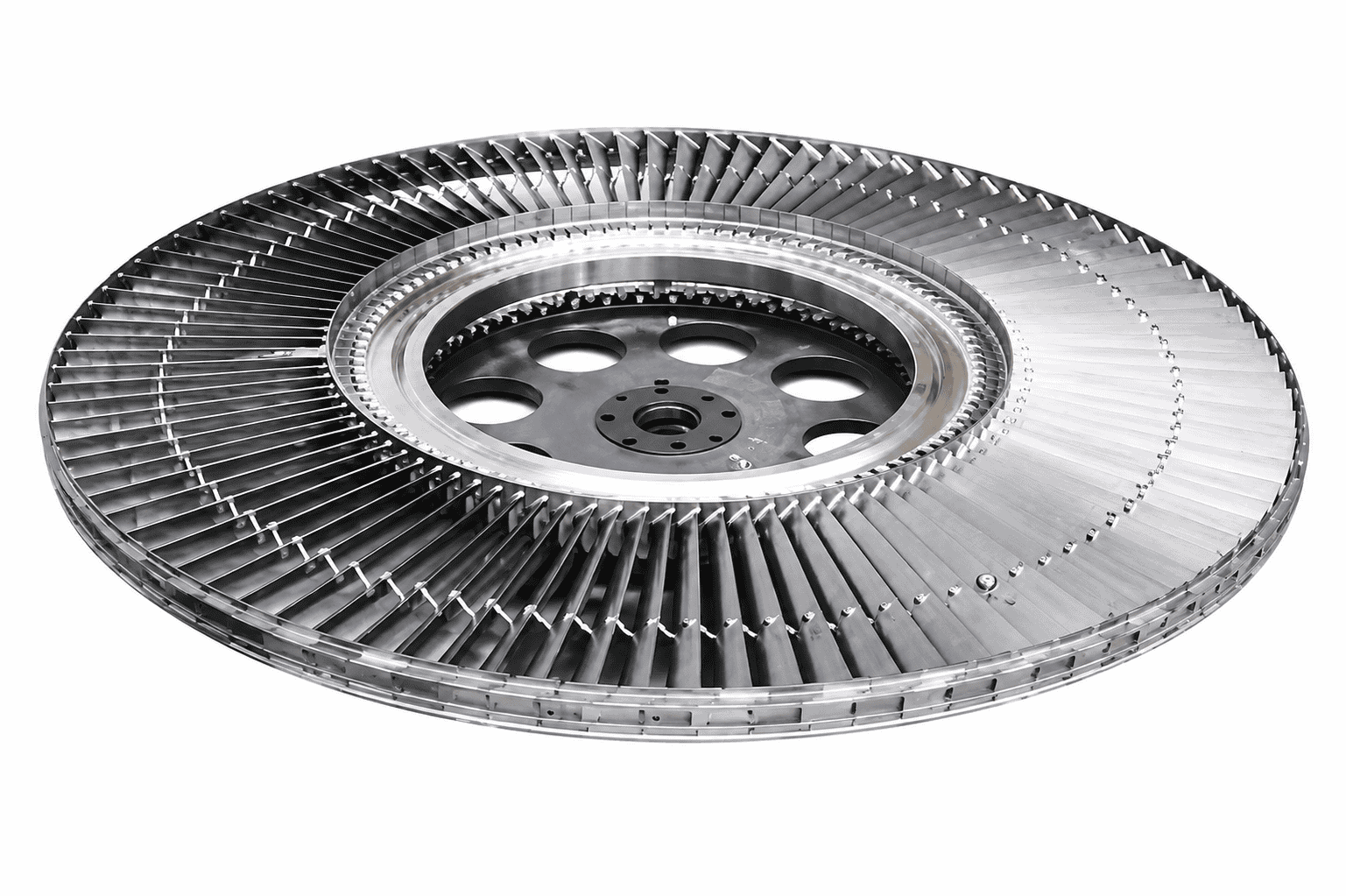
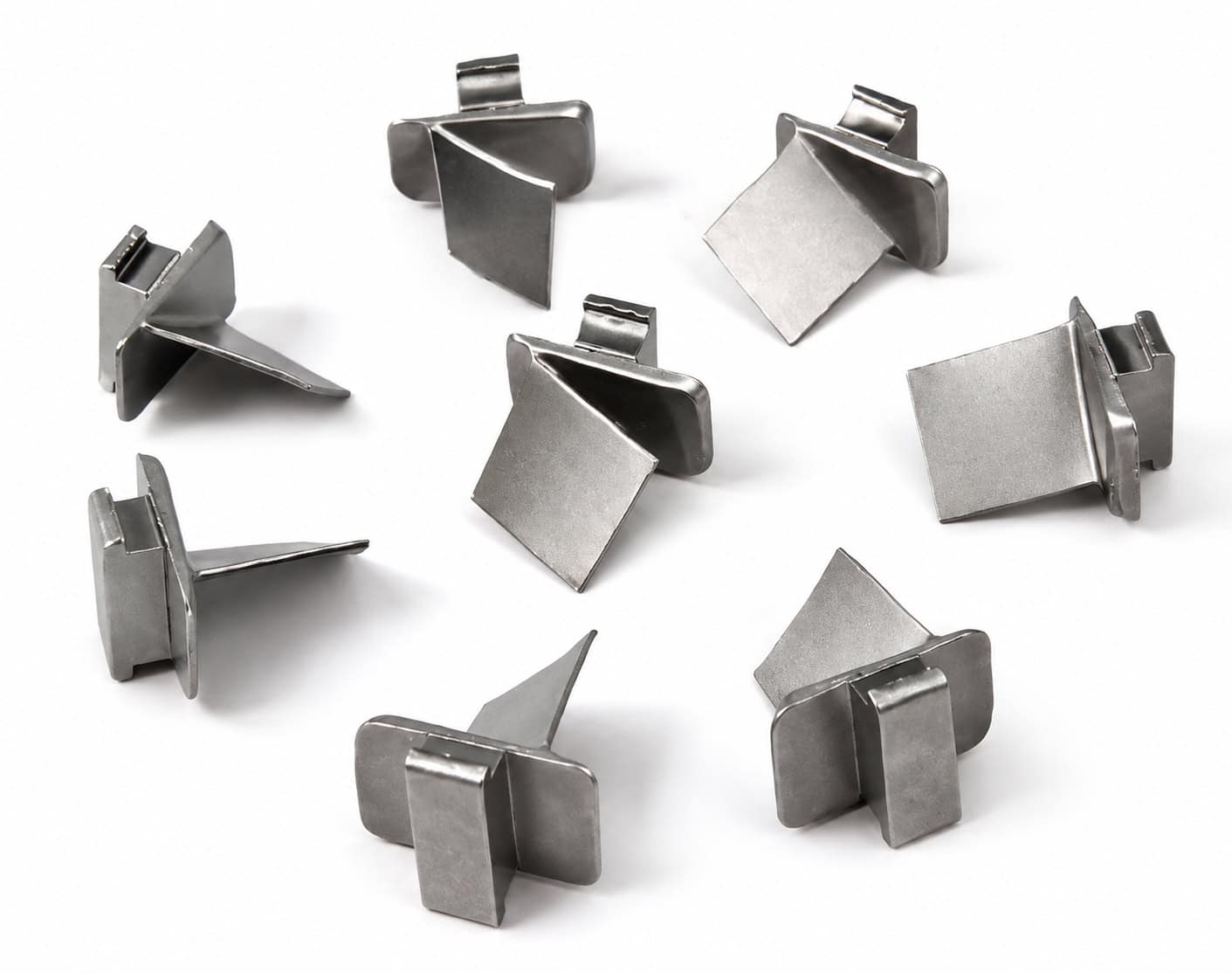
- 가이드 베인
- 연소기 라이너
- 노즐 가이드 베인
- 애프터버너 구성 요소
- 열 보호 시스템
에너지
- 산업용 가스 터빈
- 복합화력발전소
- Hydrogen combustion turbines
- 고체산화물연료전지(SOFC)
반도체 제조
- High-temperature processing components
- Ceramic coatings for vacuum equipment
- Silicon carbide processing systems
의료 공학
- Implant coatings
- Biocompatible ceramic surfaces
- Wear-resistant medical devices
고급 제조
- Ceramic functional coatings
- 광학 코팅
- 고온 공구
- 연구 개발 플랫폼
As industries continue to demand higher operating temperatures and longer component lifetimes, EB-PVD is expected to play an increasingly important role in next-generation manufacturing technologies.
Chapter 2. What Is Electron Beam Physical Vapor Deposition (EB-PVD)?
2.1 정의
전자빔 물리 기상 증착(EB-PVD) is an advanced vacuum coating technology that uses a high-energy electron beam to melt and evaporate coating materials inside a high-vacuum chamber. The resulting vapor travels through the vacuum environment and condenses onto the surface of heated substrates, forming dense, high-purity functional coatings.
Unlike conventional thermal spraying processes, EB-PVD is a line-of-sight vapor deposition process. The coating grows atom by atom through vapor condensation, enabling exceptional control over microstructure, crystallographic orientation, coating purity, and thickness uniformity.
Because of these characteristics, EB-PVD has become one of the world’s most important manufacturing technologies for producing high-performance ceramic thermal barrier coatings.
2.2 기본원리
The EB-PVD process can be divided into several sequential stages:
Step 1 — High Vacuum Generation
The deposition chamber is evacuated to a high vacuum, typically reaching pressures between 10⁻² and 10⁻⁴ Pa. This environment minimizes contamination and allows vapor atoms to travel freely without significant collisions.
Step 2 — Electron Beam Generation
An electron gun accelerates electrons under high voltage toward the source material. Magnetic focusing systems precisely control the beam position and energy density.
Electron beam temperatures can exceed several thousand degrees Celsius, enabling the melting and evaporation of refractory ceramic materials such as yttria-stabilized zirconia (YSZ).
Step 3 — Material Evaporation
The concentrated electron beam rapidly heats the target material inside a water-cooled copper crucible.
The material transforms from solid to liquid and then into a high-temperature vapor cloud.
Step 4 — Vapor Transport
Under high vacuum conditions, evaporated atoms travel directly toward the rotating workpiece.
Unlike plasma spraying, no carrier gas transports the coating particles.
This highly directional transport contributes to excellent coating purity and precise thickness control.
Step 5 — Condensation and Film Growth
When vapor atoms reach the heated substrate, they condense and diffuse across the surface.
Through controlled nucleation and crystal growth, a ceramic coating gradually develops into the characteristic columnar microstructure that distinguishes EB-PVD from all other thermal barrier coating technologies.
2.3 Why the Columnar Structure Is So Important
The most remarkable feature of EB-PVD is not simply the coating itself, but the way in which the coating grows.
Instead of forming a dense lamellar structure like plasma-sprayed coatings, EB-PVD naturally produces millions of vertically aligned ceramic columns separated by microscopic gaps.
This architecture provides several critical advantages:
- Allows thermal expansion without cracking
- Reduces residual stresses
- Improves thermal fatigue resistance
- Enhances thermal shock performance
- Minimizes coating spallation
- Extends coating lifetime under cyclic heating
These characteristics explain why EB-PVD remains the preferred deposition technology for high-performance turbine blades despite its higher manufacturing cost.
2.4 Relationship Between EB-PVD and Thermal Barrier Coating Systems
An EB-PVD coating is only one part of a complete Thermal Barrier Coating (TBC) 시스템.
A typical TBC consists of four functional layers:
- Nickel-based Superalloy Substrate – provides structural strength at elevated temperatures.
- Bond Coat (typically MCrAlY or Pt-Al) – improves adhesion and forms a protective thermally grown oxide (TGO).
- Thermally Grown Oxide (TGO) – a thin alumina layer that develops during service and enhances oxidation resistance.
- Ceramic Top Coat (commonly 7–8 wt.% YSZ) – deposited by EB-PVD to provide thermal insulation through its columnar architecture.
This multilayer system enables turbine components to operate at gas temperatures significantly higher than the substrate alloy could withstand alone, contributing directly to higher engine efficiency and longer service life.
Chapter 3. How Electron Beam Physical Vapor Deposition (EB-PVD) Works
Unlike conventional thermal spray technologies that project molten particles onto a substrate, 전자빔 물리 기상 증착(EB-PVD) is a highly controlled vacuum vapor deposition process in which coating materials are transformed directly into vapor using a focused high-energy electron beam. The vapor subsequently condenses onto heated components, producing dense, highly pure ceramic coatings with a unique columnar crystal structure.
The entire deposition process is carried out inside an ultra-high vacuum chamber where contamination is minimized and the movement of vapor atoms can be precisely controlled. Every process parameter—including electron beam power, evaporation rate, substrate temperature, chamber pressure, and component rotation—directly influences the coating’s microstructure, adhesion, density, and long-term service performance.
Compared with many conventional coating methods, EB-PVD provides exceptional control over coating architecture, making it particularly suitable for manufacturing 열 차단 코팅(TBC) for aerospace turbine blades operating under extremely severe thermal cycling conditions.
3.1 Complete EB-PVD Process Flow
A complete EB-PVD deposition cycle generally consists of the following stages:
Step 1 — Component Preparation
Before coating begins, all workpieces undergo thorough cleaning and surface preparation.
Typical preparation procedures include:
- 정밀 가공
- 탈지제
- 초음파 청소
- 화학 세척
- Sand blasting (when required)
- 표면 활성화
The cleanliness of the substrate is critical because even microscopic contamination can significantly reduce coating adhesion.
Step 2 — Loading Into the Vacuum Chamber
Prepared components are mounted on specially designed rotating fixtures.
Depending on the application, fixtures may rotate around multiple axes to ensure:
- 균일한 코팅 두께
- Consistent vapor exposure
- 안정적인 온도 분포
- Complex geometry coverage
Multiple turbine blades are typically coated simultaneously in one production cycle.
Step 3 — High Vacuum Generation
The chamber is evacuated using a combination of:
- Mechanical pumps
- Roots pumps
- 터보 분자 펌프
- Cryogenic pumps
- Diffusion pumps (certain systems)
Typical operating vacuum:
10⁻² – 10⁻⁴ Pa
Such a vacuum greatly increases the mean free path of vapor atoms, allowing nearly collision-free transport from the evaporation source to the substrate.
Step 4 — Electron Beam Heating
After reaching the required vacuum level, the electron gun generates a high-energy electron beam.
Electrons are accelerated through high voltage before being focused by electromagnetic lenses onto the evaporation material.
The energy density is extremely high.
Localized temperatures can exceed several thousand degrees Celsius, allowing rapid melting and evaporation of refractory ceramic materials that would otherwise be difficult to process.
Step 5 — Material Evaporation
The electron beam continuously heats the ceramic ingot or target material.
Common evaporation materials include:
- 7–8 wt.% YSZ
- Gadolinium Zirconate
- Rare-Earth Zirconates
- Other advanced ceramic compositions
As temperature rises, the material changes from:
고체
↓
녹은
↓
Atomic Vapor
The generated vapor cloud becomes the source of coating atoms.
Step 6 — Vapor Transport
Under high vacuum conditions, evaporated atoms travel almost linearly toward the heated substrate.
Unlike plasma spraying,
다음과 같은 것들이 있습니다:
- No carrier gases
- No molten droplets
- No powder impact
대신,
individual atoms or atomic clusters move directly through the vacuum environment.
This greatly improves coating purity while minimizing oxidation and contamination.
Step 7 — Coating Growth
The vapor reaches the rotating workpiece.
Atoms condense on the hot surface.
Surface diffusion begins.
Crystal nuclei form.
The coating gradually develops.
Because deposition occurs under carefully controlled thermal conditions,
the ceramic crystals grow preferentially in the vertical direction,
eventually producing the famous:
Columnar Microstructure
This structure provides the outstanding strain tolerance required for modern thermal barrier coatings.
Step 8 — Cooling and Inspection
After deposition,
the chamber is gradually cooled.
Components are unloaded.
Typical quality inspections include:
- 코팅 두께
- 표면 형태
- 미세 구조
- 부착
- 다공성
- 거
- 열 순환 성능
- 금속 조직 분석
Only components meeting strict aerospace standards proceed to service.
3.2 Physical Mechanism of Columnar Crystal Growth
One of the defining characteristics of EB-PVD is the formation of vertically aligned ceramic columns rather than a dense lamellar coating.
This phenomenon results from several interacting factors:
Directional Vapor Flux
The vapor arrives from a highly directional source.
This favors vertical crystal growth.
High Substrate Temperature
The substrate is maintained at elevated temperature.
Surface diffusion becomes more active.
Atoms migrate to energetically favorable crystal sites.
Competitive Crystal Growth
처음에,
many crystal nuclei form.
As deposition continues,
faster-growing grains gradually dominate,
creating long continuous ceramic columns.
Shadowing Effect
Because the vapor travels almost linearly,
growing columns partially block neighboring regions,
allowing separated columnar structures to develop naturally.
These microscopic gaps later become beneficial strain-relief channels.
3.3 Why Columnar Structures Improve Thermal Barrier Performance
The columnar architecture is the primary reason why EB-PVD coatings outperform many conventional ceramic coatings under cyclic thermal loading.
주요 이점은 다음과 같습니다.
열팽창 조절
Metal substrates expand more than ceramics.
Instead of generating excessive stress,
the gaps between columns allow slight movement.
Internal stresses are greatly reduced.
향상된 열충격 저항성
Repeated heating and cooling create thermal fatigue.
The independent ceramic columns absorb thermal strain without forming large cracks.
Crack Arrest Capability
If microcracks develop,
they are typically confined between adjacent columns.
Crack propagation becomes much more difficult,
greatly extending coating life.
Long Thermal Cycling Life
Compared with dense ceramic coatings,
EB-PVD coatings survive significantly more thermal cycles before failure.
This makes them particularly suitable for aircraft engines experiencing thousands of takeoff-and-landing cycles.
3.4 EB-PVD Process Control Parameters
The quality of an EB-PVD coating depends on precise process control.
중요한 매개변수는 다음과 같습니다.
| 매개 변수 | 영향 |
|---|---|
| 진공 압력 | Vapor transport stability |
| 전자빔 출력 | 증발 속도 |
| Beam scanning pattern | Uniform melting |
| 기판 온도 | 결정 성장 |
| 회전 속도 | 두께 균일성 |
| 증착률 | 미세 구조 |
| 코팅 두께 | 서비스 성능 |
| Chamber atmosphere | 코팅 순도 |
| 냉각 속도 | 잔류응력 |
Modern EB-PVD systems employ computer-controlled closed-loop process control to maintain stable deposition conditions throughout production.
3.5 EB-PVD Equipment and System Components
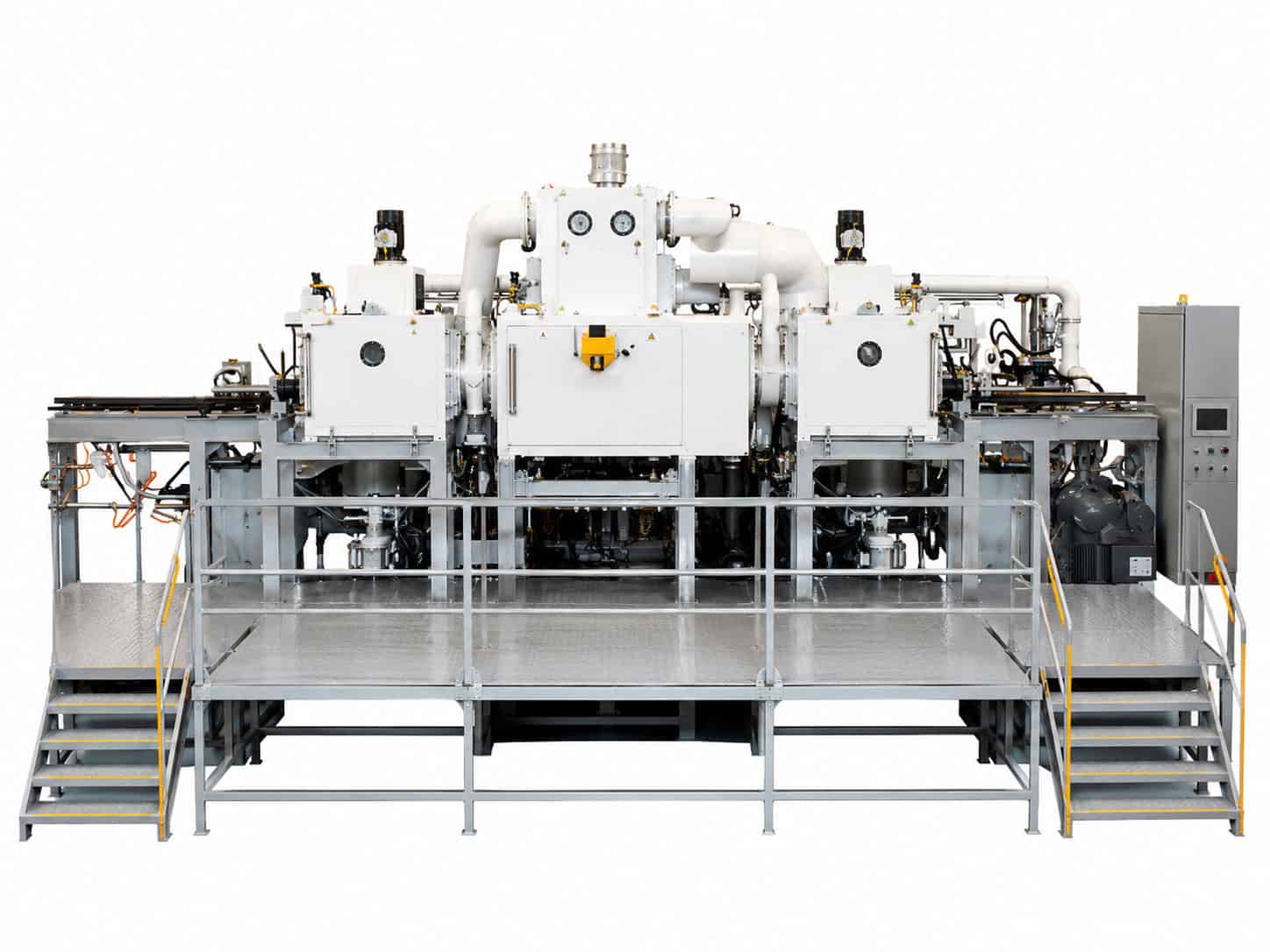
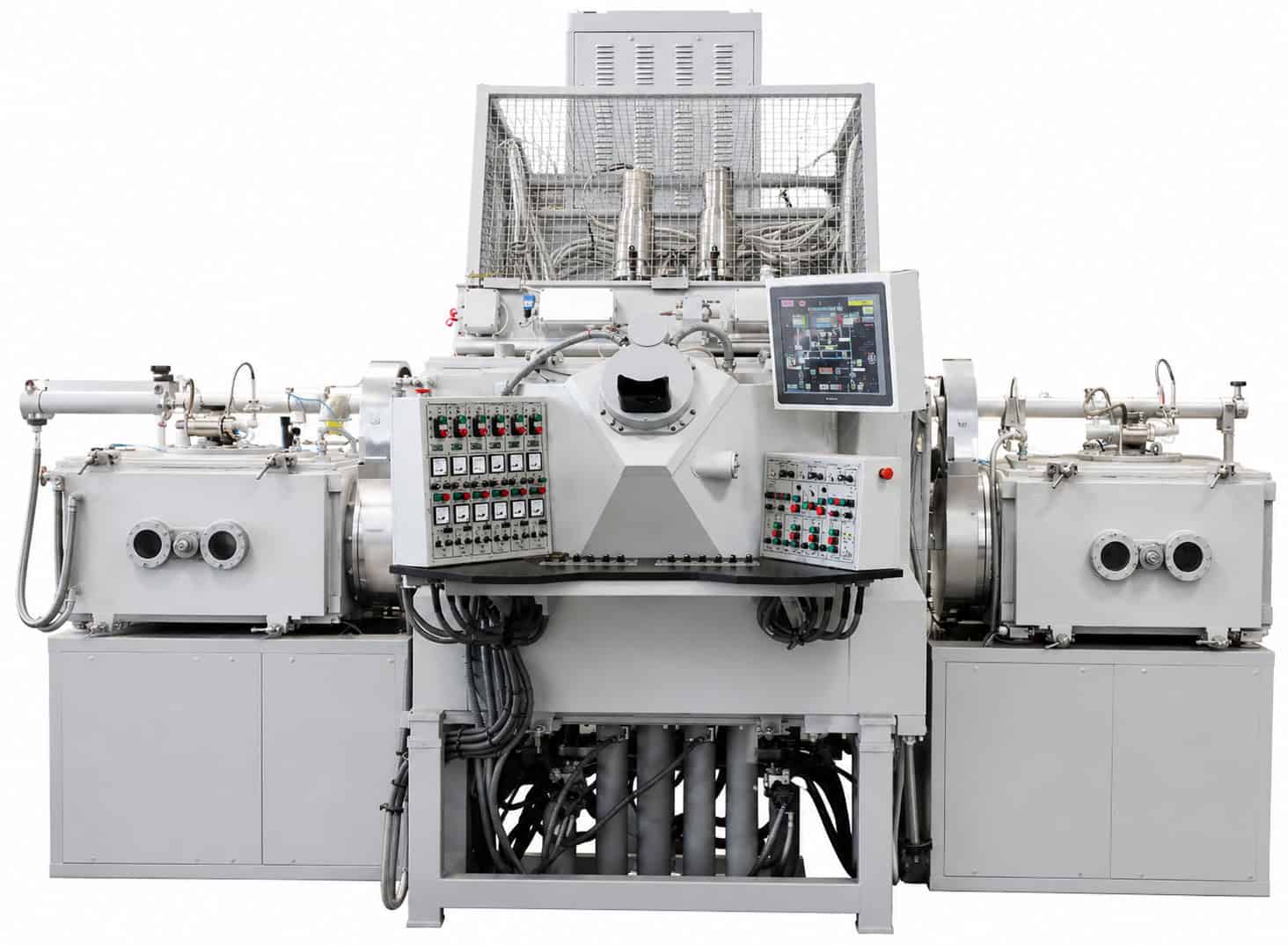
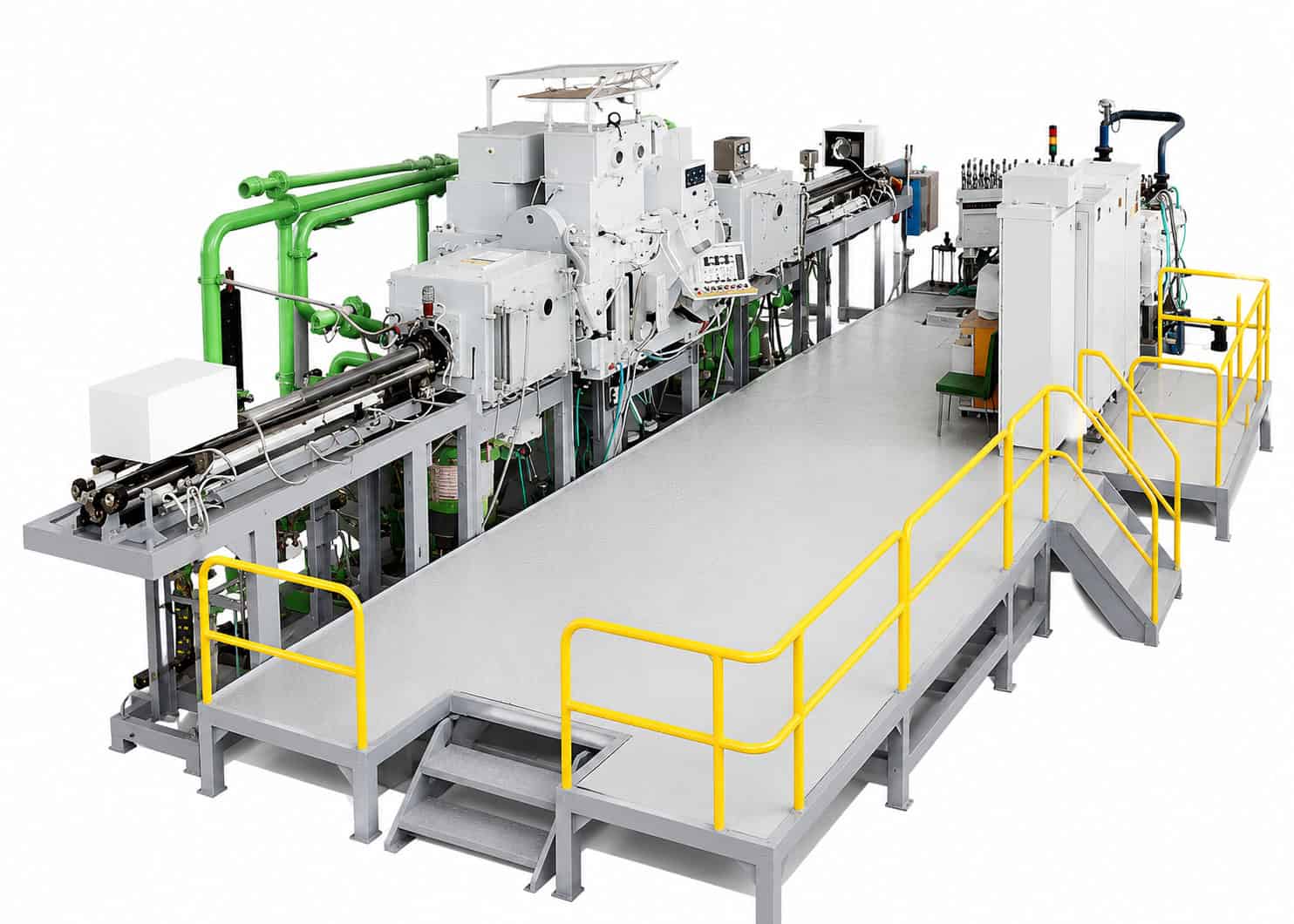
A modern EB-PVD production system consists of multiple integrated subsystems designed to ensure stable evaporation, precise vapor transport, and reproducible coating quality.
3.5.1 Electron Beam Gun
The electron beam gun is the heart of the entire EB-PVD system.
그 기능은 다음과 같습니다.
- Electron generation
- Electron acceleration
- 빔 포커싱
- 빔 편향
- Beam scanning
Modern guns typically operate at:
- 높은 전압
- High beam stability
- 정밀한 위치 정확도
Stable beam quality directly determines evaporation efficiency.
3.5.2 진공 챔버
The vacuum chamber provides the controlled deposition environment.
일반적인 특징은 다음과 같습니다.
- 스테인리스 건축
- Water-cooled walls
- 고진공 호환성
- Large observation windows
- Multiple process ports
Large industrial systems may accommodate dozens of turbine blades simultaneously.
3.5.3 진공 펌핑 시스템
Maintaining ultra-high vacuum is essential.
Typical pumping configuration:
- 로터리 베인 펌프
- 뿌리 송풍기
- Turbomolecular pump
- Cryogenic pump
The pumping system removes:
- 비행기
- 수분
- 산소
- Residual gases
This prevents contamination during coating growth.
3.5.4 Evaporation Source Assembly
The evaporation source contains:
- Ceramic ingot
- Water-cooled copper crucible
- 피드 메커니즘
- 냉각 채널
Its purpose is to provide continuous and stable material evaporation.
3.5.5 Substrate Manipulation System
To ensure uniform coating,
components rotate continuously during deposition.
기능은 다음과 같습니다.
- 회전
- 행성 운동
- 기울이기
- 높이 조절
- 다축 운동
Complex blade geometries require sophisticated motion control.
3.5.6 난방 시스템
Substrate heating strongly influences crystal growth.
Heating methods include:
- 복사 히터
- Electron beam preheating
- 저항 가열
Typical substrate temperatures range from approximately 850-1100 ° C, depending on coating material and process design.
3.5.7 냉각 시스템
Critical equipment components require continuous cooling.
Water cooling protects:
- 전자총
- 도가니
- 챔버 벽
- 전원 공급 장치
- Magnetic coils
Stable cooling improves equipment reliability.
3.5.8 Process Control and Monitoring System
Modern EB-PVD systems are highly automated.
Typical monitoring functions include:
- Vacuum pressure monitoring
- Beam current monitoring
- Beam voltage monitoring
- 온도 측정
- Deposition rate control
- 코팅 두께 측정
- 동작 동기화
- Alarm diagnostics
- 프로세스 데이터 기록
- 레시피 관리
Many next-generation systems also incorporate digital process control, real-time diagnostics, and intelligent manufacturing features to improve coating consistency, production efficiency, and traceability.
단원 요약
Electron Beam Physical Vapor Deposition is a highly sophisticated vacuum coating technology that combines high-energy electron beam heating, ultra-high vacuum processing, precise thermal management, and automated motion control to manufacture advanced ceramic coatings with exceptional structural integrity.
Its unique deposition mechanism produces the characteristic columnar microstructure that has made EB-PVD the industry benchmark for thermal barrier coatings used in aircraft engines, industrial gas turbines, and other high-temperature applications. At the same time, the integration of precision electron optics, vacuum engineering, substrate manipulation, and intelligent process control enables modern EB-PVD systems to deliver repeatable coating quality for the most demanding aerospace and energy industries.
Chapter 4. Coating Materials Used in EB-PVD Systems
The performance of an Electron Beam Physical Vapor Deposition coating is determined not only by the deposition process itself but also by the selection of coating materials. Modern EB-PVD systems are capable of depositing a wide range of advanced ceramics and metallic coatings, each engineered to withstand specific thermal, mechanical, and chemical environments.
For aerospace gas turbines, the coating system is generally designed as a multilayer Thermal Barrier Coating (TBC) architecture rather than a single coating. Each layer performs a distinct function, collectively providing thermal insulation, oxidation resistance, corrosion protection, and long-term mechanical stability.
4.1 Structure of a Typical Thermal Barrier Coating (TBC) System
A modern EB-PVD thermal barrier coating generally consists of four functional layers:
| 층 | 일반적인 재료 | 주요 기능 |
|---|---|---|
| Ceramic Top Coat | 7–8 wt.% YSZ | 단열재 |
| Thermally Grown Oxide (TGO) | α-Al₂O₃ | 산화 보호 |
| 본드 코트 | MCrAlY or Pt-Aluminide | Adhesion & oxidation resistance |
| 기판 | Nickel-based Single Crystal Superalloy | 기계적 강도 |
Each layer works together to protect turbine components operating under temperatures approaching or exceeding 1,500 ° C.
4.2 Ceramic Top Coat
The ceramic top coat is the outermost layer directly exposed to combustion gases.
주요 기능은 다음과 같습니다:
- 단열재
- 내열 충격성
- 낮은 열전도율
- 산화 저항성
- Resistance to hot corrosion
- Protection against thermal fatigue
To achieve these properties, the ceramic material must possess:
- 높은 용융 온도
- 낮은 열전도율
- 낮은 탄성 계수
- 높은 파괴 인성
- 화학적 안정성
- 상 안정성
- Low sintering tendency
4.3 이트리아 안정화 지르코니아(YSZ)
The most widely used EB-PVD ceramic is 7–8 wt.% Yttria-Stabilized Zirconia (YSZ).
YSZ remains the industry standard because it offers an excellent balance between thermal insulation, toughness, manufacturability, and long-term stability.
Advantages of YSZ
- 낮은 열전도율
- Excellent strain tolerance
- 높은 파괴 인성
- 우수한 열충격 저항
- Stable columnar growth
- Mature industrial processing
- Extensive aerospace qualification
일반적인 속성은 다음과 같습니다.
| 부동산 | 전형적인 가치 |
|---|---|
| 녹는 점 | ~ 2700 ° C |
| 열전도율 | 1.5~2.5 와트/m·K |
| 작동 온도 | 1100-1200 ° C |
| 밀도 | ~6g/cm³ |
Because of its proven reliability, YSZ continues to dominate commercial aircraft engine production.
4.4 Rare-Earth Zirconates
As turbine inlet temperatures continue to increase, researchers have developed alternative ceramic materials capable of operating beyond the limits of conventional YSZ.
예는 다음과 같습니다 :
- Gadolinium Zirconate (Gd₂Zr₂O₇)
- Lanthanum Zirconate (La₂Zr₂O₇)
- Samarium Zirconate
- Neodymium Zirconate
Compared with YSZ, these ceramics offer:
- 낮은 열전도도
- Higher phase stability
- Improved CMAS resistance
- Better high-temperature capability
However, they generally exhibit lower fracture toughness and require optimized multilayer coating architectures.
4.5 Emerging Ceramic Materials
Future EB-PVD coatings may utilize advanced ceramics such as:
Pyrochlore Ceramics
장점:
- 매우 낮은 열전도율
- 탁월한 상 안정성
- 고온 성능
희토류 산화물
응용 프로그램은 다음과 같습니다.
- Ultra-high temperature coatings
- Space propulsion
- 초음속 차량
Environmental Barrier Coating Materials
For ceramic matrix composites (CMCs), researchers are increasingly employing:
- Rare-earth silicates
- 멀 라이트
- Hafnium compounds
These materials protect ceramic substrates from water vapor corrosion at elevated temperatures.
4.6 Bond Coat Materials
The bond coat forms the interface between the ceramic coating and the metallic substrate.
Although relatively thin, it is one of the most critical layers in the entire coating system.
주요 기능은 다음과 같습니다.
- 접착력 향상
- 산화 보호
- Aluminum reservoir
- 스트레스 감소
- 보호 산화물 층 형성
Without a high-quality bond coat, ceramic coatings would rapidly delaminate during thermal cycling.
4.7 MCrAlY Bond Coatings
The most common bond coat material is MCrAlY, 어디:
- M = Nickel, Cobalt, or both
- Cr = Chromium
- Al = Aluminum
- Y = Yttrium
Typical compositions include:
- NiCrAlY
- CoNiCrAlY
- NiCoCrAlY
장점:
- 우수한 내 산화성
- 내식성
- 강한 접착
- Stable oxide formation
- Good thermal expansion compatibility
4.8 Platinum Aluminide Bond Coats
For the most demanding turbine blades,
Platinum-Aluminide (Pt-Al) coatings are widely used.
장점은 다음과 같습니다.
- Exceptional oxidation resistance
- Dense alumina formation
- 높은 내구성
- Improved thermal cycling life
Although considerably more expensive than MCrAlY coatings, Pt-Al systems are commonly employed in premium aircraft engines where maximum reliability is required.
4.9 Thermally Grown Oxide (TGO)
During service,
oxygen diffuses through the ceramic coating and reacts with aluminum in the bond coat,
forming an extremely thin α-Al₂O₃ 층.
This layer is known as the Thermally Grown Oxide (TGO).
A properly controlled TGO:
- 접착력 향상
- Reduces oxygen diffusion
- Protects the bond coat
- Extends coating life
그러나,
excessive TGO growth eventually generates internal stresses,
which become one of the primary failure mechanisms of thermal barrier coatings.
4.10 Future Material Development
Research continues toward next-generation TBC materials capable of supporting turbine inlet temperatures exceeding 1700°C.
Current research directions include:
- Multi-layer ceramic coatings
- Functionally graded coatings
- Nano-structured ceramics
- Multi-component oxides
- High-entropy ceramics
- Environmental barrier coatings
- Smart self-healing coatings
These developments are expected to significantly extend coating lifetime while enabling higher engine efficiency.
Chapter 5. Formation of the EB-PVD Columnar Microstructure
One of the defining features of Electron Beam Physical Vapor Deposition is its ability to produce a highly ordered columnar ceramic microstructure. Unlike conventional plasma-sprayed coatings, which consist of flattened splats and lamellar interfaces, EB-PVD coatings grow as vertically aligned crystals extending from the bond coat toward the coating surface.
This architecture is the primary reason why EB-PVD coatings exhibit exceptional thermal fatigue resistance and have become the preferred solution for aircraft engine turbine blades.
5.1 핵형성
Immediately after deposition begins,
individual vapor atoms condense onto the heated substrate.
These atoms diffuse across the surface,
forming stable crystal nuclei.
The density and orientation of these nuclei depend on:
- 기판 온도
- 표면 거칠기
- Vapor flux
- 증착률
5.2 Competitive Grain Growth
As deposition continues,
individual grains compete for incoming atoms.
Grains with favorable crystallographic orientations grow faster,
gradually suppressing neighboring grains.
The result is a population of vertically aligned columns.
5.3 Shadowing Effect
Because vapor arrives from a directional source,
growing columns partially block adjacent regions.
이 현상은,
로 알려진 shadowing effect,
creates the characteristic gaps between neighboring columns.
5.4 Column Separation
Rather than being defects,
the gaps between columns are intentionally beneficial.
다음을 허용합니다.
- 열 팽창
- 기계적 유연성
- Stress relaxation
- 균열 변형
These features dramatically improve coating durability.
5.5 열 사이클링 성능
Aircraft engines experience thousands of heating and cooling cycles.
During each cycle,
the ceramic coating and metallic substrate expand at different rates.
The columnar architecture accommodates this mismatch,
greatly reducing thermal stress.
5.6 Crack Propagation Behavior
Dense ceramic coatings often develop long transverse cracks.
EB-PVD coatings behave differently.
미세 균열:
- Stop at column boundaries
- Change propagation direction
- Dissipate stress
This significantly delays catastrophic coating failure.
5.7 열전도율
The microscopic gaps between columns also reduce heat transfer.
Combined with the intrinsically low thermal conductivity of YSZ,
the columnar architecture provides highly effective thermal insulation.
5.8 Long-Term Microstructural Evolution
During long-term service,
the coating gradually changes.
Typical phenomena include:
- 소결
- Column thickening
- Pore reduction
- TGO growth
- 입자 조대화
These changes eventually reduce strain tolerance and determine coating service life.
Understanding these mechanisms is essential for designing next-generation thermal barrier coatings.
Chapter 6. Advantages and Limitations of EB-PVD
Although EB-PVD represents one of the most advanced coating technologies available today, no manufacturing process is universally applicable. Understanding both its strengths and limitations is essential when selecting the appropriate coating solution.
6.1의 장점
Exceptional Thermal Cycling Resistance
The columnar ceramic structure accommodates repeated expansion and contraction without significant cracking.
뛰어난 고온 성능
EB-PVD coatings can operate reliably under extremely high turbine inlet temperatures.
Excellent Coating Purity
Vacuum deposition minimizes contamination and oxidation during coating formation.
우수한 접착력
Carefully engineered bond coat systems and controlled deposition conditions provide excellent coating-substrate bonding.
제어된 미세 구조
Engineers can precisely tailor:
- 두께
- Grain orientation
- 증착률
- 결정 성장
- 표면 형태
낮은 잔류 응력
The columnar architecture significantly reduces internal stresses generated during thermal cycling.
High Process Repeatability
Modern computer-controlled systems ensure consistent coating quality for aerospace production.
Complex Component Capability
Rotating fixtures enable coating of:
- 터빈 블레이드
- 가이드 베인
- 연소기 부품
- Complex aerospace geometries
6.2 제한
많은 장점에도 불구하고,
EB-PVD also presents several challenges.
높은 장비 투자
EB-PVD systems require:
- High-vacuum chambers
- Electron beam guns
- 정밀 전원 공급 장치
- 정교한 자동화
Initial capital investment is significantly higher than conventional thermal spraying systems.
Relatively Low Deposition Rate
Compared with plasma spraying,
EB-PVD generally deposits coatings more slowly,
making production costs higher.
Line-of-Sight Process
Like most PVD technologies,
EB-PVD primarily coats surfaces directly exposed to the vapor source.
Deep internal cavities remain difficult to coat uniformly.
High Process Complexity
Stable production requires precise control of:
- 진공
- 온도
- 전자빔
- 운동
- 재료 공급
- 냉각
This demands experienced process engineers and highly trained operators.
제한된 재료 호환성
Not every ceramic material evaporates uniformly under electron beam heating.
Material selection must consider vapor pressure, evaporation behavior, and chemical stability.
6.3 Advantages Compared with Other Technologies
| 기술 | 주요 장점 | 주요 제한 사항 |
|---|---|---|
| EB-PVD | Best thermal cycling resistance | 높은 장비 비용 |
| APS | Low cost, high deposition rate | Lower strain tolerance |
| CVD | Excellent conformity | 더 높은 처리 온도 |
| HVOF | Dense metallic coatings | Not suitable for TBC ceramics |
| 콜드 스프레이 | Solid-state deposition | Cannot produce ceramic TBC structures |
다음과 같은 응용 프로그램의 경우 maximum reliability, thermal cycling durability, and high-temperature performance are required—particularly in aerospace turbine blades and advanced gas turbines—EB-PVD remains the benchmark technology despite its higher manufacturing cost. Its ability to produce a controlled columnar ceramic architecture continues to set it apart from alternative coating processes and underpins its critical role in next-generation thermal barrier coating systems.


Chapter 7. EB-PVD vs. APS vs. CVD vs. Other Advanced Coating Technologies
Selecting an appropriate coating technology is a critical engineering decision that directly influences component performance, manufacturing cost, service life, and maintenance requirements. Although numerous coating processes are available today, no single technology is suitable for every application. Each process offers distinct advantages depending on the substrate material, coating composition, operating environment, and performance objectives.
Electron Beam Physical Vapor Deposition (EB-PVD) has become the preferred solution for high-performance thermal barrier coatings in aerospace gas turbines because of its unique ability to produce a strain-tolerant columnar ceramic microstructure. However, technologies such as Air Plasma Spray (APS), Chemical Vapor Deposition (CVD), High Velocity Oxygen Fuel (HVOF), Physical Vapor Deposition (PVD), and Cold Spray continue to play important roles across different industries.
This chapter compares these technologies from technical, structural, and industrial perspectives.
7.1 EB-PVD vs. Air Plasma Spray (APS)
APS has been the most widely used thermal spray technology for thermal barrier coatings for several decades. It propels molten ceramic particles onto a substrate using a high-temperature plasma jet, producing a layered “splat” microstructure.
구조적 차이점
| 제품 특장점 | EB-PVD | APS |
|---|---|---|
| Deposition Mechanism | 증기 응축 | Molten Particle Impact |
| 미세 구조 | 원주의 | 라멜라 |
| 다공성 | Controlled Fine Gaps | Interlamellar Porosity |
| 잔류응력 | 높음 | 더 높은 |
| 열 순환 저항 | 우수한 | 좋은 |
| 표면 처리 | 부드럽게 | Relatively Rough |
The fundamental distinction lies in the coating architecture. EB-PVD coatings consist of vertically aligned ceramic columns that accommodate thermal strain, whereas APS coatings are composed of flattened molten particles stacked layer by layer.
Thermal Fatigue Performance
Aircraft engines experience repeated heating and cooling during every flight cycle.
EB-PVD coatings:
- Accommodate thermal expansion
- 내부 스트레스를 줄이세요
- Resist crack propagation
- Maintain adhesion over thousands of cycles
APS coatings generally exhibit excellent insulation but are more susceptible to crack initiation under severe cyclic loading due to their lamellar interfaces.
제조 비용
APS offers several economic advantages:
- 낮은 장비 투자
- 증착 효율 향상
- 유지 보수 비용 절감
- 더 간단한 조작
Consequently, APS remains the dominant solution for many industrial gas turbine applications where manufacturing cost is a major consideration.
Aerospace Preference
Modern commercial and military aircraft engines generally favor EB-PVD because reliability, thermal cycling resistance, and engine efficiency outweigh manufacturing cost.
7.2 EB-PVD vs. Chemical Vapor Deposition (CVD)
Chemical Vapor Deposition forms coatings through chemical reactions between gaseous precursors at elevated temperatures.
Unlike EB-PVD, which relies on physical evaporation, CVD is fundamentally a chemical synthesis process.
비교
| 제품 특장점 | EB-PVD | CVD |
|---|---|---|
| 보증금 유형 | 물리적 | 화학 |
| 진공 요구 사항 | 높은 진공 | Controlled Gas Atmosphere |
| 코팅 균일성 | Excellent on Exposed Surfaces | Excellent Even in Complex Cavities |
| 일반적인 코팅 | Ceramic TBC | Carbides, Nitrides, DLC, SiC |
| 처리 온도 | 보통-높음 | 종종 더 높은 |
| Columnar TBC Structure | 가능 | 아니 |
전형적인 신청
EB-PVD
- 써멀 배리어 코팅
- 터빈 블레이드
- 항공 우주 부품
CVD
- 반도체 제조
- 절삭 공구
- 실리콘 카바이드 코팅
- 다이아몬드 코팅
- 광학 코팅
- High-purity functional films
7.3 EB-PVD vs. Conventional PVD
Physical Vapor Deposition includes several technologies:
- 마그네트론 스퍼터링
- 아크 이온 도금
- 열 증발
- 전자빔 증발
EB-PVD is a specialized branch of PVD optimized for high-temperature ceramic deposition.
Compared with conventional sputtering systems:
EB-PVD offers:
- 더 높은 증착 속도
- Better ceramic evaporation capability
- Superior TBC microstructure
- Large industrial coating capacity
7.4 EB-PVD vs. HVOF
High Velocity Oxygen Fuel (HVOF) spraying accelerates partially molten particles to supersonic velocities.
It is widely used for metallic coatings.
장점:
- Extremely dense coatings
- 높은 결합 강도
- 우수한 내마모성
일반적인 응용 프로그램 :
- 유압 실린더
- 펌프 샤프트
- 착륙 장치
- 롤러
- 광산 장비
그러나,
HVOF is generally unsuitable for producing the strain-tolerant ceramic thermal barrier coatings required by modern turbine blades.
7.5 EB-PVD vs. Cold Spray
Cold Spray accelerates powder particles without melting them.
장점은 다음과 같습니다.
- No thermal oxidation
- Minimal residual stress
- Excellent dimensional repair
- 높은 증착 효율
Cold Spray is ideal for:
- 부품 수리
- 알루미늄 합금
- 구리
- 티타늄
- 마그네슘
- Aerospace structural repair
그러나,
because ceramic particles cannot plastically deform,
Cold Spray cannot produce ceramic thermal barrier coatings comparable to EB-PVD.
7.6 Choosing the Right Coating Technology
The optimal process depends on the application.
| 어플리케이션 | 선호하는 기술 |
|---|---|
| Aircraft Engine TBC | EB-PVD |
| 산업용 가스 터빈 | APS / EB-PVD |
| 절단 도구 | CVD |
| 반도체 부품 | CVD / PVD |
| Wear Resistant Shafts | HVOF |
| 항공우주 구조물 수리 | 콜드 스프레이 |
| 장식용 코팅 | PVD |
Rather than competing directly, these technologies complement one another across modern manufacturing.
Chapter 8. Industrial Applications of EB-PVD
Since its commercialization, EB-PVD has evolved from a specialized aerospace process into a critical manufacturing technology supporting numerous high-performance industries. Its exceptional coating purity, superior thermal cycling resistance, and precisely controlled microstructure make it indispensable wherever components operate under extreme thermal, mechanical, or corrosive conditions.
8.1 항공우주 산업
The aerospace sector remains the largest and most technologically demanding application of EB-PVD.
Typical coated components include:
- 고압 터빈 블레이드
- 저압 터빈 블레이드
- 노즐 가이드 베인
- 연소기 라이너
- 전환 덕트
- 애프터버너 구성 요소
- 배기 시스템
Modern aircraft engines operate at temperatures that exceed the melting point of the underlying nickel-based superalloys. EB-PVD thermal barrier coatings reduce the metal temperature by approximately 100-200 ° C, significantly extending component life while enabling higher engine efficiency.
8.2 산업용 가스 터빈
Power generation turbines operate continuously under severe thermal loads.
EB-PVD coatings improve:
- 열효율
- 연비
- 내 산화성
- 유지 보수 간격
- 수명
As utilities increasingly adopt combined-cycle power plants and hydrogen-compatible turbines, demand for advanced thermal barrier coatings continues to grow.
8.3 Energy and Hydrogen Systems
The global transition toward low-carbon energy has created new opportunities for EB-PVD technology.
응용 프로그램은 다음과 같습니다.
- Hydrogen combustion turbines
- 집중형 태양광 발전 시스템
- Advanced nuclear reactors
- Supercritical CO₂ power cycles
These systems require coatings capable of withstanding higher temperatures and increasingly aggressive operating environments.
8.4 고체산화물 연료전지(SOFC)
Solid Oxide Fuel Cells operate at temperatures ranging from approximately 600-1000 ° C.
EB-PVD can deposit:
- Electrolyte layers
- 배리어 코팅
- Functional ceramic films
The technology offers excellent thickness control and high coating density, contributing to improved electrochemical efficiency and longer system life.
8.5 반도체 제조
Modern semiconductor fabrication requires components that can withstand:
- 고온
- Plasma environments
- Vacuum processing
- 부식성 가스
EB-PVD is increasingly used for specialized ceramic coatings on vacuum chamber components, heating assemblies, and high-temperature processing equipment where coating purity and thermal stability are essential.
8.6 Medical Engineering
Although smaller in market size, medical applications continue to expand.
일반적인 응용 분야는 다음과 같습니다.
- Biocompatible implant coatings
- Wear-resistant orthopedic components
- 수술 도구
- Dental coatings
The precise microstructural control offered by EB-PVD enables the development of functional ceramic surfaces with enhanced durability and biological performance.
8.7 첨단 제조
Beyond aerospace, EB-PVD supports numerous high-value industrial sectors, including:
- 광학 코팅
- 고온 센서
- 세라믹 매트릭스 복합재(CMC)
- Aerospace research
- Defense technologies
- 정밀 기기
Research institutions and advanced manufacturing companies increasingly utilize EB-PVD for developing next-generation functional coatings with tailored thermal, electrical, and optical properties.
8.8 수리 및 재제조
As sustainability becomes a strategic priority, component repair and remanufacturing are gaining importance.
EB-PVD enables refurbishment of:
- 터빈 블레이드
- 가이드 베인
- Combustor hardware
- High-value aerospace components
Rather than replacing expensive components, manufacturers can restore thermal protection systems, significantly reducing maintenance costs and extending asset life.
Chapter 9. Global Market, Industry Landscape, and Future Development Trends
The global market for advanced coating technologies has grown steadily over the past two decades, driven by increasing demand for high-efficiency aircraft engines, cleaner energy systems, and longer-lasting industrial equipment.
Among thermal barrier coating technologies, EB-PVD occupies the premium segment, where performance and reliability are prioritized over production cost.
9.1 마켓 드라이버
Several long-term trends continue to support market growth:
- Higher turbine inlet temperatures
- 향상된 연비
- 탄소 배출 감소
- 항공기 함대 확장
- Gas turbine modernization
- Growth of hydrogen energy
- Increased maintenance, repair, and overhaul (MRO) demand
As engine manufacturers pursue ever-higher operating temperatures, the need for advanced ceramic coating systems becomes increasingly critical.
9.2 Aerospace Growth
Commercial aviation remains the dominant demand source.
성장 요인에는 다음이 포함됩니다.
- 새로운 항공기 인도
- 함대 교체
- 엔진 정비
- 군사 현대화
- Wide-body engine refurbishment
Every new generation of turbine engines requires increasingly sophisticated thermal barrier coating systems, reinforcing the importance of EB-PVD technology.
9.3 Regional Industry Distribution
북아메리카
The United States remains a global leader in aerospace engine development, supported by major engine manufacturers, research institutions, and MRO providers.
유럽
Europe maintains strong capabilities in advanced coatings, gas turbines, and aerospace materials, with extensive investment in sustainable aviation and hydrogen energy technologies.
아시아 태평양
China, Japan, South Korea, and India continue to expand investment in:
- 상업 항공
- 산업용 가스 터빈
- 항공 우주 제조
- 첨단소재 연구
This region is expected to experience the fastest growth in EB-PVD-related equipment and coating services over the coming decade.
9.4 새로운 기술 동향
Future EB-PVD systems are evolving toward greater intelligence, precision, and manufacturing efficiency.
주요 개발 방향은 다음과 같습니다.
디지털 제조
- 자동화된 레시피 관리
- 프로세스 추적성
- 실시간 모니터링
- 폐쇄 루프 품질 관리
인공지능
Machine learning algorithms are increasingly used to:
- Predict coating quality
- Optimize deposition parameters
- Reduce process variation
- Improve production yield
디지털 쌍둥이
Virtual process simulation enables engineers to optimize coating recipes before production, reducing development time and manufacturing cost.
고급 재료
향후 연구는 다음에 초점을 맞춥니다.
- High-entropy ceramics
- Rare-earth zirconates
- Functionally graded coatings
- Environmental barrier coatings (EBCs)
- Ultra-high-temperature ceramics (UHTCs)
These materials are expected to support next-generation aircraft engines, hypersonic vehicles, and advanced energy systems.
9.5 지속 가능성 및 순환 제조
Sustainability is becoming an increasingly important driver of coating technology development.
EB-PVD contributes to environmental goals by:
- Extending component service life
- Reducing raw material consumption
- Supporting remanufacturing
- 유지관리 비용 절감
- 에너지 효율성 향상
- Reducing lifecycle carbon emissions
As industries transition toward circular manufacturing models, advanced coating technologies will play a central role in maximizing the value and longevity of high-cost engineered components.
9.6 전망
Looking ahead, EB-PVD is expected to remain the benchmark technology for premium thermal barrier coatings in aerospace and high-temperature energy applications. While emerging coating processes will continue to evolve, the unique combination of high-purity deposition, controlled columnar microstructure, superior thermal cycling resistance, and exceptional reliability ensures that EB-PVD will remain indispensable for the world’s most demanding engineering applications.
The convergence of intelligent manufacturing, advanced ceramic materials, digital process control, and sustainable remanufacturing is likely to define the next generation of EB-PVD systems, opening new opportunities across aerospace, power generation, semiconductor manufacturing, and advanced surface engineering.

Chapter 10. Greenstone EB-PVD Solutions
10.1 Advanced EB-PVD Solutions for High-Performance Surface Engineering
As industries continue to demand higher operating temperatures, longer component life, and greater manufacturing precision, selecting the right coating equipment becomes just as important as choosing the coating material itself. A modern Electron Beam Physical Vapor Deposition system must combine stable vacuum technology, precise electron beam control, intelligent automation, and flexible process integration to consistently produce aerospace-grade coatings.
녹암 is committed to delivering complete EB-PVD solutions for research institutes, universities, aerospace manufacturers, gas turbine producers, coating service providers, and advanced materials laboratories worldwide.
Our solutions are designed to support both research-scale development and industrial production, enabling customers to manufacture high-quality ceramic coatings with excellent repeatability, reliability, and process stability.
10.2 Greenstone EB-PVD System Features
Greenstone EB-PVD systems integrate advanced vacuum engineering, electron beam technology, precision motion control, and intelligent process management into a complete coating platform.
일반적인 시스템 기능은 다음과 같습니다.
- High-vacuum coating chamber
- High-power electron beam evaporation source
- Multi-axis substrate manipulation system
- Intelligent beam scanning control
- Automatic process recipe management
- 정밀 온도 모니터링
- Stable vacuum pumping system
- Water-cooled safety protection
- 실시간 공정 모니터링
- Industrial PLC and HMI control interface
- 원격 진단 및 기술 지원
- Modular configuration for future upgrades
The modular architecture allows customers to configure systems according to production capacity, component size, coating materials, and research objectives.
10.3 Typical Coating Materials
Greenstone EB-PVD systems are compatible with a wide range of advanced ceramic and metallic evaporation materials, including:
열 차단 코팅 세라믹
- 7–8 wt.% Yttria-Stabilized Zirconia (YSZ)
- Gadolinium Zirconate
- Lanthanum Zirconate
- Samarium Zirconate
- Rare-Earth Oxides
Metallic Coating Materials
- MCrAlY Alloys
- NiCrAlY
- CoNiCrAlY
- Platinum Aluminide
- 고온 합금
Functional Coating Materials
- 산화물 세라믹
- 복합 세라믹
- Environmental Barrier Coatings (EBCs)
- Functional Thin Films
- 첨단 연구 재료
Customized material compatibility can also be developed according to customer requirements.
10.4 일반적인 산업 응용 분야
Greenstone EB-PVD systems support coating development and production across numerous industries.
우주항공
- 터빈 블레이드
- 가이드 베인
- 연소기 라이너
- 애프터버너 구성 요소
- Engine hot-section parts
발전
- 산업용 가스 터빈
- Hydrogen turbines
- 발전소 구성 요소
연구 기관
- Ceramic materials research
- Thin-film development
- 고온재료
- Surface engineering laboratories
반도체 산업
- High-temperature processing components
- Functional ceramic coatings
- 진공 시스템 구성 요소
고급 제조
- 세라믹 매트릭스 복합재
- High-temperature functional coatings
- Experimental coating development
- 프로토 타입 제작
10.5 Custom Engineering Solutions
Every customer’s production environment is different.
Instead of supplying standardized equipment alone, Greenstone provides customized engineering solutions tailored to specific manufacturing requirements.
사용자 정의 옵션에는 다음이 포함됩니다.
- 챔버 크기
- 전자빔 출력
- Number of evaporation sources
- Pumping configuration
- 비품 디자인
- Component loading capacity
- 자동화 수준
- 프로세스 소프트웨어
- 데이터 수집
- 원격 모니터링
- 안전 시스템
Whether the application involves laboratory research, pilot production, or large-scale industrial manufacturing, Greenstone can design an optimized solution to meet technical and production objectives.
10.6 Complete Engineering Services
Greenstone provides comprehensive support throughout the entire project lifecycle.
우리의 서비스는 다음과 같습니다.
- 기술 자문
- 프로세스 평가
- 장비 설계
- 제조
- 설치
- 시운전
- 프로세스 개발
- 작업자 교육
- 유지보수 지원
- 예비 부품 공급
- 원격 문제 해결
- 장기 기술 협력
Our engineering team works closely with customers to shorten development cycles and improve production efficiency while ensuring reliable system performance.
10.7 More Than Equipment
Beyond supplying EB-PVD systems, Greenstone also provides advanced surface engineering services for customers who require prototype development, sample evaluation, or outsourced coating production.
우리의 역량은 다음과 같습니다:
- EB-PVD coating services
- Thermal Barrier Coating (TBC) development
- Coating process optimization
- Component remanufacturing
- Surface engineering consulting
- 고장 분석 지원
- Coating feasibility studies
- 프로토 타입 제작
- 소량 생산
This integrated service model enables customers to evaluate coating performance before investing in full-scale production equipment.
Chapter 11. Frequently Asked Questions (FAQ)
Q1. What is Electron Beam Physical Vapor Deposition (EB-PVD)?
EB-PVD is a high-vacuum coating technology that uses a focused electron beam to evaporate ceramic or metallic materials. The resulting vapor condenses onto heated substrates, forming high-purity coatings with a characteristic columnar microstructure. It is widely used to produce thermal barrier coatings for aerospace turbine components.
Q2. Why is EB-PVD preferred for aircraft engine turbine blades?
EB-PVD produces a strain-tolerant columnar ceramic coating that accommodates thermal expansion and contraction during repeated engine start-stop cycles. This significantly improves thermal fatigue resistance and coating durability compared with conventional coating methods.
Q3. What coating materials can be deposited using EB-PVD?
일반적인 자료는 다음과 같습니다:
- YZZ
- Gadolinium Zirconate
- Rare-Earth Zirconates
- MCrAlY 본드 코팅
- Platinum Aluminide
- 산화물 세라믹
- Functional Ceramic Coatings
Material selection depends on operating temperature, corrosion environment, and application requirements.
Q4. What industries use EB-PVD technology?
주요 산업은 다음과 같습니다.
- 우주항공
- 산업용 가스 터빈
- 에너지
- 반도체 제조
- 의료 공학
- 첨단소재 연구
- 방위산업
- 과학 연구실
Q5. What are the advantages of EB-PVD over Air Plasma Spray (APS)?
Compared with APS, EB-PVD offers:
- Superior thermal cycling resistance
- 낮은 잔류 응력
- Higher coating purity
- Better strain tolerance
- Controlled columnar microstructure
- Longer coating life in aircraft engines
APS, however, generally provides higher deposition rates and lower manufacturing costs.
Q6. Is EB-PVD suitable for mass production?
예.
Modern EB-PVD systems are capable of industrial-scale production using automated process control, multi-component fixtures, and programmable deposition recipes. The technology is already widely used in commercial aerospace manufacturing.
Q7. Can EB-PVD be used for component repair and remanufacturing?
예.
EB-PVD plays an important role in restoring thermal barrier coatings on high-value turbine components during maintenance, repair, and overhaul (MRO), helping extend service life and reduce replacement costs.
Q8. How long does an EB-PVD coating last?
Coating lifetime depends on factors such as:
- 작동 온도
- 열 사이클링 주파수
- 연료 품질
- 환경 조건
- 코팅 재료
- Bond coat quality
Properly engineered EB-PVD thermal barrier coatings can remain effective through thousands of thermal cycles in demanding aerospace applications.
Q9. Does Greenstone provide customized EB-PVD systems?
예.
Greenstone offers customized EB-PVD solutions based on customer requirements, including laboratory systems, pilot-scale equipment, and industrial production lines with configurable chamber sizes, electron beam power, automation levels, and process capabilities.
Q10. Does Greenstone offer coating services in addition to equipment?
예.
In addition to complete equipment solutions, Greenstone provides coating process development, sample testing, prototype manufacturing, component remanufacturing, and advanced surface engineering services to help customers validate applications before full-scale production.
제12장 결론
Electron Beam Physical Vapor Deposition has become one of the most influential coating technologies in modern surface engineering. By combining high-energy electron beam evaporation, high-vacuum processing, and precisely controlled crystal growth, EB-PVD enables the production of ceramic coatings capable of protecting critical components under some of the harshest operating conditions encountered in engineering.
Its unique columnar microstructure provides outstanding thermal insulation, superior thermal fatigue resistance, and excellent long-term reliability—qualities that have made EB-PVD the benchmark technology for thermal barrier coatings in commercial aviation, military propulsion systems, and industrial gas turbines. As industries pursue higher operating temperatures, improved energy efficiency, and lower emissions, the importance of advanced coating technologies will continue to increase.
Looking ahead, the integration of artificial intelligence, digital manufacturing, advanced ceramics, environmental barrier coatings, and intelligent process control will further expand the capabilities of EB-PVD systems. These developments will support next-generation aerospace engines, hydrogen energy systems, semiconductor manufacturing, and other high-value industries where performance, durability, and reliability are paramount.
Greenstone is dedicated to supporting this technological evolution by providing advanced EB-PVD equipment, customized engineering solutions, coating process development, and comprehensive technical services. From laboratory research to industrial production and component remanufacturing, our goal is to help customers transform advanced coating technologies into reliable, efficient, and commercially successful manufacturing solutions.
Whether you are developing next-generation thermal barrier coatings, upgrading turbine manufacturing capabilities, or seeking a trusted partner for advanced surface engineering, 녹암 is ready to deliver integrated solutions that combine innovation, precision, and long-term value for the global advanced manufacturing industry.
마이클 시어
마이클 셰이 - 해외 사업 개발 책임자 겸 수석 기술 엔지니어링 전문가 마이클 셰이는 그린스톤의 해외 사업 개발 책임자이자, 레이저 클래딩, DED 금속 적층 제조, 레이저 세척, 레이저 담금질, 산업 설비 현대화 및 첨단 제조 시스템 통합 분야에 걸쳐 깊이 있는 전문 지식과 글로벌 비즈니스 리더십을 겸비한 다재다능한 수석 기술 엔지니어링 전문가입니다. 국제 시장 개발 및 산업 기술 구현 전반에 걸친 풍부한 경험을 바탕으로, 마이클은 다양한 고객 애플리케이션에 걸쳐 기술적 우수성을 보장하면서 그린스톤의 글로벌 확장을 주도하는 데 핵심적인 역할을 수행합니다. 그의 독보적인 강점은 상업 전략, 엔지니어링 전문 지식 및…