


۱. دانش پایه در مورد توربینهای گازی
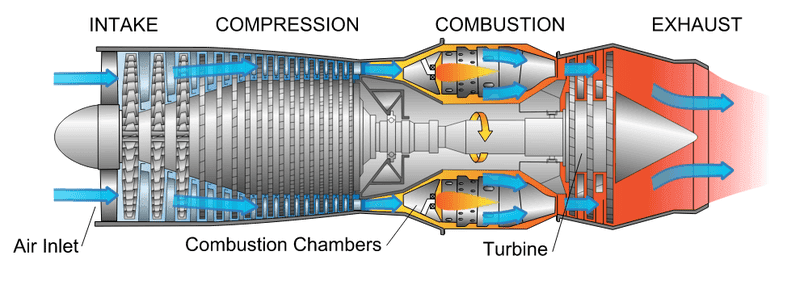
توربینهای گازی در درجه اول از سه جزء اصلی تشکیل شدهاند: کمپرسور ، محفظه احتراق و توربین . چرخه توربین گازی معمولاً به عنوان یک چرخه ساده شناخته میشود که پرکاربردترین پیکربندی است. با این حال، توربینهای گازی سنگین اغلب از یک طرح چرخه ترکیبی برای افزایش راندمان استفاده میکنند. از نظر تاریخی، توربینهای گازی در مسیرهای فنی مختلفی تکامل یافتهاند. توربینهای گازی مشتق شده از هوا ، که در کاربردهای صنعتی و دریایی استفاده میشوند، از موتورهای هواپیمای اصلاح شده مشتق شدهاند. در مقابل، توربینهای گازی صنعتی سنگین بر اساس مفاهیم سنتی توربین بخار توسعه یافتهاند و در درجه اول برای درایوهای مکانیکی و تولید برق در مقیاس بزرگ مورد استفاده قرار میگیرند.
یک توربین گازی را میتوان به صورت سه بخش از چپ به راست تصور کرد: کمپرسور (آبی) ، محفظه احتراق (قرمز) و توربین (زرد).
۲. طبقهبندی توربینهای گازی
در سطح جهان، دهها شرکت در زمینه تحقیق، طراحی و ساخت توربینهای گازی فعالیت دارند. در حال حاضر، چهار شرکتی که به طور کامل بر فناوری توربینهای گازی سنگین تسلط دارند، عبارتند از: جنرال الکتریک (GE) ایالات متحده، زیمنس آلمان، صنایع سنگین میتسوبیشی (MHI) ژاپن (که در ابتدا فناوری را از وستینگهاوس در ایالات متحده مجوز گرفت) و آنسالدو ایتالیا. به گفته آقای چن، نایب رئیس شرکت توربین گازی شانگهای الکتریک، هیچ استاندارد بینالمللی برای طبقهبندی مدلهای توربین گازی وجود ندارد و تمایزات به طور فزایندهای مبهم شدهاند. بر اساس اطلاعات موجود، توربینهای گازی را میتوان به صورت زیر طبقهبندی کرد:
۲.۱ طبقهبندی بر اساس دمای احتراق (با گامهای ۱۰۰ درجه سانتیگراد):
- جنرال الکتریک (GE):
- کلاس E: 1100 درجه سانتیگراد
- کلاس F: 1200 درجه سانتیگراد
- کلاس H: ۱۵۰۰ درجه سانتیگراد
- صنایع سنگین میتسوبیشی (MHI):
- کلاس F: 1400 درجه سانتیگراد
- کلاس G: ۱۵۰۰ درجه سانتیگراد
- کلاس H: محصول آزمایشی متوسط
- کلاس J: 1600-1700 درجه سانتیگراد
- زیمنس:
- مدلهای قدیمیتر (V64.3A، V84.3A، V94.3A): کلاس 6F
- مدلهای جدیدتر (SGT6-5000F، SGT-8000H):
- کلاس F: 1200 درجه سانتیگراد
- کلاس H: ۱۵۰۰ درجه سانتیگراد
۲.۲ طبقهبندی بر اساس خروجی برای توربینهای گازی سنگین:
توربینهای گازی سنگین برای تولید برق معمولاً بر اساس خروجی، زمانی که دمای احتراق بین ۱۱۰۰ تا ۱۵۰۰ درجه سانتیگراد است، طبقهبندی میشوند:
- کلاس B: ≤100 مگاوات
- کلاس E: ۳۰۰–۴۰۰ مگاوات
- کلاس F: ۳۰۰–۴۰۰ مگاوات
- کلاس G/H: ۳۰۰–۴۰۰ مگاوات
با این حال، با پیشرفت سریع خروجیهای توربینهای گازی، این روش طبقهبندی تا حدودی منسوخ شده است.
۳. توسعه توربینهای گازی بینالمللی
زیمنس:
توربین گازی سوپر SGT5-8000H یک محصول شاخص است که 390 تن وزن دارد (معادل یک ایرباس A380 با سوخت کامل) و 13.1 متر طول، 4.9 متر عرض و 4.9 متر ارتفاع دارد. این توربین با توان سیکل ترکیبی 595 مگاوات ، میتواند برق یک شهر صنعتی بزرگ را تأمین کند. پرههای توربین آن دمایی بیش از 1500 درجه سانتیگراد را تحمل میکنند که از دمای ورودی توربین موتورهای توربوفن GE90 و جت F404 فراتر میرود. سرعت نوک پره از 1700 کیلومتر در ساعت فراتر میرود و هر پره را در معرض نیروهای گریز از مرکز معادل 10,000 برابر گرانش زمین قرار میدهد. تلرانسهای تولید در حد دهها میکرون هستند ، زیرا حتی نقصهای جزئی میتوانند یک پره را غیرقابل استفاده کنند. اغلب گفته میشود که یک پره به تنهایی به اندازه یک بیامو میارزد.
صنایع سنگین میتسوبیشی (MHI):
توربین گازی فوقالعاده M701J ، با توان خروجی سیکل ترکیبی ۶۵۰ مگاوات ، دارای یک کمپرسور محوری ۱۵ مرحلهای با نسبت فشار ۲۳:۱ است. مشعل و توربین محوری ۴ مرحلهای با هوا خنک میشوند و سه مرحله اول شامل فناوریهای پیشرفتهای مانند پوششهای محافظ دمای بالا ، پوششهای مانع حرارتی سرامیکی و خنککننده فیلم هوای با کارایی بالا هستند . با دمای ورودی توربین ۱۶۰۰ درجه سانتیگراد ، طول عمر اجزای دمای بالا را تضمین میکند. نوآوریهای سری J بر کاهش انتشار کربن تمرکز دارند. در مارس ۲۰۲۰، MHI سفارشی برای دو پیشرانه M501JAC از اداره برق Intermountain در یوتا، ایالات متحده آمریکا دریافت کرد. این توربینها از یک سیستم احتراق خشک با NOx کم و خنککننده با هوا استفاده میکنند و میتوانند با سوخت هیدروژن تجدیدپذیر تا ۳۰٪ کار کنند . در مقایسه با نیروگاههای زغالسنگ با ظرفیت مشابه، سیستم ۳۰٪ هیدروژن، انتشار کربن را بیش از ۷۵٪ کاهش میدهد، در حالی که یک سیستم ۱۰۰٪ هیدروژن، انتشار کربن را به طور کامل از بین میبرد. این نیروگاه قصد دارد بین سالهای ۲۰۲۵ تا ۲۰۴۵ به تولید ۱۰۰٪ برق از هیدروژن تجدیدپذیر دست یابد .
جنرال الکتریک (GE):
سری 9HA از توربینهای گازی سنگین، کارآمدترین توربینهای گازی سیکل ترکیبی در سطح جهان هستند. جدیدترین مدل 9HA.02 دارای راندمان سیکل ترکیبی بیش از 64٪ و توان خروجی 826 مگاوات است که از رقبای خود پیشی میگیرد. GE از فناوری چاپ سهبعدی پیشرفته برای تولید اجزای کلیدی استفاده میکند و عملکرد و قابلیت اطمینان را بیش از پیش افزایش میدهد.
نتیجه
صنعت توربینهای گازی همچنان در حال پیشرفت است و این پیشرفتها مدیون نوآوری در مواد، فناوریهای خنککننده و سیستمهای احتراق است. شرکتهایی مانند زیمنس، صنایع سنگین میتسوبیشی و جنرال الکتریک با توربینهایی که راندمان، توان خروجی بیسابقه و پایداری زیستمحیطی را ارائه میدهند، در این زمینه پیشرو هستند. این پیشرفتها نه تنها تقاضای رو به رشد انرژی را برآورده میکنند، بلکه با تلاشهای جهانی برای کاهش انتشار کربن و گذار به منابع انرژی پاکتر نیز همسو هستند.
دیوید چونگ
دیوید چونگ، مدیر فناوری روکش لیزری و متخصص فرآیندهای تولید پیشرفته، به عنوان مدیر فناوری روکش لیزری گریناستون فعالیت میکند و در فناوریهای پیشرفته مهندسی سطح، توسعه فرآیند روکش لیزری، بهینهسازی مواد و کاربردهای بازسازی صنعتی تخصص دارد. دیوید با تجربه گسترده در فناوریهای تولید مبتنی بر لیزر و فرآیندهای بهبود سطح فلز، رهبری توسعه و بهینهسازی راهحلهای روکش لیزری گریناستون، از جمله روکش لیزری پودری، روکش لیزری پرسرعت، روکش داخلی سوراخ، سختکاری لیزری و فناوریهای تعمیر یکپارچه را بر عهده دارد. تخصص حرفهای او گردش کار فنی کامل را از تجزیه و تحلیل مواد، توسعه پارامترهای فرآیند، ارزیابی عملکرد پوشش و اعتبارسنجی کاربرد تا پیادهسازی صنعتی پوشش میدهد. با ترکیب مواد بنیادی…