
Laserauftragschweißen in der Wärmebehandlung: Präzisionssteuerung und technologische Innovation
August 16, 2020


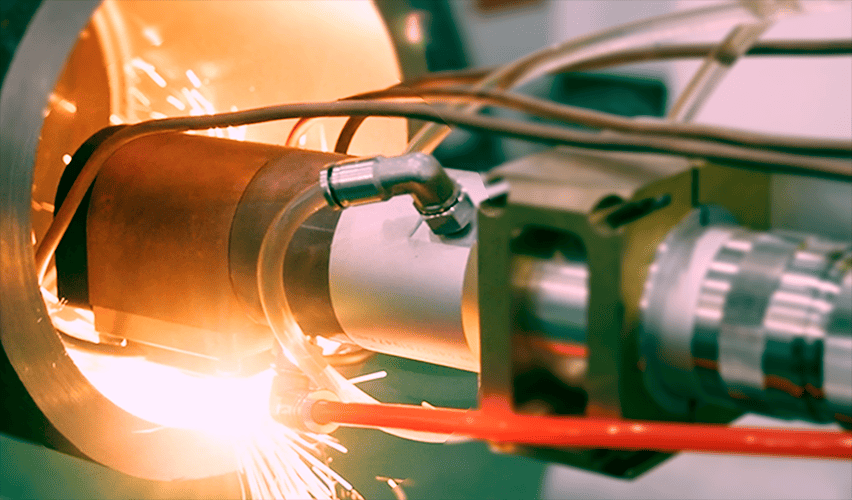
Beim Laserauftragschweißen in der Wärmebehandlung werden hochenergetische Laserstrahlen eingesetzt, um die Oberfläche von Werkstoffen lokal zu erhitzen und so deren Mikrostruktur präzise zu steuern. Im Vergleich zu traditionellen Wärmebehandlungsverfahren wie Induktionserwärmung oder Gasflammenerwärmung … Laserplattierung bietet deutliche Vorteile, darunter eine hohe Energiedichte, eine kontrollierte, lokalisierte Wärmezufuhr und minimierte Wärmeeinflusszonen. Dieser Artikel befasst sich mit den wichtigsten Anwendungsgebieten von Laserplattierung im Bereich der Wärmebehandlung, wobei die jüngsten technologischen Fortschritte und Durchbrüche hervorgehoben werden.
1. Laserhärtung: Präzise Steuerung der Oberflächenverfestigung
Die Laserhärtung ist ein fortschrittliches Verfahren, bei dem ein Laserstrahl die Werkstückoberfläche schnell erhitzt. Austenitisierungstemperatur (normalerweise 900 ° C ° C bis 1500 für Stahl), gefolgt von einer schnellen Selbstabschreckung, wodurch sich ein martensitisch Struktur. Zu den Hauptvorteilen der Laserhärtung gehören:
- Selektive BehandlungLaserstrahlen können komplexe Geometrien (z. B. Nockenwellen oder Zahnfußbereiche) präzise anvisieren und so unnötige Wärmeeinwirkung auf nicht gehärtete Bereiche vermeiden. Beispielsweise die Nockenbahnen in Nockenwellen für Automobilmotoren Um zyklischem Verschleiß zu widerstehen, ist eine selektive Härtung erforderlich, und die Lasertechnologie ermöglicht Härtungstiefen von nur wenigen Millimetern. 0.1 – 0.5 mm unter Beibehaltung der Eigenschaften des Kernmaterials Duktilität.
- Kontrollierte Wärmezufuhr bei geringer VerformungDie Echtzeit-Temperaturüberwachung mittels integrierter Thermometer oder Infrarotkameras gewährleistet die dynamische Anpassung der Laserleistung und der Scangeschwindigkeit zur Steuerung. verbleibender Stress und Verformung auf minimalem Niveau. Studien zu EA4T Achsenstahl zeigen, dass Laserauftragschweißen mit anschließender Wärmebehandlung die Härte und die Eigenspannungen deutlich reduziert, während gleichzeitig eine ausreichende Dauerfestigkeit erhalten bleibt.
- Effizienz und KosteneinsparungenIm Gegensatz zu herkömmlichen Verfahren benötigt die Laserhärtung weder externe Kühlmedien noch eine nachträgliche Korrektur von Verformungen, wodurch die nachfolgenden Bearbeitungskosten reduziert werden. Zum Beispiel: Laserhärten großer Zahnräder hat mehr als ein 70 % Reduzierung der thermischen Verzerrung im Vergleich zur Induktionsabschreckung, wobei die Oberflächenhärte erhalten bleibt HRC 35–45 range.
- Technologische FortschritteLaserhärtung kann kombiniert werden mit Verbundwärmebehandlung Techniken wie das Anlassen U75V Stahlschienenbeschichtungen at 600°C, Wobei die Wärmeeinflusszone verwandelt sich in angelassener Martensitwodurch die Verschleißfestigkeit verbessert wird. Darüber hinaus Laser-Schock-Peening umwandeln kann Restzugspannung in Druckspannung, was die Ermüdungslebensdauer weiter erhöht.

2. Materialerweichung: Präzisionsglühen und Zähigkeitskontrolle
Laserweichmachung, auch bekannt als LaserhärtenDabei wird das Material auf kritische Temperaturen erhitzt (z. B. 300 ° C ° C bis 600oder indem man es langsam abkühlen lässt, nachdem Austenitisierung, In ein resultierendes Ferrit-Perlit-StrukturDieser Prozess erhöht Plastizität und Formbarkeit. Zu den Hauptmerkmalen gehören:
- Sanfte ÜbergangszonenDie Energieverteilung des Lasers gewährleistet einen gleichmäßigen Härtegradienten zwischen behandelten und unbehandelten Bereichen und reduziert so Spannungskonzentrationen. 50% im Vergleich zur Induktionserwärmung.
- Innovative Anwendungen:
- Sicherheitsstrukturen für KraftfahrzeugeIn hochfestem Stahl Karosserien, Laserhärten kritischer Bereiche (z. B. Aufprallschutzbalken) kontrollierten Formen energieabsorbierende Zonen die bei Kollisionen die Aufprallenergie absorbieren und so die Insassen schützen.
- Tiefziehen: Aluminium- oder hochfeste Stahlbleche werden in den Biegebereichen vor dem Stanzen lasergeweicht, wodurch Risse beim Umformen verhindert und die Eigenschaften verbessert werden. Duktilität by 20-30%.
- Typischer Fall: Nach dem Laserplattierung a NiCrBSi/WC-Beschichtung on Ti6Al4V-Titanlegierung, eine Wärmebehandlung bei 700-900 ° C führt zu kontrollierten Ausfällungsphasen wie Cr23C6, Erhöhung der Bruchzähigkeit ab 3.05 MPa·m¹/² zu 5.31 MPa·m¹/², während es sich auch verbessert Härte zu 1395 HV.
3. Technologische Vorteile: Leistungsdurchbrüche jenseits traditioneller Methoden
- FlexibilitätDas laseroptische System (integriert mit Galvo-Spiegel und Roboter) ermöglicht die Bearbeitung komplexer Oberflächen, wie z. B. Schwalbenschwanzführungen an Turbinenschaufeln oder Formhohlräume, und bietet damit eine beispiellose Flexibilität für schwer zugängliche Bereiche.
- Integration von Verbundprozessen: Kombinieren Mischlösung, Alternden kryogene Behandlung Durch Laserauftragschweißen wird die Beschichtungsleistung optimiert. Zum Beispiel nach Glühen bei 700°C of WC@Ni/Ni60-Beschichtungen, verbleibender Stress wird reduziert und die Verschleißfestigkeit deutlich verbessert.
- Vorteile für die Umwelt und die WirtschaftLaserauftragschweißen ist ein trockener ProzessDadurch wird die chemische Verschmutzung beseitigt. Außerdem ist der Energieverbrauch von Lasersystemen gering. 30–50 % niedriger als Induktionserwärmung, was es zu einer umweltfreundlicheren und kostengünstigeren Lösung macht.
4. Industrielle Anwendungsszenarien
Luft- und Raumfahrt: In Hochtemperatur-Turbinenschaufeln aus Rene125, Laserauftragschweißen mit anschließender mehrstufiger Wärmebehandlung (z. B. 1220 °C Lösung + 590 °C kontrollierte Kühlung) reduziert verbleibender Stress ab 253 MPa zu 4 MPa, wodurch die Ermüdungslebensdauer nahezu verbessert wird vierfach.
Bahntransport: EA4T Achsenstahl ist laserbeschichtet mit 24CrNiMo-LegierungAnschließend erfolgt eine Wärmebehandlung zur Anpassung des Anteils an angelassenem Martensit. Dieses Verfahren gewährleistet, dass Zerreißfestigkeit passt sich dem Substrat an und behält gleichzeitig seine Eigenschaften bei Ermüdungsbeständigkeit.
Schimmelreparatur: Nach dem Laserplattierung a Kobalt-basierte Legierung Bei Stanzformen für die Automobilindustrie erreicht die Oberflächenhärte HRK 50 oder höher, ohne Risse, wodurch die Lebensdauer der Form erheblich verlängert wird 3 – 5 mal.
5. Zukünftige Trends und Herausforderungen
- Smarte Steuerung: Integrieren KI-basierte Echtzeitanalyse Die Auswertung von Wärmebilddaten ermöglicht die dynamische Anpassung der Laserparameter zur präzisen Steuerung von Mikrostruktur und verbleibender Stress in wärmebehandelten Bauteilen.
- Materialinnovation: Entwicklung spezialisierter Laserwärmebehandlungspulver, sowie mit Seltenerden modifizierte Pulver (z.B, Y₂O₃ or La₂O₃), können die Kornstruktur verfeinern und die Hochtemperaturstabilität von Beschichtungen verbessern.
- Kostenoptimierung: Wie Preise für Faserlaser sinkt die wirtschaftliche Tragfähigkeit weiter, Laser-Wärmebehandlung für Reparaturen kleiner und mittelgroßer Bauteile wird sich weiter verbessern und dadurch für ein breiteres Spektrum von Branchen zugänglicher werden.
Fazit
Laserauftragschweißen zur Wärmebehandlung bietet unübertroffene Präzision und EffizienzDadurch werden Härtungs- und Weichmachungsprozesse ermöglicht, die mit herkömmlichen Methoden zuvor schwierig oder unmöglich waren. Seine Anwendungen in der Luft- und Raumfahrt, der Automobilindustrie und der High-End-Geräteindustrie demonstrieren das transformative Potenzial von Lasertechnologie im Bereich der Werkstofftechnik. Als Verbundprozesse und intelligente Steuerungen Die Laserwärmebehandlung entwickelt sich rasant und wird voraussichtlich zu einer Schlüsseltechnologie werden. Wiederaufbereitung von High-End-Geräten und grüne Fertigungund sicherte sich damit seinen Platz an der Spitze der modernen Industrie.
Michael Shea
Michael Shea – Auslandsdirektor, Leiter der globalen Geschäftsentwicklung & Senior Technical Engineering Expert. Michael Shea ist als Auslandsdirektor von Greenstone ein äußerst vielseitiger Senior Technical Engineering Expert. Er vereint globale Geschäftsführung mit fundiertem, multidisziplinärem Fachwissen in den Bereichen Laserauftragschweißen, additive Fertigung von Metallen mittels DED, Laserreinigung, Laserhärten, Modernisierung von Industrieanlagen und Integration fortschrittlicher Fertigungssysteme. Dank seiner umfassenden Erfahrung in der internationalen Marktentwicklung und der Implementierung industrieller Technologien spielt Michael eine entscheidende Rolle bei der globalen Expansion von Greenstone und gewährleistet gleichzeitig technische Exzellenz in den unterschiedlichsten Kundenanwendungen. Seine besondere Stärke liegt in der nahtlosen Integration von Geschäftsstrategie, technischem Know-how und …